Explore our engaging Animal Recognition Worksheets designed specifically for kids ages 3-4! These fun and interactive resources help young learners identify and connect with various animals, enhancing their observational skills and vocabulary. Each worksheet features colorful illustrations and age-appropriate activities, making learning enjoyable and effective. From matching animals to their habitats to simple identification exercises, our worksheets encourage creativity and critical thinking. Ideal for preschool classrooms or home learning, these activities promote early literacy and cognitive development. Download our Animal Recognition Worksheets today and watch your child’s excitement for learning grow while they discover the amazing world of animals!
Check out this FREE "Animal recognition" Trial Lesson for age 3-4!

What Do Animals Need?

Favorites
With answer key
Interactive
  • 3-4
  • Animal recognition
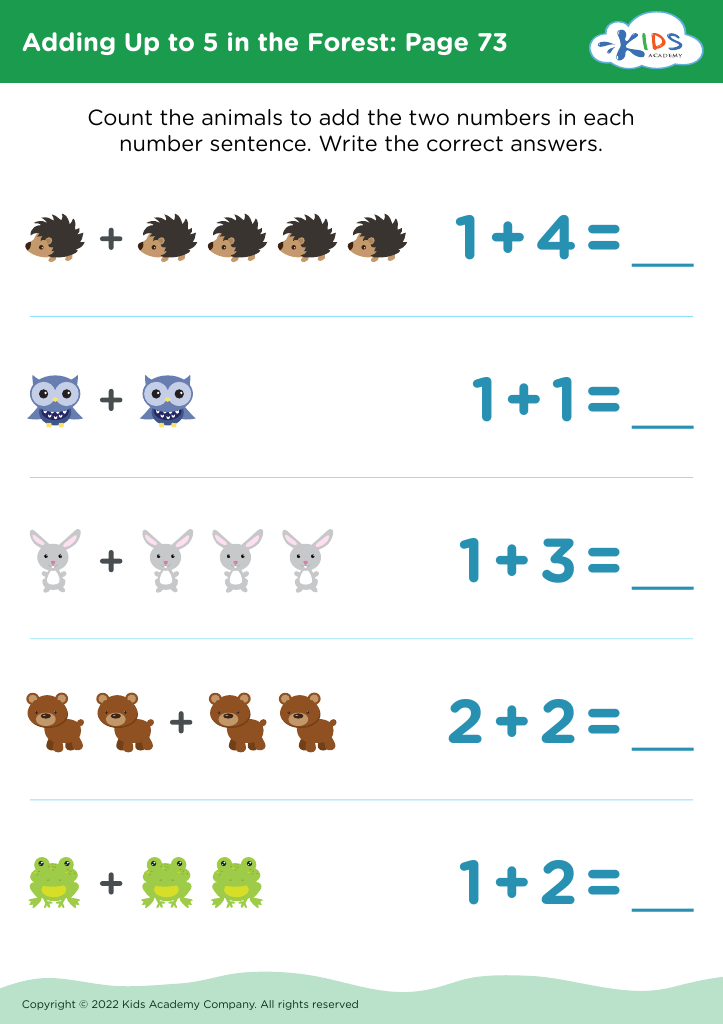
Adding Up to 5 in the Forest: Page 73
Worksheet
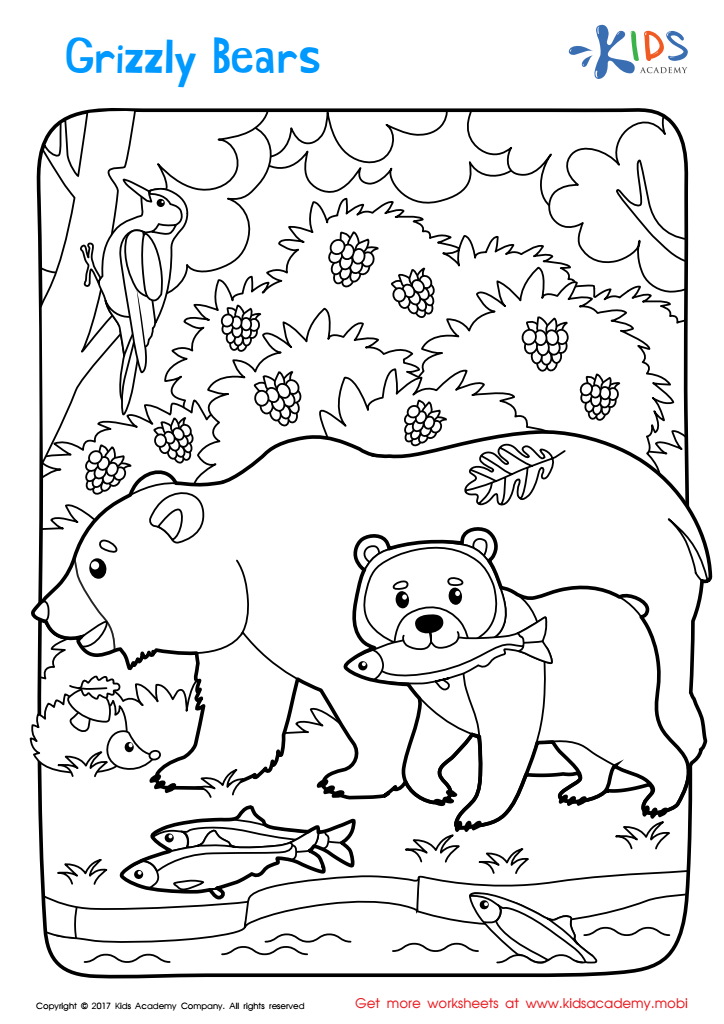
Free printable grizzly bear coloring page

Free Printable Grizzly Bear Coloring Page

Today we're exploring the Great Plains and its most popular inhabitant: the grizzly bear! Our free printable coloring page introduces kids to the bear's natural habitat and food, like salmon and berries. Join us for a fun and educational experience!
Download (PDF)
Assign to My Students
Free Printable Grizzly Bear Coloring Page
Worksheet
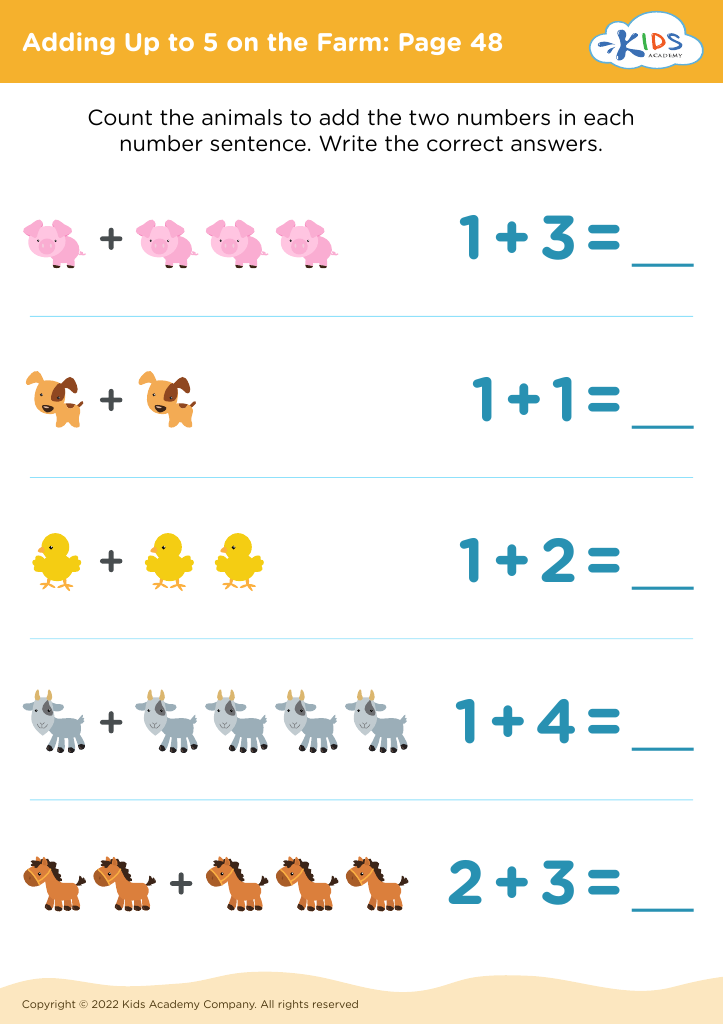
Adding Up to 5 on the Farm: Page 48
Worksheet
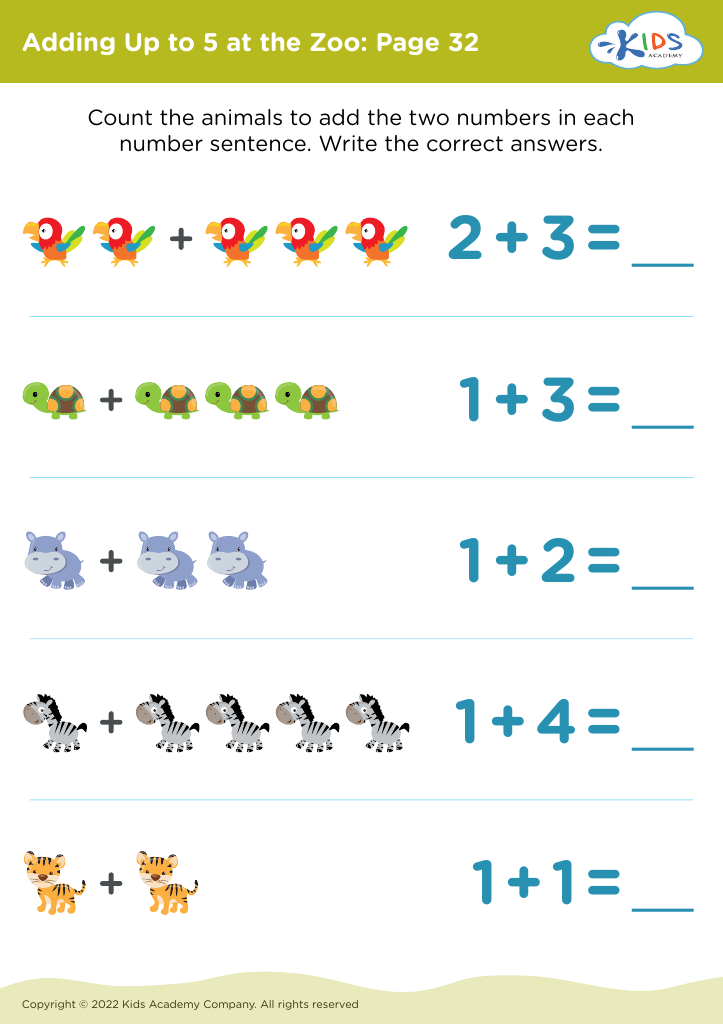
Adding Up to 5 at the Zoo: Page 32
Worksheet
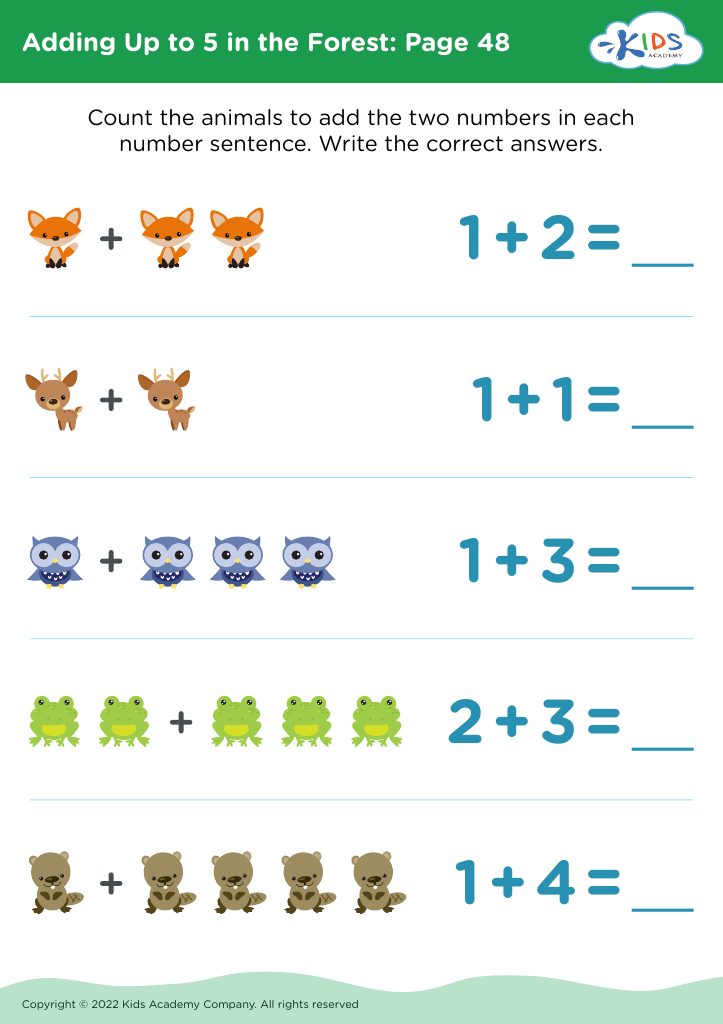
Adding Up to 5 in the Forest: Page 48
Worksheet
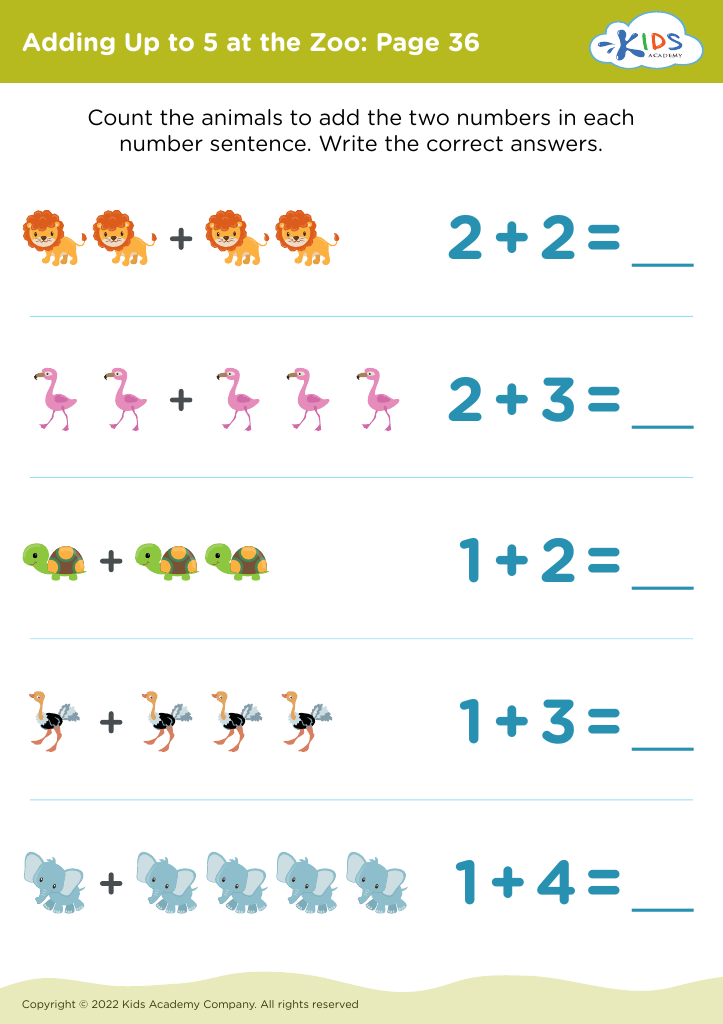
Adding Up to 5 at the Zoo: Page 36
Worksheet
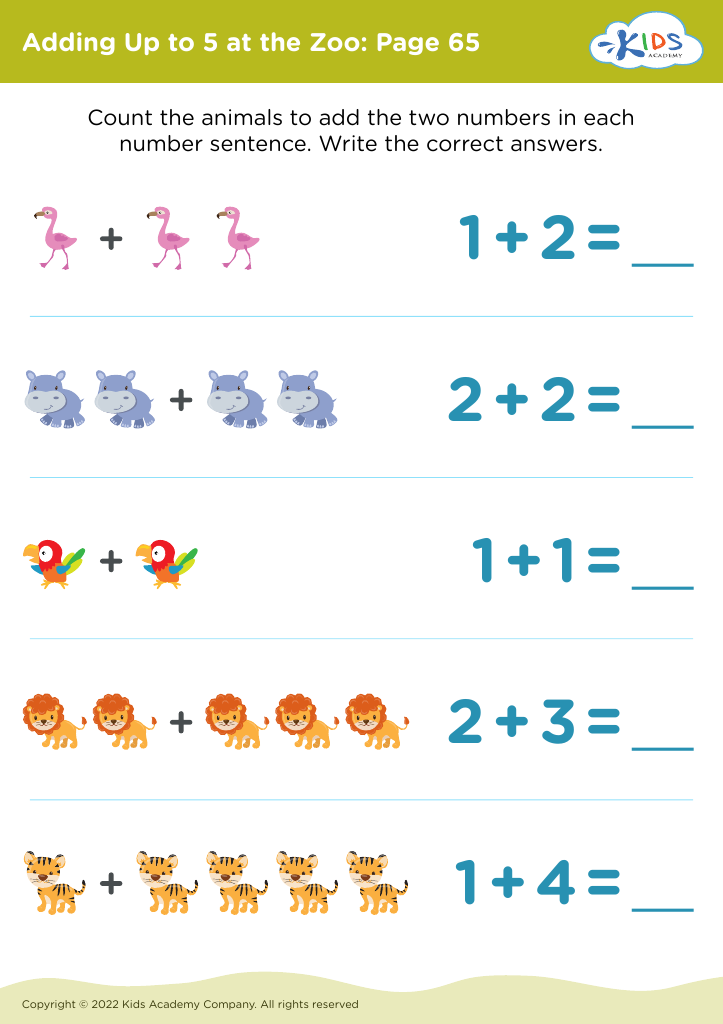
Adding Up to 5 at the Zoo: Page 65
Worksheet
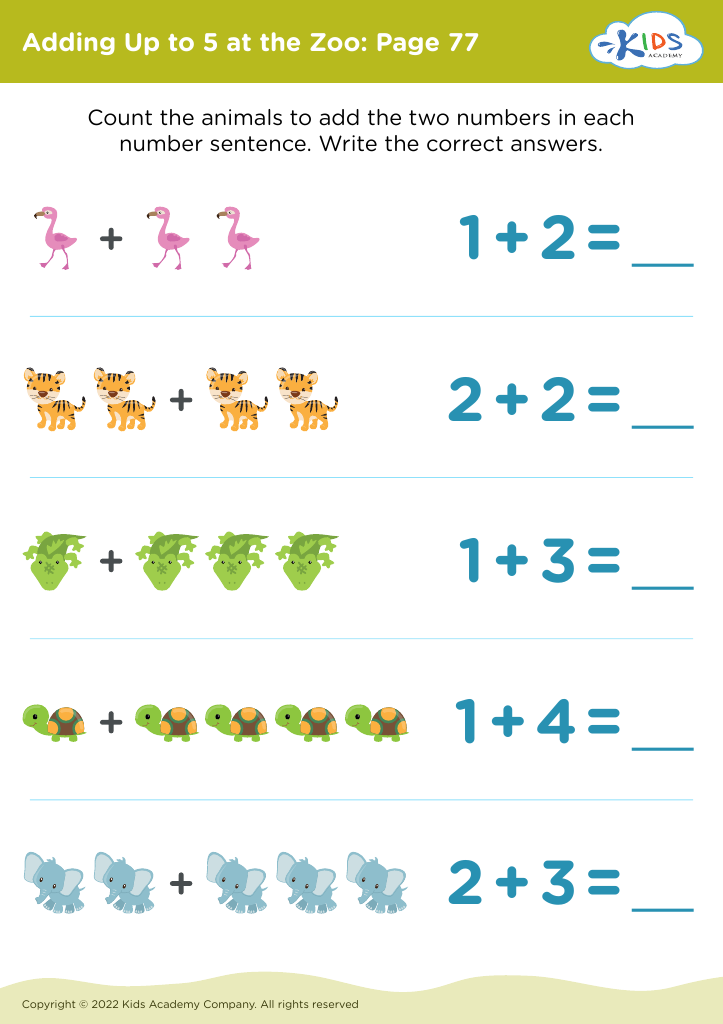
Adding Up to 5 at the Zoo: Page 77
Worksheet
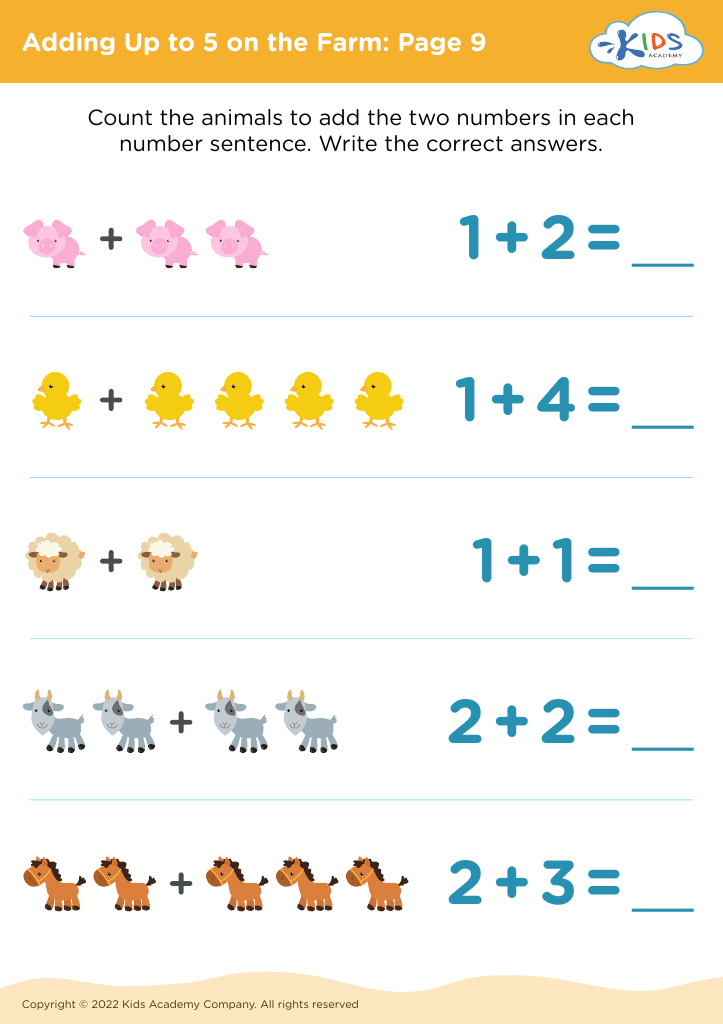
Adding Up to 5 on the Farm: Page 9
Worksheet
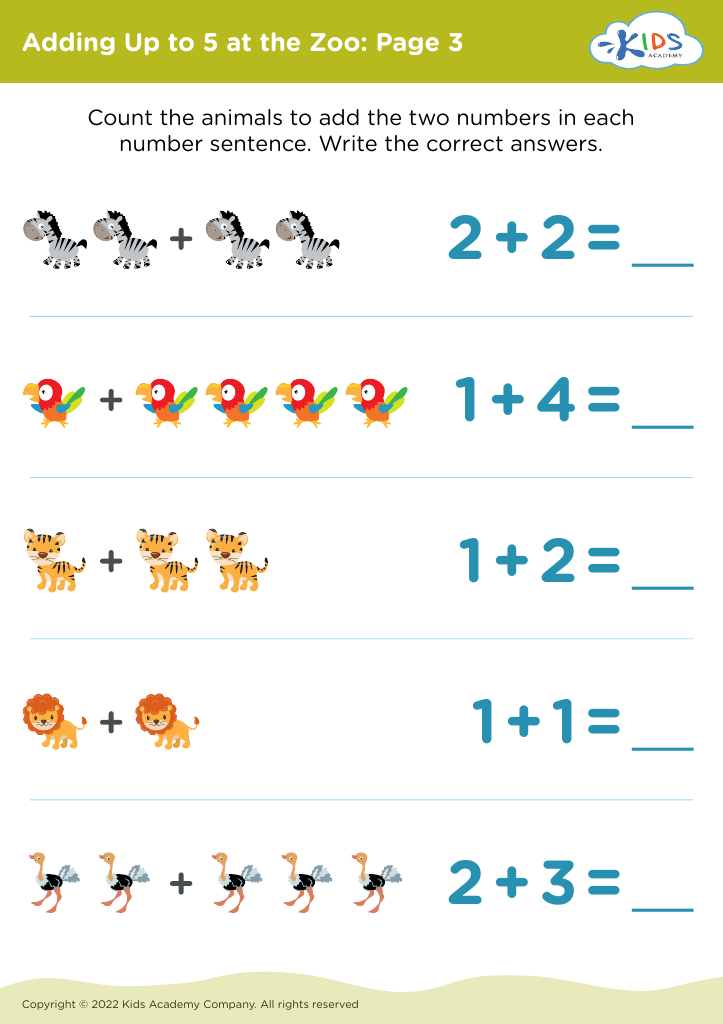
Adding Up to 5 at the Zoo: Page 3

Adding Up to 5 at the Zoo: Page 3

Adding Up to 5 at the Zoo: Page 3
Worksheet
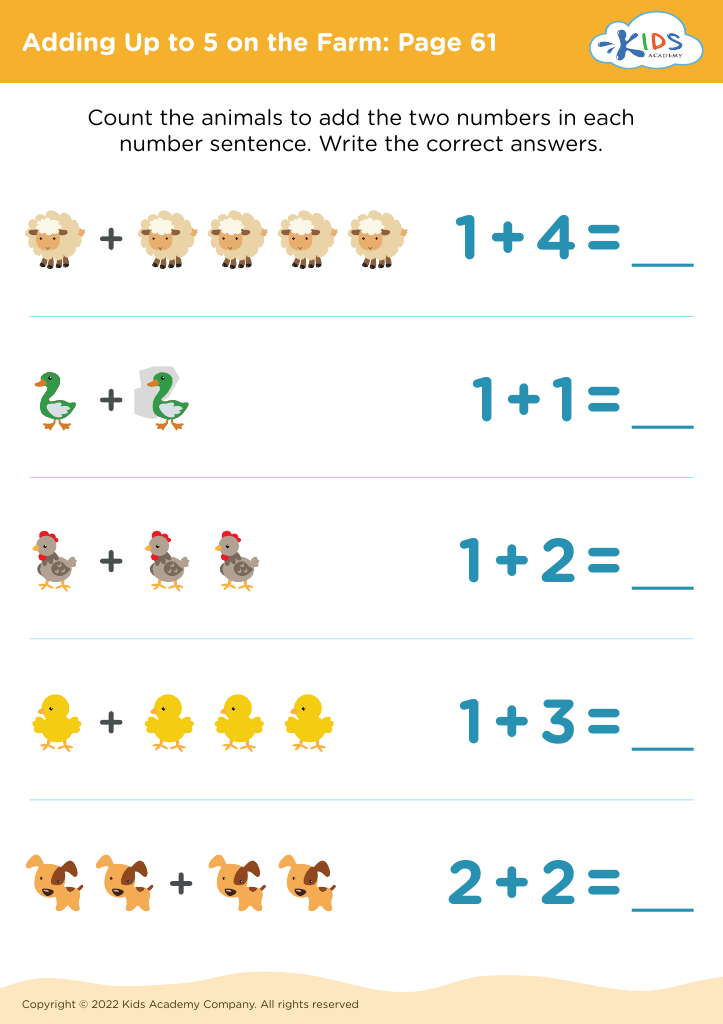
Adding Up to 5 on the Farm: Page 61
Worksheet
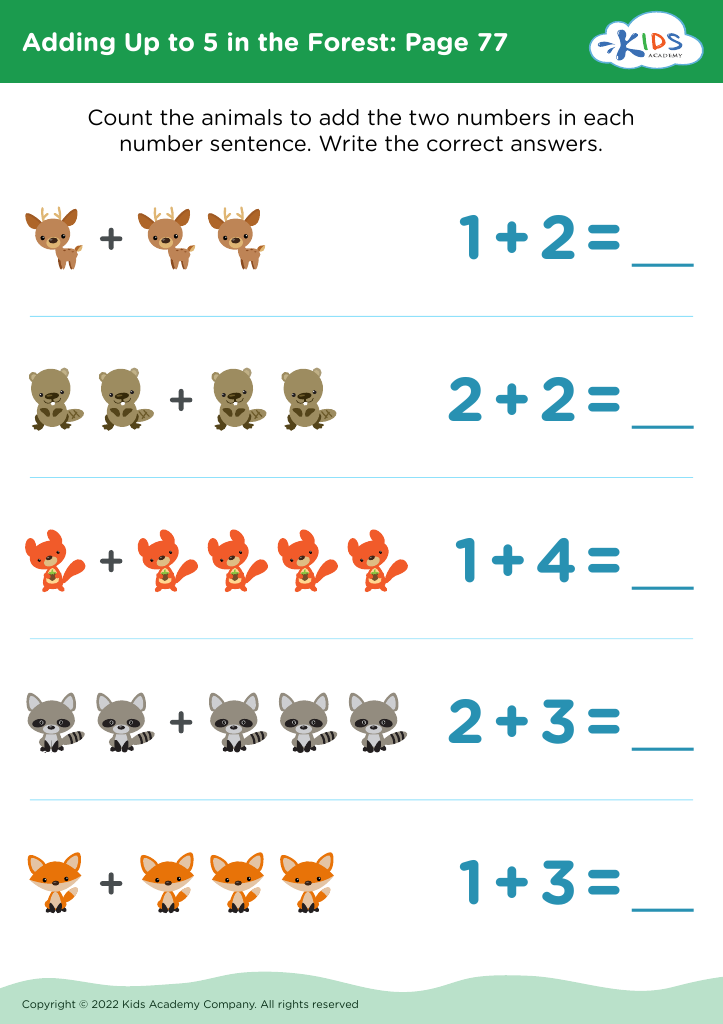
Adding Up to 5 in the Forest: Page 77
Worksheet
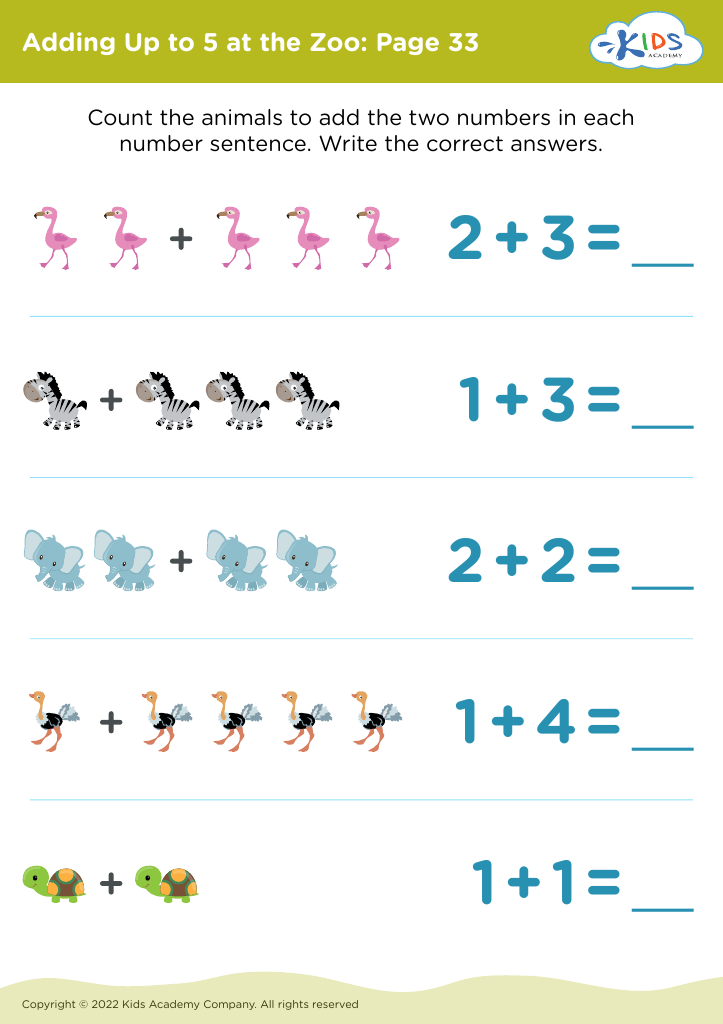
Adding Up to 5 at the Zoo: Page 33
Worksheet
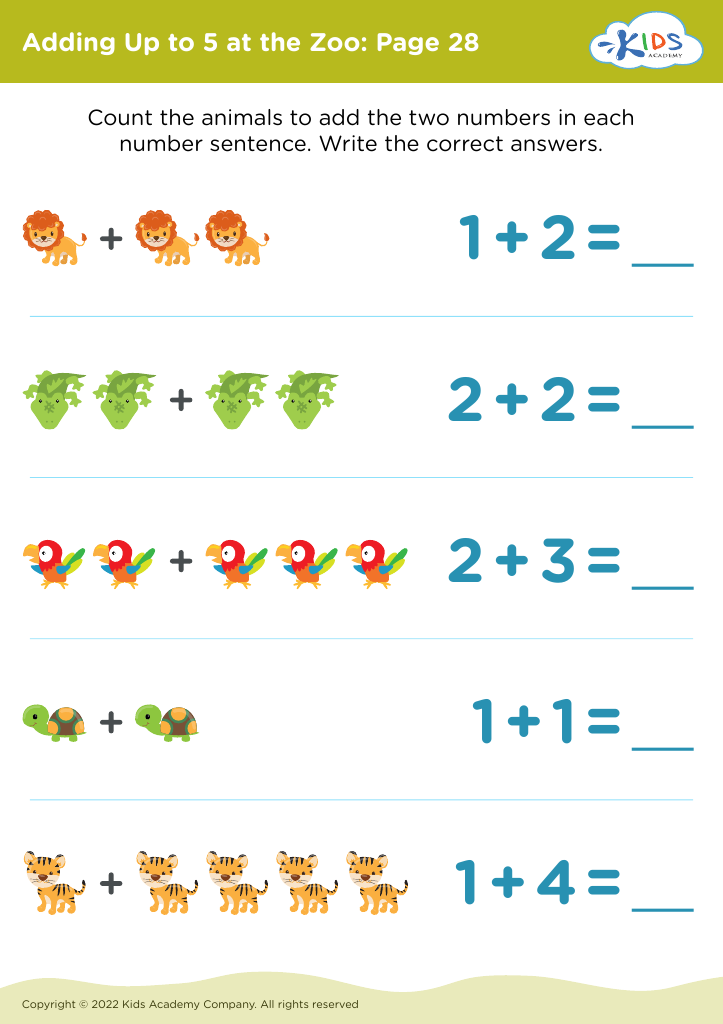
Adding Up to 5 at the Zoo: Page 28
Worksheet
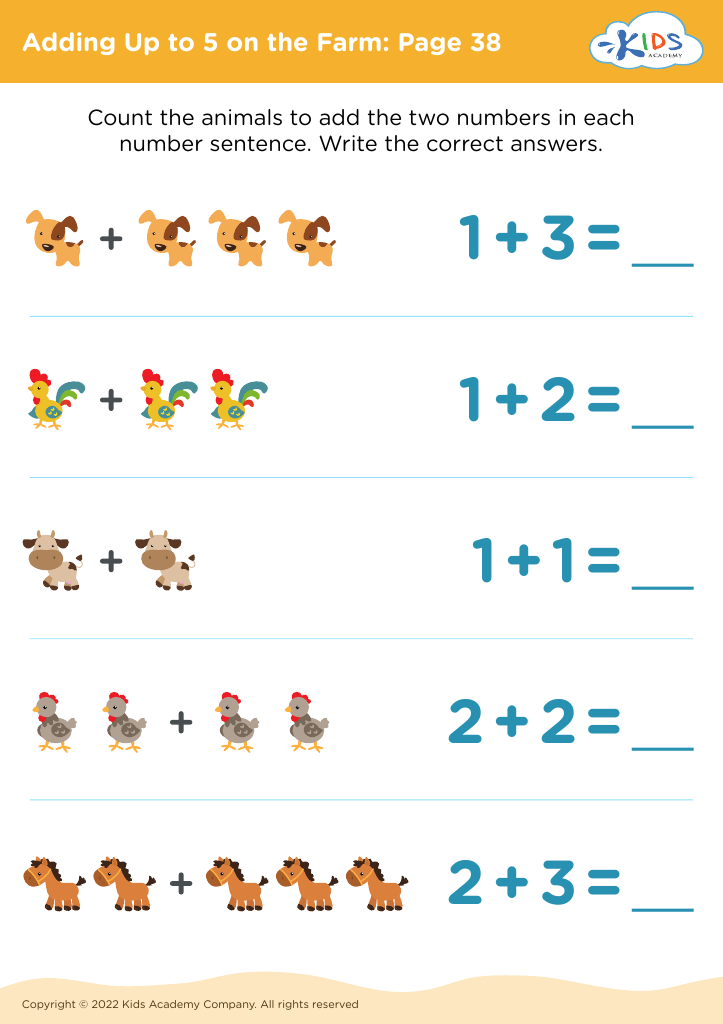
Adding Up to 5 on the Farm: Page 38
Worksheet
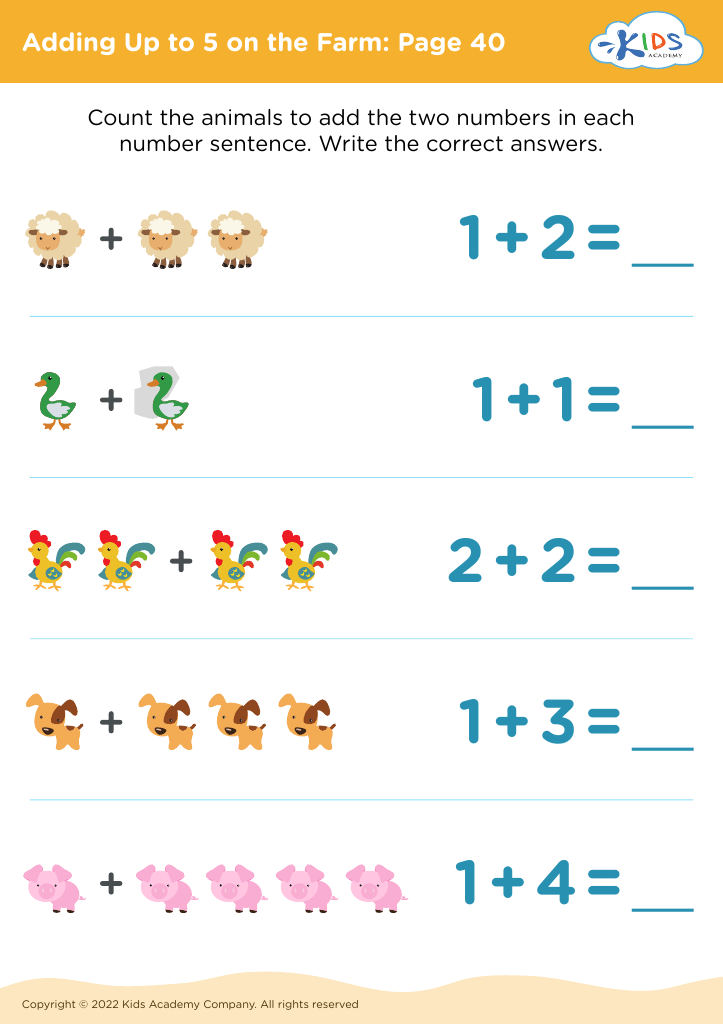
Adding Up to 5 on the Farm: Page 40
Worksheet
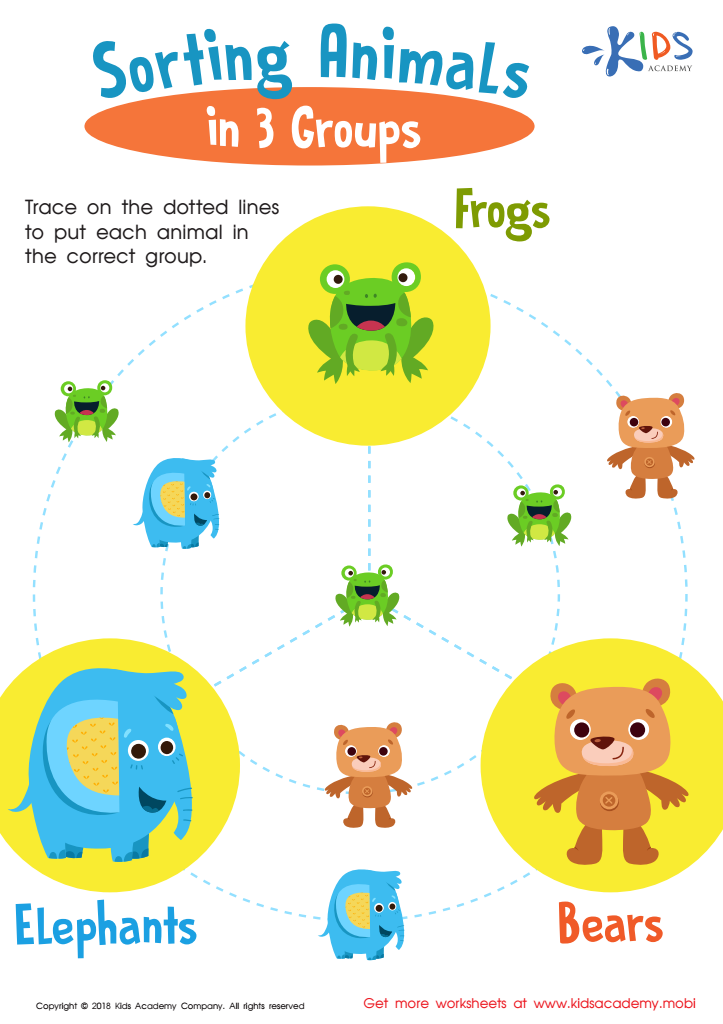
Sorting Animals in 3 Groups Worksheet
Sorting Animals in 3 Groups Worksheet
Let your kids practice and build skills for future Venn Diagrams with this PDF worksheet. They'll trace lines to match and group animals, and learn the differences and similarities of animals by categorizing with pictures and words. Plus, it's a great way to develop fine motor skills.
Sorting Animals in 3 Groups Worksheet
Worksheet
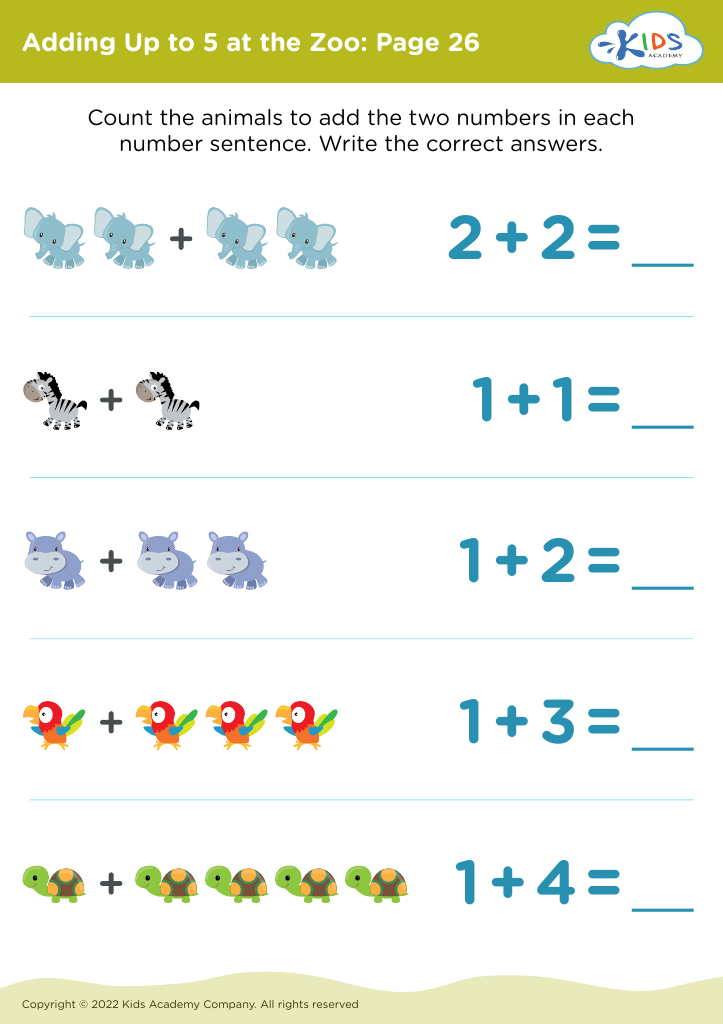
Adding Up to 5 at the Zoo: Page 26
Worksheet
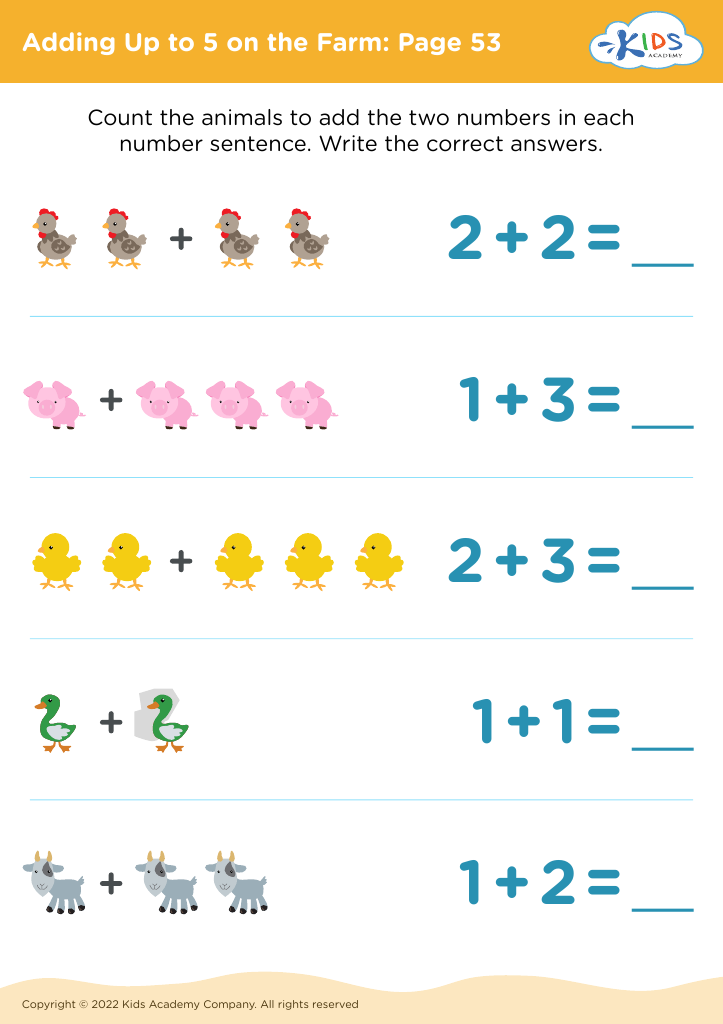
Adding Up to 5 on the Farm: Page 53
Worksheet
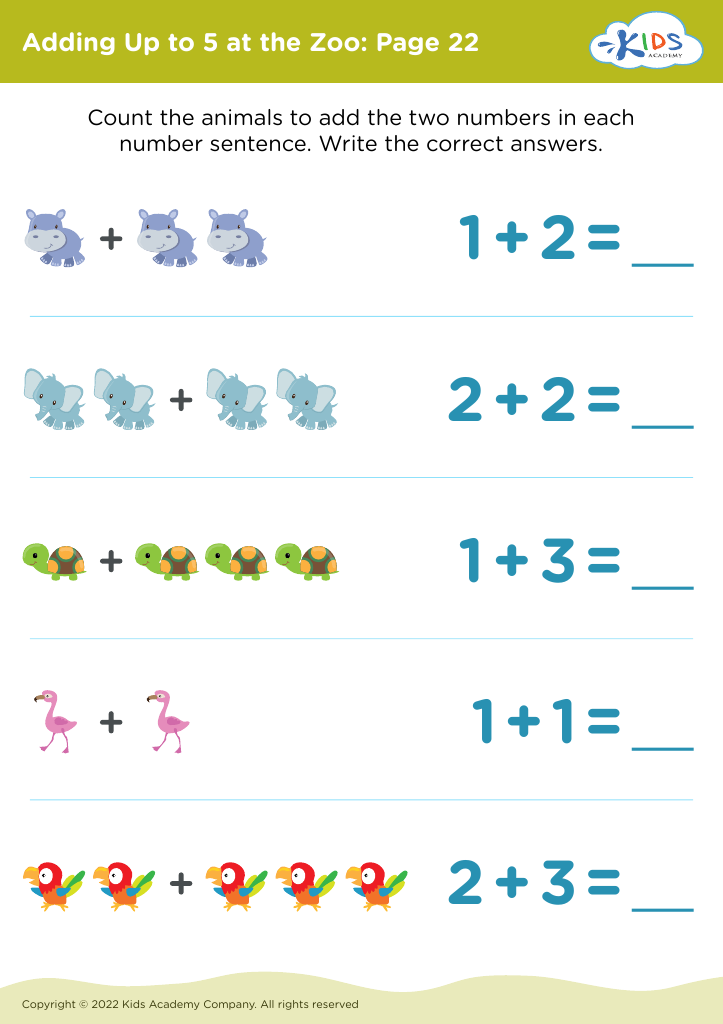
Adding Up to 5 at the Zoo: Page 22
Worksheet
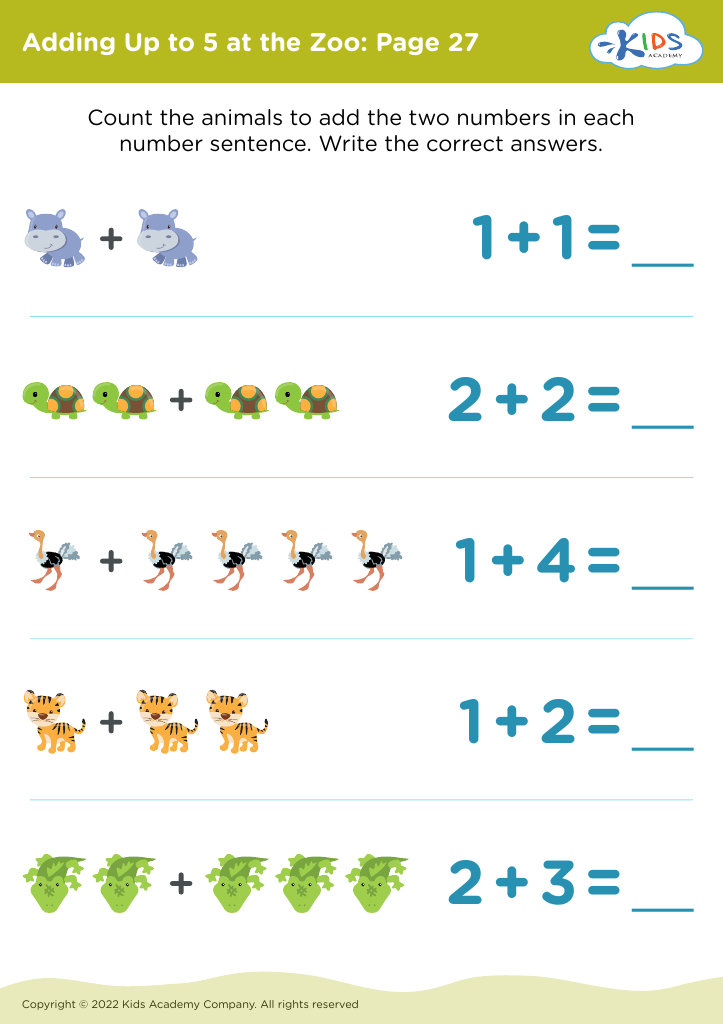
Adding Up to 5 at the Zoo: Page 27
Worksheet
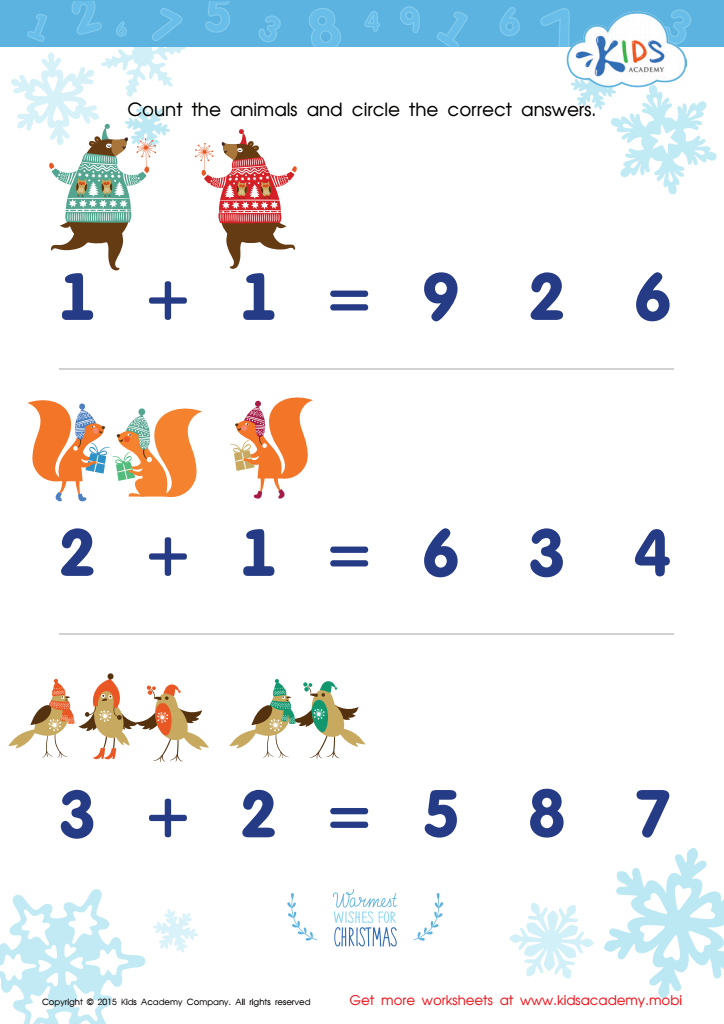
Math PDF Worksheet: Count Funny Animals

Count Funny Animals Worksheet

Get your kid in the Christmas spirit with this festive addition worksheet! They'll have fun counting the colorful animals and writing in the numbers. Our graphic layout makes it easy for them to visualize and solve the task. Print it out and help your kid keep their math skills sharp this winter with Kids Academy!
Count Funny Animals Worksheet
Worksheet
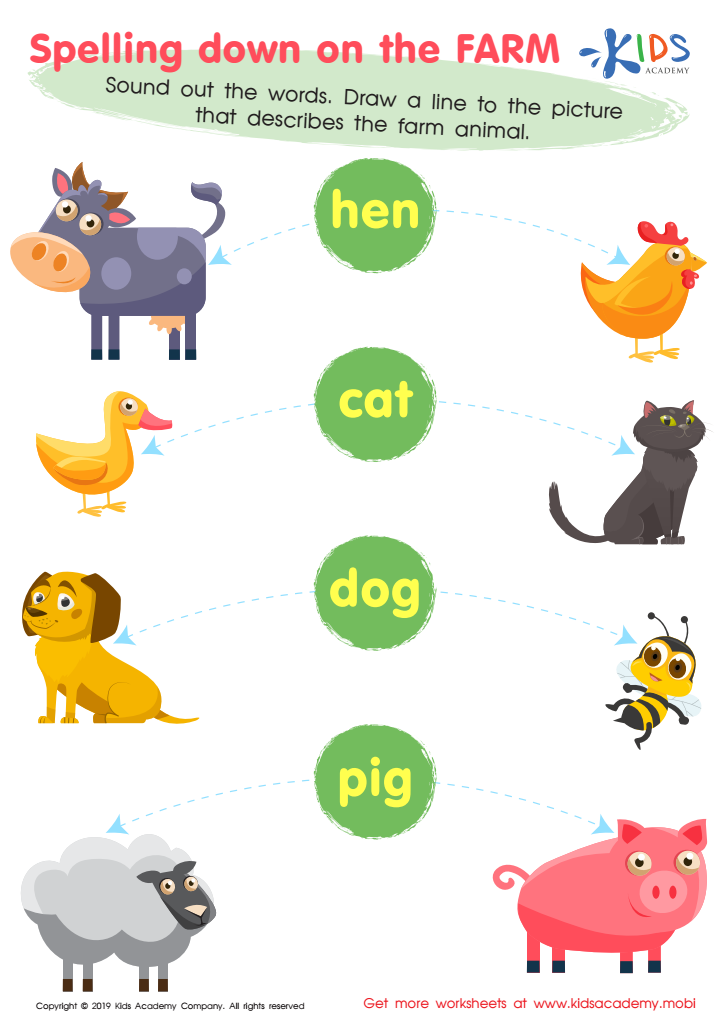
Spelling Down on the Farm Worksheet

Spelling Down on the Farm Worksheet

Want to help your kids nail their spelling? Introduce them to this farm animal worksheet! Get them to look at the animals in the tracing sheet, name them and then sound out the words. Have them draw a line to the picture that describes it. You'll be surprised at how quickly their skills improve.
Spelling Down on the Farm Worksheet

Worksheet
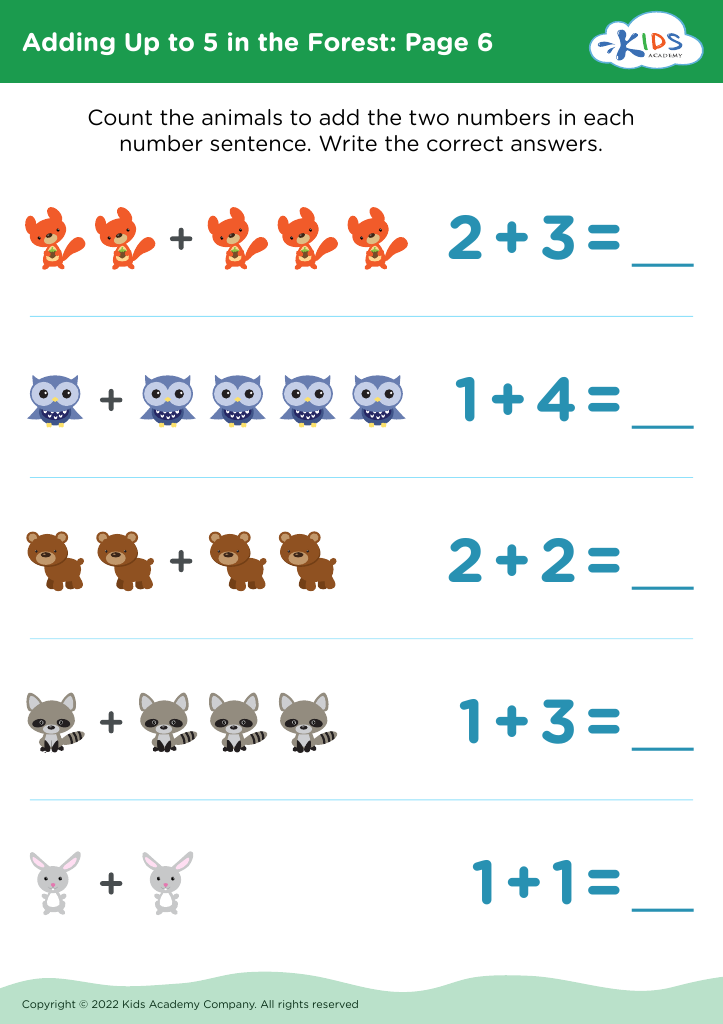
Adding Up to 5 in the Forest: Page 6
Worksheet


Animal recognition is a fundamental aspect of early childhood development, particularly for children aged 3-4. During this crucial phase, young learners are naturally curious about the world around them, and animals often captivate their interest. Recognizing different animals helps children develop essential cognitive skills such as observation, categorization, and memory. Through animal recognition, children enhance their vocabulary as they learn the names of various animals, aiding language skills and communication.

Moreover, learning about animals fosters empathy and respect for living beings, instilling a foundational understanding of the ecosystem and the significance of biodiversity. This early exposure can nurture a lifelong interest in wildlife and nature, promoting environmental stewardship.

Additionally, animal recognition activities—like sorting games or matching cards—encourage social interaction and collaborative play, further developing essential social skills. By incorporating animal recognition into educational settings, teachers and parents create engaging, interactive learning experiences that also support emotional and intellectual growth. Ultimately, recognizing animals opens the door to a myriad of learning opportunities, laying the groundwork for curiosity and inquiry as children grow. In summary, promoting animal recognition in early childhood enriches cognitive, social, and emotional aspects of development, making it vital for educators and parents alike.