
Capitalization rules Worksheets for Ages 3-4
4 filtered results
Difficulty Level
Grade
Age
-
From - To
Subject
Activity
Standards
Help your little ones explore the basics of capitalization with our engaging worksheets designed for ages 3-4! These playful and educational resources introduce young learners to essential capitalization rules in a fun, interactive way. Through a variety of activities, children will practice identifying uppercase letters at the beginning of sentences, in names, and in titles. Our worksheets foster early literacy skills while keeping children entertained. Perfect for both home and classroom settings, our Capitalization Rules Worksheets encourage creativity and critical thinking. Support your child's language development and boost their confidence with these foundational skills today!
Favorites
With answer key
Interactive
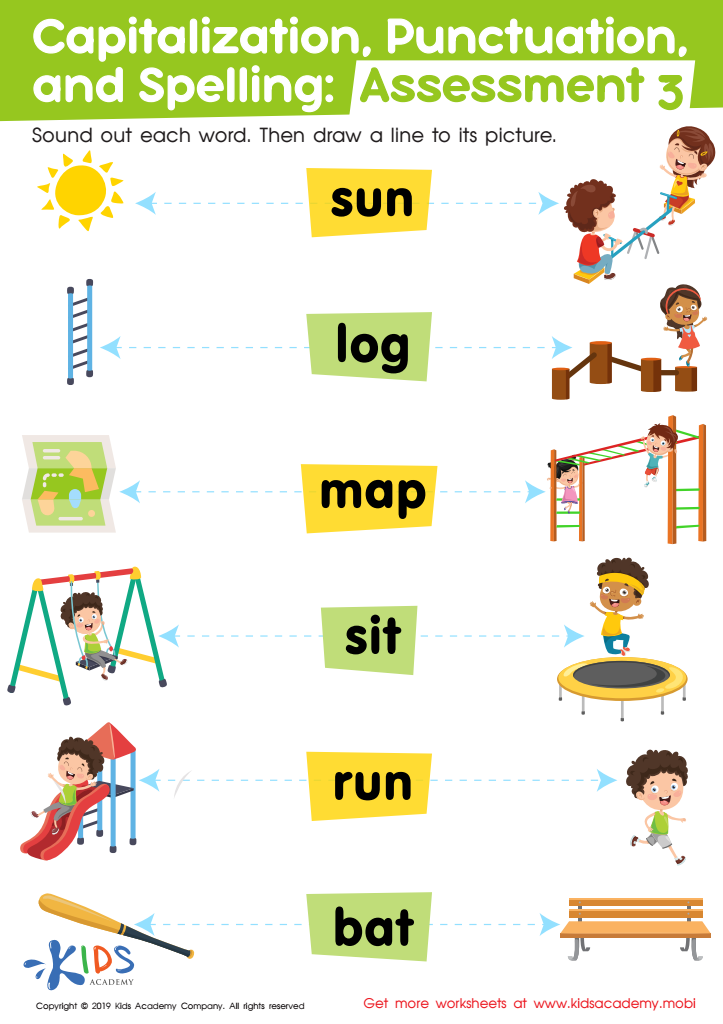
Capitalization. Punctuation. Spelling. Assessment 3 Worksheet
Before starting this worksheet, have your kids spell some simple words. Correct if wrong and show the right spellings. Then, ask them to link the pictures to the words you read out. Spelling is key for a good writer, and kids need to know how to spell to read texts easily.
 Assign to My Students
Capitalization. Punctuation. Spelling. Assessment 3 Worksheet
Worksheet
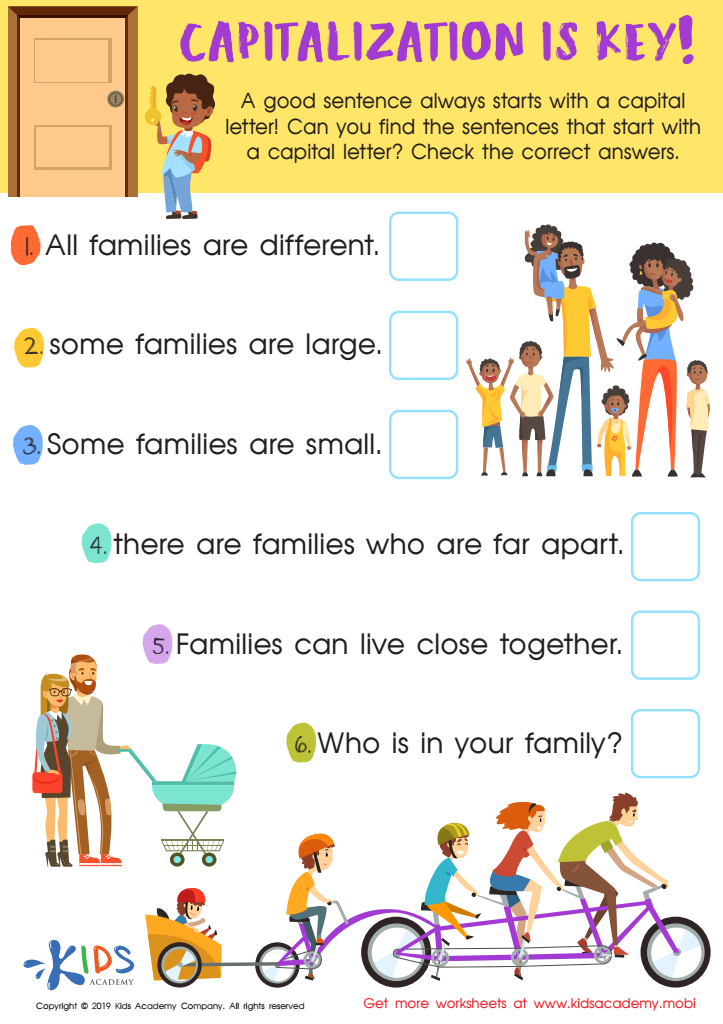
Capitalization Key Worksheet
Help your kids learn the importance of capitalizing at the start of sentences with this fun PDF! It features 6 family-themed sentences, with pictures, that your students have to find the correctly capitalized versions of. Perfect for young learners, this worksheet adds a fun twist to learning.
Capitalization Key Worksheet
Worksheet
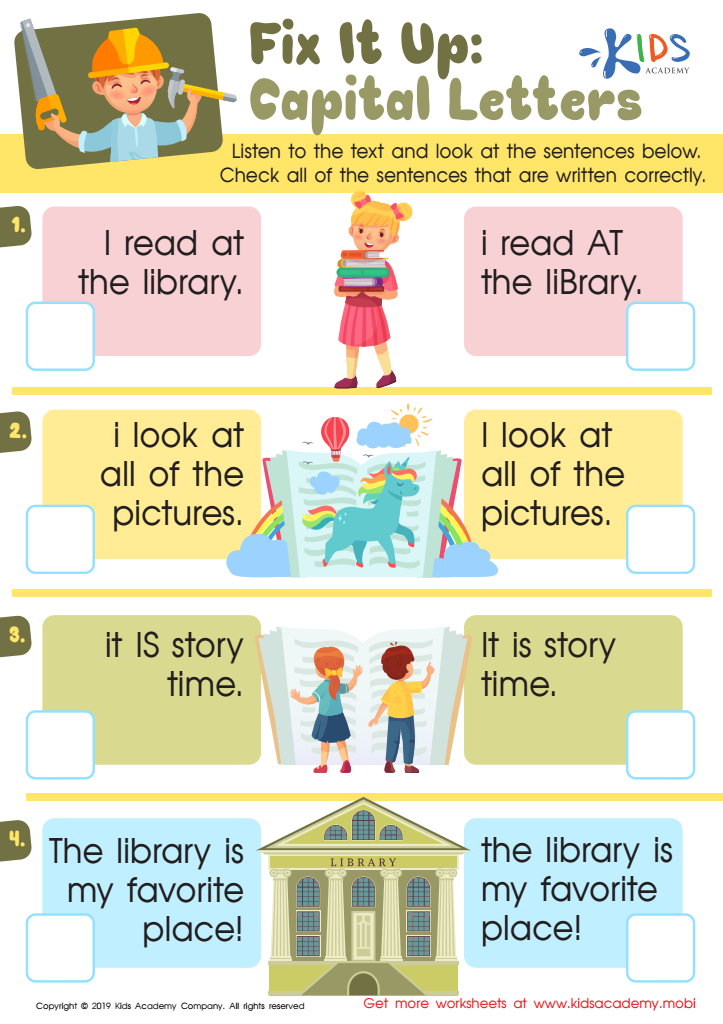
Fix Capital Letters Worksheet
Put on your hardhats and get out the tools - it's time to do some repair work! Have your child identify sentences written with proper capitalization on this fun and colorful worksheet. Ask more advanced students to rewrite incorrect sentences correctly - it'll help them understand letter case better.
Fix Capital Letters Worksheet
Worksheet
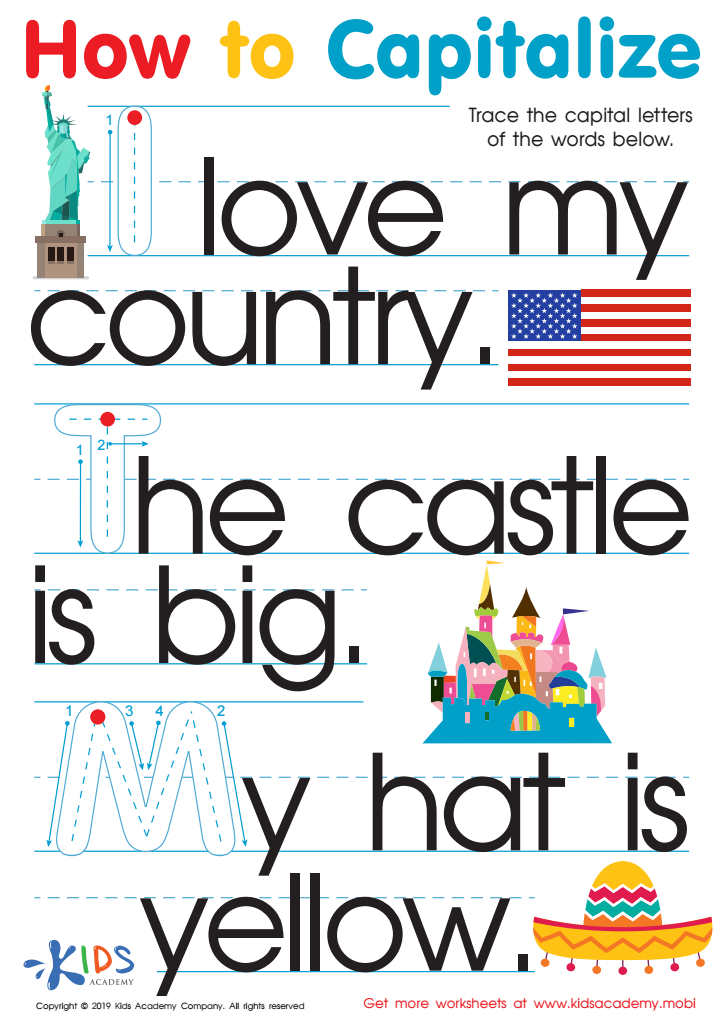
How to Capitalize Worksheet
Capitalizing letters is important in English. This worksheet will help your child learn how to write them. Words such as "the" and "I" will be covered, with visuals such as the Statue of Liberty, the American Flag, a castle, and a sombrero. The "How to Capitalize" PDF is a great way to sharpen your child's writing and aid their success!
How to Capitalize Worksheet
Worksheet
Join Kids Academy for Free
Who is primarily going to use this learning content?








Parents and teachers should care about capitalization rules for children aged 3-4 because early learning lays the foundation for literacy. At this young age, children are beginning to grasp the concepts of written language, and capitalization plays a pivotal role in helping them understand how text is structured. When kids learn that certain words, like names and the beginning of sentences, are capitalized, they begin to differentiate between common and proper nouns, fostering a sense of grammar and organization in writing.
Teaching these rules in a playful and engaging manner can ignite an interest in reading and writing, making language arts more enjoyable. Moreover, exposure to capitalization prepares children for future learning as they increasingly encounter written language in books, signs, and educational materials.
Additionally, a grasp of basic capitalization assists in developing strong communication skills. Young learners who understand these conventions will feel more confident when expressing themselves in writing. By providing consistency in the way we present language—whether through storytime, games, or everyday interactions—parents and teachers can enhance children's language abilities, setting them on a path toward becoming proficient readers and writers. Capitalization may seem minor, but its impact on literacy development is significant.








