
Fine motor skills improvement Worksheets for Ages 3-4
5 filtered results
Difficulty Level
Grade
Age
-
From - To
Subject
Activity
Standards
Welcome to our Fine Motor Skills Improvement Worksheets for Ages 3-4! Designed to engage young learners, these printable worksheets help develop essential fine motor skills through fun and interactive activities. Your child will enhance their hand-eye coordination, dexterity, and control as they complete tasks like tracing, cutting, and coloring. Our worksheets cater to various skill levels, ensuring that every child can progress at their own pace. Ideal for homeschooling or supplementary activities, these resources will encourage creativity and focus while making learning enjoyable. Start nurturing your child's fine motor skills today and lay the foundation for their future learning success!
Favorites
With answer key
Interactive
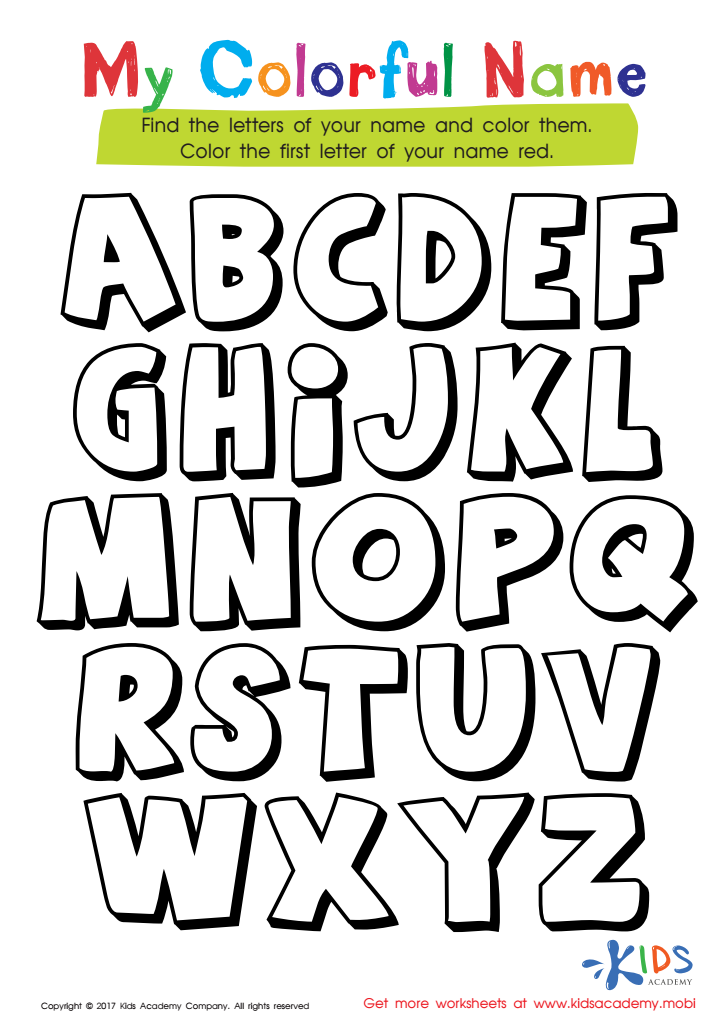
My Colorful Name Worksheet
Writing their names is a milestone for children. With this worksheet, they recall the letters in their name and color the letters one at a time. Spelling and alphabet order are reinforced as they find each letter. Use this fun printable to help kids learn to write their names!
Download (PDF)
 Assign to My Students
Assign to My Students
My Colorful Name Worksheet
Worksheet
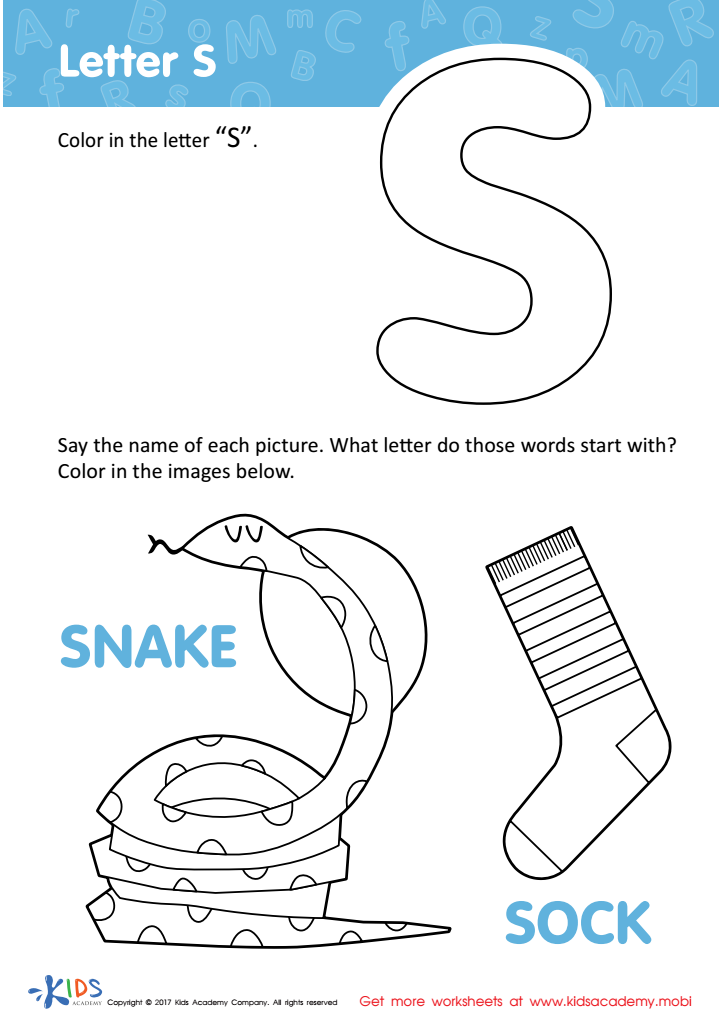
Letter S Coloring Sheet
Help your child practice recognizing the letter "S" and the sound it makes with this fun coloring page. It features a slippery snake, smelly sock and more! Give them extra practice by coming up with more "S" sounds and words.
Download (PDF)
Assign to My Students
Assign to My Students
Letter S Coloring Sheet
Worksheet
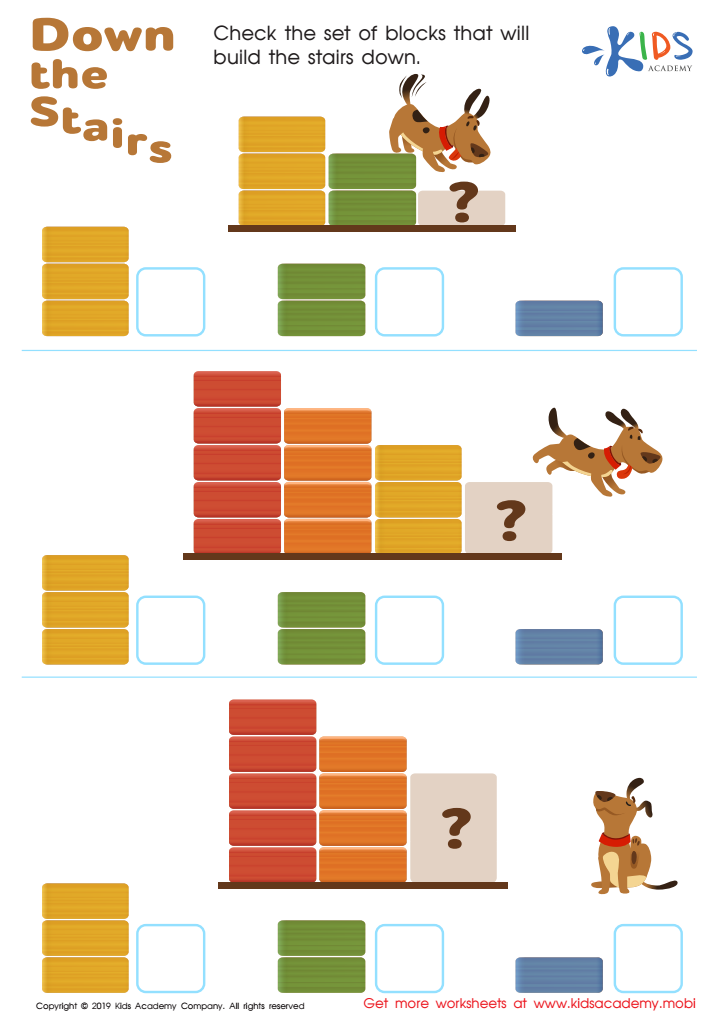
Down the Stairs Worksheet
Let your kids' imaginations run wild with this worksheet featuring a cute and friendly dog! Ask them to point out the dog in the printout, then help count the blocks in each set. Aim to stack them in descending order and build stairs for the pup to get down. Count each block and check the set - it's that easy!
Down the Stairs Worksheet
Worksheet

Count the Cherries and Trace the Number 10 Printable
Download this fun math and number worksheet to help your kid practice counting and tracing. Reinforce addition facts and handwriting skills while counting sweet cherries. Check out Kids Academy for more free printable worksheets by topic.
Count the Cherries and Trace the Number 10 Printable
Worksheet
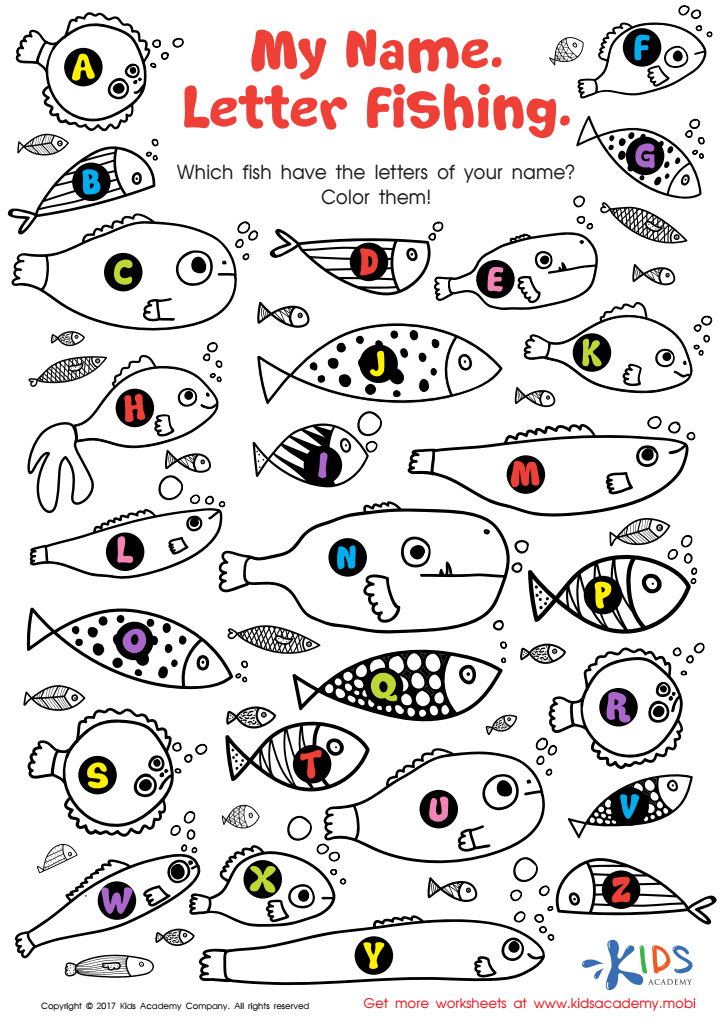
My Name: Letter Fishing Worksheet
Dive into the deep sea and search for fish with a letter on them. Can you find all the letters from your name? Color your favorite fish with crayons and be creative! On the other side, use the letters you found to write your name. Have fun coloring and finding the letters of your name! (80 words)
Download (PDF)
Assign to My Students
Assign to My Students
My Name: Letter Fishing Worksheet
Worksheet
Join Kids Academy for Free
Who is primarily going to use this learning content?




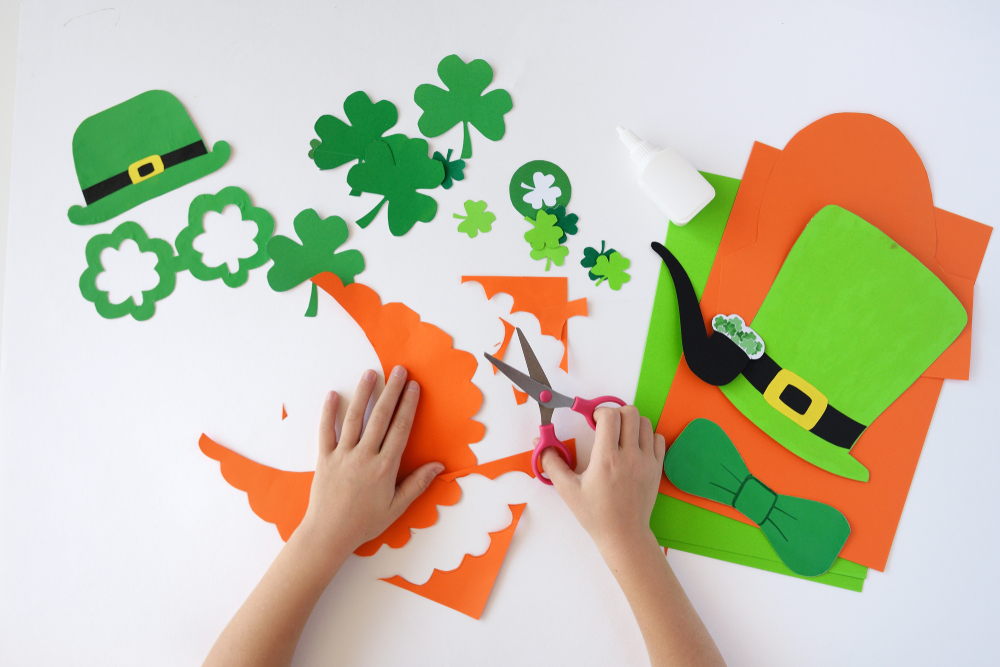


Fine motor skills are essential for the overall development of children aged 3-4, as they lay the groundwork for future academic and everyday tasks. These skills involve the coordination of small muscles in the hands and fingers, enabling activities like drawing, writing, using scissors, and buttoning clothing. By nurturing fine motor skills in early childhood, parents and teachers help foster independence and confidence in children.
Improving fine motor skills enhances cognitive abilities by promoting hand-eye coordination, spatial awareness, and problem-solving skills. Engaging in activities such as crafting, playing with building blocks, or simple manipulative toys can stimulate creativity while also strengthening these muscles.
Furthermore, fine motor development is closely connected to academic performance. As children prepare for school, well-developed fine motor skills enable them to engage in writing, cutting, and other classroom activities more effectively. Early interventions and practice can prevent potential struggles in kindergarten and beyond.
Ultimately, prioritizing the development of fine motor skills promotes a child’s physical, emotional, and social growth, equipping them with critical life skills that extend beyond the classroom. Thus, it is crucial for parents and teachers to incorporate activities that encourage fine motor activities into a child’s daily routine.








