
Letter-sound correlation Worksheets for Ages 3-4
7 filtered results
Difficulty Level
Grade
Age
-
From - To
Subject
Activity
Standards
Discover an engaging way to help your child master letter-sound correlations with our specially designed worksheets for ages 3-4. These interactive resources aim to enhance early literacy skills through fun activities that promote sound recognition and letter identification. Each worksheet incorporates colorful illustrations and phonetic practice, making learning enjoyable and effective. Ideal for preschoolers and kindergarten readiness, our letter-sound correlation worksheets support developmental milestones while fostering a love for reading. Easy to print and use at home or in educational settings, these tools empower parents and educators to cultivate foundational language skills in young learners. Start your child's literacy journey today!
Favorites
With answer key
Interactive
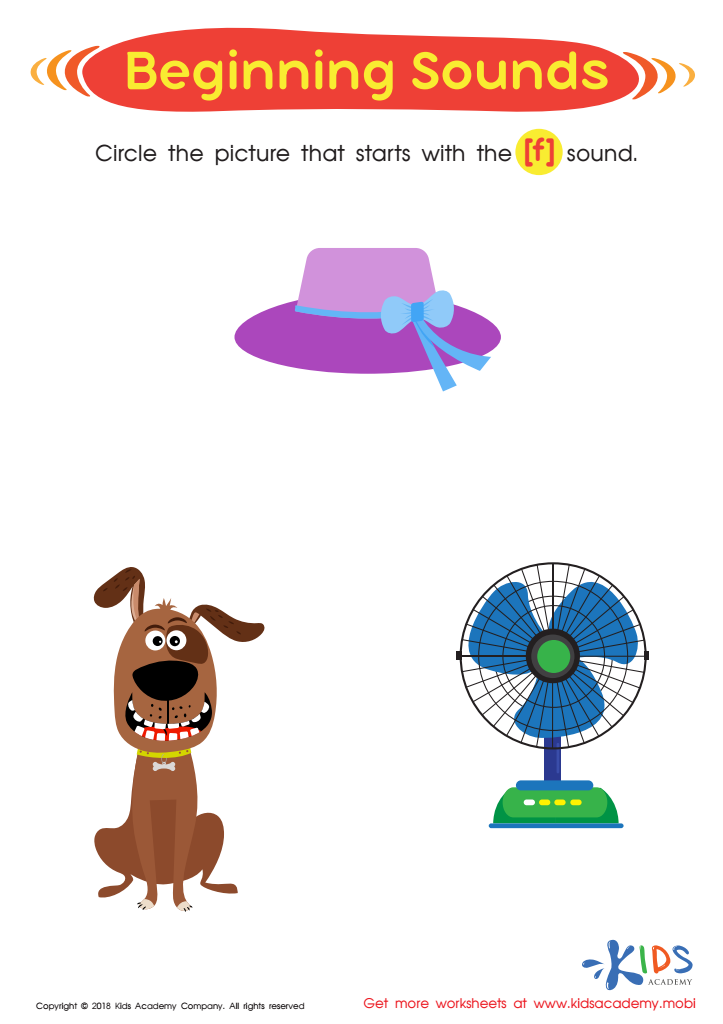
Beginning Sounds Assessment Printable
Test your child's knowledge of the alphabet. Ask them to recite the whole alphabet and the words for each letter. For example: A for apple, B for boy. Identify objects on this worksheet, then ask your child which one starts with the letter "f" and have them circle it.
 Assign to My Students
Beginning Sounds Assessment Printable
Worksheet
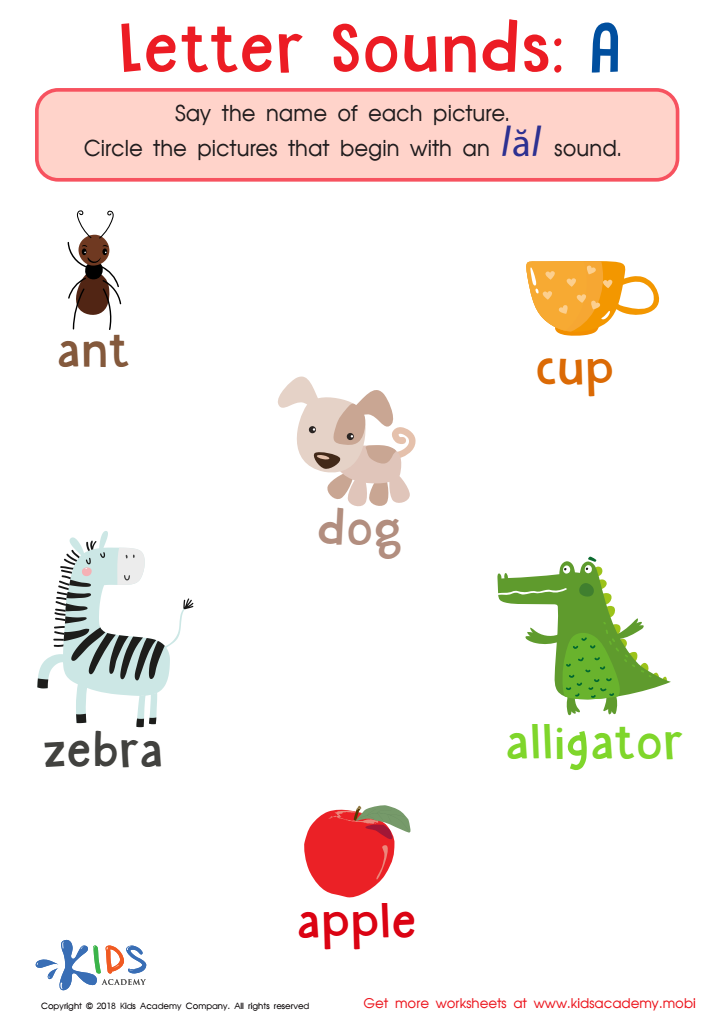
Letter A Sounds Worksheet
Encourage your new reader to practice the «ă» sound with this fun, free PDF worksheet. With the help of picture clues, they'll say the name of each word and trace circles around the items that start with «ă». This worksheet is an effective way to boost beginning sound skills while having fun!
Letter A Sounds Worksheet
Worksheet
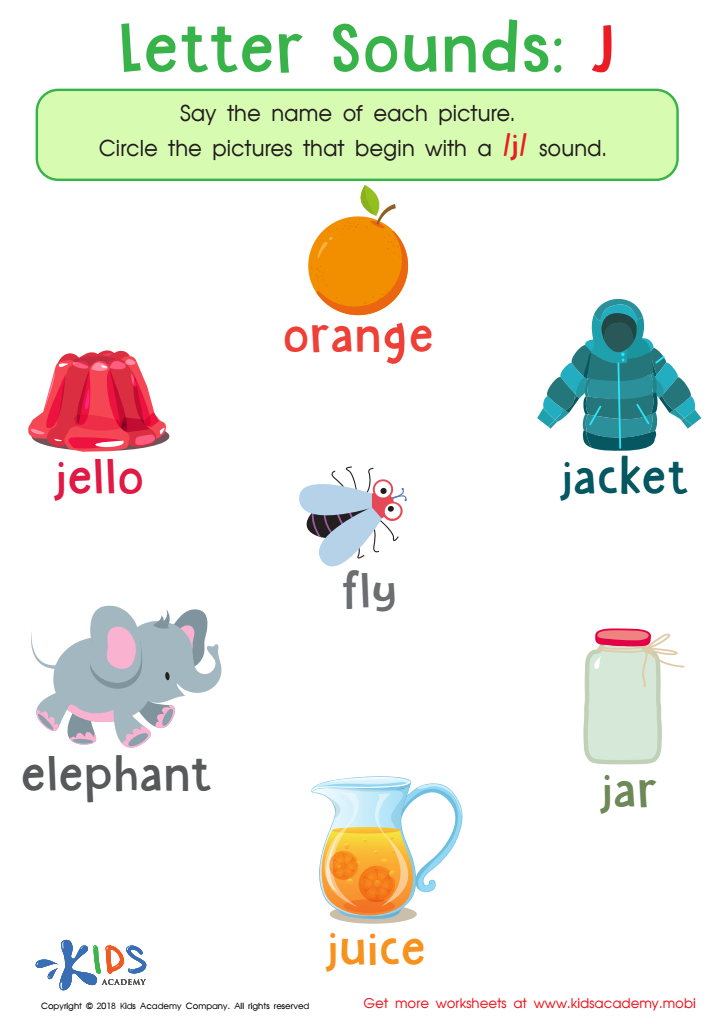
Letter Sounds: J Printable Worksheet
Preschoolers can learn to identify letter sounds by focusing on beginning sounds. This cute and colorful worksheet reviews the hard “j” sound. Kids can point it out by naming the words and circling only those starting with the “j” sound. Read the text out loud and listen closely!
Letter Sounds: J Printable Worksheet
Worksheet
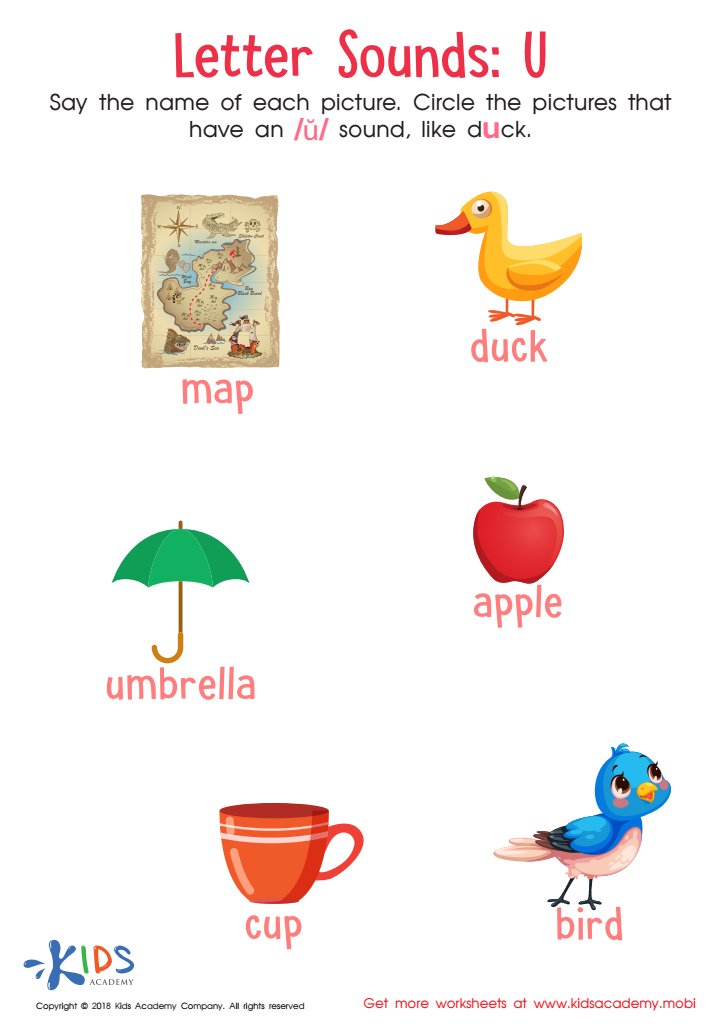
Letter U Sounds Worksheet
The letter U is special with multiple pronunciations. This worksheet helps kids identify the short «u» in words like duck and cup. Read the words aloud and listen closely to the sounds. Circle only words with the correct sound to complete the sheet. Kids will quickly know that words like "map" don't contain a U.
Letter U Sounds Worksheet
Worksheet
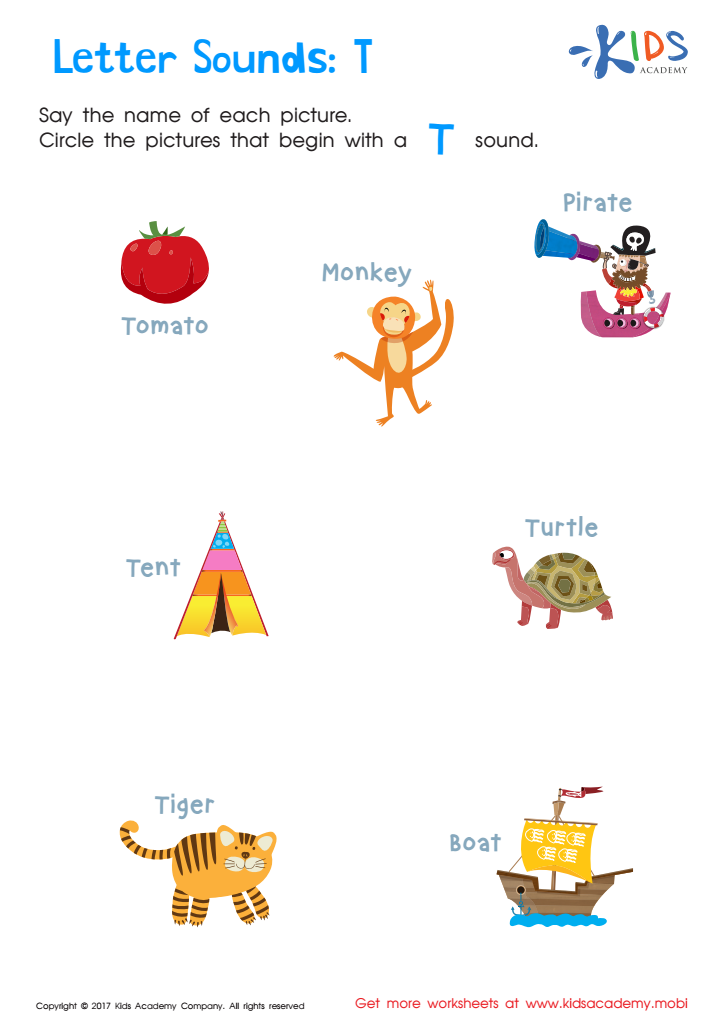
Letter T Sounds Worksheet
This worksheet is a fun way to help kids learn the t sound. It has familiar pictures and an easy-to-follow format, so kids can quickly recognize and learn the letter t.
Letter T Sounds Worksheet
Worksheet
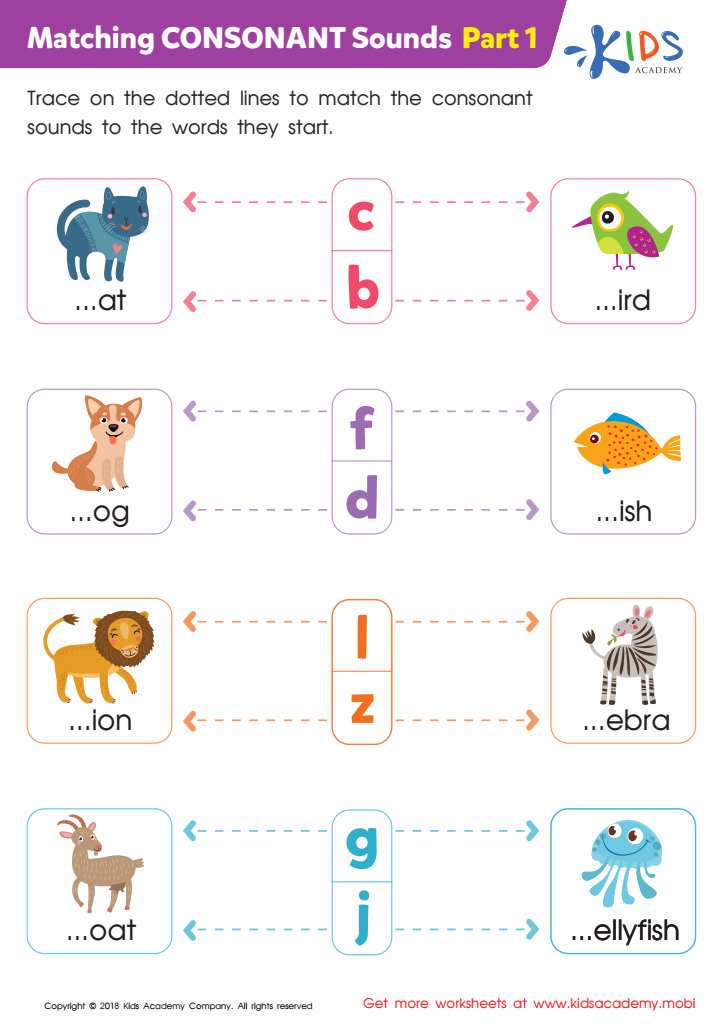
Matching Consonant Sounds: Part 1 Worksheet
Decide which letter matches each word and picture in this fun phonics worksheet. Slide your finger over each word, trying out each letter to check for matches. Once each pair is solved, trace the dotted lines with pencil to complete the printable. Who knew learning could be so enjoyable?
Matching Consonant Sounds: Part 1 Worksheet
Worksheet
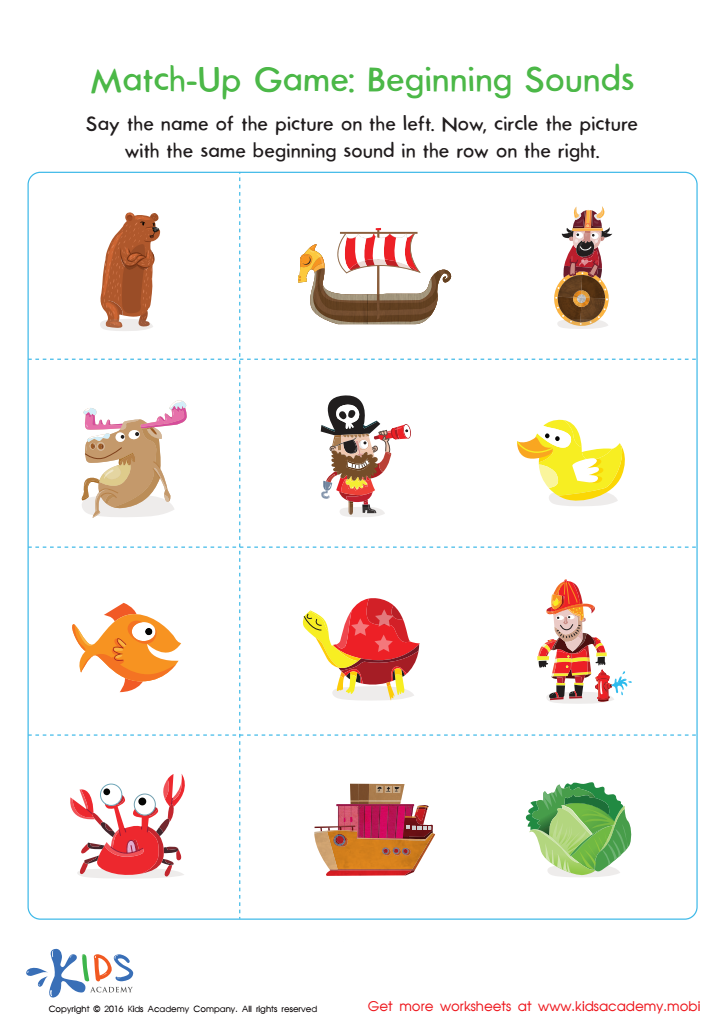
Match–Up Game: Beginning Sounds Worksheet
Start today with this beginning sounds match-up printable!
Teach your child to solve problems mentally with this beginning sounds match-up printable. They'll learn to categorize pictures based on phonics rules, developing mental stamina and focus. It's an important step for recognizing sounds and letters in print, building a foundation for reading and spelling. Start today and take your child's skills to the next level!
Match–Up Game: Beginning Sounds Worksheet
Worksheet
Join Kids Academy for Free
Who is primarily going to use this learning content?







Letter-sound correlation, or phonemic awareness, is crucial for early literacy development in children aged 3-4. Understanding how letters correspond to their sounds lays the foundation for reading and writing skills. At this age, children are developing their language abilities, and exposure to letter-sound relationships can significantly enhance their phonological awareness.
Parents and teachers should care about this because strong letter-sound knowledge supports the transition into formal reading instruction. When children can recognize and articulate the sounds that correspond to specific letters, they are better equipped to decode words, which is essential for reading fluency and comprehension.
Moreover, emphasizing letter-sound correlation fosters self-confidence as children learn to face the challenges of reading. Engaging activities, like singing alphabet songs, playing rhyming games, or reading aloud, can make learning enjoyable and effective.
In addition, early exposure to these concepts helps to bridge the gap for children who may enter preschool or kindergarten with varying levels of readiness. Investing time in developing letter-sound recognition not only benefits children's academic growth but also provides them with critical communication skills vital for their social interactions and overall development.








