Noun identification Worksheets for Ages 3-4
5 filtered results
-
From - To
Discover our engaging Noun Identification Worksheets designed specifically for ages 3-4! These fun and interactive resources are perfect for introducing young learners to the world of nouns. Each worksheet features vibrant colors and captivating illustrations that encourage children to identify and name common nouns in their surroundings. With simple exercises, these worksheets help develop language skills, enhance vocabulary, and foster cognitive growth. Parents and educators will find these easy-to-use tools ideal for reinforcing learning at home or in the classroom. Start your child’s language journey today with our delightful noun identification worksheets that make learning both enjoyable and effective!
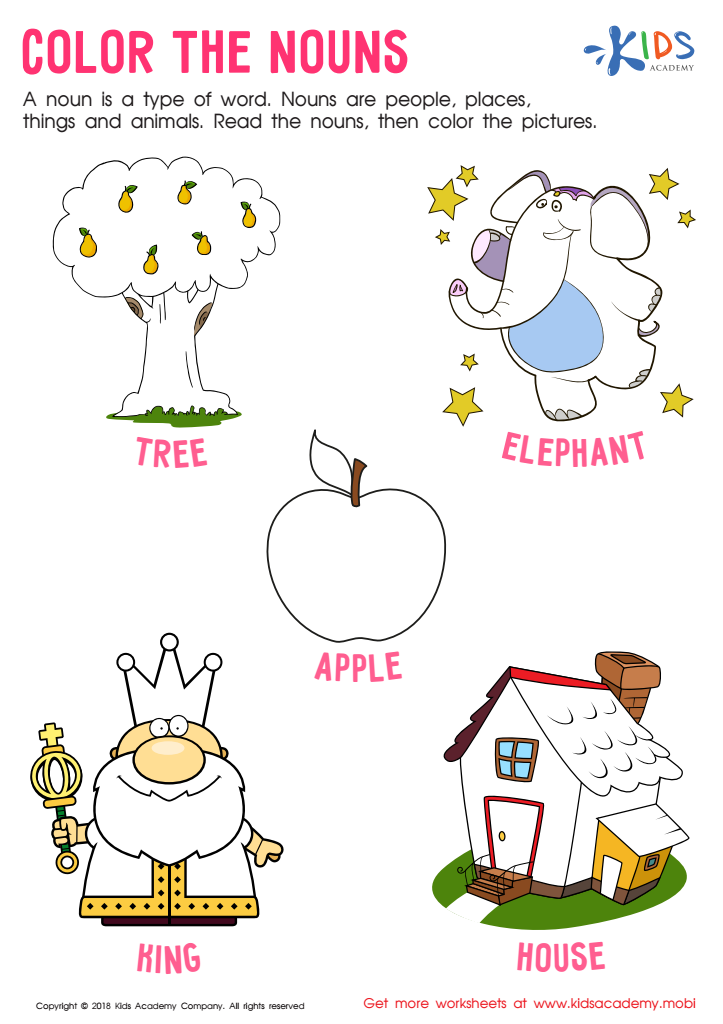
Color the Nouns Worksheet
 Assign to My Students
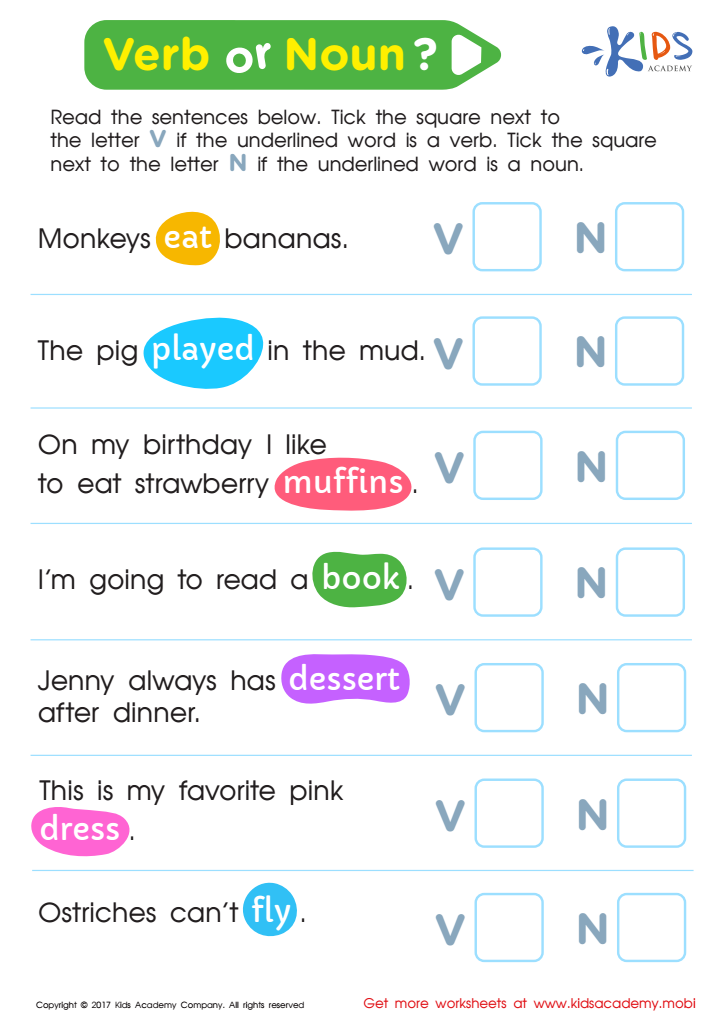
Verb or Noun Worksheet
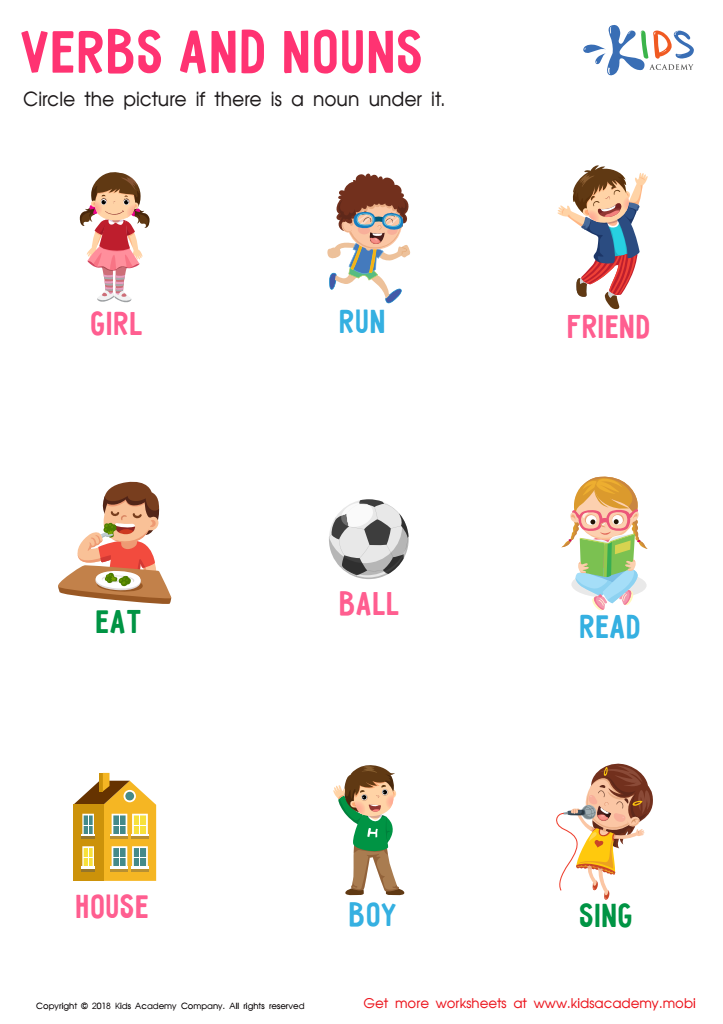
Verbs and Nouns Worksheet
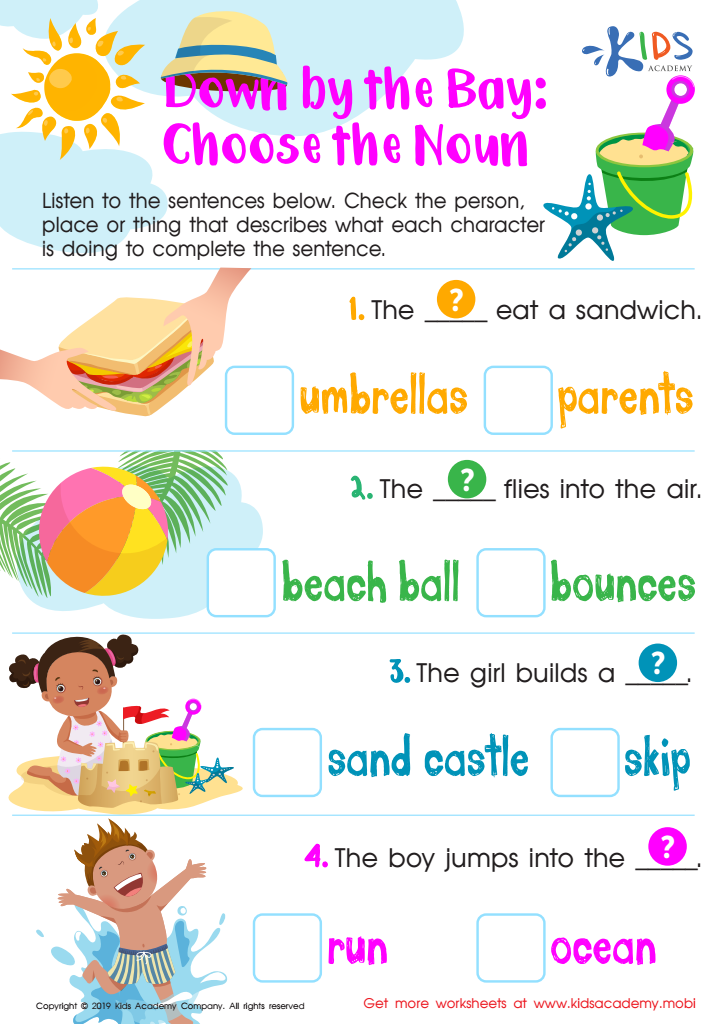
Down by the Bay: Choose the Noun Worksheet
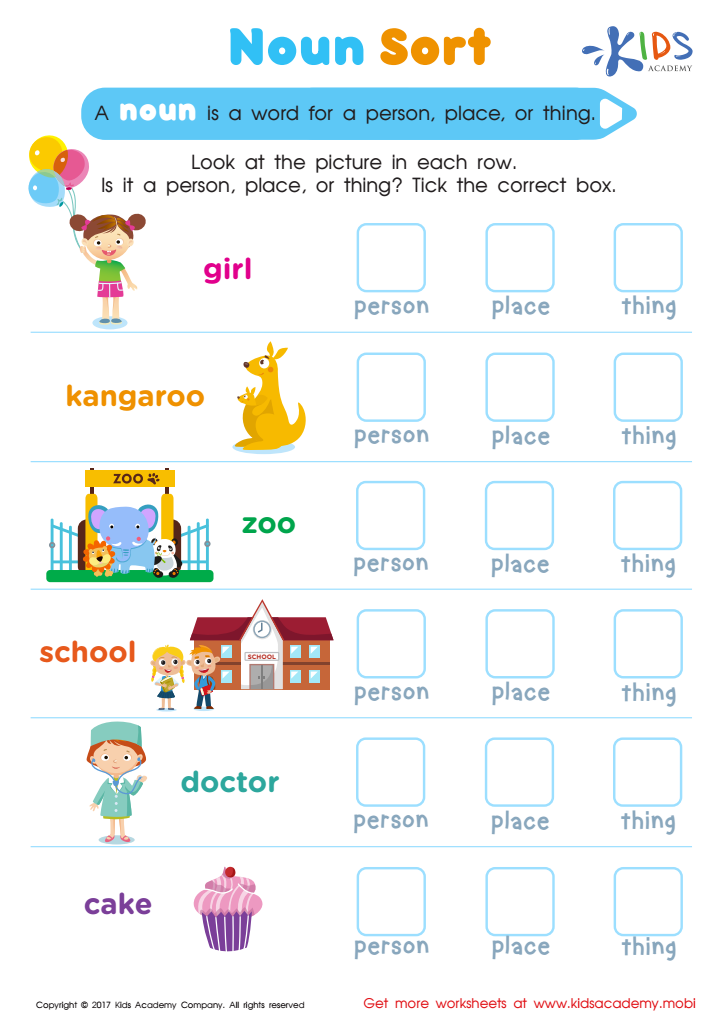
Noun Sort Printable







Noun identification is a foundational skill in early literacy that significantly impacts language development for children aged 3-4. At this stage, children are in a critical period for language acquisition, and understanding nouns—the names of people, places, things, and ideas—builds the cornerstone for vocabulary expansion and communication. Encouraging noun identification aids in developing categorization skills, as children learn to group various nouns into specific categories (e.g., animals, toys, foods).
Moreover, recognizing nouns helps enhance listening and comprehension skills, allowing young learners to follow directions and engage in conversations more effectively. As children master noun identification, they become more adept in expressing their thoughts and feelings, boosting their confidence and social interaction. This early literacy skill not only fosters academic success in later years but also supports critical thinking and creativity as children start to tell stories and share experiences.
For parents and teachers, integrating noun identification into daily activities and play fosters an engaging and interactive learning environment, establishing a strong linguistic foundation. Ultimately, caring about noun identification is essential for nurturing holistic development in children, ensuring they communicate effectively and thrive in their educational journey.








