Plant identification Worksheets for Ages 3-4
3 filtered results
-
From - To
Discover our engaging Plant Identification Worksheets tailored for children ages 3-4! These thoughtfully designed printables help young learners recognize various plants while enhancing their observational and fine motor skills. Each worksheet features vibrant images, simple instructions, and fun activities perfect for fostering a love for nature. By exploring diverse plant types through interactive tasks, toddlers and preschoolers can broaden their botanical knowledge and curiosity. These educational resources make learning about plants enjoyable and accessible, ensuring a strong foundation for future science exploration. Ideal for home or classroom use, our worksheets encourage hands-on learning and discovery. Download now for endless botanical adventures!
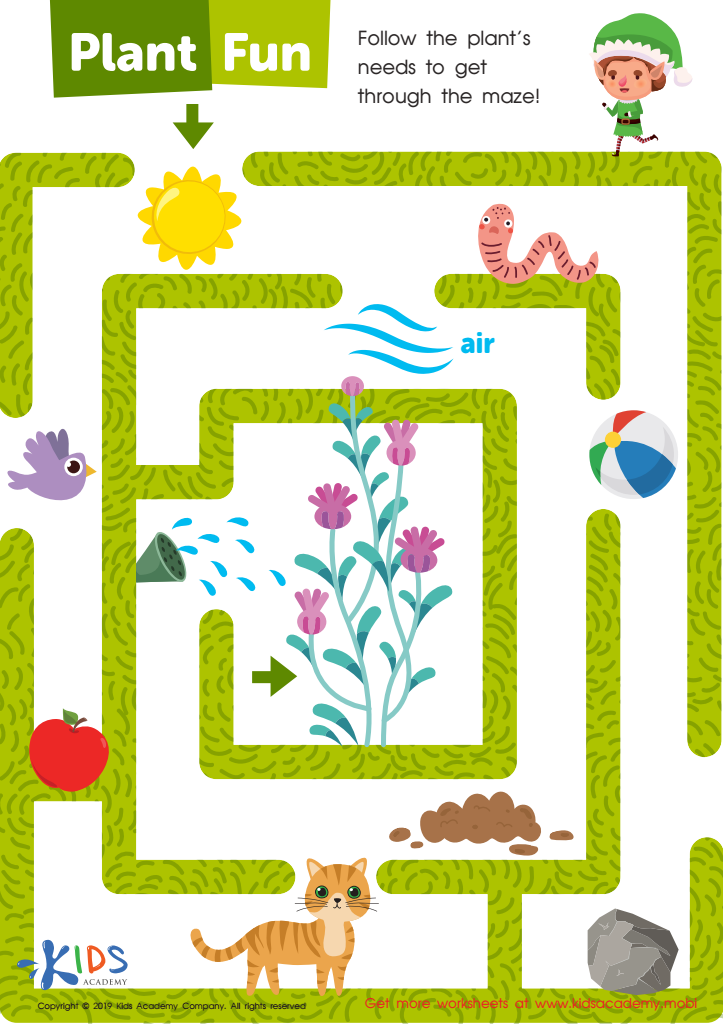
Plant Fun Worksheet
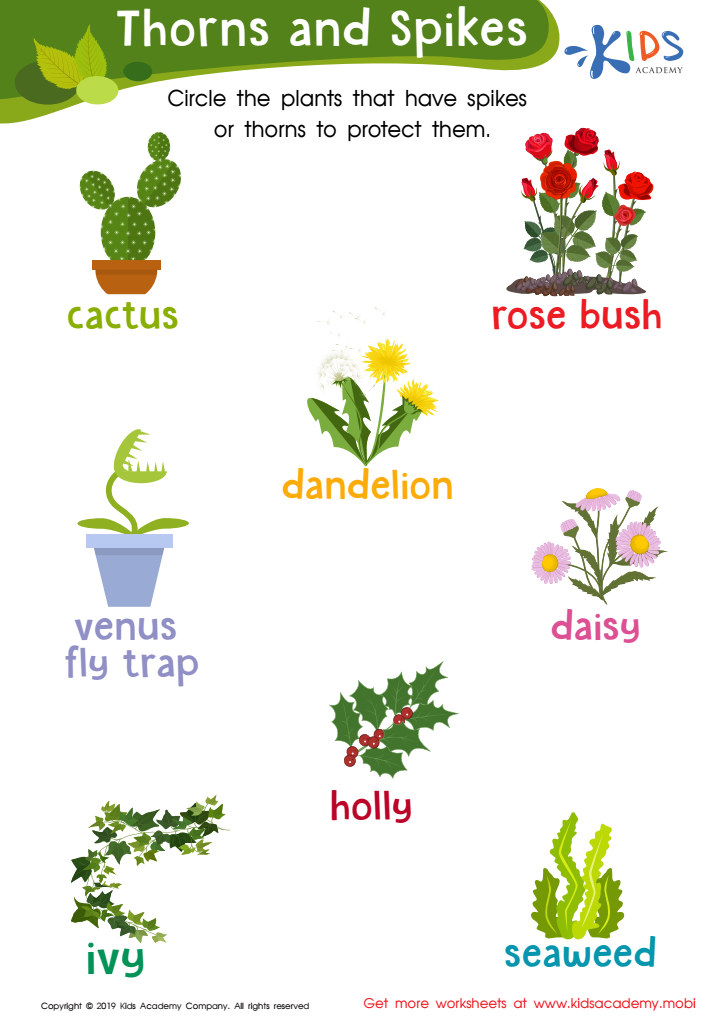
Thorns and Spikes Worksheet
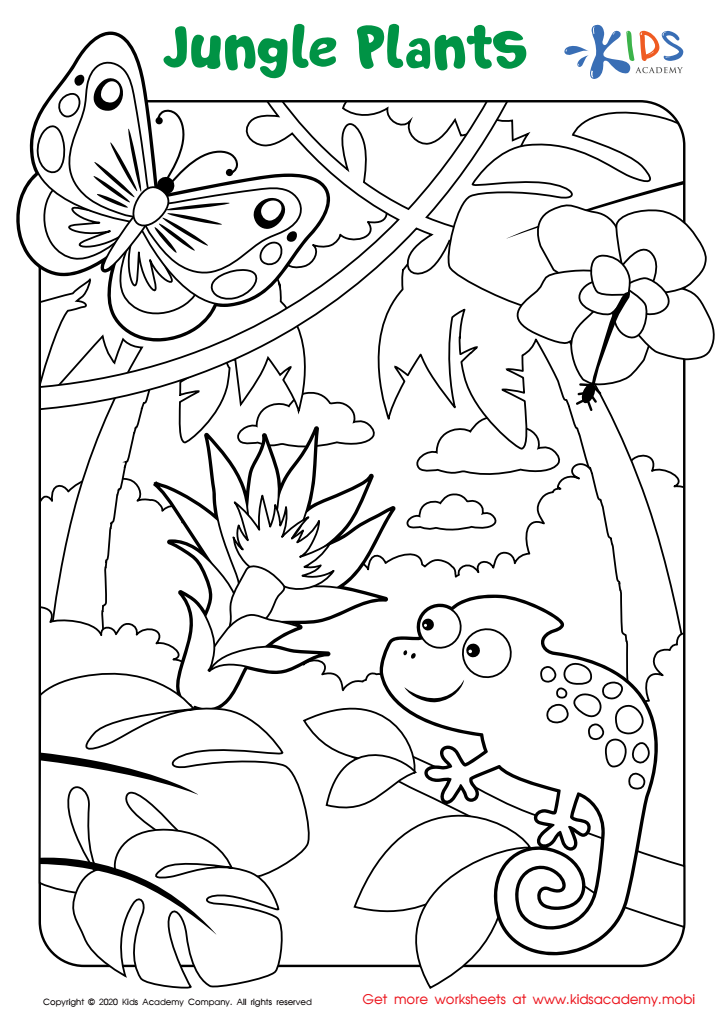
Jungle Plants Worksheet
 Assign to My Students








Parents and teachers should prioritize plant identification for children ages 3-4 for several compelling reasons. Firstly, it fosters a sense of curiosity and appreciation for the natural world. Young children are innately curious and introducing them to various types of plants can spark a lifelong interest in nature and science. Secondly, learning to identify plants can enhance their cognitive development. It encourages observation skills, critical thinking, and categorization abilities, as they learn to notice details and differentiate between species.
Moreover, plant identification can support sensory development. Handling plants, noting their textures, colors, and smells, provides rich, multi-sensory experiences, essential for the growth and development of young minds. Additionally, it lays a foundation for environmental stewardship. Teaching children about plants and their roles in ecosystems can instill a sense of responsibility and care for the environment from an early age.
Furthermore, this activity can be grounding and therapeutic, providing both children and caretakers a break from digital screens and busy routines, promoting mindfulness and well-being. Lastly, it offers a wonderful opportunity for bonding, whether it's through a shared project between parents and children, or a collaborative classroom activity led by teachers.
Overall, integrating plant identification into early childhood education nurtures intellectual, emotional, and social development, preparing well-rounded, environmentally-aware individuals.








