
Reading proficiency Worksheets for Ages 3-4
5 filtered results
Difficulty Level
Grade
Age
-
From - To
Subject
Activity
Standards
Boost your child's reading skills with our engaging "Reading Proficiency Worksheets for Ages 3-4." Designed to foster early literacy, these worksheets feature fun activities that help children recognize letters, comprehend simple words, and develop essential phonemic awareness. Our age-appropriate resources include colorful illustrations and interactive exercises that capture young learners' attention while promoting a love for reading. Each worksheet aims to enhance vocabulary, improve letter recognition, and build confidence in young readers. Ideal for parents and educators, these printable worksheets make learning to read enjoyable and effective. Start your child’s reading journey today with our thoughtfully crafted activities!
Favorites
With answer key
Interactive
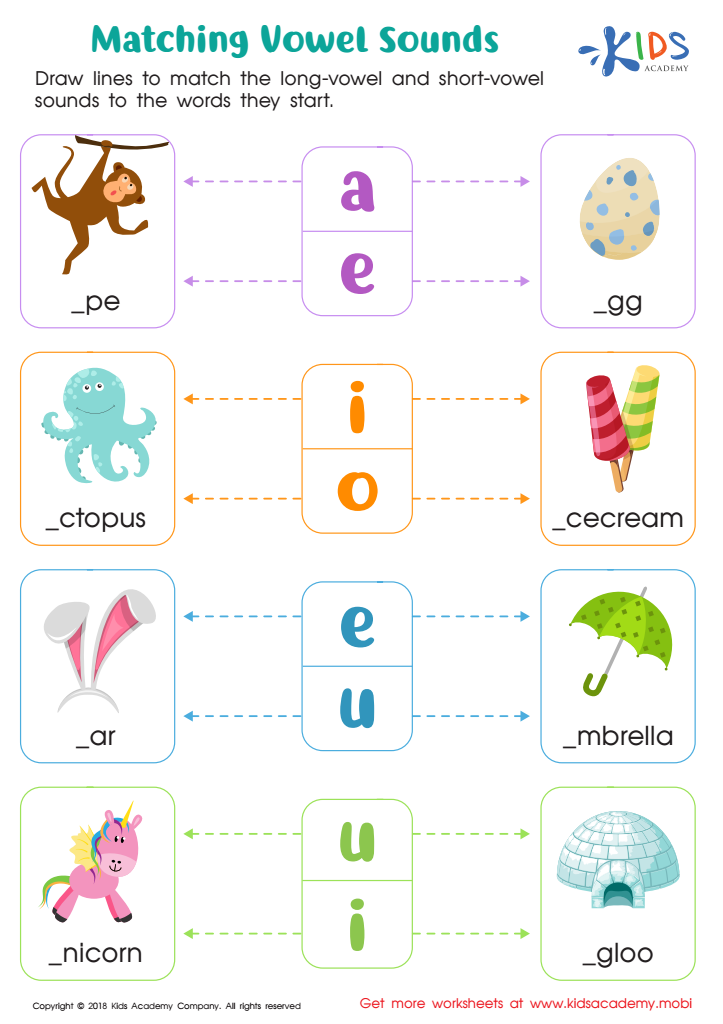
Matching Vowel Sounds Worksheet
Teach your child phonics with a fun worksheet! Ask your child to name a vowel sound and listen if it's long or short. Differentiating between long and short vowel sounds can be tricky, but this matching worksheet makes it easy for kids to understand. Have fun and master phonics - the worksheet will help them understand the difference between long and short vowel sounds!
Matching Vowel Sounds Worksheet
Worksheet

Long and Short U Worksheet
Revised: Spice up your lesson on long and short vowels with this fun printout! Kids read the words "tube" and "tub," then reinforce the sound by coloring in the words and pictures. It's a great way to make phonics class enjoyable!
Download (PDF)
 Assign to My Students
Assign to My Students
Long and Short U Worksheet
Worksheet
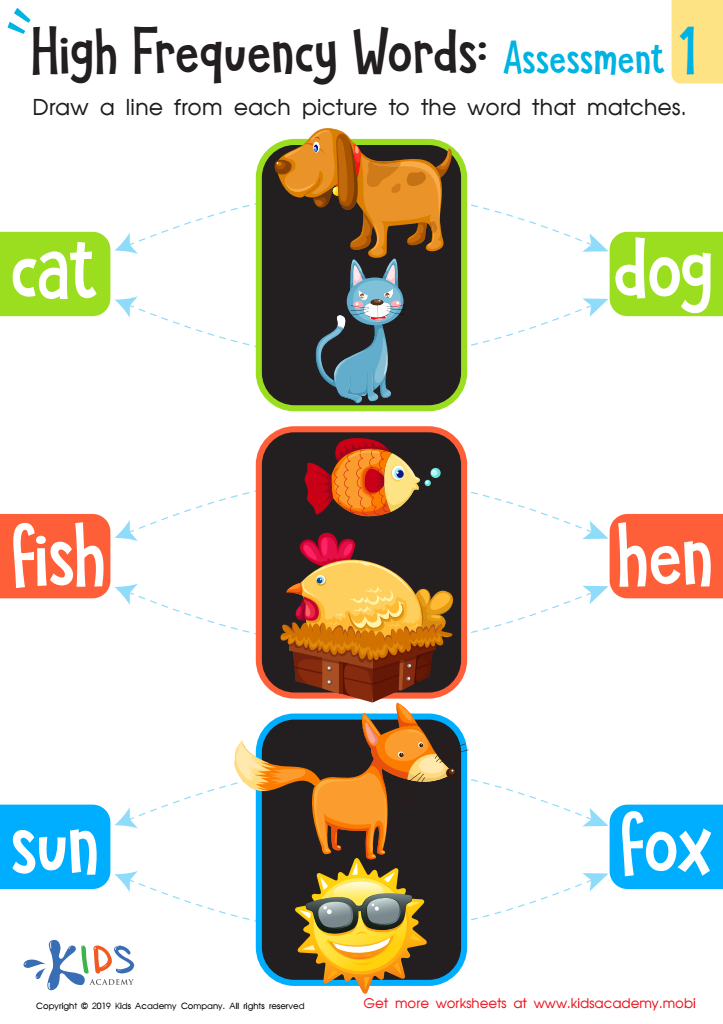
High Frequency Words: Assessment 1 Worksheet
Emergent readers need to know high-frequency words accurately and quickly to develop fluency. Connecting these words to colorful, fun pictures helps reading prosody. This assessment worksheet uses traceable lines to help learners match pictures to words.
High Frequency Words: Assessment 1 Worksheet
Worksheet
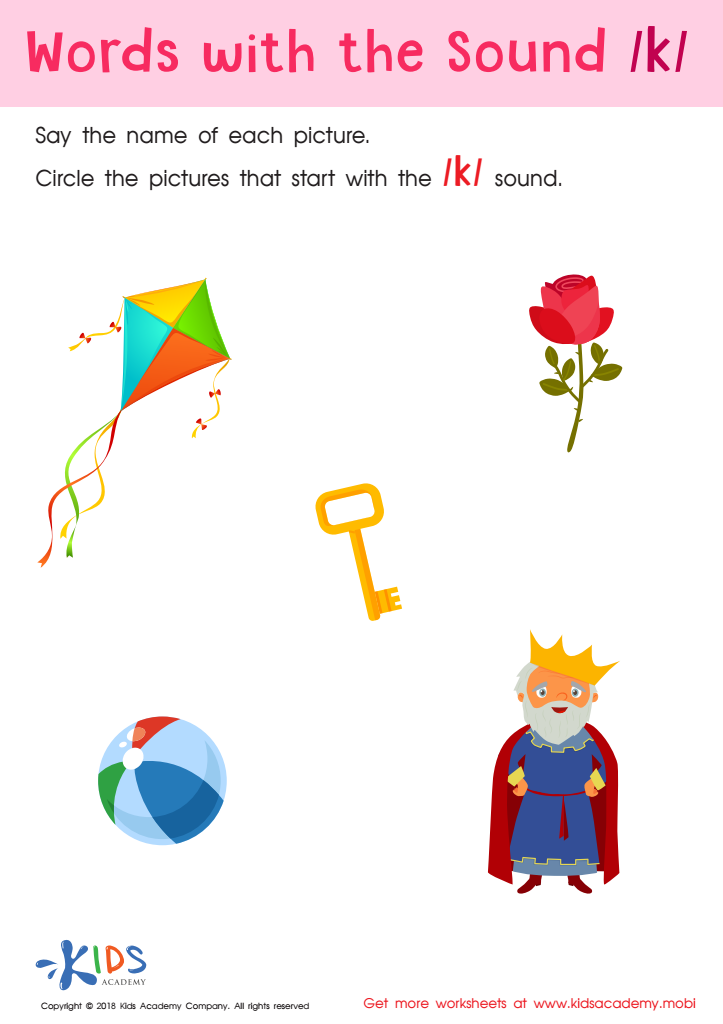
Words with sound k Reading Worksheet
Help your preschooler master the hard "k" sound with this fun worksheet from Kids Academy! Ask your child to say each picture aloud and circle only the pictures that start with "k". This early reading exercise will boost phonics skills and is sure to be loved by your little learner!
Words with sound k Reading Worksheet
Worksheet
Join Kids Academy for Free
Who is primarily going to use this learning content?




.jpg)
.jpg)


Reading proficiency in children ages 3-4 is crucial for several reasons, making it a key focus for both parents and teachers. At this developmental stage, children are rapidly acquiring language skills and cognitive abilities that lay the foundation for future learning. Exposure to reading at an early age fosters critical language proficiency, boosts vocabulary development, and enhances comprehension skills.
Research shows that children who engage with books early on are more likely to succeed academically later in life. Early reading experiences help cultivate curiosity and a love for learning, encouraging children to explore and engage with ideas. Moreover, these interactions promote social and emotional development, as children learn to express themselves and connect with others through storytelling.
In addition, early reading proficiency is linked to improved literacy skills in later years. It can reduce the risk of reading difficulties, helping to close achievement gaps later in school. Parents and teachers, therefore, play a pivotal role in introducing books, interactive reading sessions, and creating a language-rich environment that nurtures this essential skill. By prioritizing reading proficiency at this early age, caregivers can set children on a path to lifelong learning and success.








