Reading skills development Worksheets for Ages 3-4
5 filtered results
-
From - To
Unleash your child's potential with our expertly crafted "Reading Skills Development Worksheets" designed for ages 3-4. Our engaging and interactive printables introduce essential reading fundamentals, from letter recognition to phonics and vocabulary building. These worksheets combine fun and learning, helping young minds explore the magical world of words. Tailored to boost early literacy skills, our resources support parents and educators in guiding children through their first reading adventures. Cultivate a love for learning and set the foundation for academic success with our top-notch, age-appropriate reading activities. Dive into a world of early education with Kids Academy!
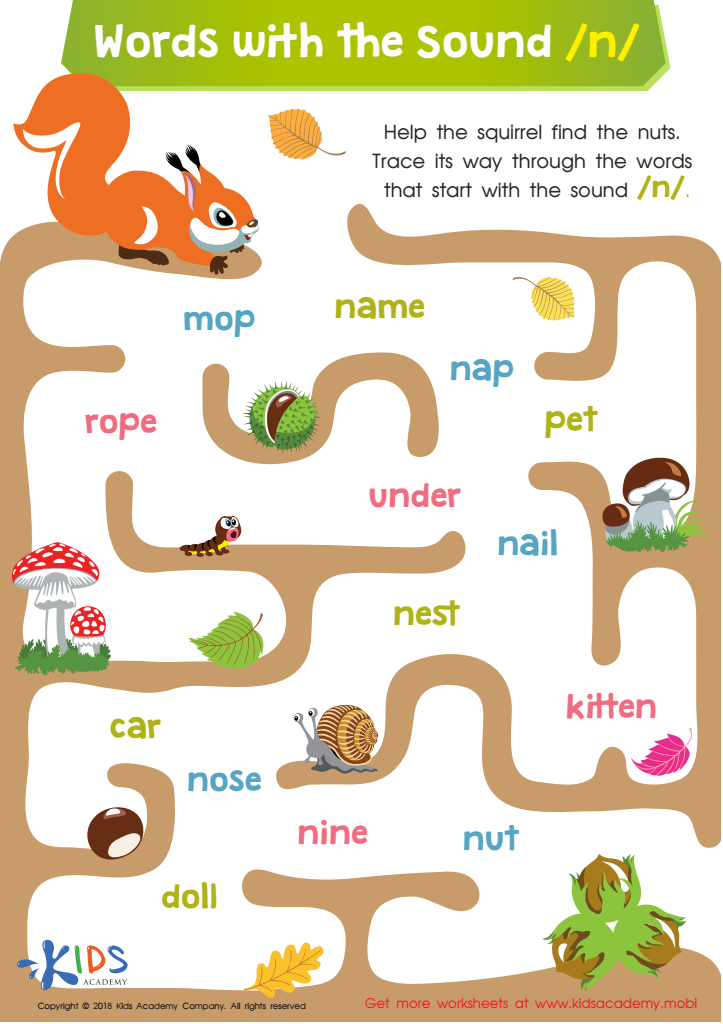
Words with Sound N Reading Worksheet
 Assign to My Students
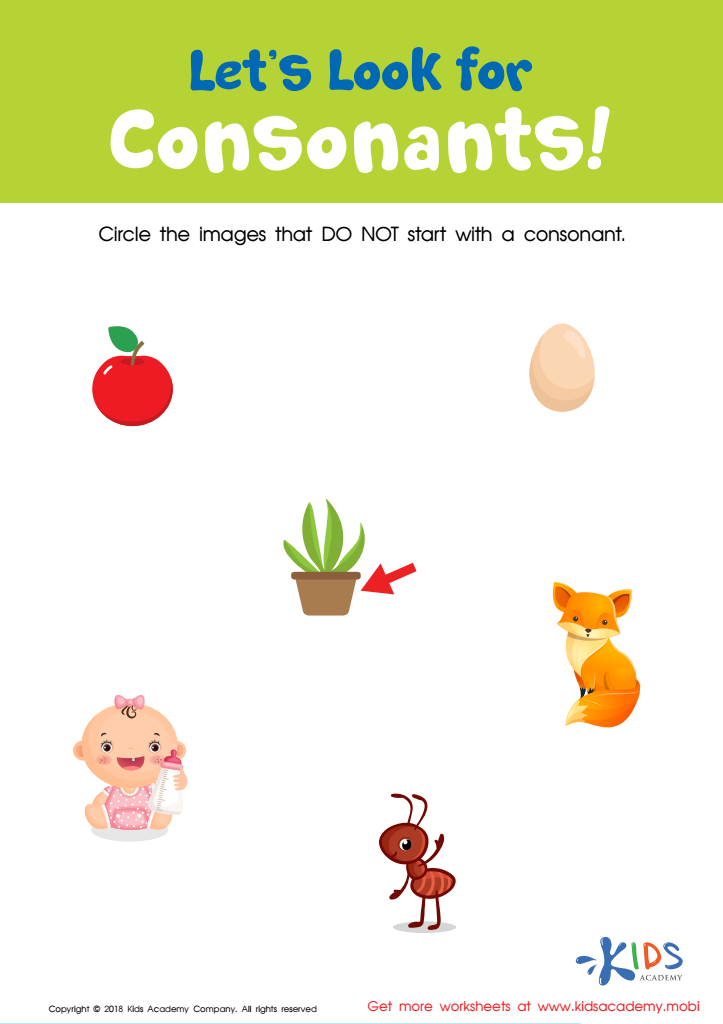
Let's Look for Consonants Worksheet
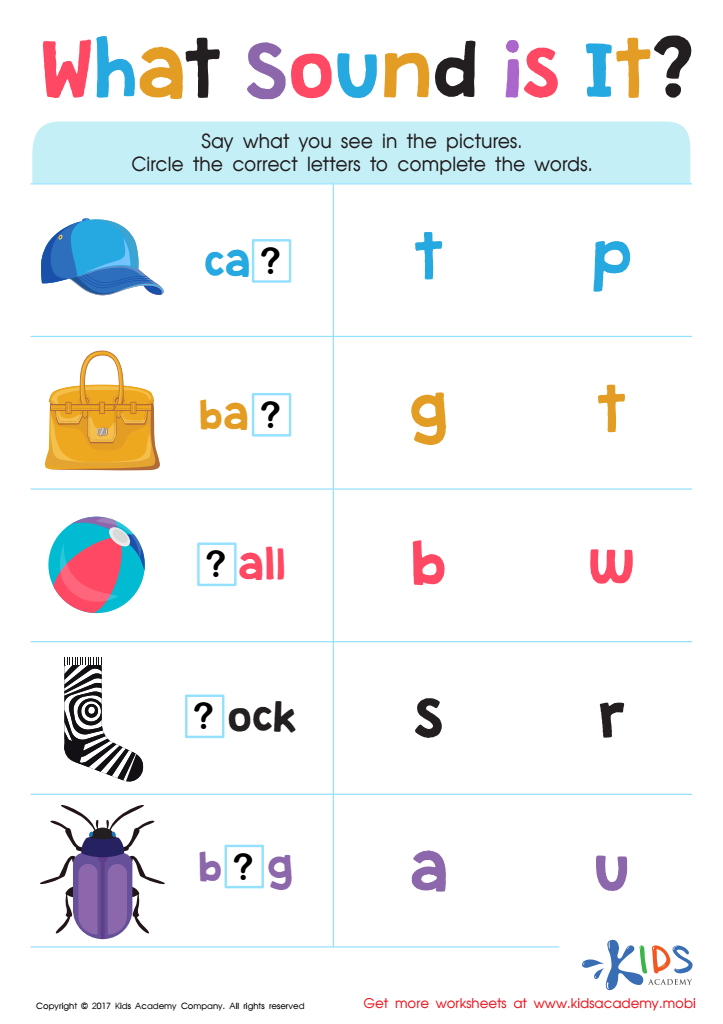
What Sound Is it? Worksheet
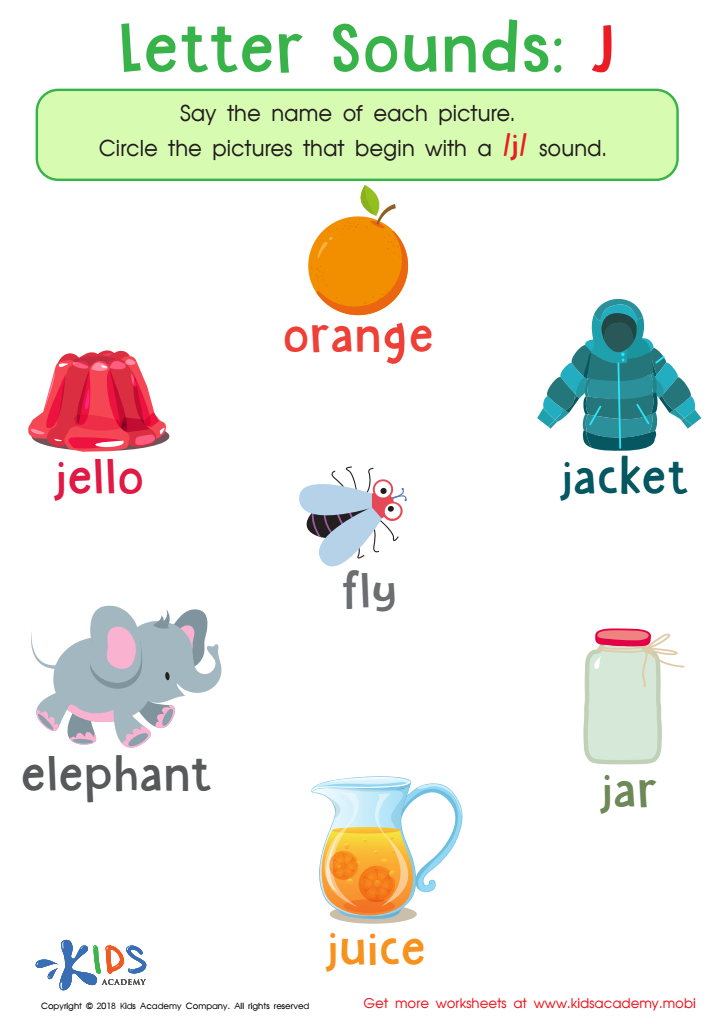
Letter Sounds: J Printable Worksheet
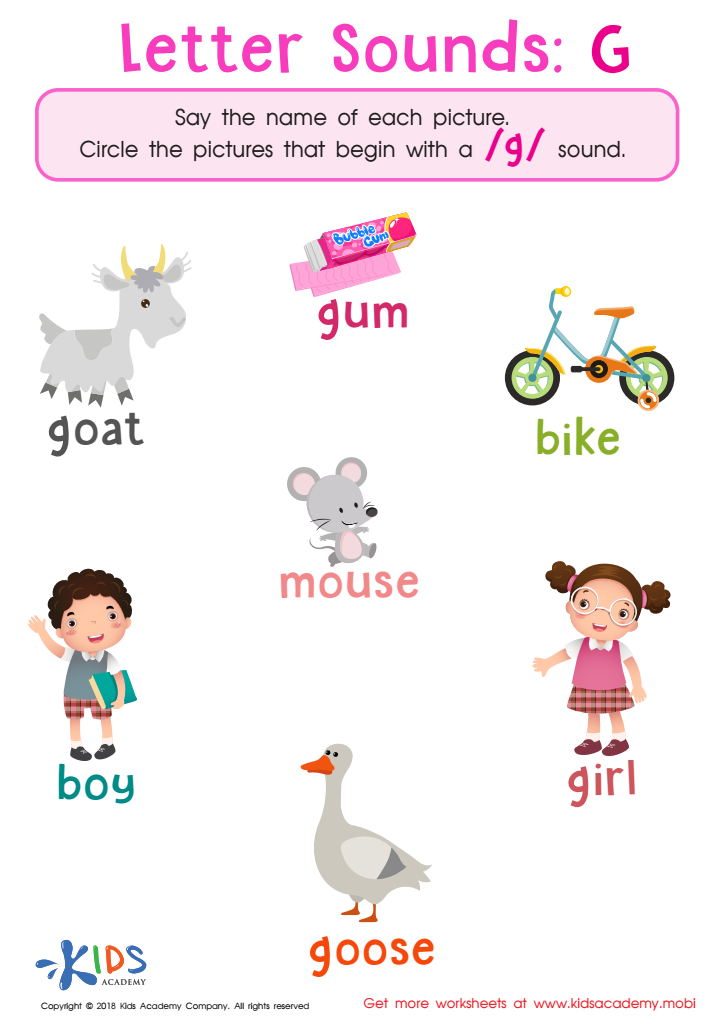
Letter G Sounds Worksheet






At ages 3-4, children's brains are rapidly developing, making this period crucial for cultivating foundational reading skills. Early exposure to reading significantly benefits cognitive and language development. For parents and teachers, nurturing reading behaviors at this stage lays a foundation for academic success and lifelong learning.
Firstly, early reading helps children build essential skills like vocabulary, comprehension, and critical thinking. By listening to stories and looking at pictures, youngsters start understanding language structures and word meanings, advancing their verbal and narrative abilities. Moreover, storytelling stimulates imagination, allowing children to explore different worlds, cultures, and perspectives.
Consistent reading practices enhance attention span and concentration, vital skills for overall learning. They also foster a strong emotional bond between children and caregivers. Shared reading times become treasured moments that promote a sense of security and attachment.
Developing reading skills early can also identify and mitigate potential learning difficulties before formal schooling begins. Early intervention makes it easier to tailor learning experiences to specific needs, thus preventing future academic struggles.
Ultimately, fostering reading habits in young children equips them with the tools needed for a successful education, ignites a passion for learning, and establishes a lifelong habit of seeking knowledge through books.








