Check out this FREE "Reading Skills" Trial Lesson for age 3-4!

High-frequency Words 2

Favorites
With answer key
Interactive
  • 3-4
  • Reading Skills
Letter or Word? Worksheet

Letter or Word? Worksheet

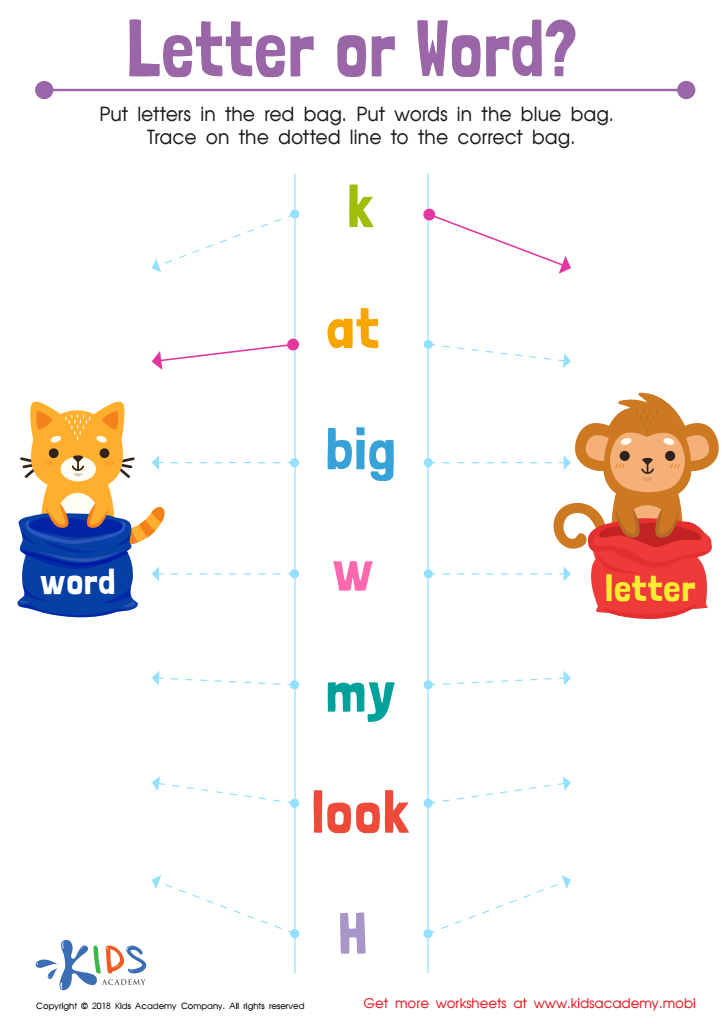
Help your kids differentiate between words and letters. If they can recite their alphabets and identify common words, this tracing sheet will be a breeze. Have them trace on the dotted lines to place the letters in the red bag with the kitten, and the words in the blue bag with the monkey.
Letter or Word? Worksheet
Worksheet
Front of the Book Worksheet

Front of the Book Worksheet

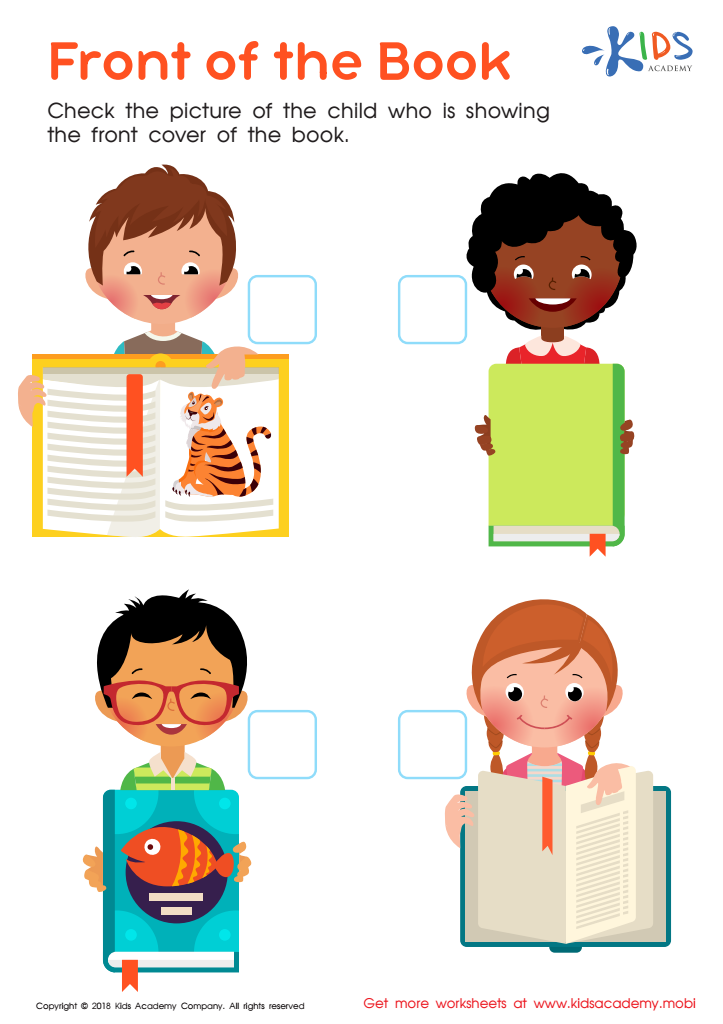
Help your child become a reader with this free worksheet! It's full of fun new friends and is designed to help kids understand concepts about the front of a book. They'll look at each picture and decide which friend is holding the book with the front cover, and check off the correct answer in the given boxes. Get your little one ready to be a reader!
Front of the Book Worksheet
Worksheet
Sight Words Worksheet: The

Sight Words: The Worksheet

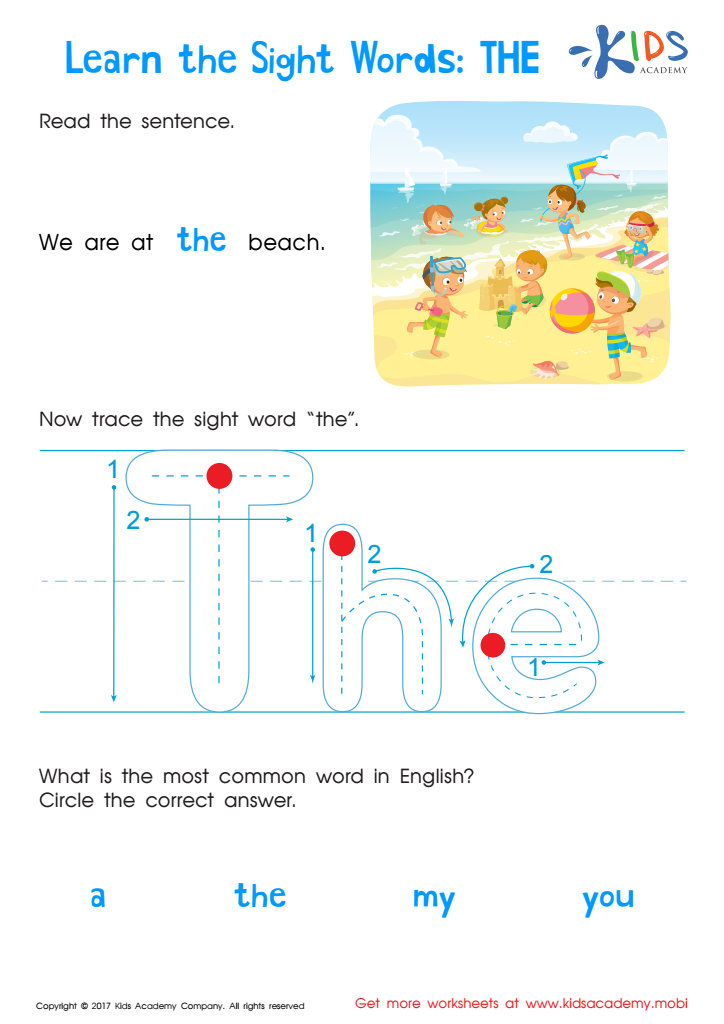
Get the worksheet and start now. The word "the" is an essential part of English. Teaching your child to read and write it is easy with this sight words worksheet. They'll practice reading the word, tracing it, and using it in sentences. It's the perfect way to take your child's language skills to the next level! Get the worksheet today.
Sight Words: The Worksheet
Worksheet
Pre reading worksheet guess my name

Pre Reading Worksheet Guess My Name

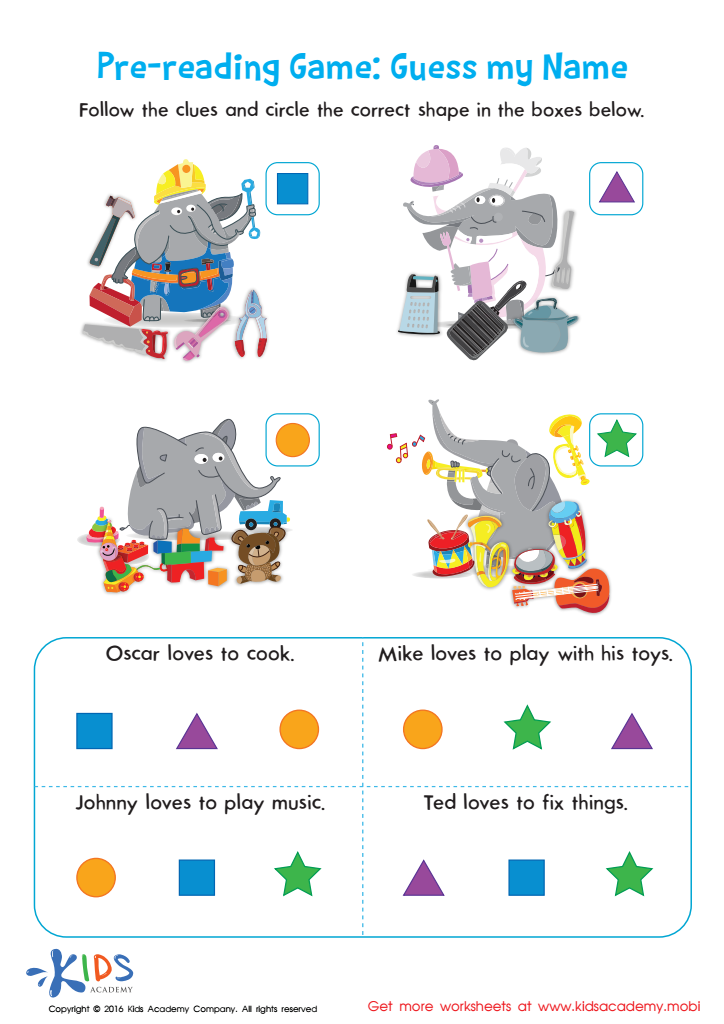
Guess My Name is a fun way to practice inference skills. Guess My Name is a fun pre-reading game to help your child practice drawing inferences from clues. With colorful illustrations, they'll use clues to match each elephant with its sentence and sharpen their inference skills.
Pre Reading Worksheet Guess My Name
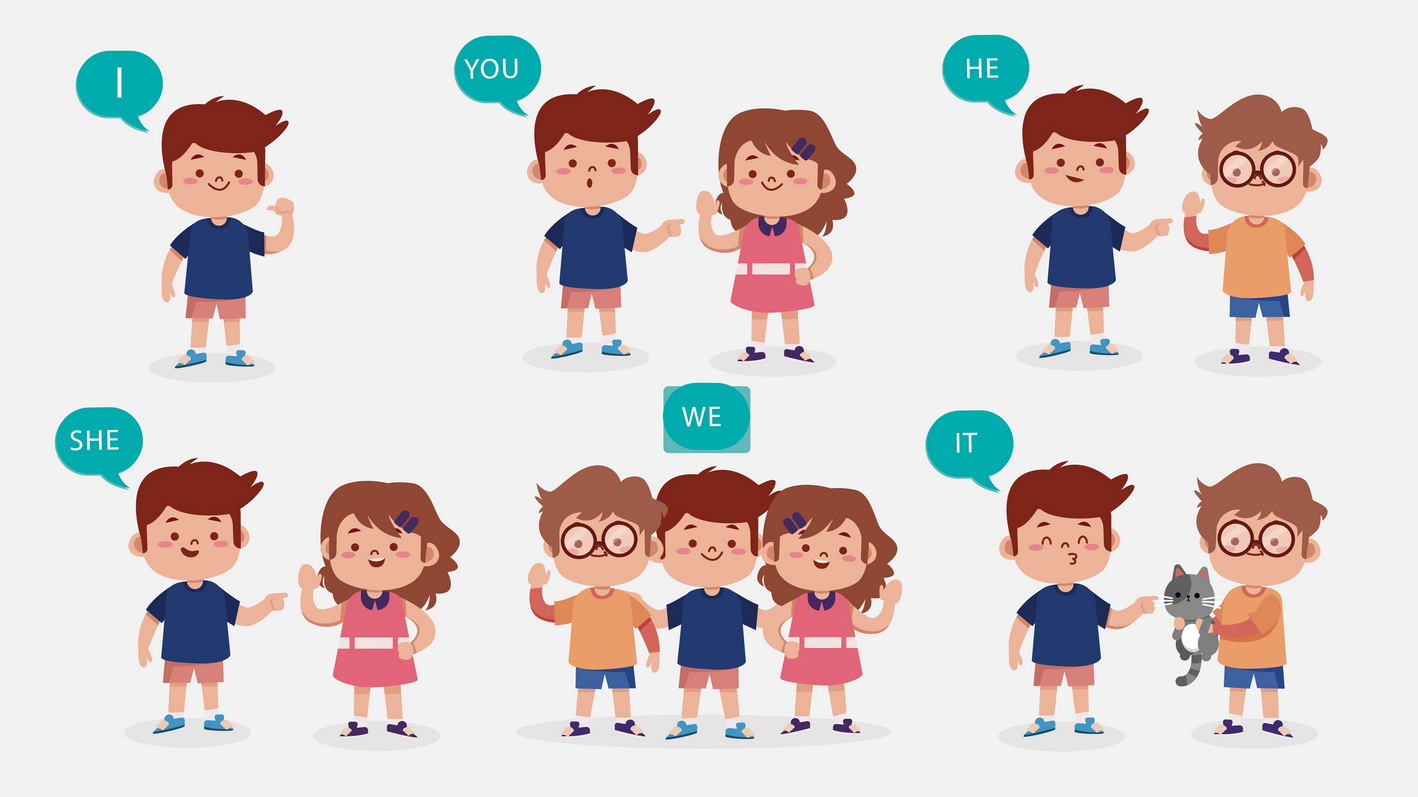
Worksheet


Parents and teachers play a crucial role in developing reading skills for children aged 3 to 4, as these foundational abilities serve as a springboard for lifelong learning. At this age, children's brains are rapidly developing, and exposure to reading can enhance vocabulary, comprehension, and critical thinking skills. Engaging with books fosters imagination and creativity, offering a window to diverse cultures and experiences.

Additionally, early reading helps form essential pre-literacy skills, such as phonemic awareness, which is understanding sounds in words, and print awareness, which involves recognizing how books work. These skills are integral to successful reading experiences later on. Beyond academics, shared reading time establishes a nurturing bond between children and caregivers, enhancing emotional security and promoting a love for learning.

Moreover, cultivating strong reading skills early on can address potential learning gaps before they widen, ensuring that children start school with confidence. By prioritizing reading activities, parents and teachers not only prepare children for future educational success but also instill a sense of curiosity and a lifelong passion for reading. In a world flooded with information, proficient reading skills are vital tools for navigating life. Ultimately, they open doors to opportunities and personal growth.