Syllable identification Worksheets for Ages 3-4
3 filtered results
-
From - To
Discover our engaging Syllable Identification Worksheets designed specifically for children aged 3-4! These colorful and interactive activities help young learners develop essential phonemic awareness skills by breaking down words into manageable parts. Our worksheets include fun visuals and simple exercises that make syllable recognition enjoyable. Perfect for use at home or in the classroom, these resources encourage language development and foster a love for reading. Help your child build a strong foundation in literacy with our carefully crafted worksheets, ensuring they grasp the basics of syllable identification while having a blast! Visit our page now to get started!
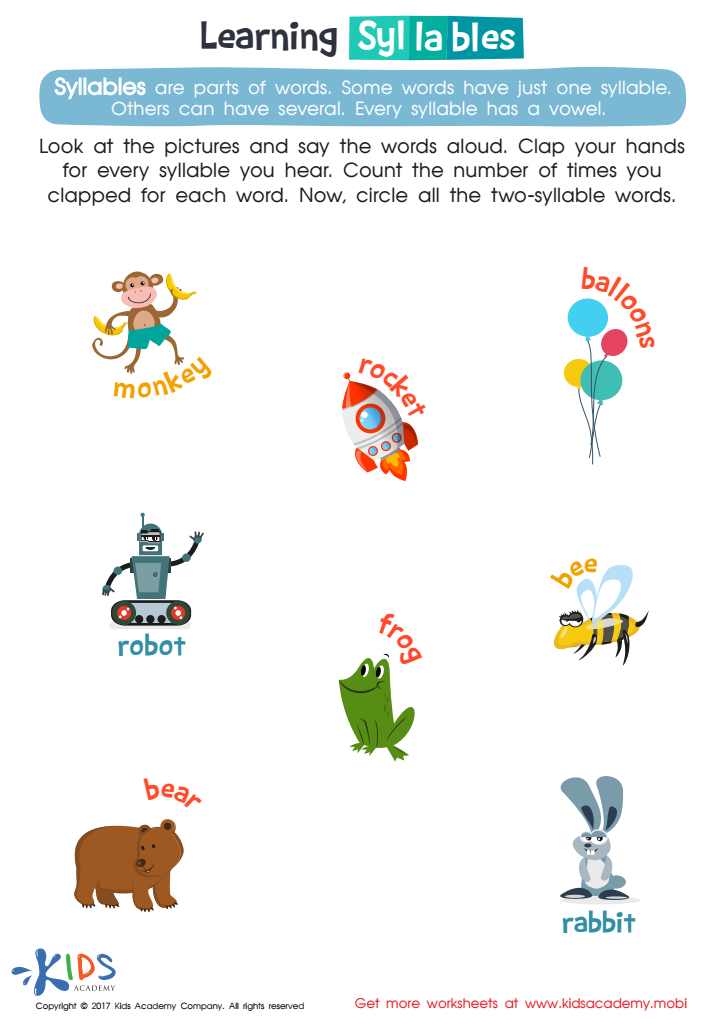
Learning Syllables Word Structure Worksheet
 Assign to My Students
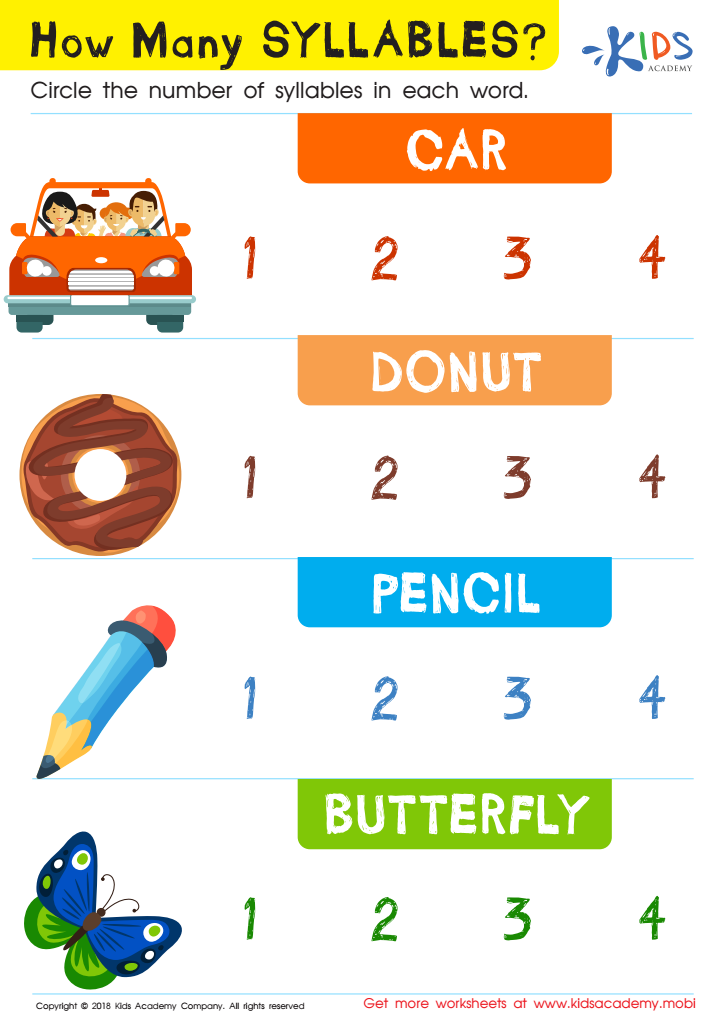
How Many Syllables? Worksheet
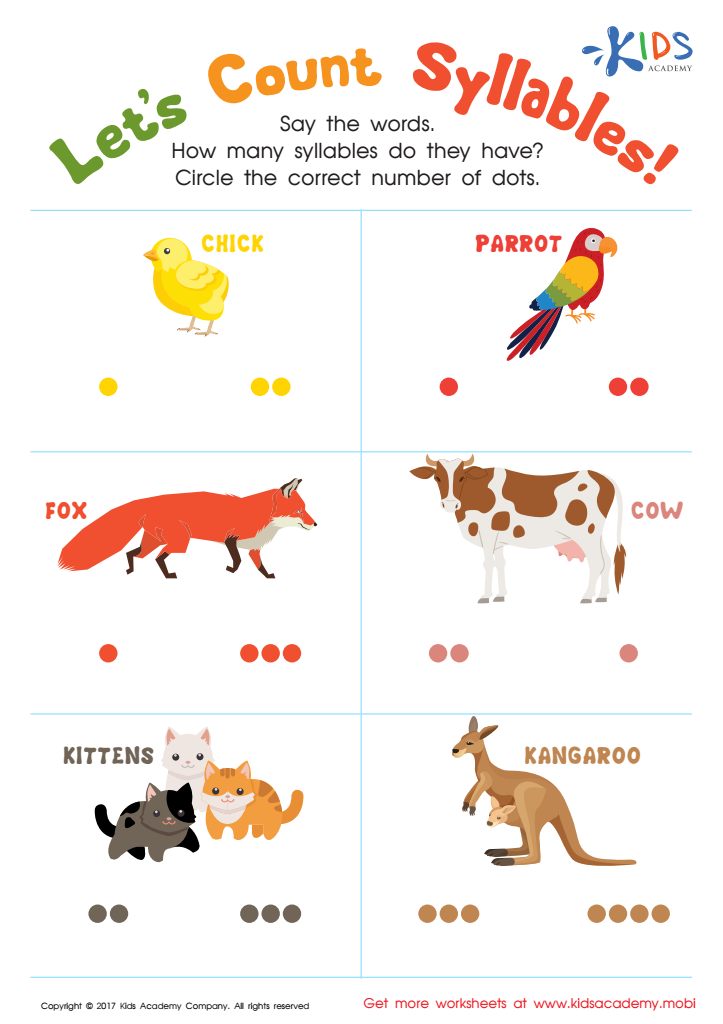
Lets Count Syllables Worksheet


.jpg)





Syllable identification is a critical early literacy skill, especially for children aged 3-4, that lays the foundation for reading and language development. During this development stage, young children are naturally curious about sounds and speech, making it an opportune time to introduce the concept of syllables. Recognizing syllables helps children understand the structure of words, enabling them to segment and blend sounds when they encounter new vocabulary.
For parents and teachers, focusing on syllable identification fosters phonemic awareness, a crucial precursor to reading success. By practicing syllable counting through clapping, tapping, or jumping, children not only engage in an enjoyable activity but also build essential auditory discrimination skills. These activities encourage active participation, aiding memory retention and language manipulation.
Additionally, understanding syllable structure supports spelling and writing as children learn to break down complex words into manageable parts. This early practice nurtures self-confidence in their language abilities, paving the way for a positive attitude toward reading and learning. Therefore, investing time and resources in syllable identification not only enhances communication skills but also serves as a vital building block for a child's academic journey. Encouraging these skills now can set them on a path to lifelong literacy and learning success.








