Understanding measurements Worksheets for Ages 3-4
7 filtered results
-
From - To
Introduce your little ones to the world of measurements with our engaging worksheets designed for ages 3-4. At Kids Academy, we offer fun and interactive activities that help preschoolers grasp fundamental measurement concepts, such as size, length, and volume. Through colorful visuals and hands-on exercises, our worksheets provide a head start in math skills, fostering curiosity and cognitive development. Perfect for both home and classroom settings, these resources are crafted to be age-appropriate, enhancing learning while keeping young minds entertained. Boost your child's confidence and understanding of measurements today with Kids Academy!
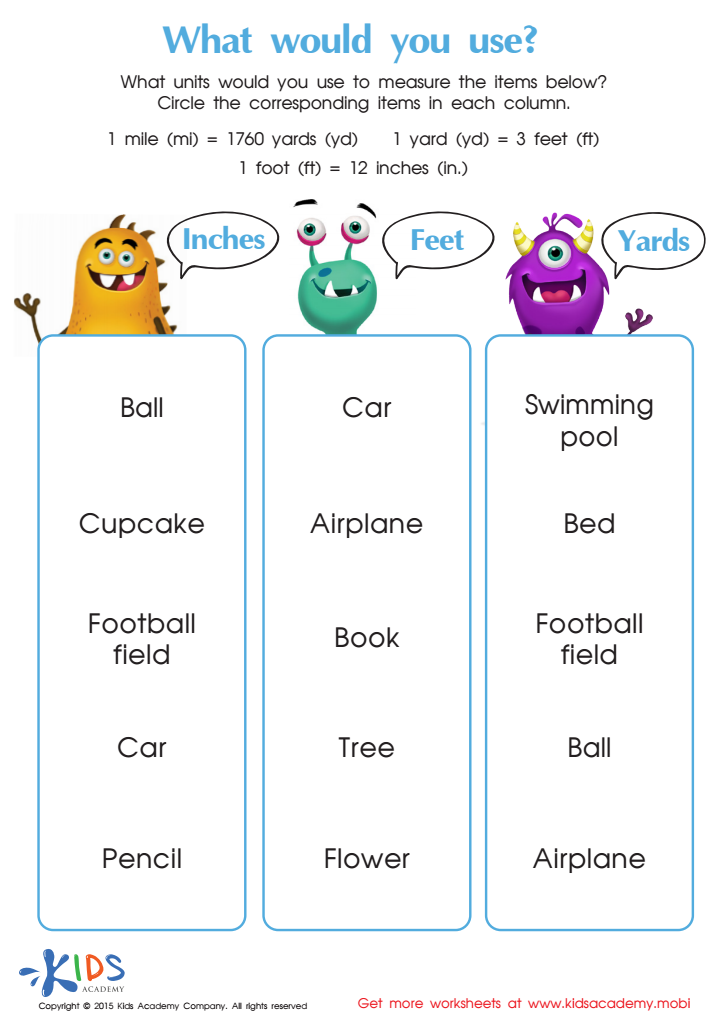
Learning about measuring objects in inches, feet and yards Worksheet
 Assign to My Students
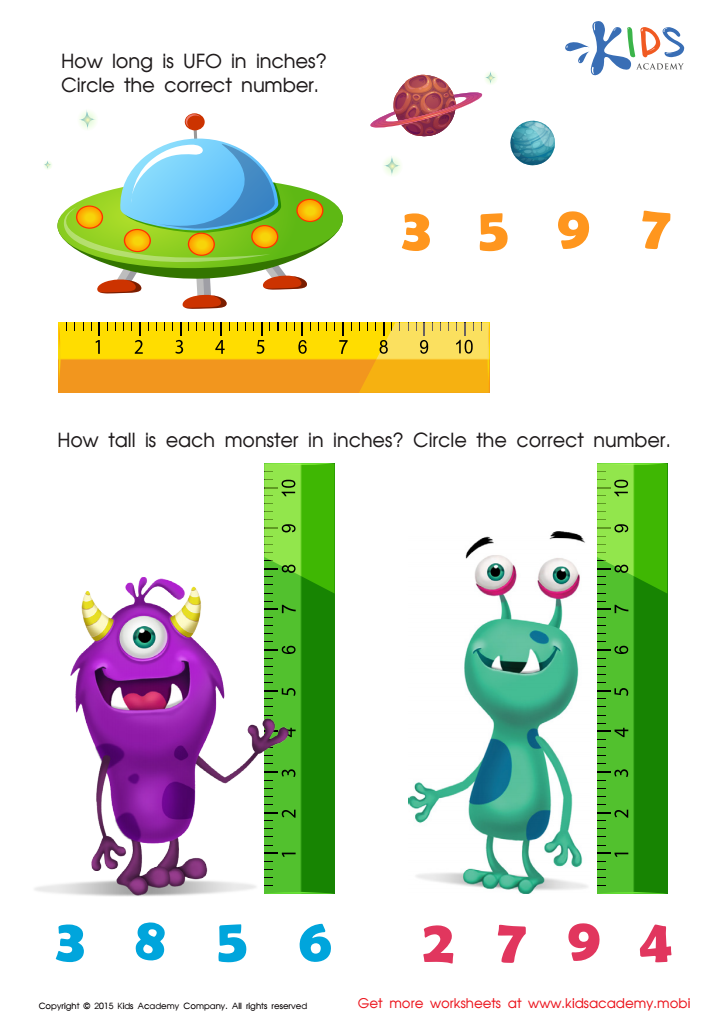
Measuring in Inches Worksheet
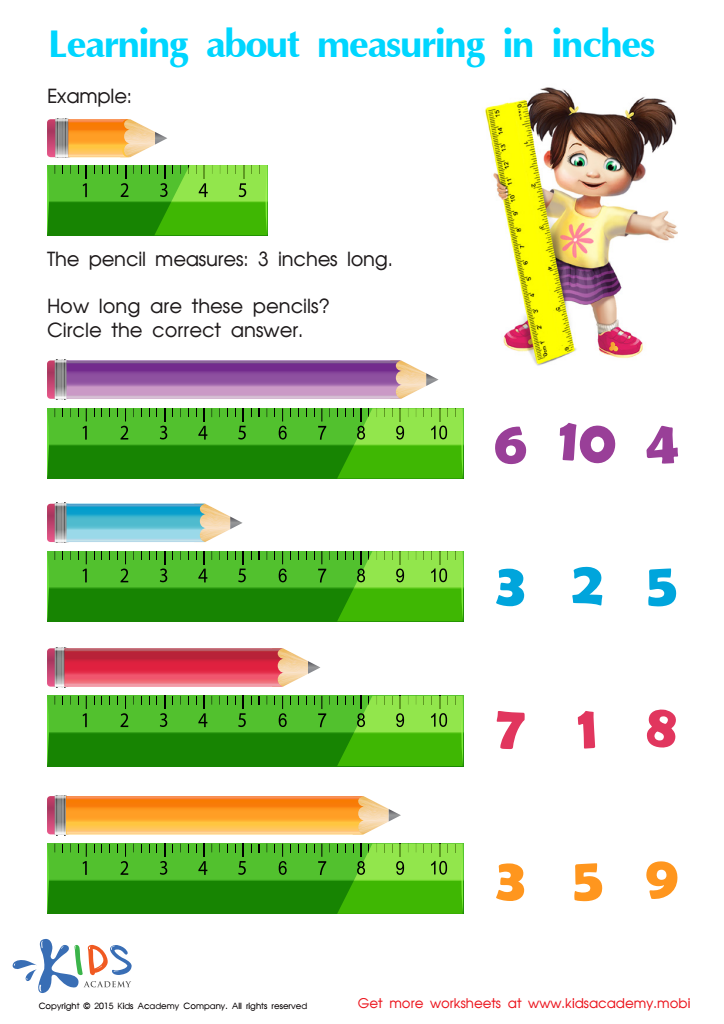
Learning About Measuring In Inches Printable
Cook Maze Worksheet
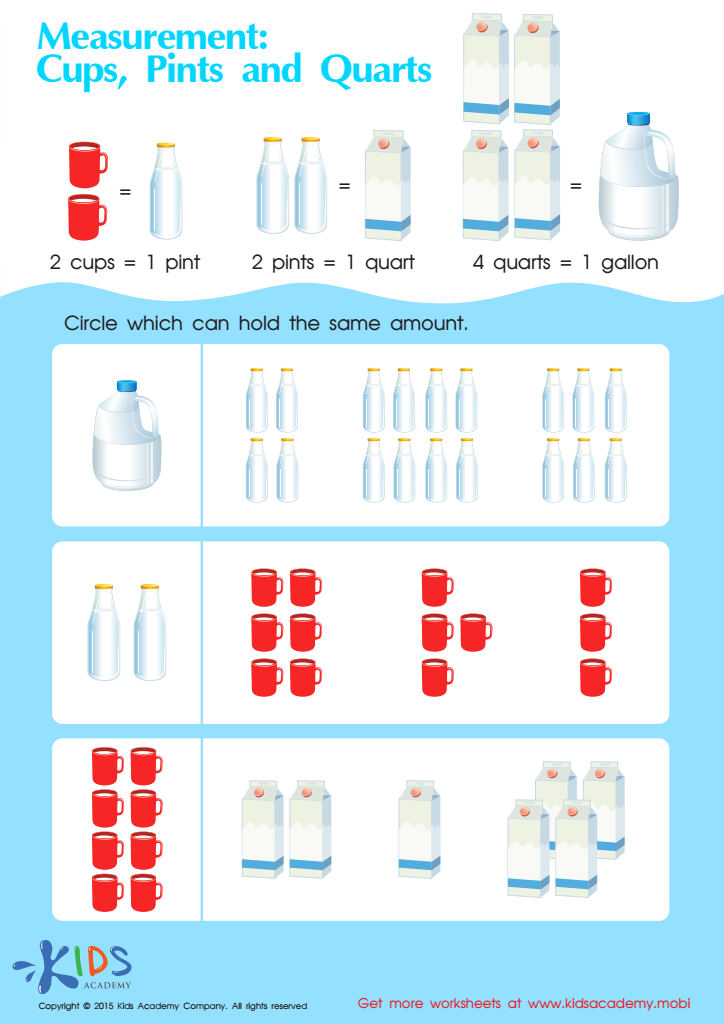
Cups, Pints and Quarts 2 Worksheet
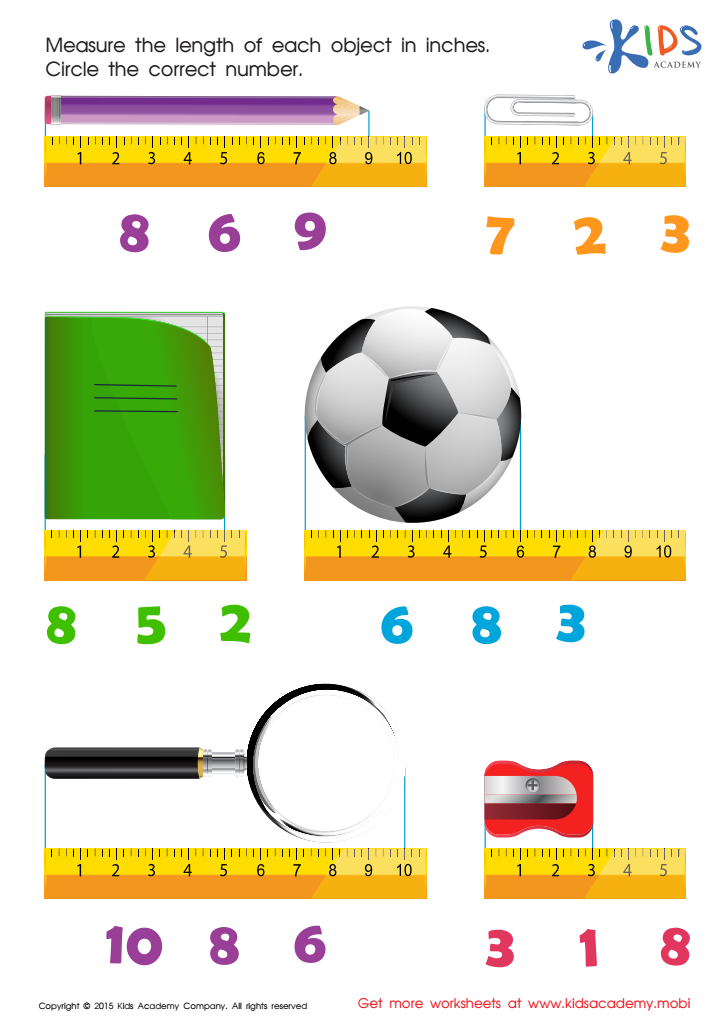
Learning measuring objects in inches Worksheet





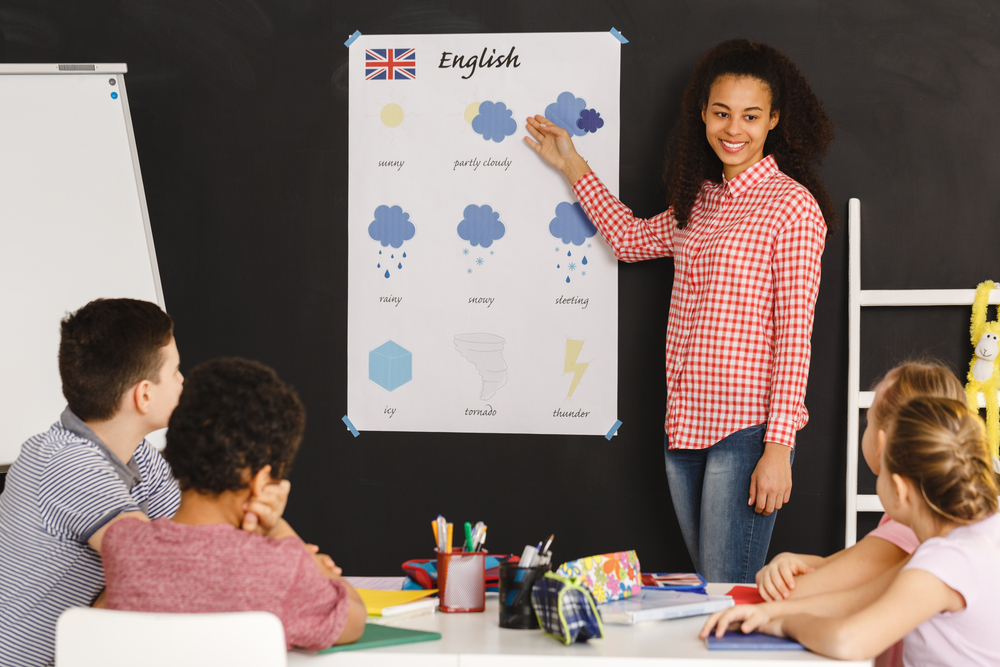

Understanding measurements at an early age is crucial for several developmental reasons. For children aged 3-4, engaging with concepts like length, height, weight, and volume lays the foundation for future mathematical and scientific learning. These early experiences help children develop spatial awareness and critical thinking skills. For instance, when children play with blocks or pour water into different-sized containers, they begin to grasp the basics of geometry and conservation of volume.
Moreover, learning measurements also bolsters language development. As children describe objects and compare their sizes, they expand their vocabulary and communication skills. This form of interactive learning helps children articulate their thoughts clearly and logically.
From a practical standpoint, measurement skills promote independence and problem-solving abilities in daily activities. Simple tasks like measuring ingredients during cooking or comparing the length of objects in a classroom can make these concepts tangible and immediately relevant.
For parents and teachers, understanding these developmental benefits guides how they incorporate measurement concepts into play and routine activities. Early exposure to measurement not only makes future academic subjects more approachable but also nurtures a child’s confidence and enthusiasm for learning. Thus, incorporating these fundamental concepts early on can set the stage for long-term academic and personal success.








