Understanding number patterns Worksheets for Ages 3-4
3 filtered results
-
From - To
Discover engaging "Understanding Number Patterns" worksheets designed specifically for ages 3-4. Our resources encourage young learners to explore and recognize sequences in a fun and interactive way. These worksheets feature colorful illustrations and simple activities that promote early math skills through identifying, completing, and creating number patterns. Perfect for home or class use, these worksheets foster critical thinking and enhance number recognition. With a mix of visual and hands-on exercises, children will develop a solid foundation in understanding patterns, laying the groundwork for future math concepts. Empower your child’s learning adventure today with our delightful and educational worksheets!
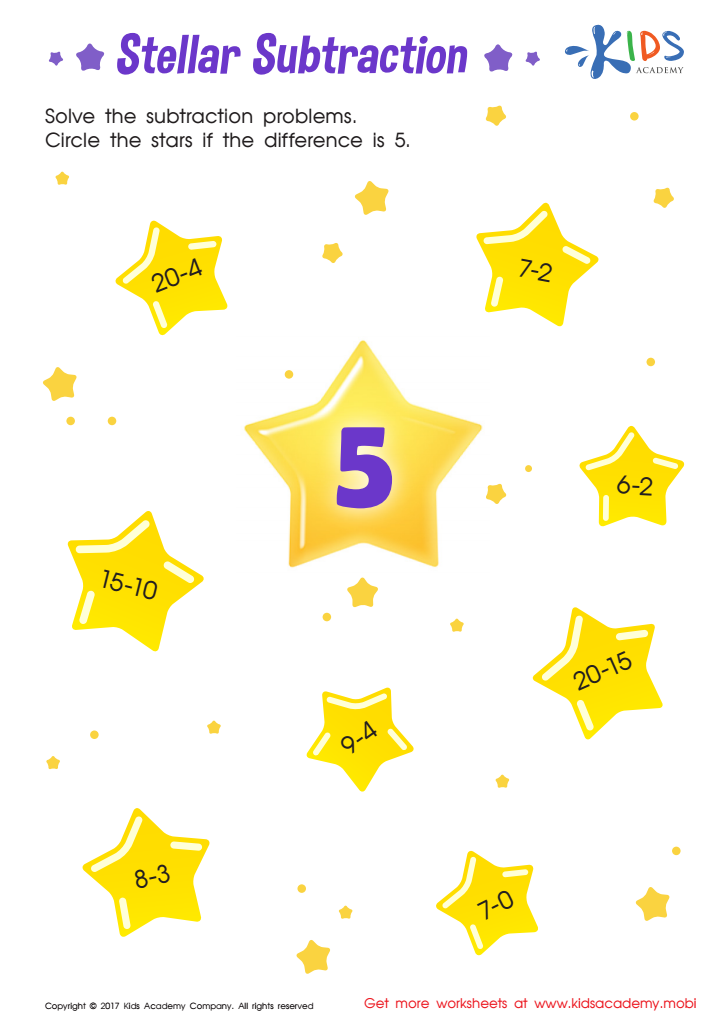
 Assign to My Students
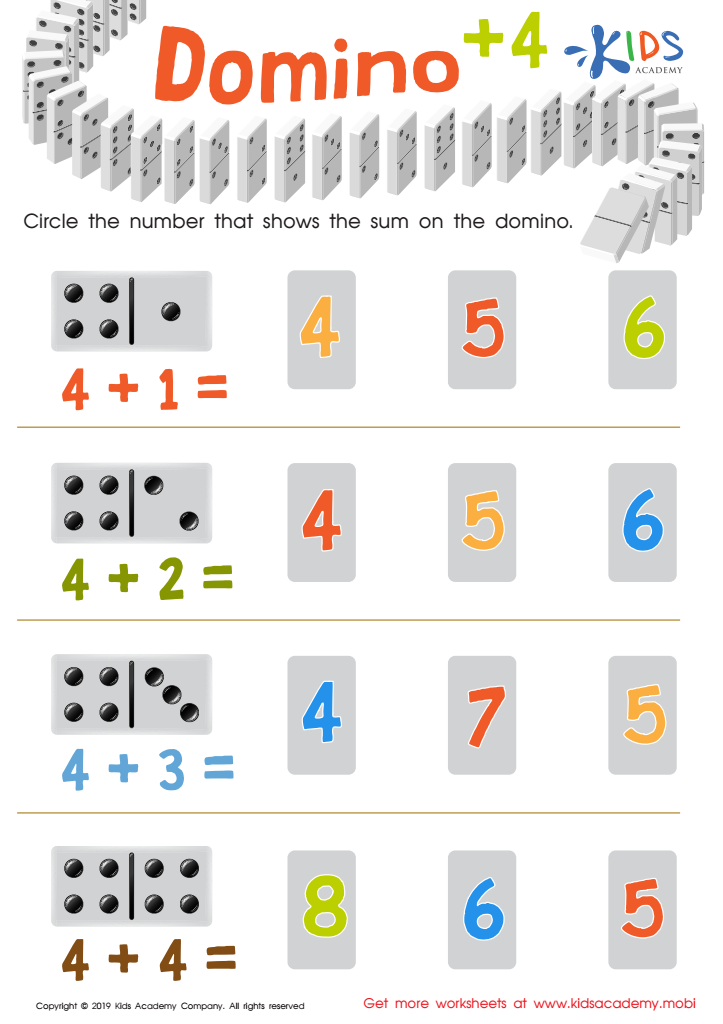
Domino +4 Worksheet
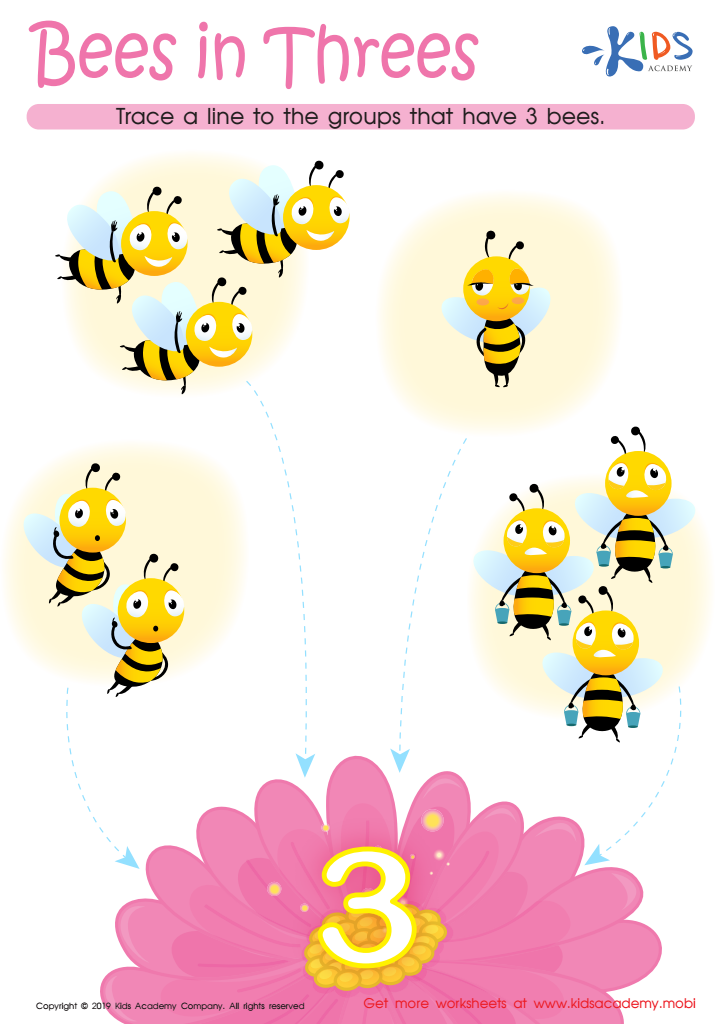
Bees in Threes Worksheet



.jpg)


Understanding number patterns is crucial for children aged 3-4, as it lays the foundation for essential mathematical concepts that will benefit them throughout their education. At this age, children are naturally curious and eager to explore their environment. Engaging them in number patterns fosters cognitive development and enhances problem-solving skills.
Teaching young children about patterns enables them to recognize regularities in numbers, shapes, and everyday objects, promoting critical thinking. It encourages them to make predictions and find relationships between different quantities, which is fundamental in learning addition and subtraction later on. Furthermore, recognizing patterns helps improve their ability to sequence events and develop logical reasoning, essential skills not only in math but in literacy and science as well.
Parents and teachers can incorporate simple activities, such as singing counting songs or using blocks and beads to create patterns, to make learning fun and interactive. These early experiences with patterns contribute to a child’s confidence in math, fostering a positive attitude towards learning as they grow. Ultimately, investing time and effort in teaching number patterns during these formative years supports a strong mathematical foundation that will serve children well in future academic endeavors.








