Understanding prepositions Worksheets for Ages 3-4
10 filtered results
-
From - To
Welcome to our "Understanding Prepositions Worksheets for Ages 3-4"! These engaging and interactive worksheets are designed to introduce young learners to the concept of prepositions. Through fun activities and colorful illustrations, children will explore different positional words such as 'in', 'on', 'under', and 'behind', helping them enhance their vocabulary and comprehension skills. Our worksheets promote hands-on learning, enabling kids to connect language to real-life experiences. Perfect for parents and teachers, these resources aim to build a solid foundation for effective communication. Dive into our collection and support your child's early literacy journey with our prepositions worksheets today!
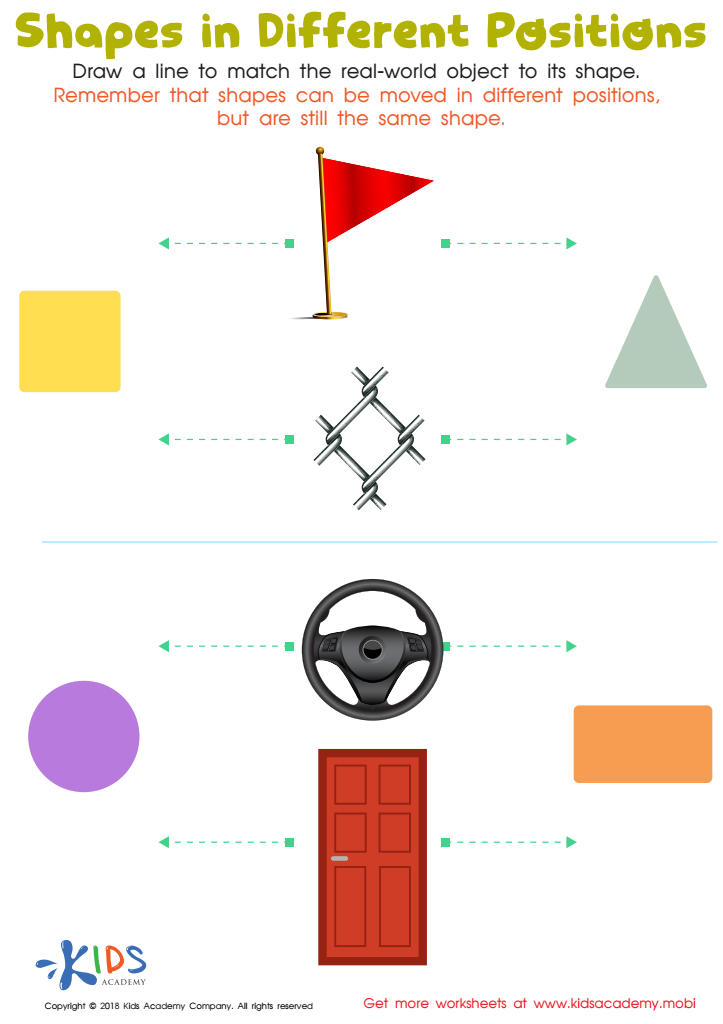
Shapes in Different Positions Worksheet
 Assign to My Students
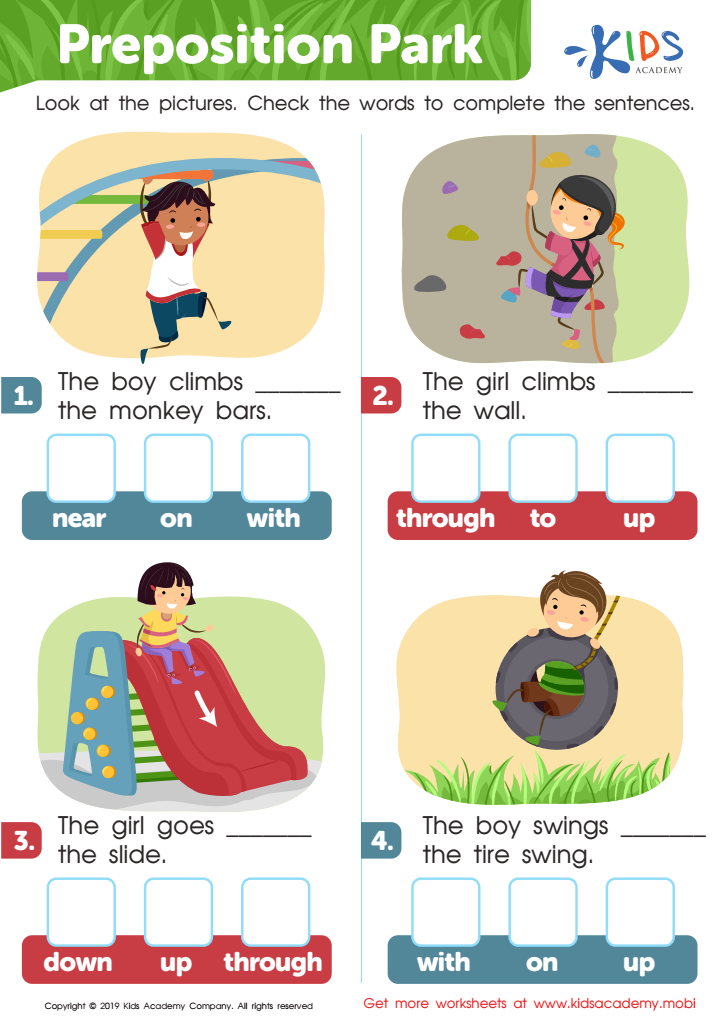
Preposition Park Worksheet
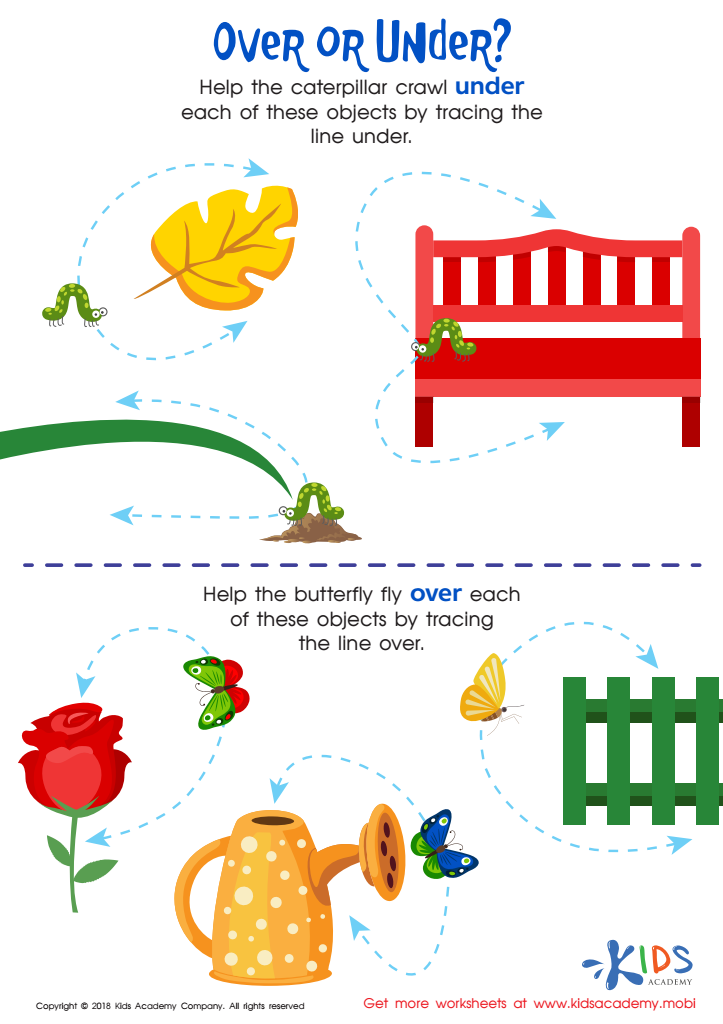
Over or Under? Worksheet
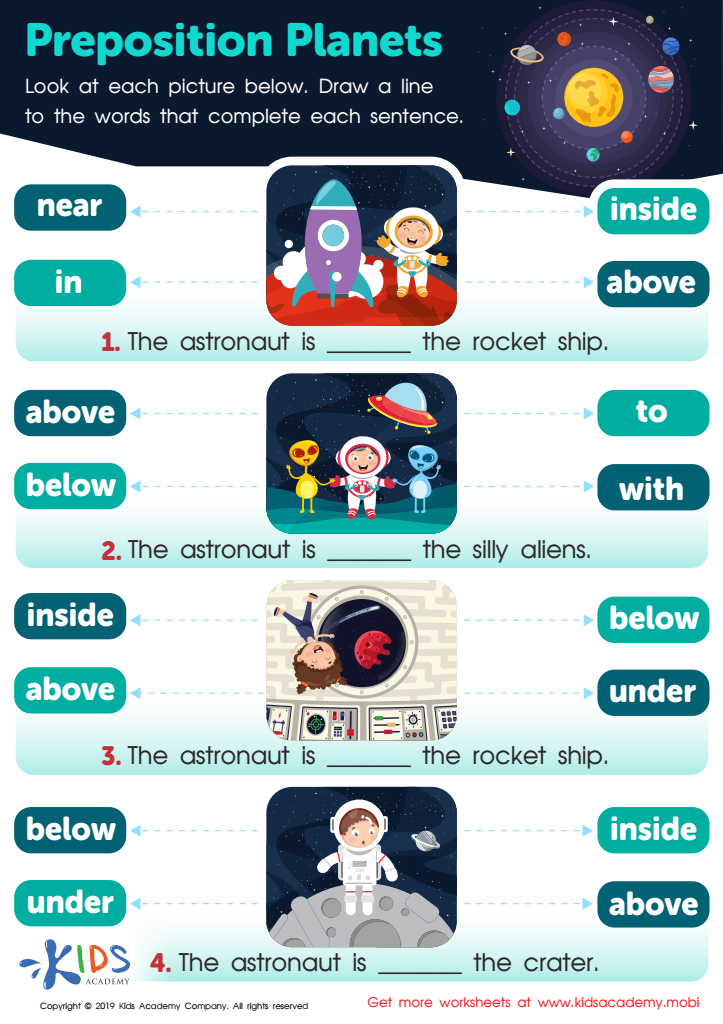
Preposition Planets Worksheet
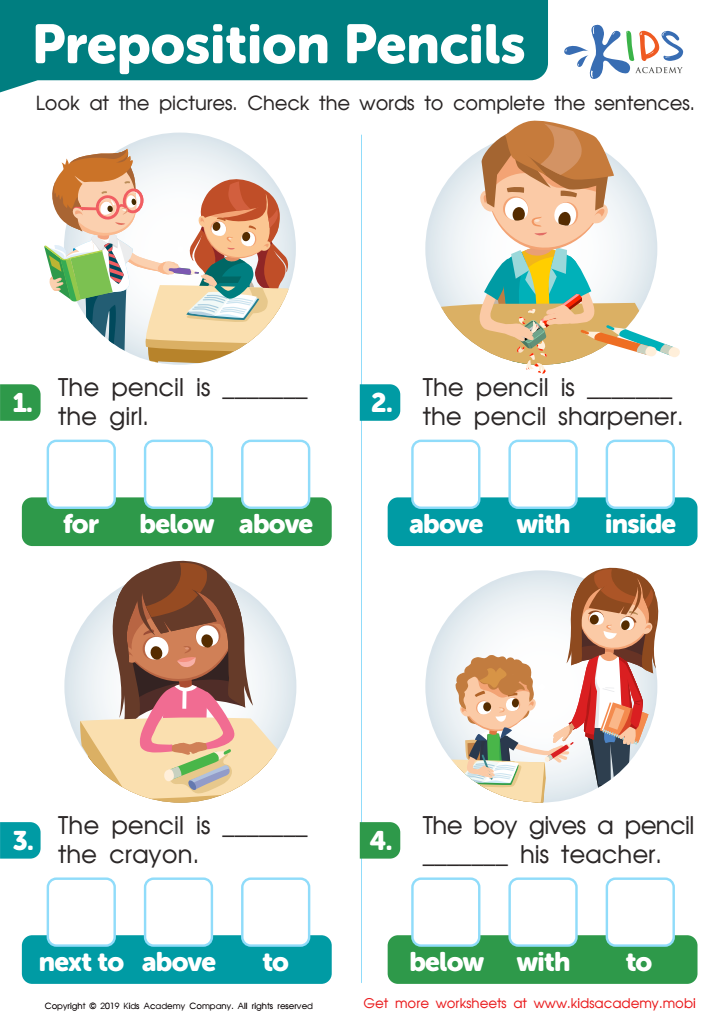
Preposition Pencils Worksheet
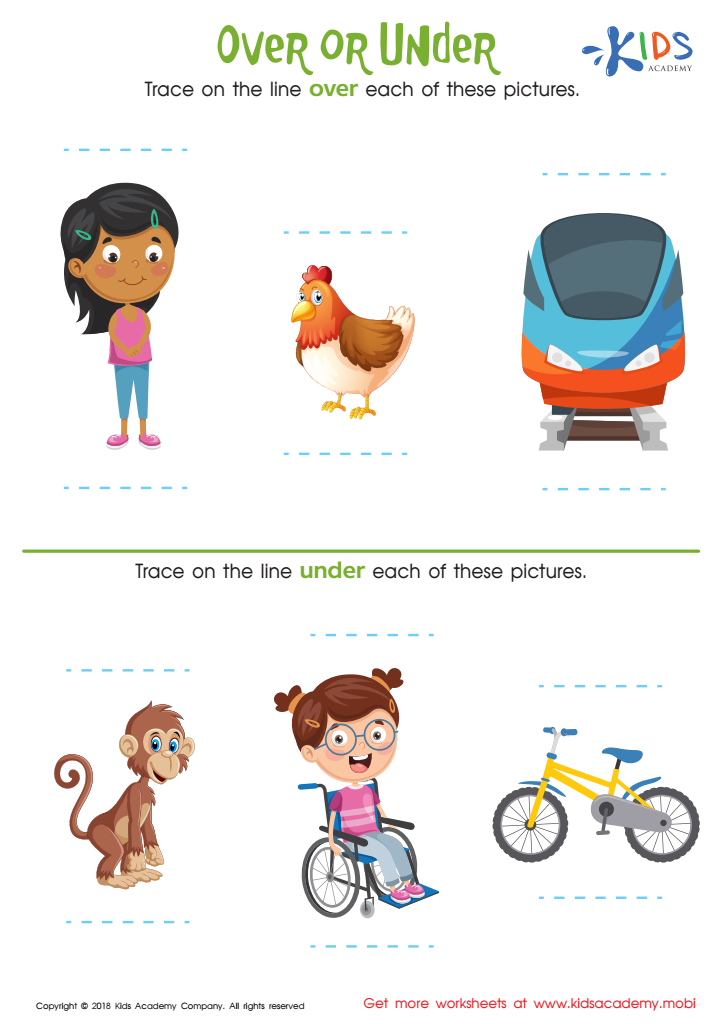
Over or Under Worksheet
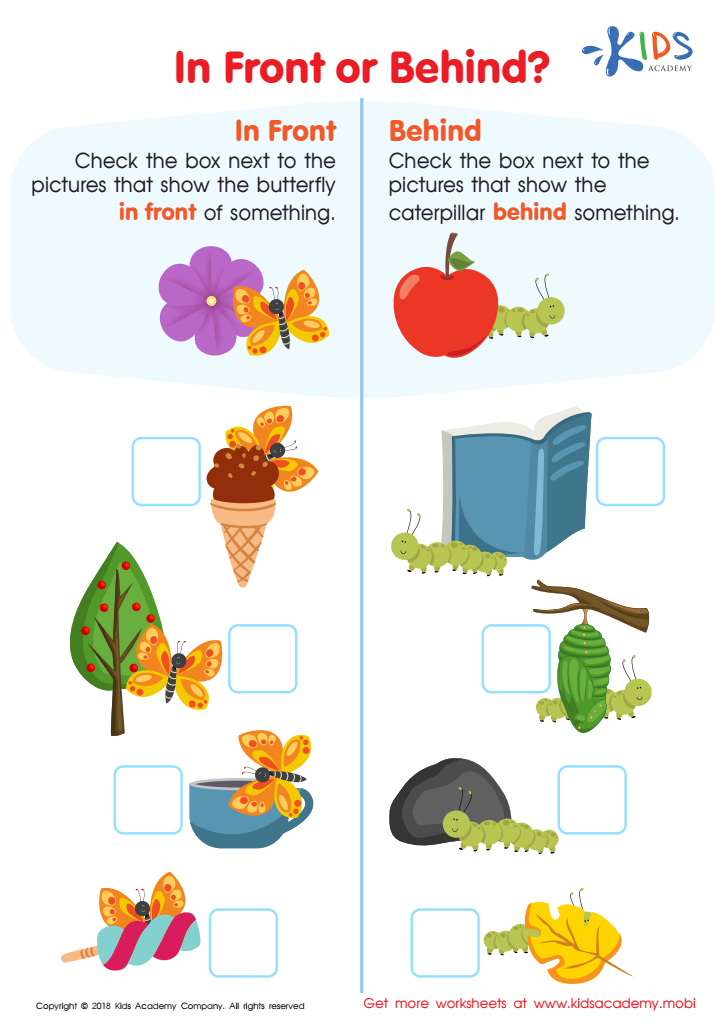
In Front or Behind Worksheet
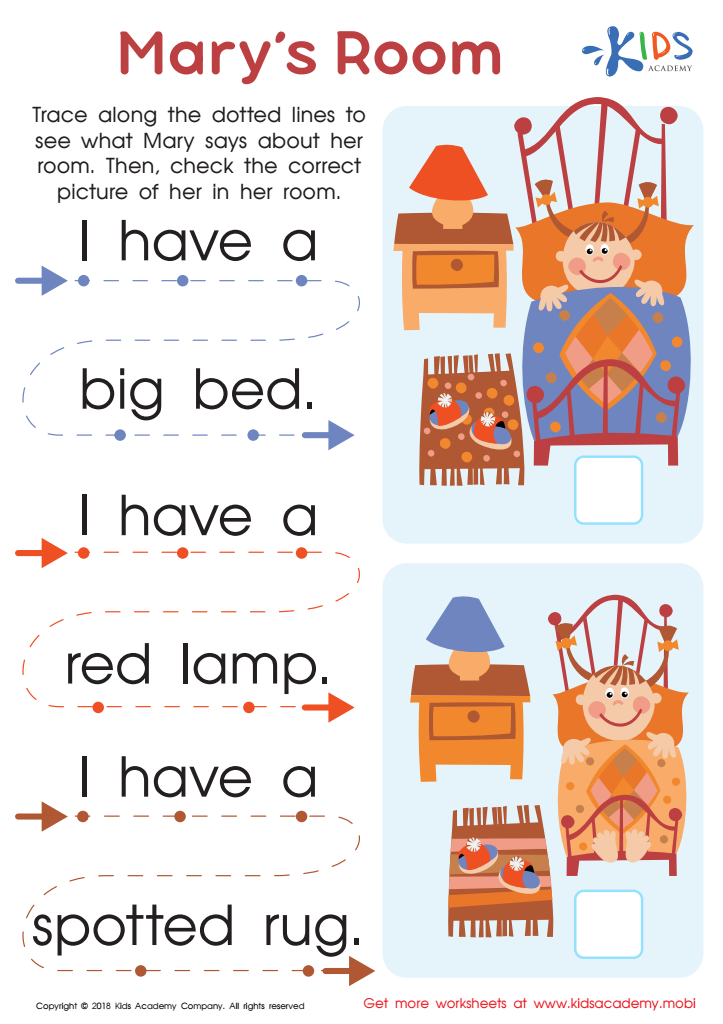
Mary's Room Worksheet



.jpg)


Understanding prepositions is crucial for children aged 3-4 as it lays the foundation for their language development, communication skills, and cognitive growth. Prepositions, such as "in," "on," "under," and "between," help children describe relationships between objects and people effectively. This understanding is vital for enhancing their vocabulary and sentence structure, enabling them to express their thoughts clearly.
Furthermore, preschoolers often engage in play and everyday interactions where spatial awareness is developed. By grasping prepositions, they learn concepts of location and direction, which can boost their problem-solving abilities and critical thinking skills. For example, when they understand "under the table," they can navigate physical environments more comfortably and safely.
Additionally, parents and teachers can incorporate preposition teaching into activities like storytelling, games, and everyday routines, making learning engaging and enjoyable. This exposure not only supports language acquisition but also strengthens social skills, as children learn to follow instructions and ask questions about their surroundings.
By prioritizing preposition understanding, caregivers can foster essential linguistic and cognitive skills in children, setting the stage for future academic success and effective communication. By playing a role in this aspect of learning, parents and teachers can help nurture well-rounded, confident, and articulate learners.








