Uppercase identification Worksheets for Ages 3-4
5 filtered results
-
From - To
Discover our engaging Uppercase Identification Worksheets for children aged 3-4, designed to boost early literacy skills in a fun and interactive way! Our printable resources help young learners recognize and differentiate uppercase letters through colorful graphics and stimulating exercises. These worksheets encourage hands-on learning, allowing kids to trace, match, and identify uppercase letters while building confidence and a solid foundation for reading. Perfect for parents and educators, our worksheets promote essential alphabet mastery, fostering a love for learning in early childhood. Download now and watch your child embark on their journey of letter recognition and linguistic skills with joy and excitement!
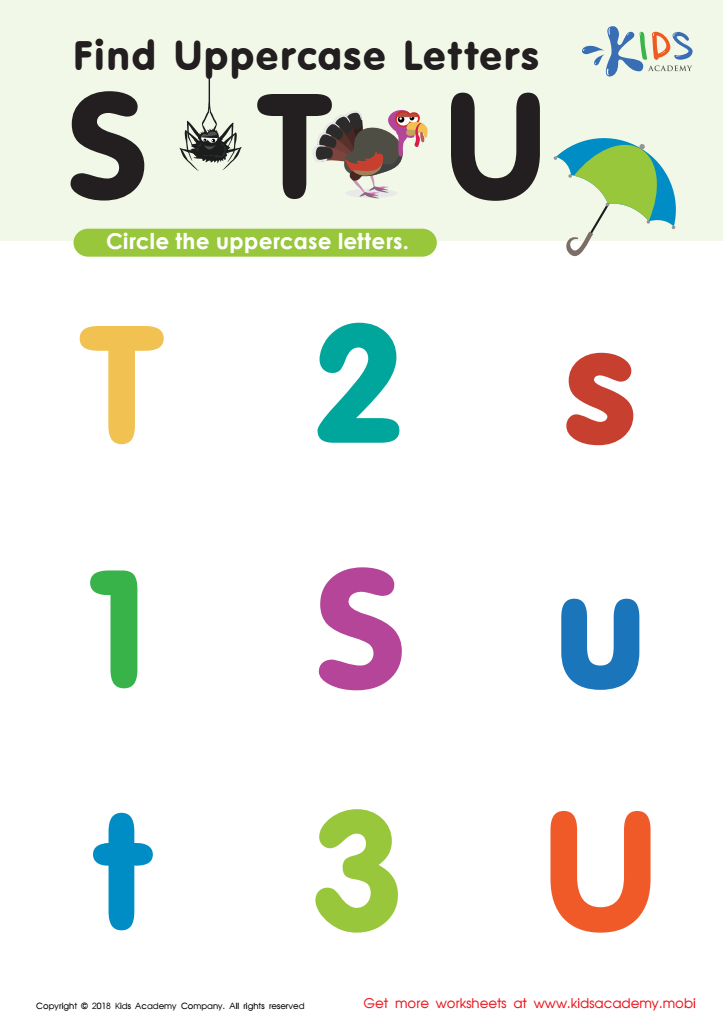
Find Uppercase Letters Worksheet
 Assign to My Students
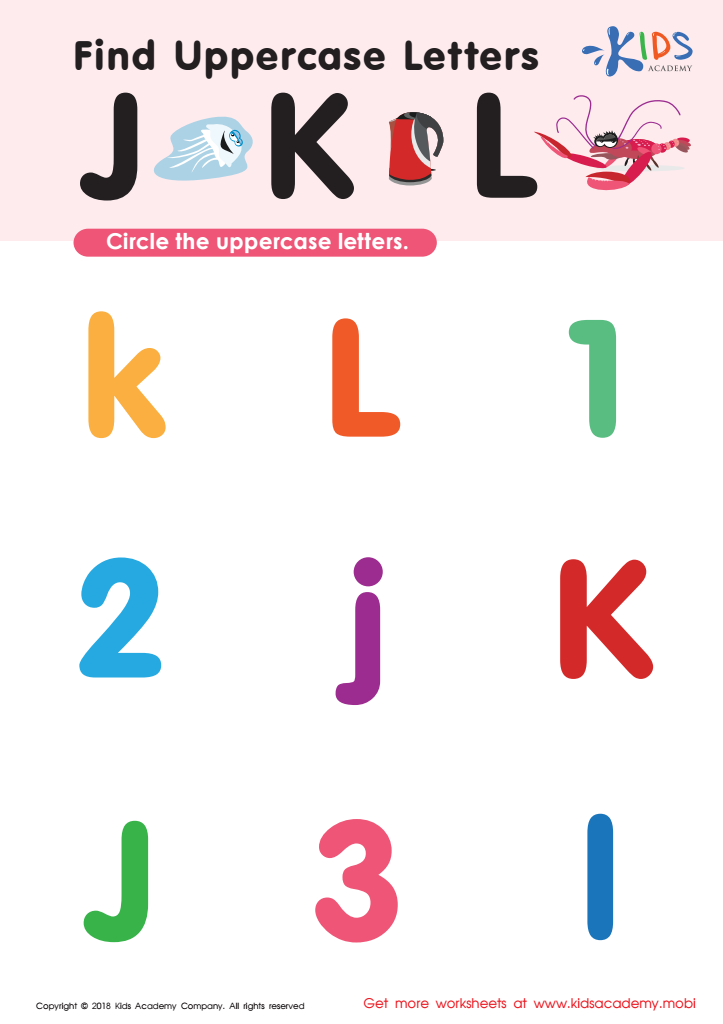
Find Uppercase Letters J, K, and L Worksheet

Find Uppercase Letters A, B, and C Worksheet
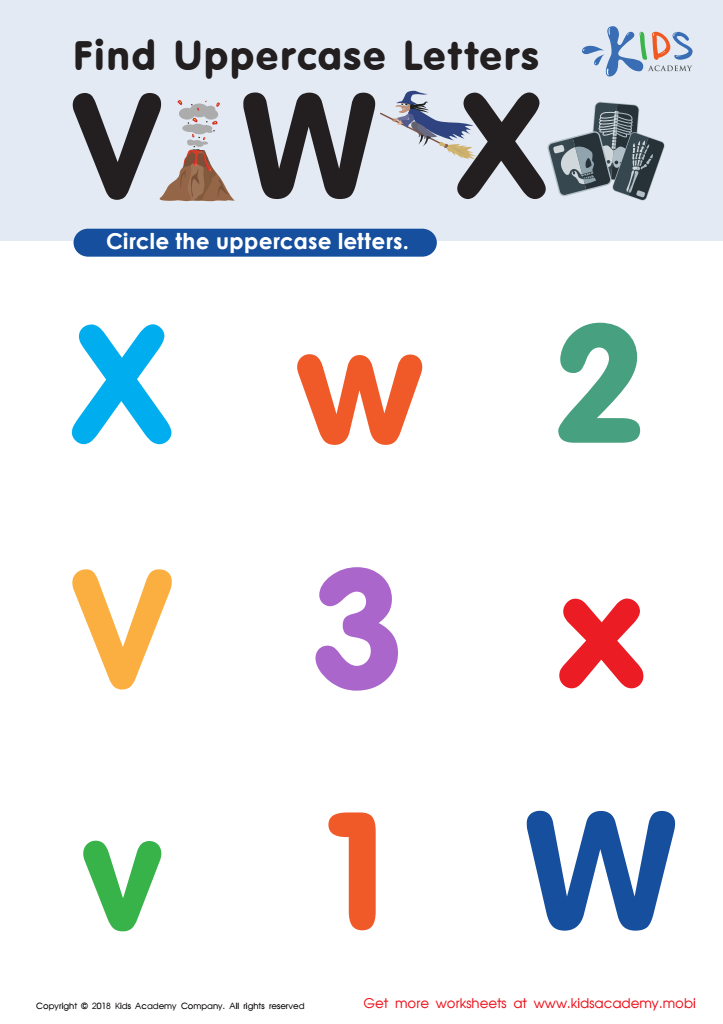
Find Uppercase Letters V, W, X Worksheet
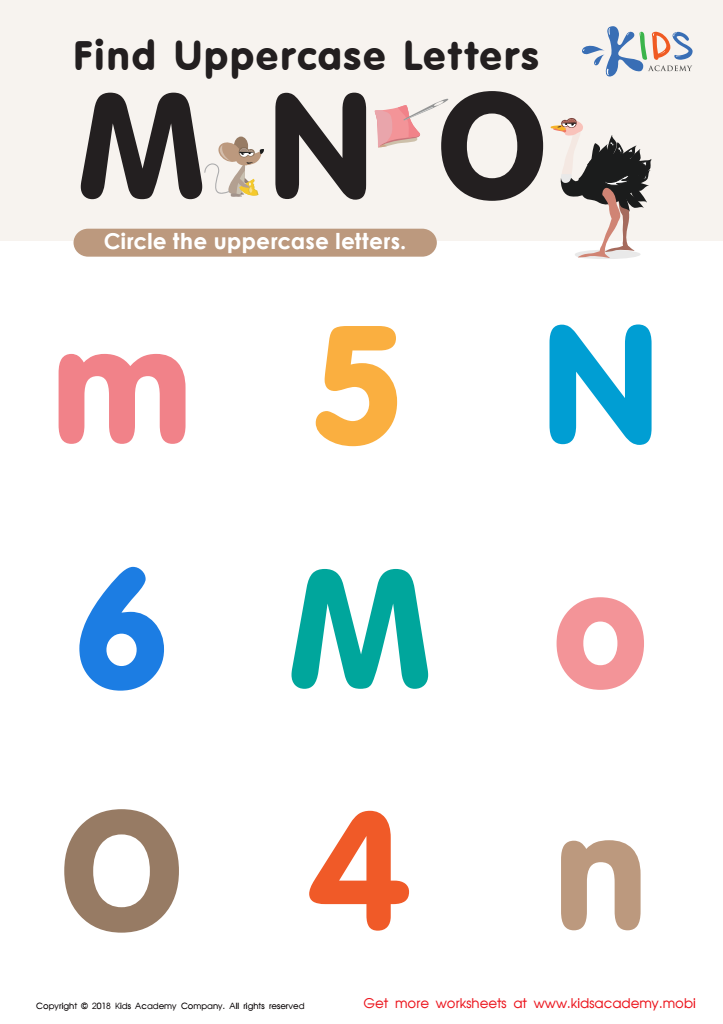
Find Uppercase Letters M, N, and O Worksheet








Uppercase letter identification is a foundational skill crucial for children aged 3-4 as they embark on their literacy journey. At this stage, children are developing essential cognitive and language skills that pave the way for reading and writing. Recognizing uppercase letters helps them understand the alphabet's structure and prepares them for distinguishing between similar letters.
Fluency in uppercase letter identification also builds confidence in children. As they master these letters, they are likely to engage more in reading activities, fostering a love for books and storytelling. Furthermore, familiarization with letters aids in phonemic awareness, enabling children to associate letters with sounds, a crucial skill for phonics and future reading proficiency.
For parents and teachers, encouraging uppercase letter recognition can enrich vocabulary development and enhance literacy skills. Meaningful interactions, such as reading aloud and incorporating playful learning activities, cultivate an effective learning environment. When families and educators prioritize uppercase identification, they support children's overall cognitive growth and prepare them for successfully navigating the academic challenges ahead, ultimately instilling a passion for learning that lasts a lifetime. Engaging early in this foundational literacy skill is a step toward ensuring children are well-equipped for future educational success.








