Vocabulary enhancement 2D Shapes Worksheets for Ages 3-4
3 filtered results
-
From - To
Enhance your child's vocabulary while exploring the world of 2D shapes with our interactive worksheets designed for ages 3-4! Our engaging materials focus on introducing essential shape-related vocabulary through fun activities. Young learners will identify, name, and describe common 2D shapes like circles, squares, and triangles, fostering both language and cognitive skills. With colorful illustrations and various exercises, these worksheets stimulate curiosity and creativity, making learning enjoyable. Perfect for parents and educators looking to enrich preschool education, our vocabulary enhancement resources align with early learning standards, ensuring your child develops a strong foundational understanding of shapes and language simultaneously.
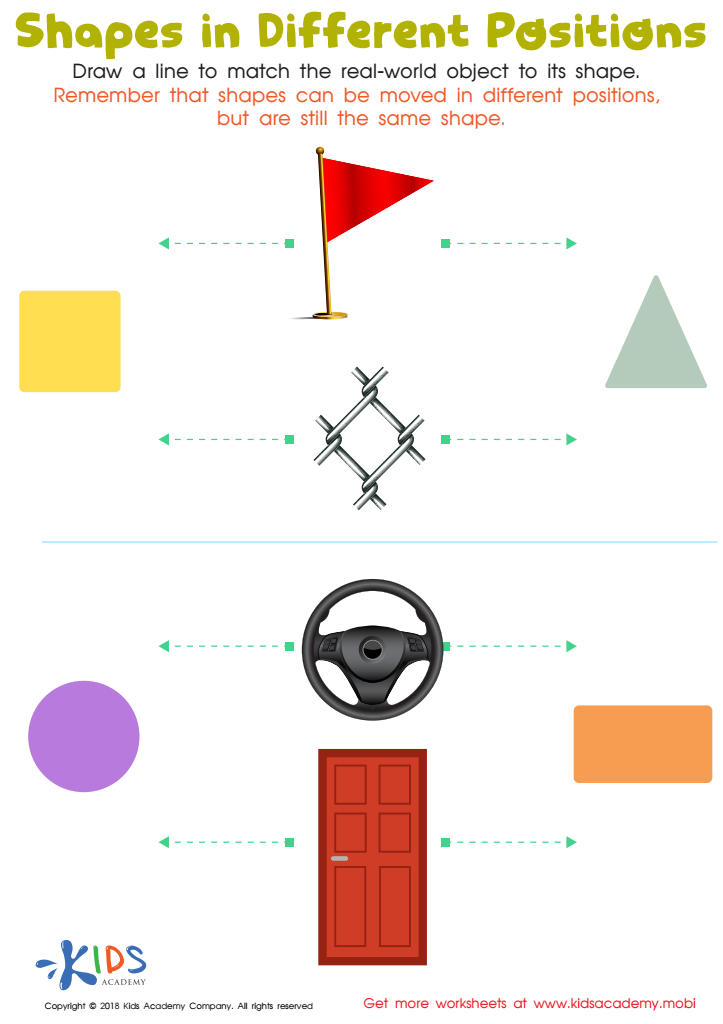
Shapes in Different Positions Worksheet
 Assign to My Students











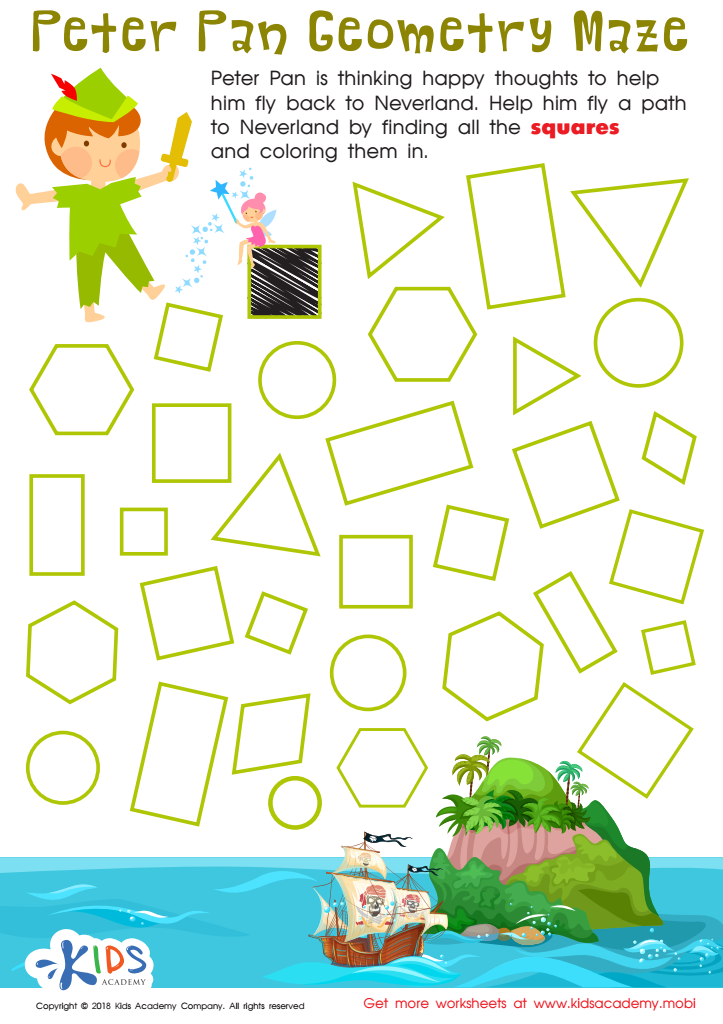
Peter Pan Worksheet
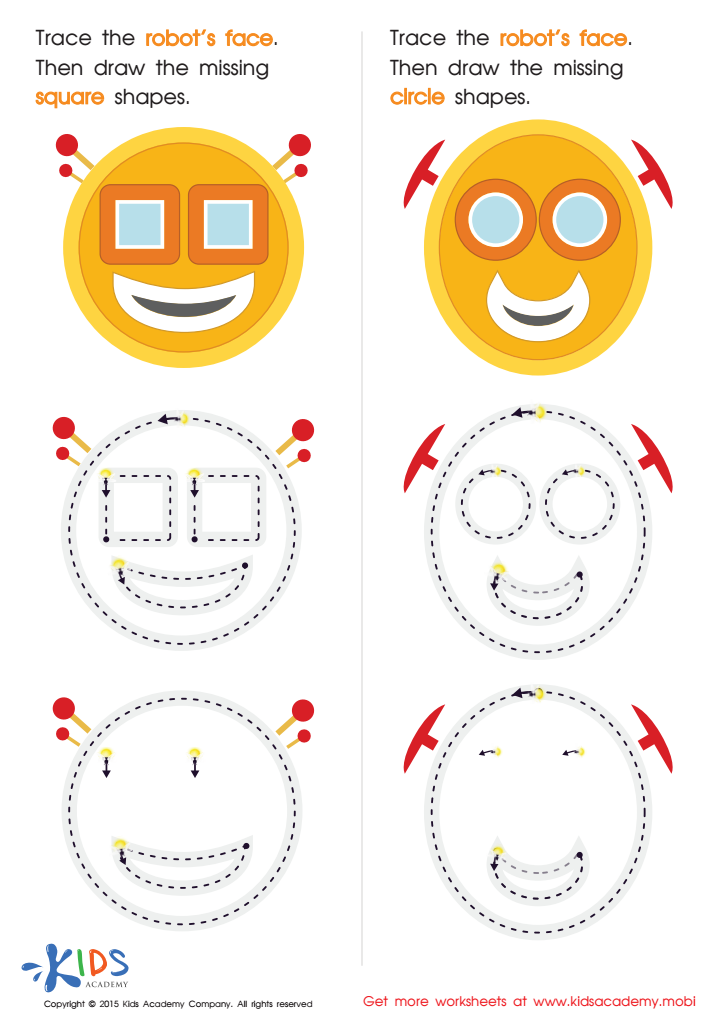
Practicing to Draw Circles And Squares Printable








Vocabulary enhancement related to 2D shapes for ages 3-4 is crucial for a child's early cognitive and linguistic development. At this age, children are naturally curious, and introducing them to a rich vocabulary around shapes—such as circle, square, triangle, rectangle, and oval—helps expand their language skills while encouraging observation and identification in their environment.
Understanding shapes is foundational for various aspects of learning, from math and science to art and everyday problem-solving. By integrating vocabulary enhancement into playful activities, teachers and parents can promote shape recognition and comprehension through stories, games, and hands-on exploration. This interactive approach keeps learning engaging and aligns with the developmental milestones of young children.
Additionally, using correct terminology enriches dialogues between adults and children, fostering better communication skills and higher levels of critical thinking. Encouraging vocabulary related to 2D shapes will enable children to describe and categorize objects around them, laying the groundwork for future academic success. Therefore, investing time in vocabulary enhancement not only supports language development but also helps nurture problem-solving abilities, spatial awareness, and creative expression in young learners, ultimately preparing them for more complex concepts in later stages.