Cognitive Development Adding in the Sea Worksheets for Ages 3-4
28 filtered results
-
From - To
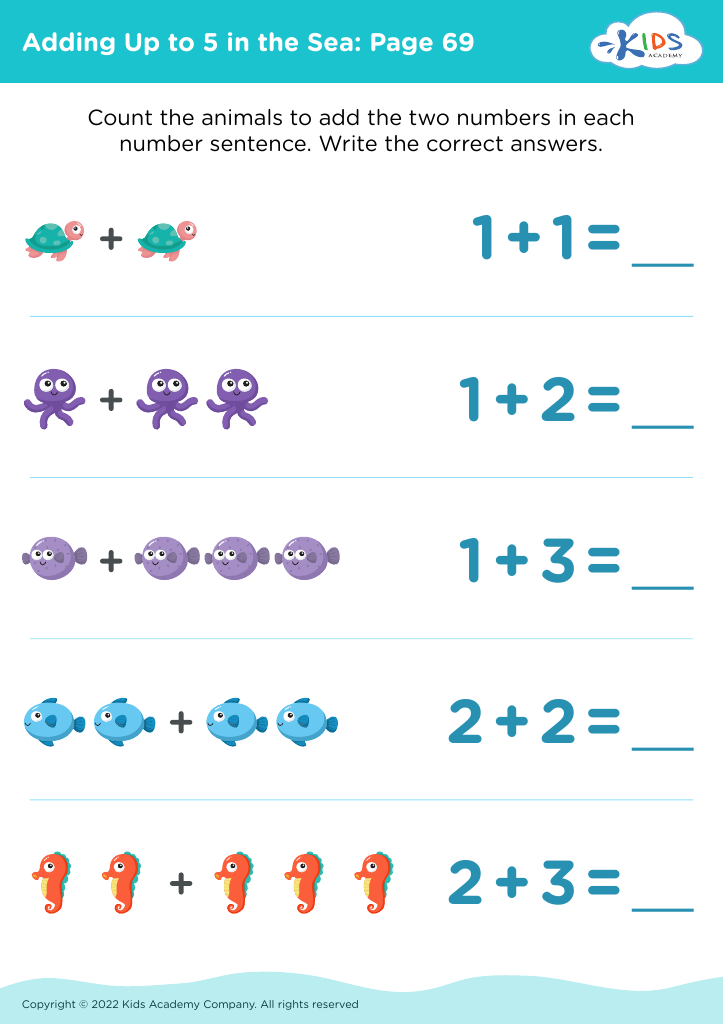
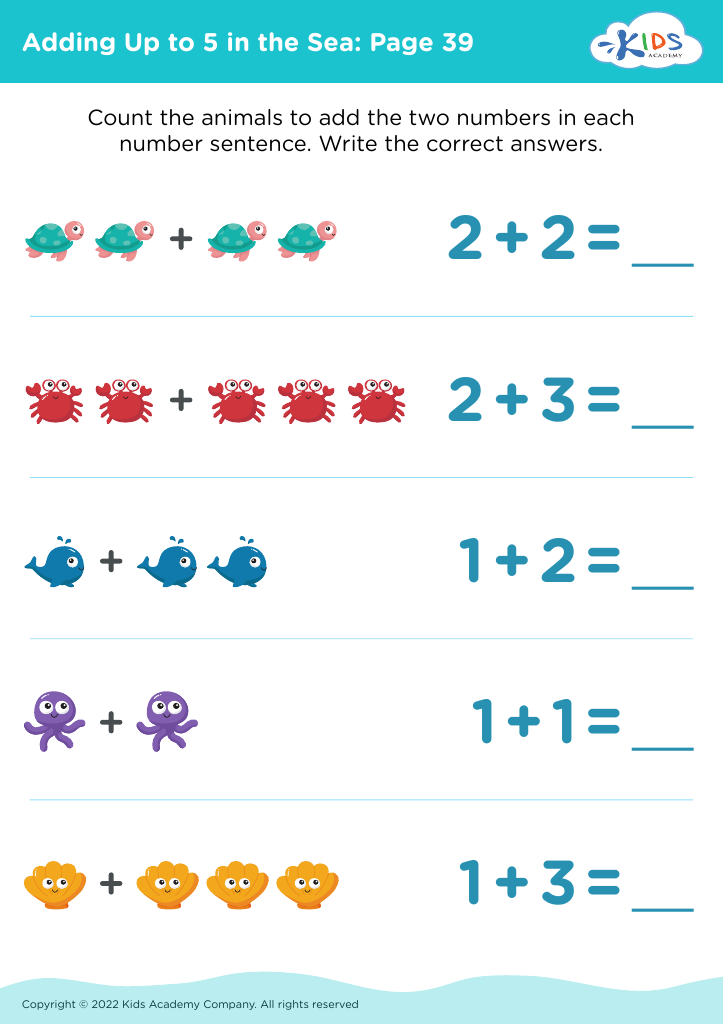
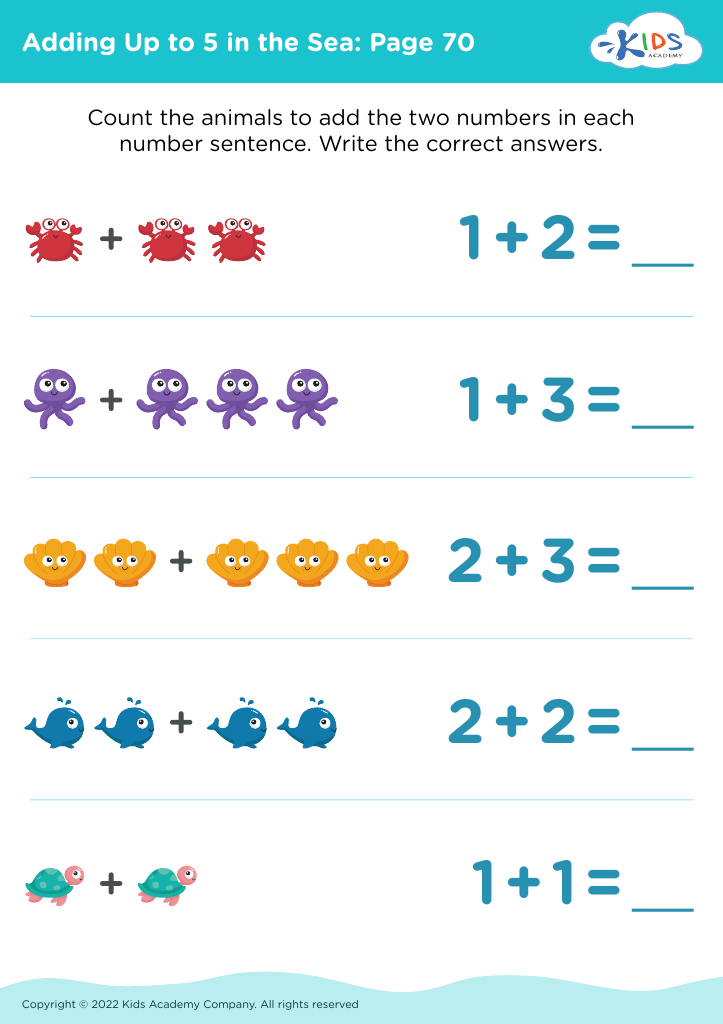
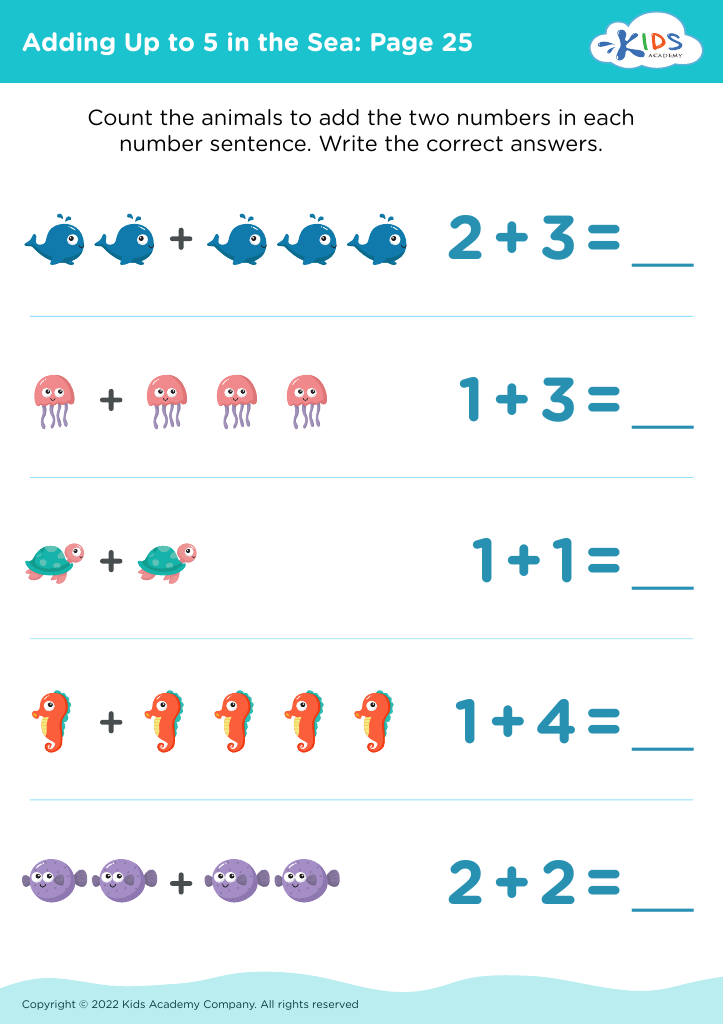
Dive into fun with our "Cognitive Development Adding in the Sea Worksheets for Ages 3-4"! These engaging and educational worksheets are designed specifically to enhance preschoolers' cognitive skills through simple addition tasks set in a captivating underwater theme. Ideal for toddlers, our printables help youngsters develop essential mathematical abilities, such as number recognition and basic counting, while also boosting problem-solving skills. As children explore and add different sea creatures, they'll be mentally stimulated and entertained. Perfect for parents and teachers alike, these worksheets make learning math an exciting adventure beneath the waves!
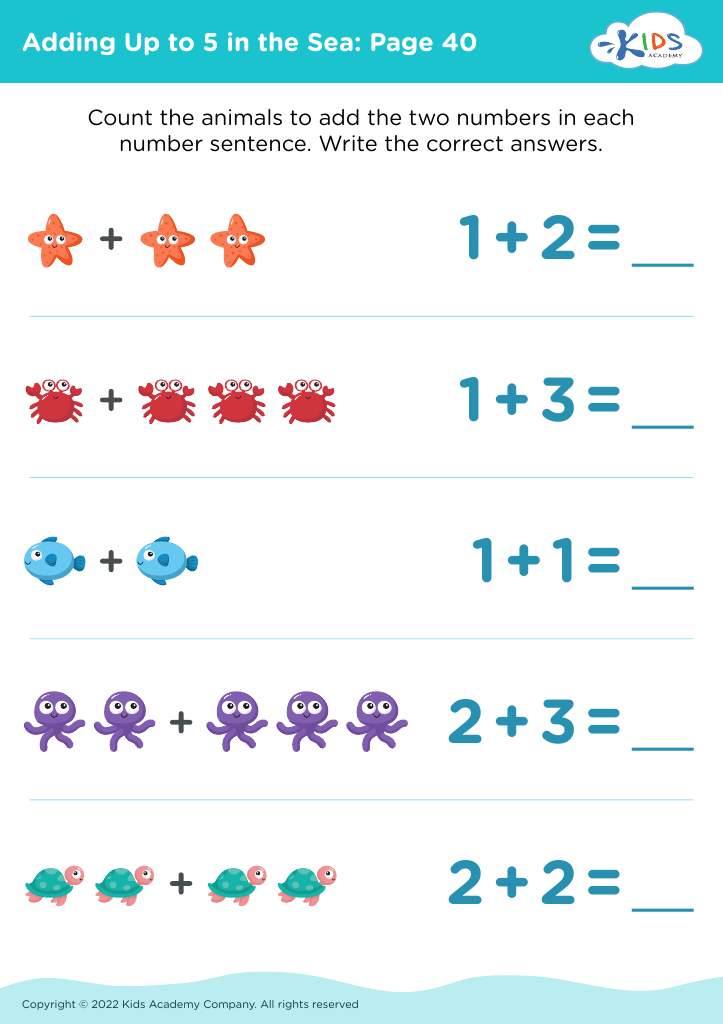
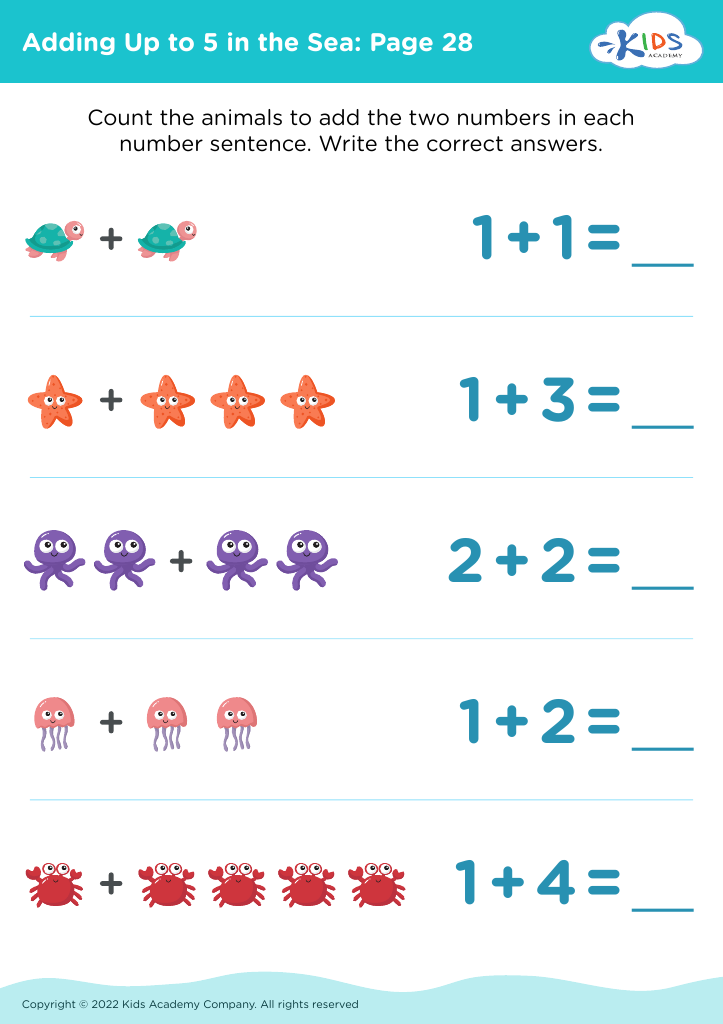
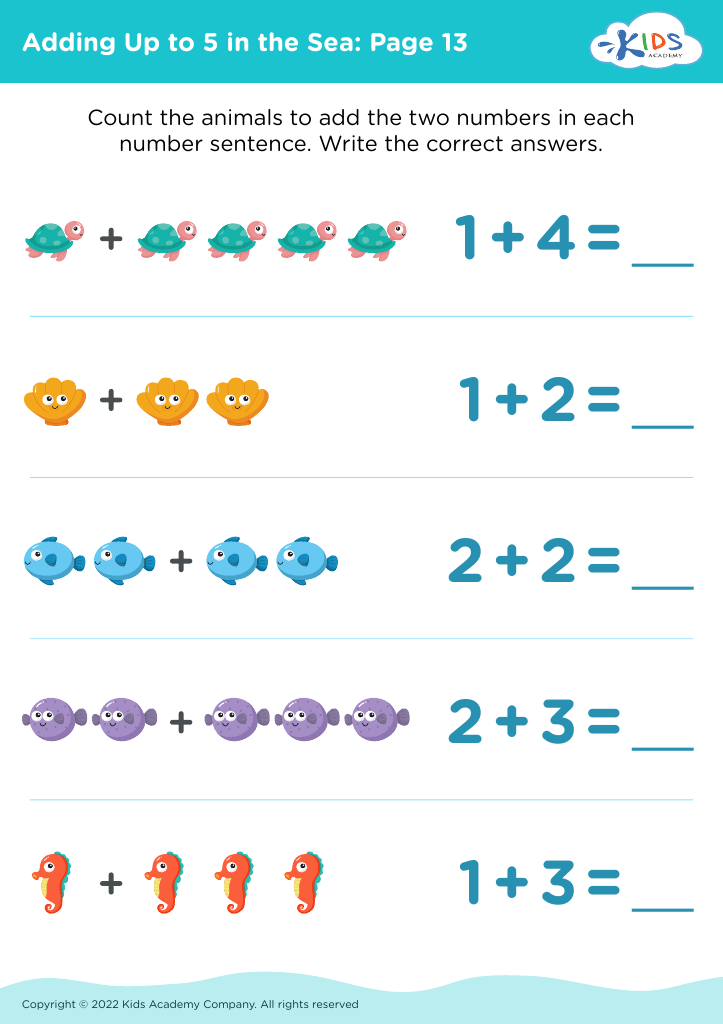
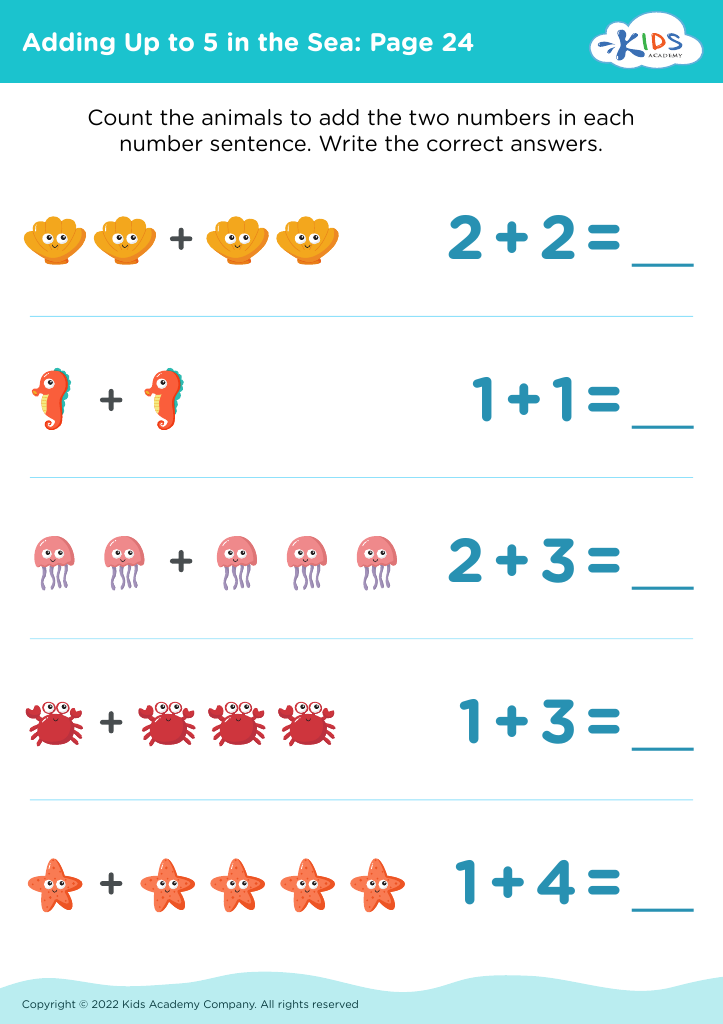
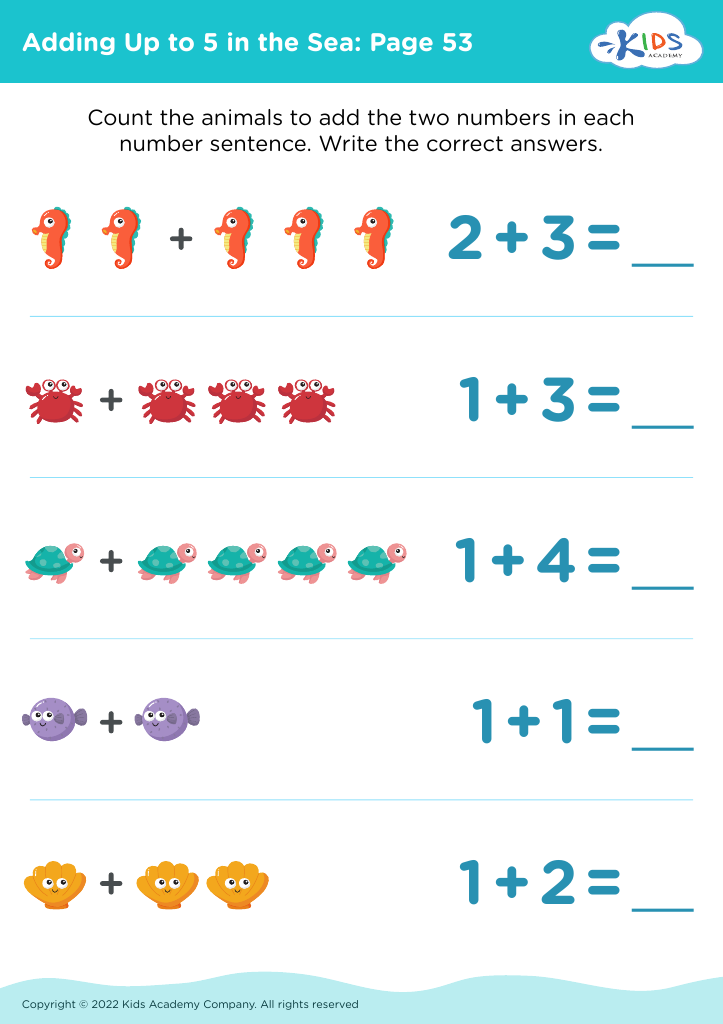
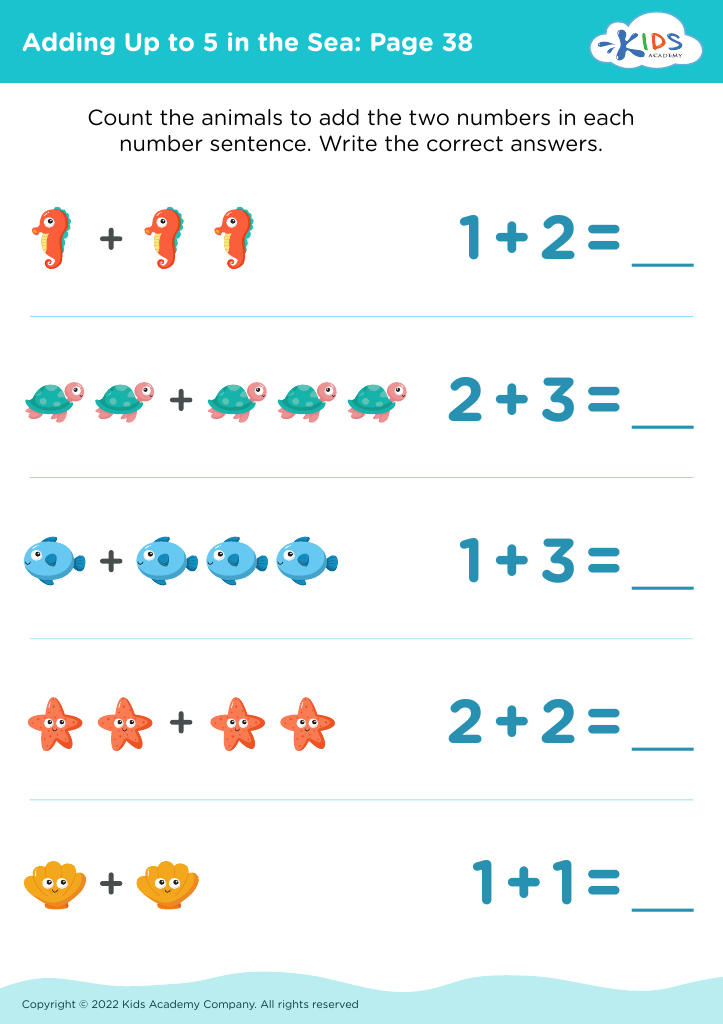
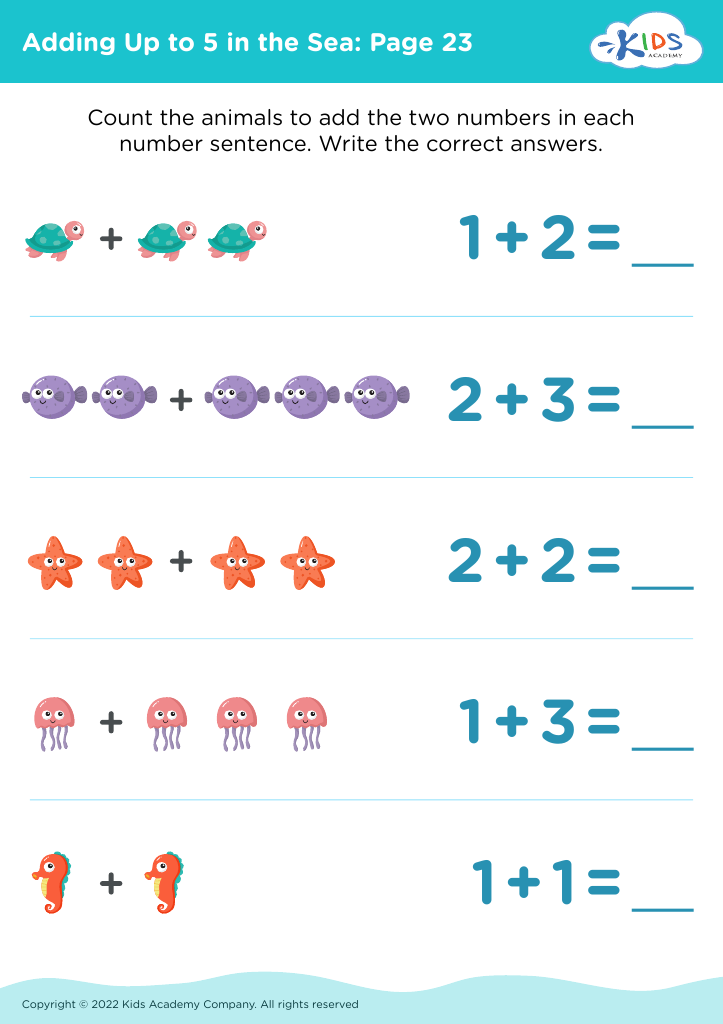
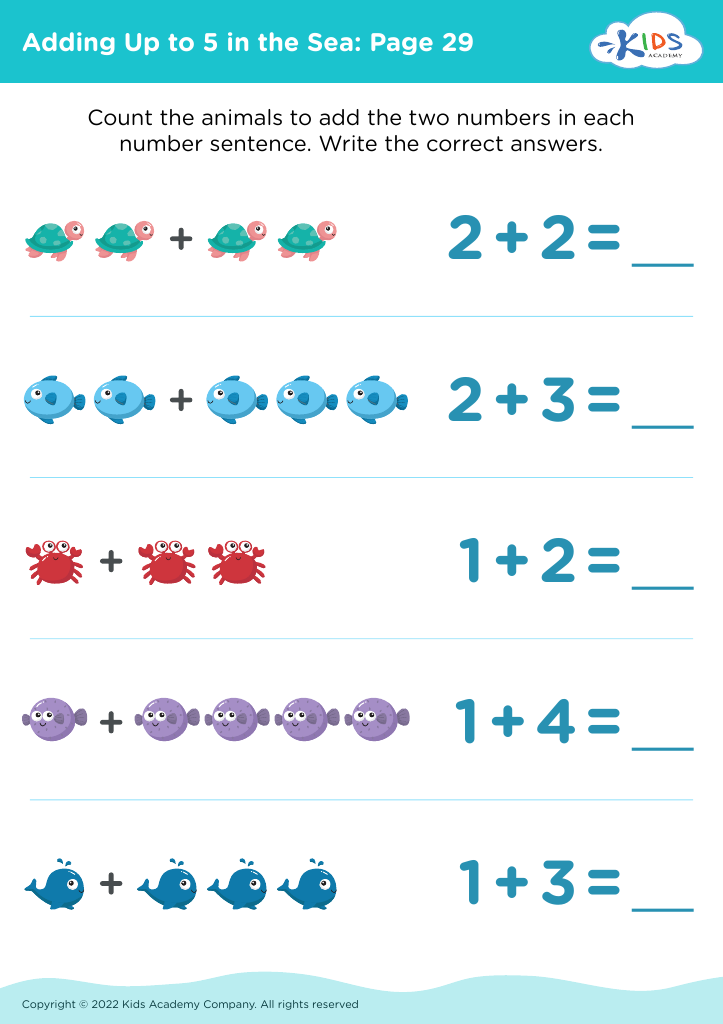
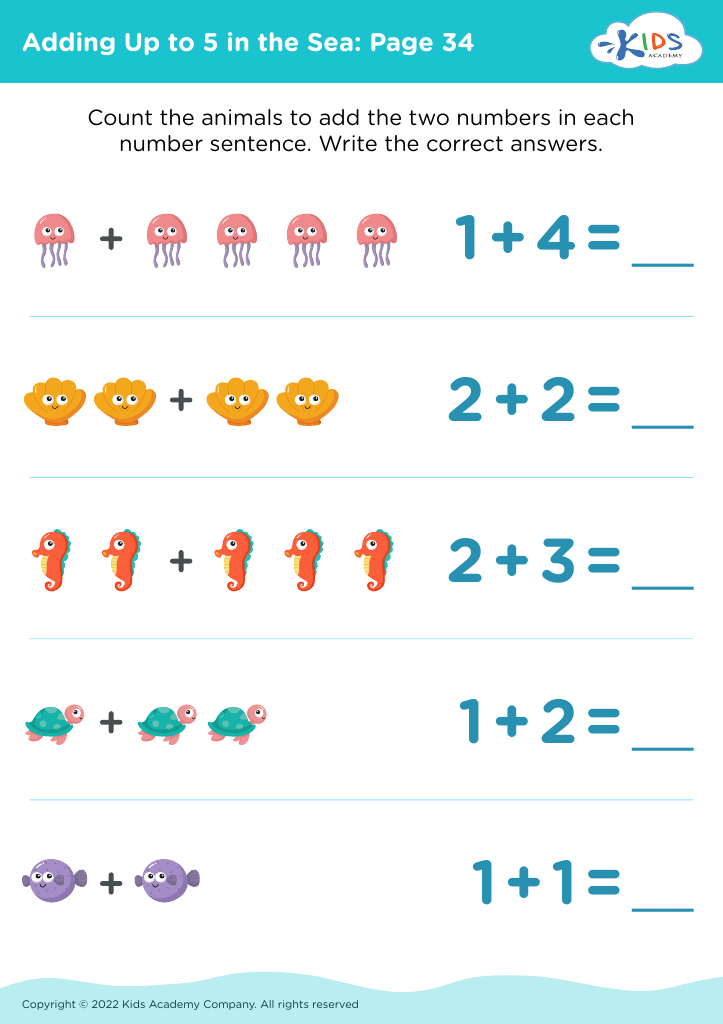
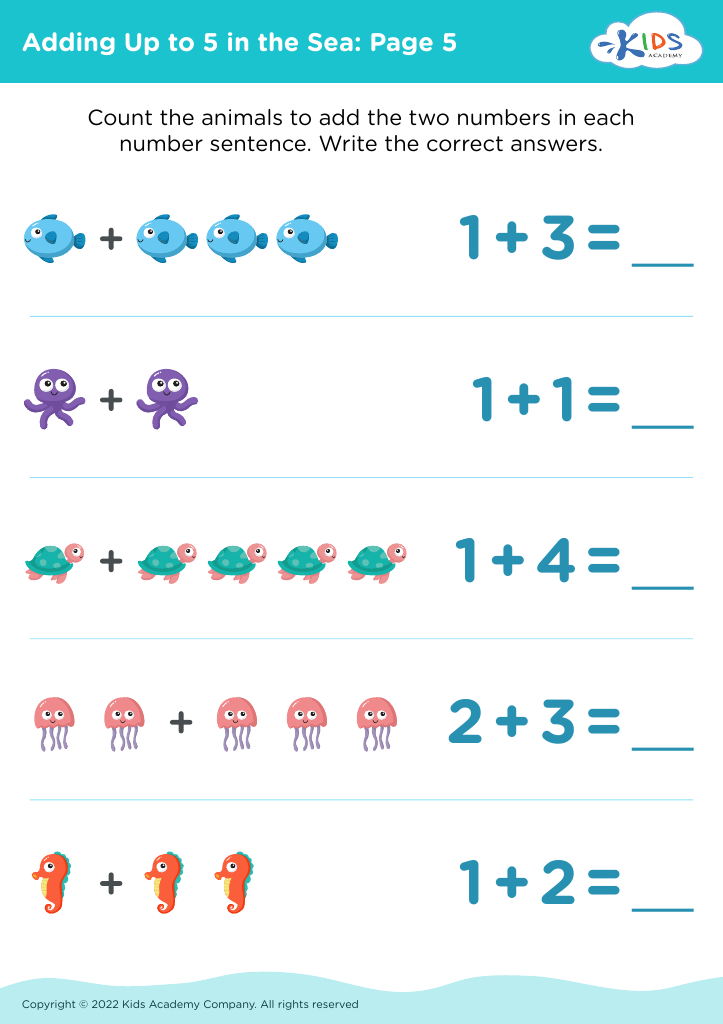
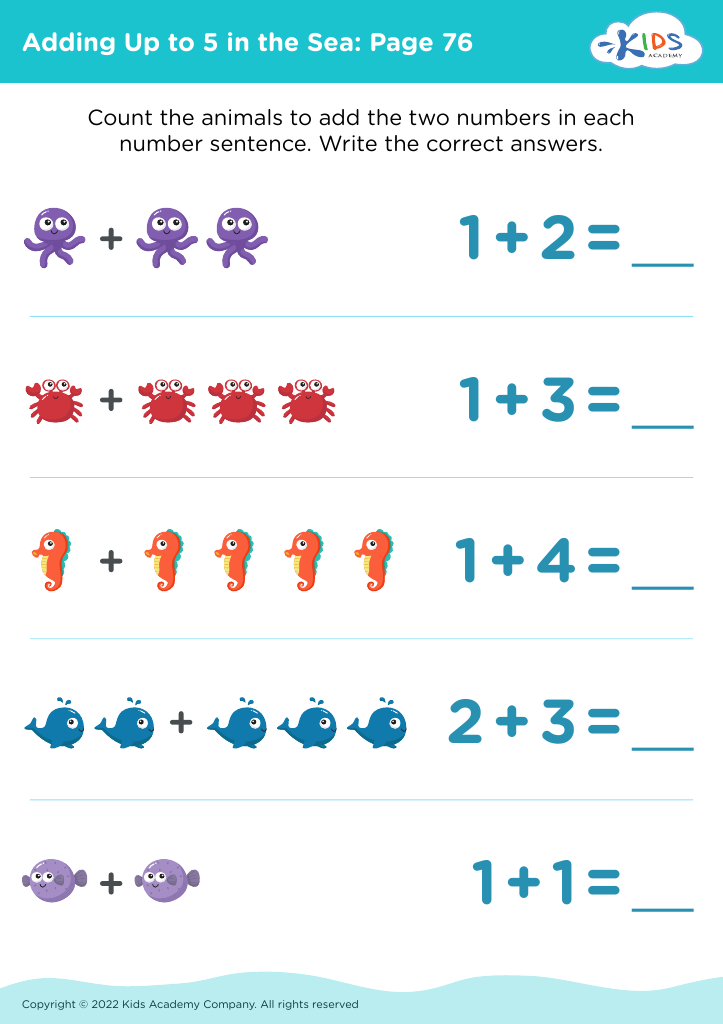
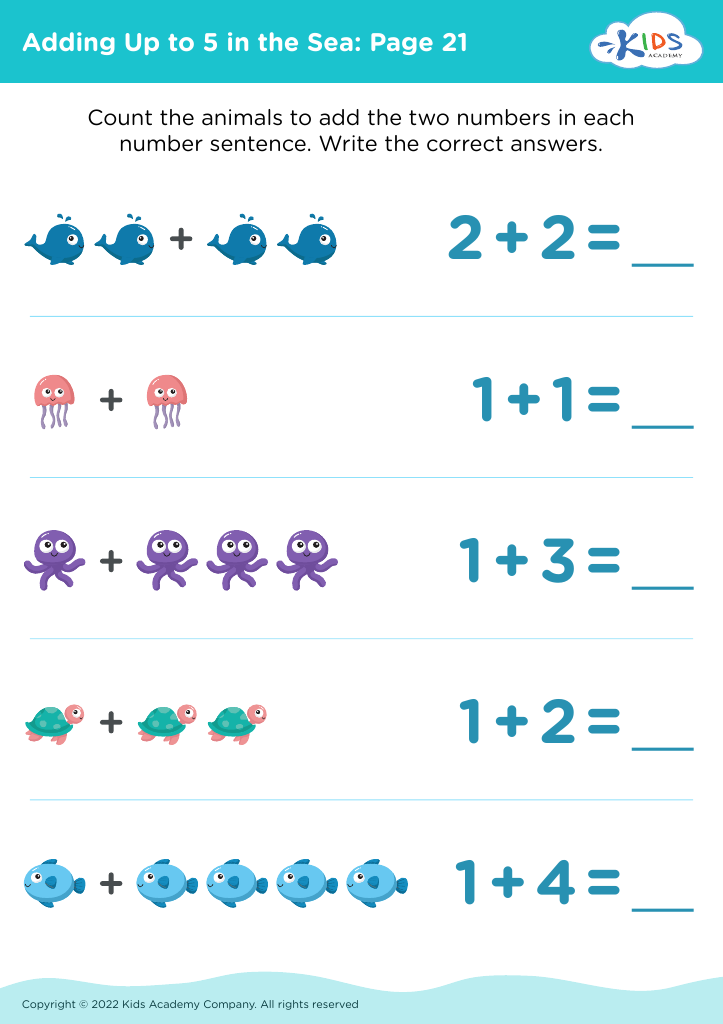
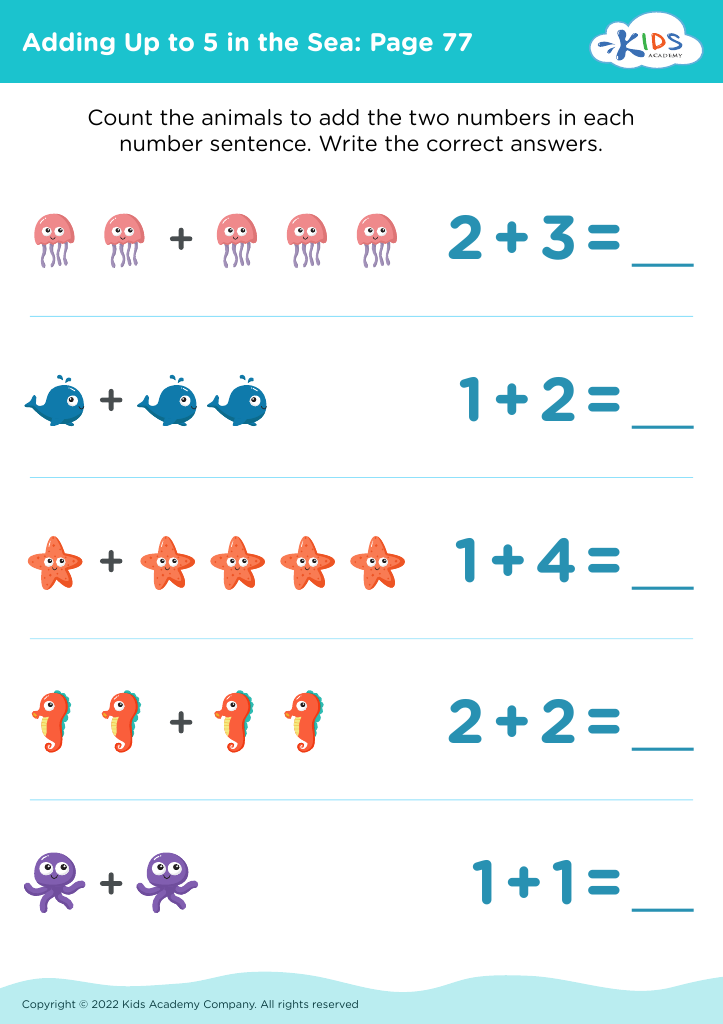
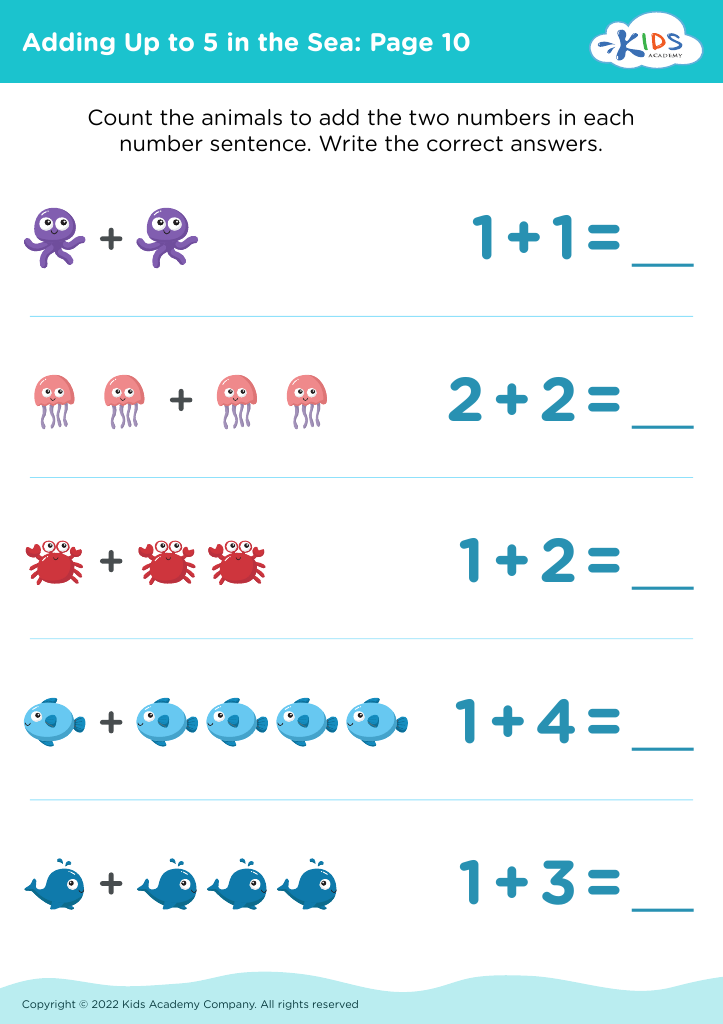
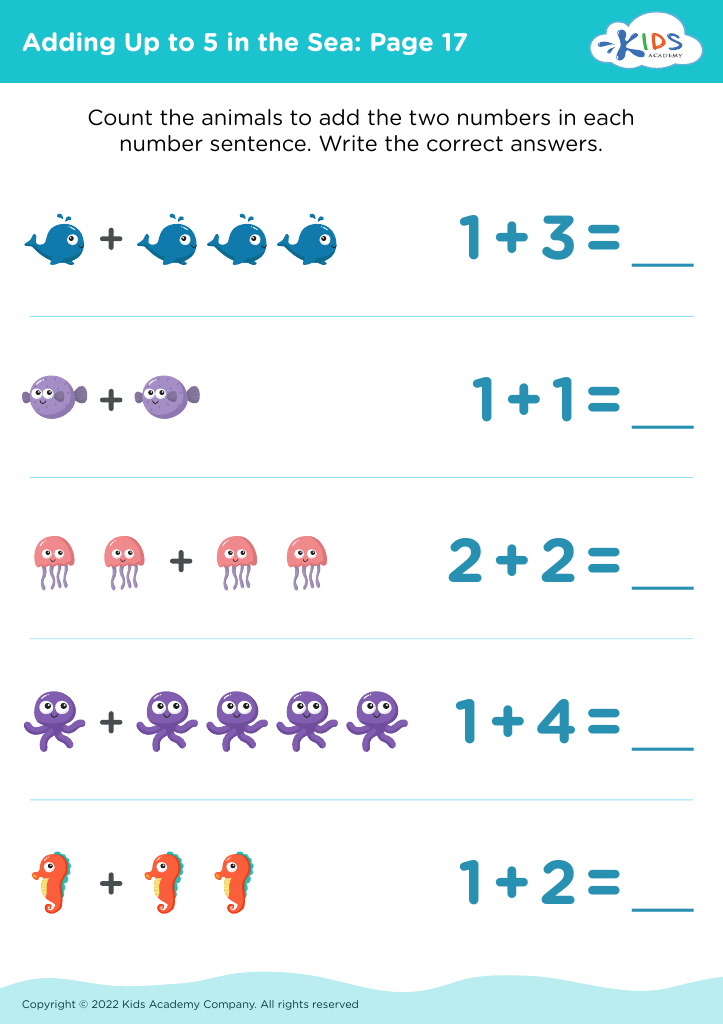
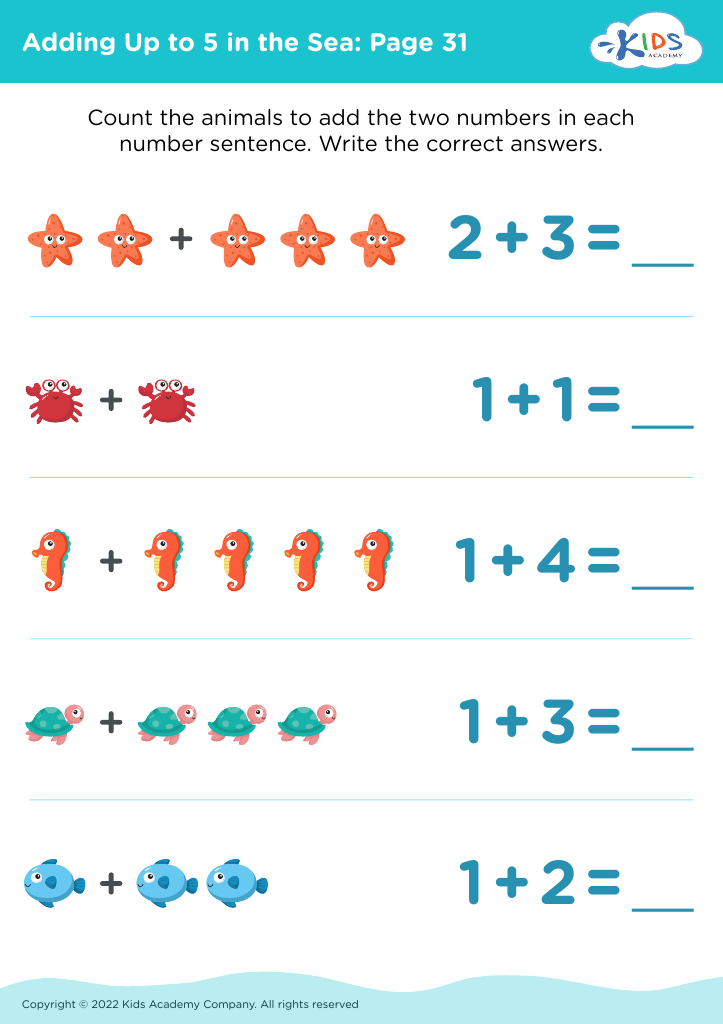
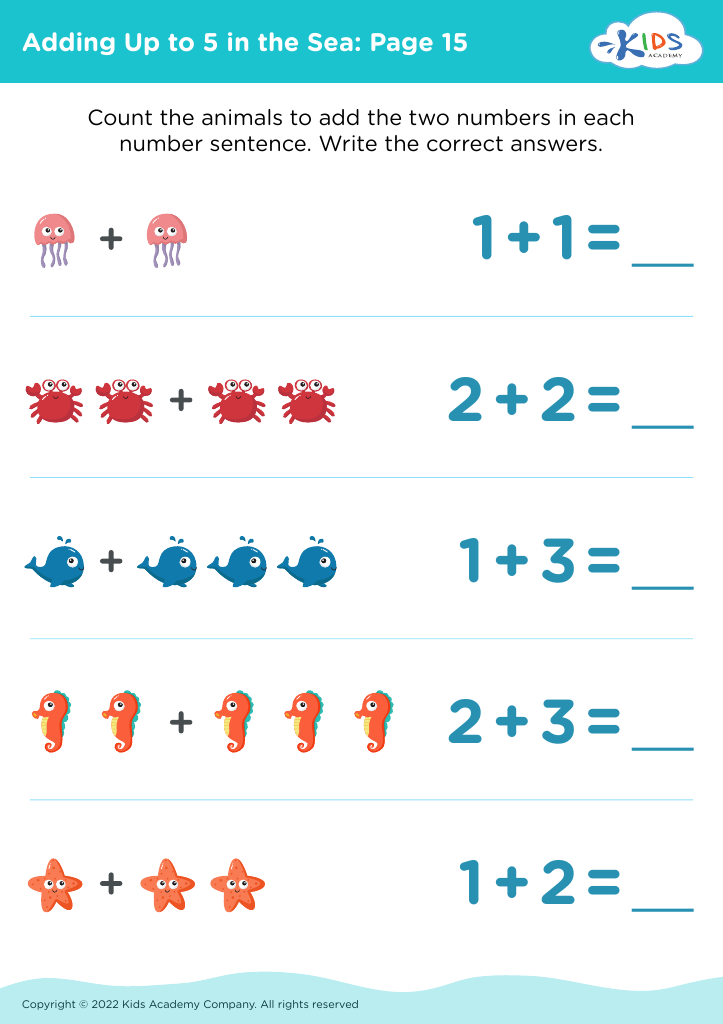
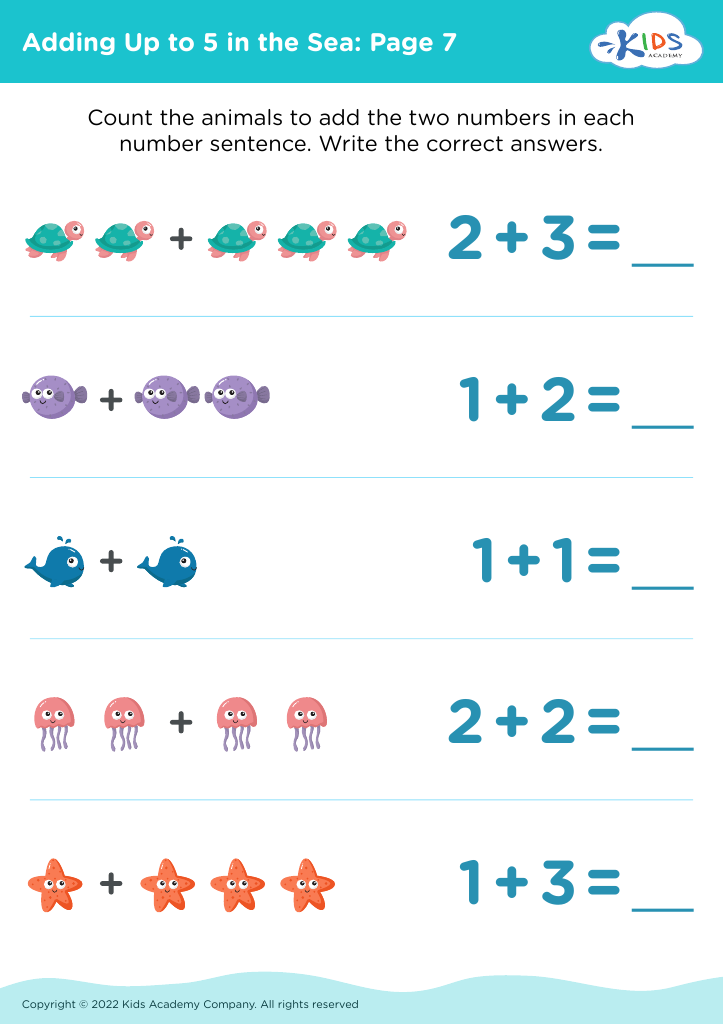
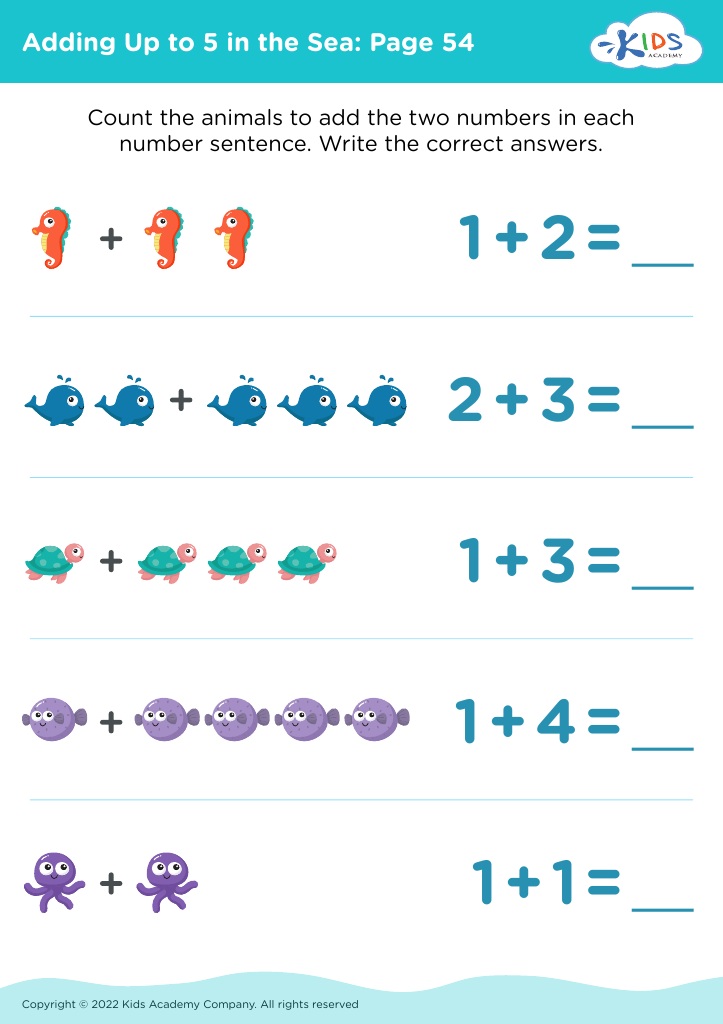
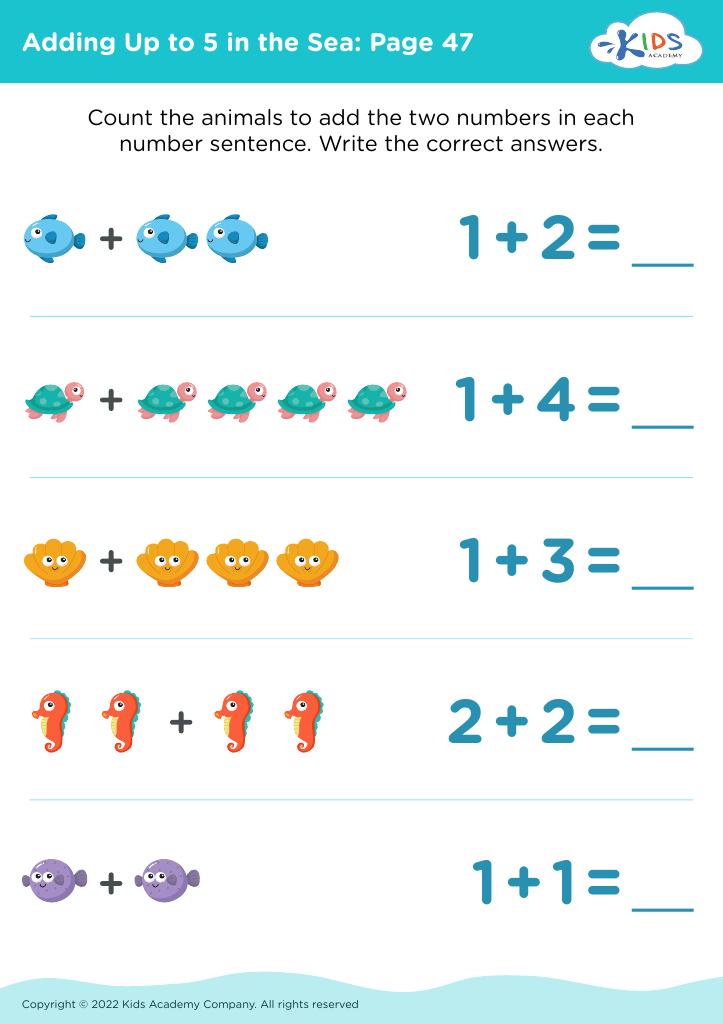



Cognitive development during early childhood is a pivotal foundation for future learning, and engaging children ages 3-4 in activities like cognitive development adding in the sea can significantly support this growth. At this stage, young minds are rapidly expanding, showing tremendous curiosity and the ability to absorb new information. Engaging them in a thematic activity like adding in the sea combines essential cognitive skills with stimulating and enjoyable play.
First, such activities introduce fundamental math concepts in a playful environment. By integrating marine themes, children are more likely to engage and retain their interest, making the learning process enjoyable and memorable. Secondly, working on adding exercises helps develop critical thinking and problem-solving skills, vital to their overall cognitive development.
Moreover, themed activities like these can enhance linguistic skills as children learn new vocabulary related to the sea and develop their communication skills by describing their actions or sharing with peers. Fine motor skills are also practiced as they manipulate small objects, which is crucial for writing and other precise tasks.
Parents and teachers should care about cognitive development adding activities as they provide a comprehensive approach to learning, incorporating sensory, motor, and cognitive skills in a context that keeps young children curious and motivated to explore further. This early investment lays down the basic skills that benefit their long-term academic success and overall intellectual growth.