Filters

31 filtered results

Clear all filters
Favorites
With answer key
Interactive

31 filtered results

Difficulty Level

Grade


Discover our engaging "Animal Recognition: Adding on the Farm" worksheets designed specifically for children ages 3-4. These thoughtfully crafted resources combine fundamental math skills with fun animal themes to create an interactive learning experience. Children will enhance their animal recognition abilities while practicing basic addition with adorable farm creatures, promoting both cognitive development and a love for learning. Our worksheets are perfect for parents and educators looking to introduce early math concepts in a playful way. Dive into the world of numbers and animals today and watch your little ones thrive in their educational journey!
Check out this FREE Trial Lesson on Adding on the Farm for age 3-4!

T

Favorites
With answer key
Interactive
  • 3-4
  • Animal recognition
  • Adding on the Farm
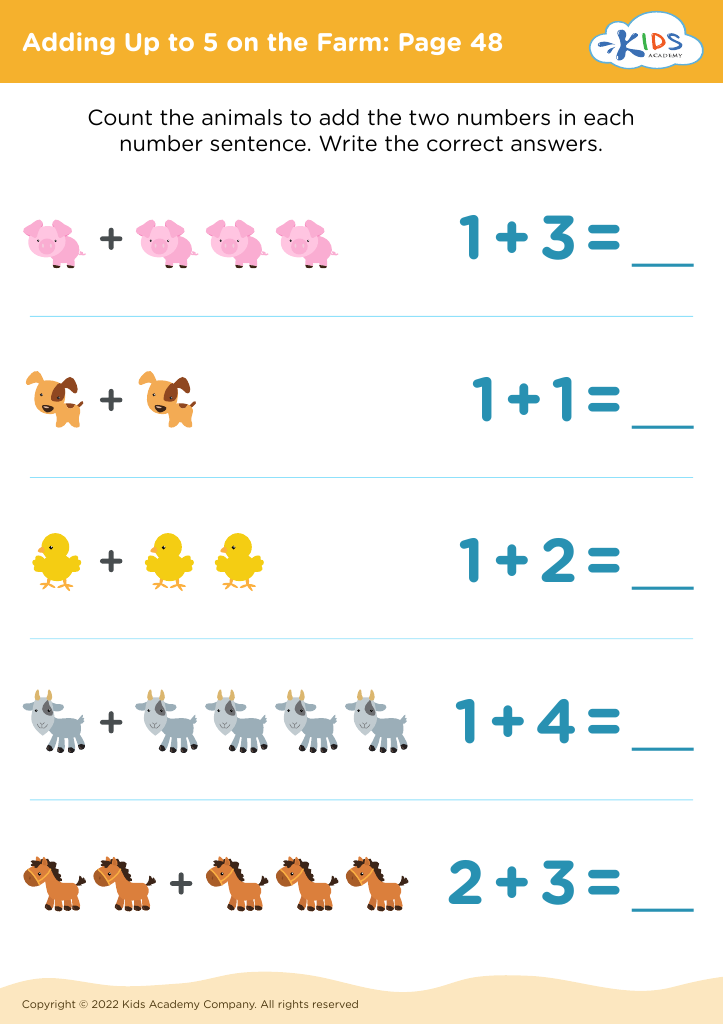
Adding Up to 5 on the Farm: Page 48
Worksheet
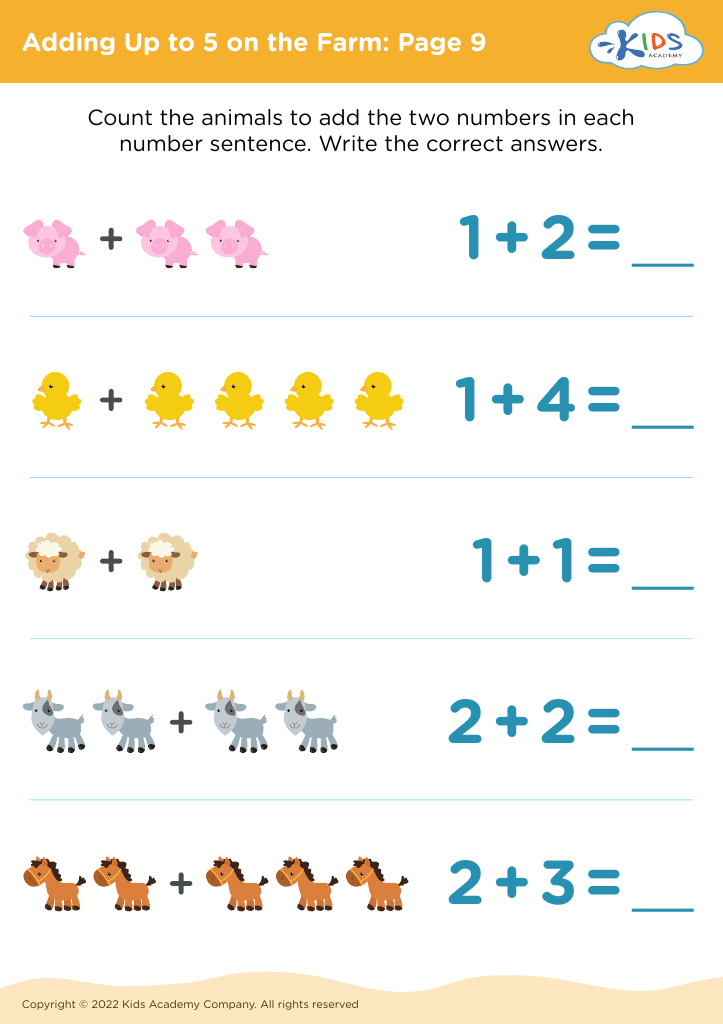
Adding Up to 5 on the Farm: Page 9
Worksheet
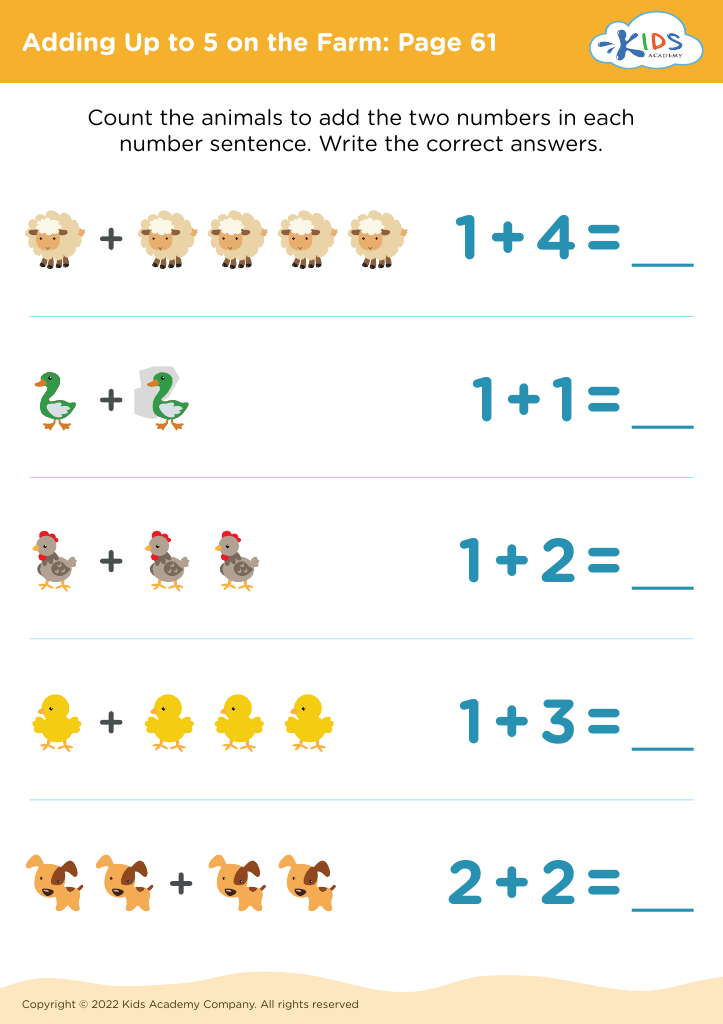
Adding Up to 5 on the Farm: Page 61
Worksheet
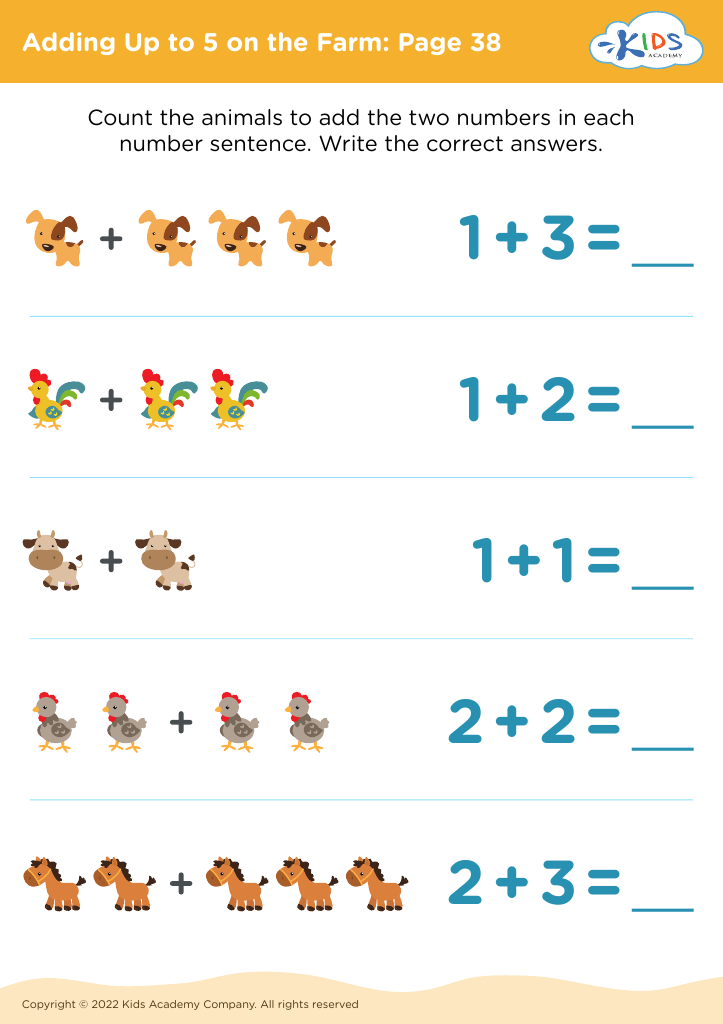
Adding Up to 5 on the Farm: Page 38
Worksheet
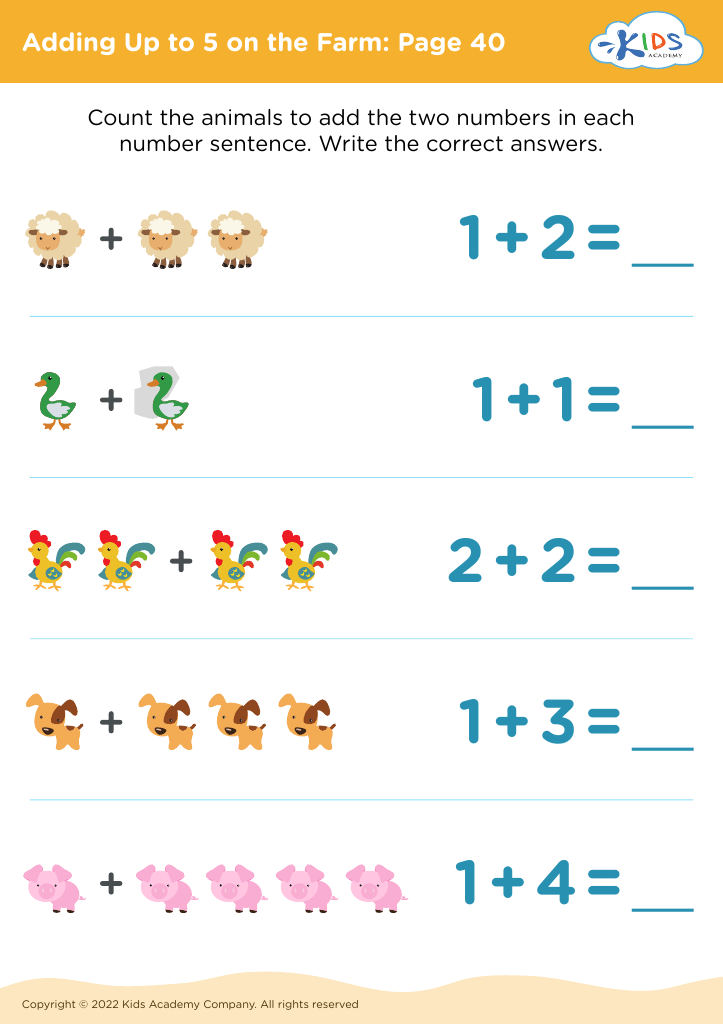
Adding Up to 5 on the Farm: Page 40
Worksheet
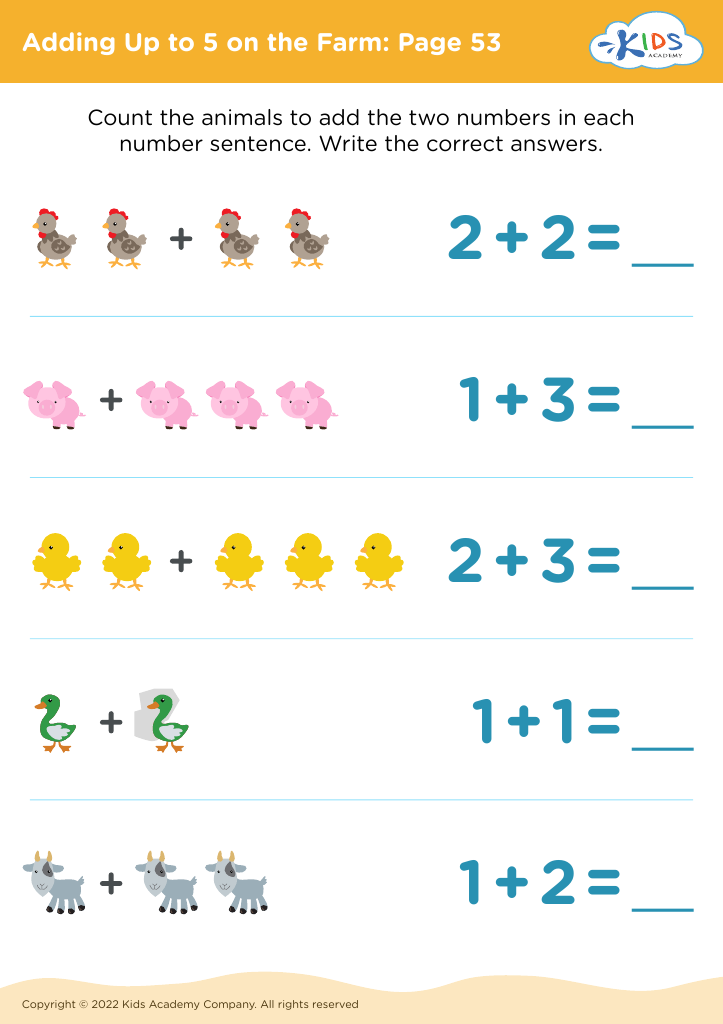
Adding Up to 5 on the Farm: Page 53
Worksheet
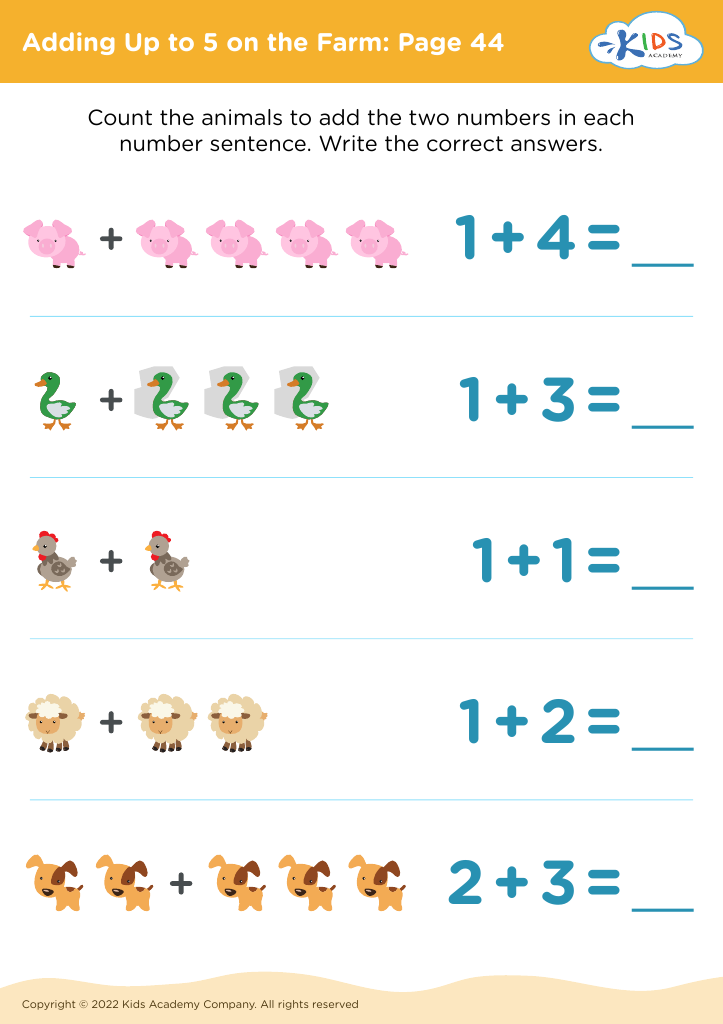
Adding Up to 5 on the Farm: Page 44
Worksheet
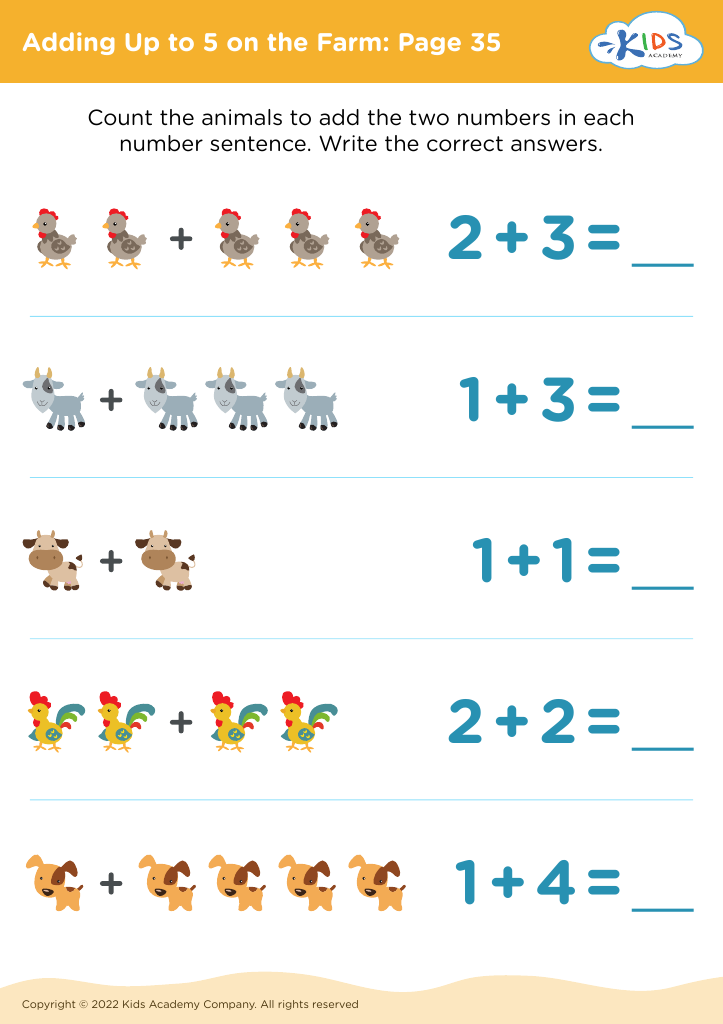
Adding Up to 5 on the Farm: Page 35
Worksheet
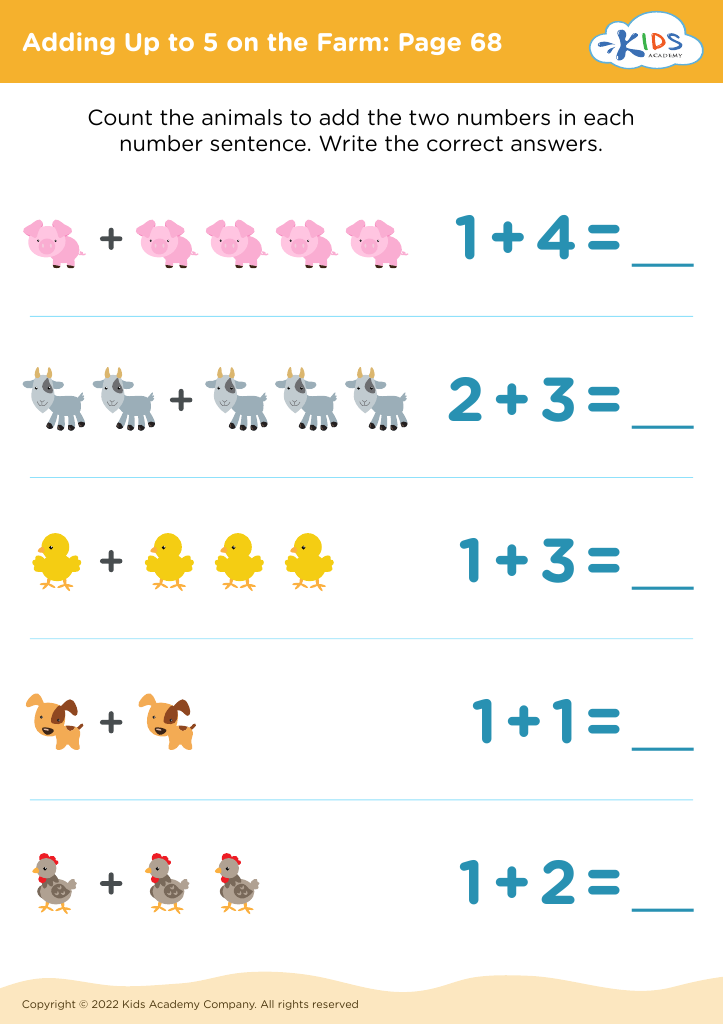
Adding Up to 5 on the Farm: Page 68
Worksheet
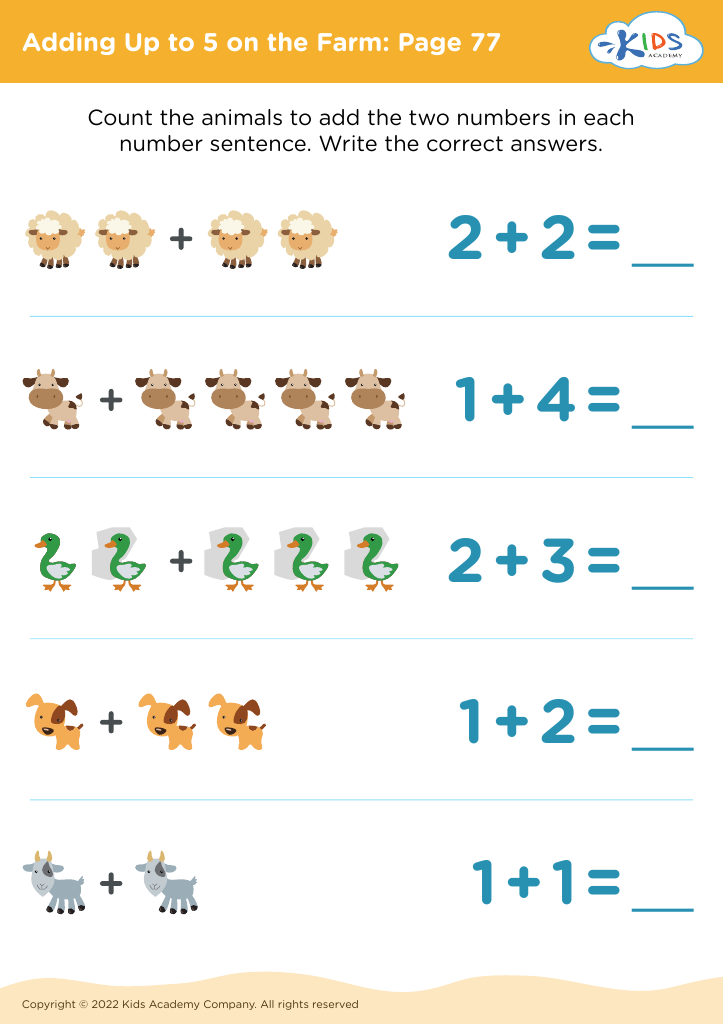
Adding Up to 5 on the Farm: Page 77
Worksheet
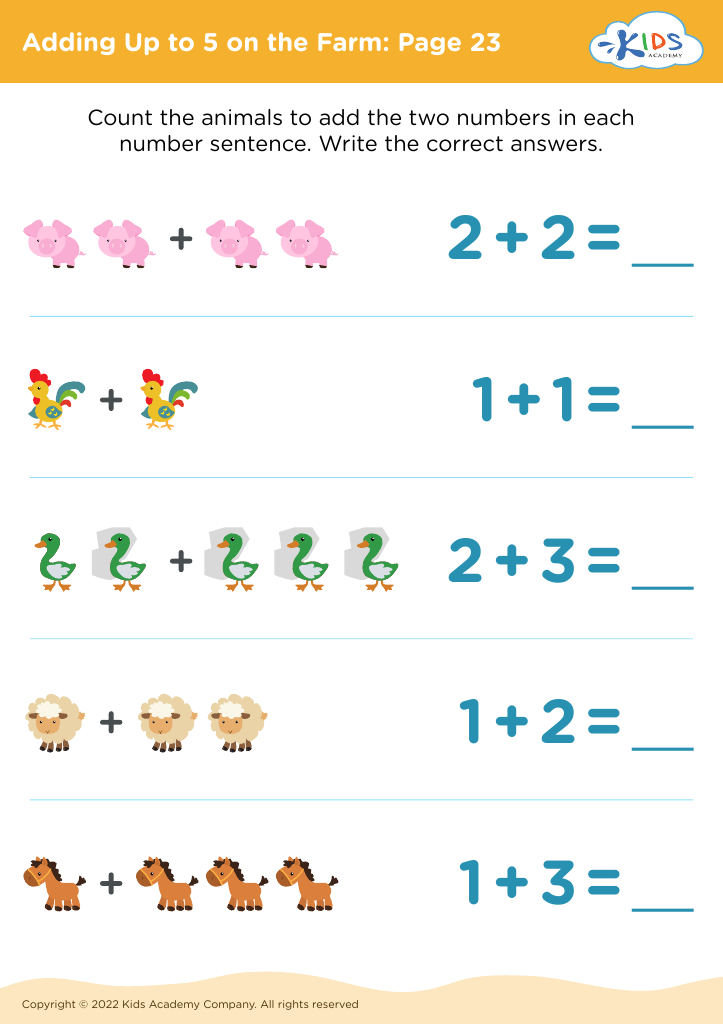
Adding Up to 5 on the Farm: Page 23
Worksheet
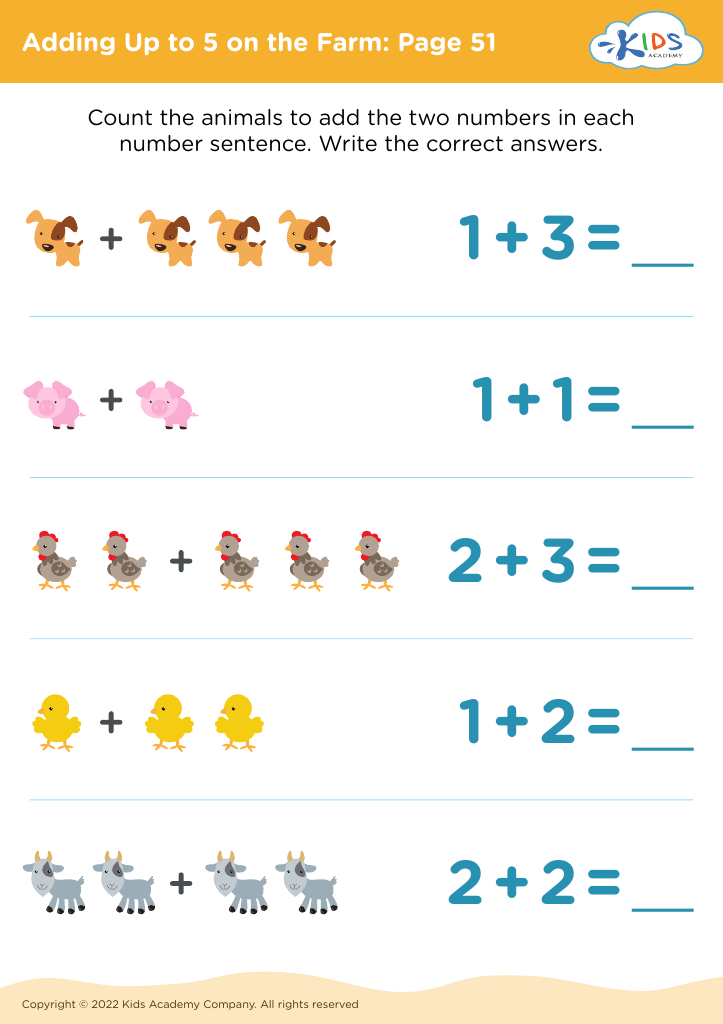
Adding Up to 5 on the Farm: Page 51
Worksheet
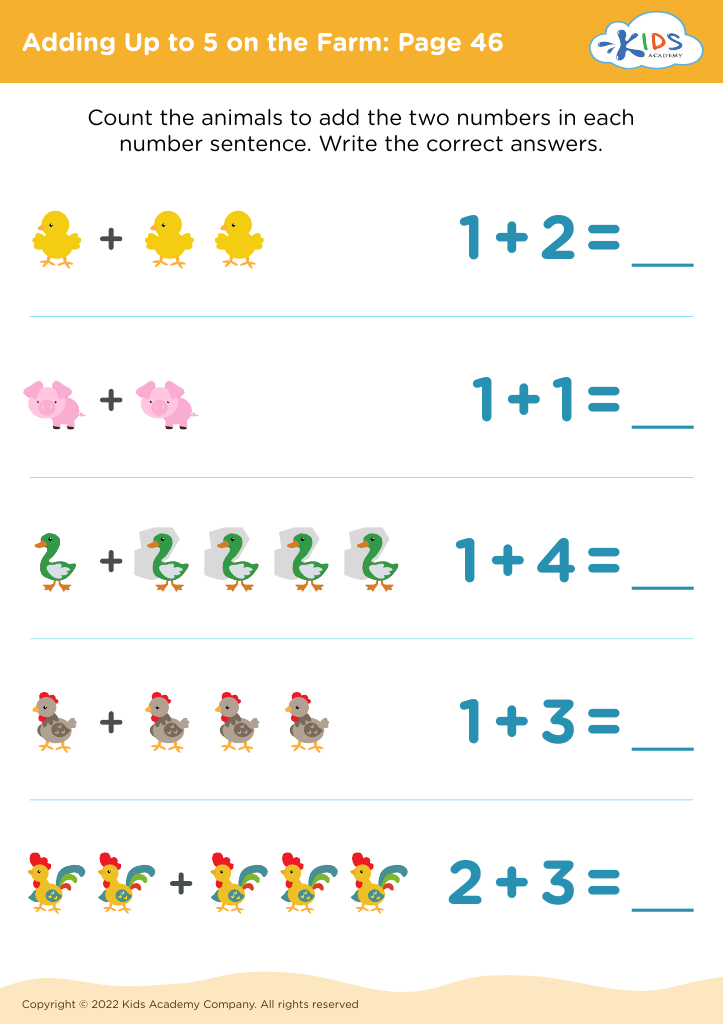
Adding Up to 5 on the Farm: Page 46
Worksheet
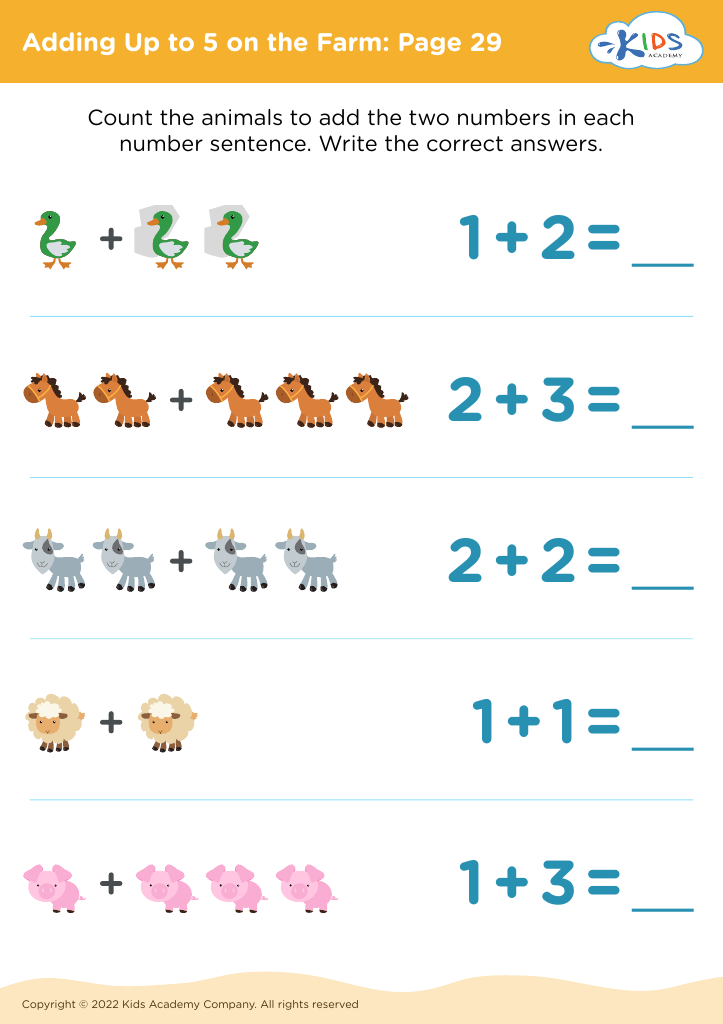
Adding Up to 5 on the Farm: Page 29
Worksheet
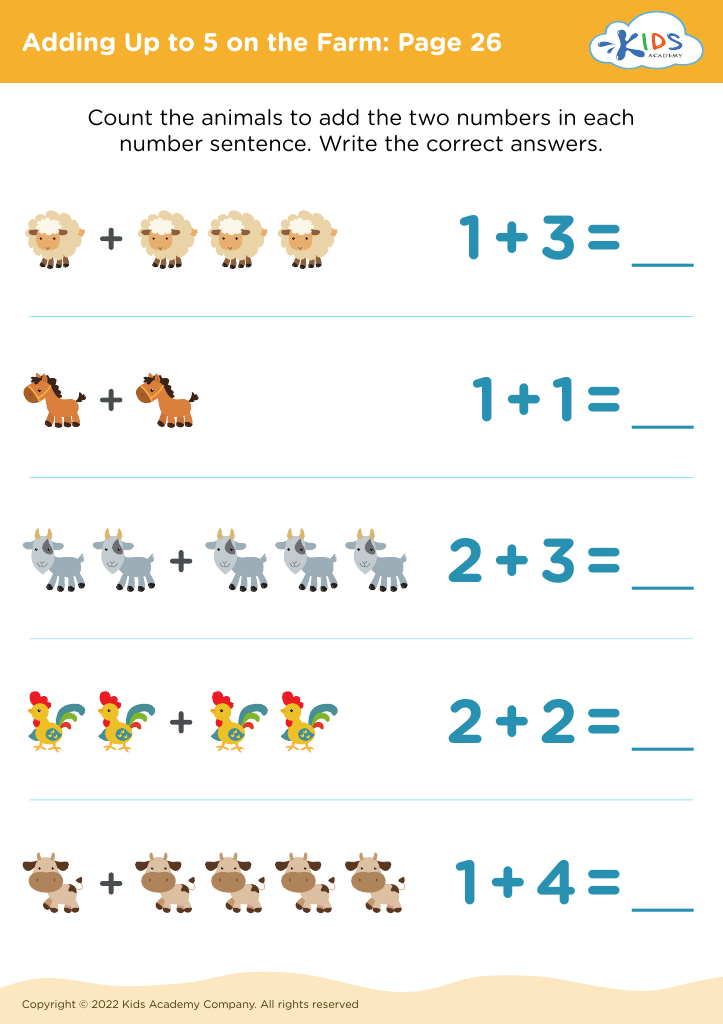
Adding Up to 5 on the Farm: Page 26
Worksheet
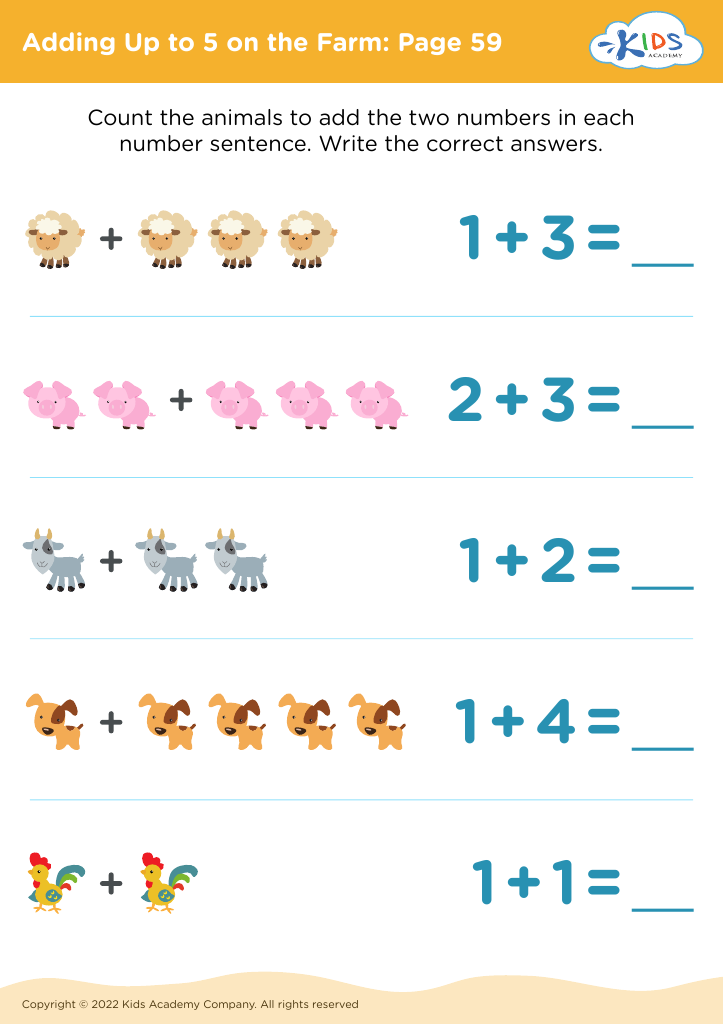
Adding Up to 5 on the Farm: Page 59
Worksheet
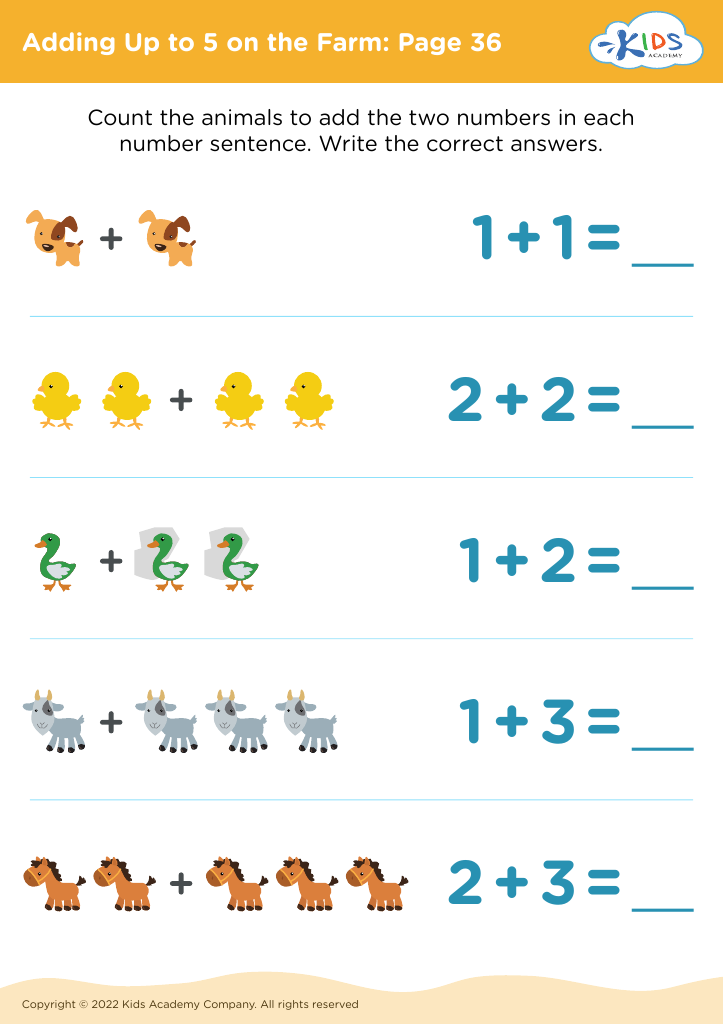
Adding Up to 5 on the Farm: Page 36
Worksheet
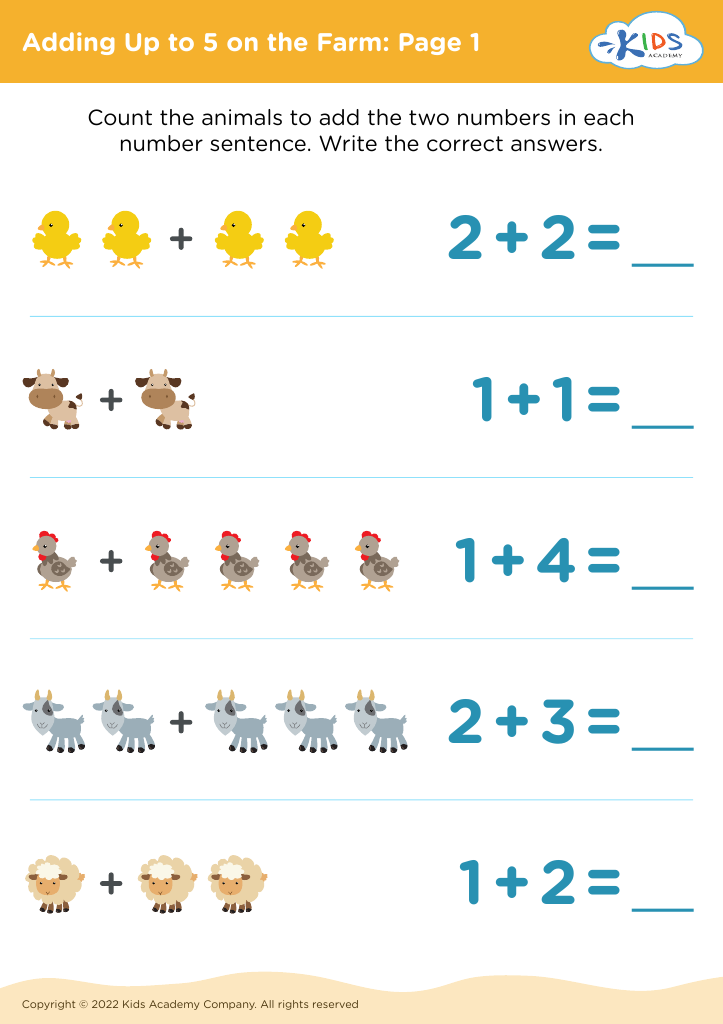
Adding Up to 5 on the Farm: Page 1
Worksheet
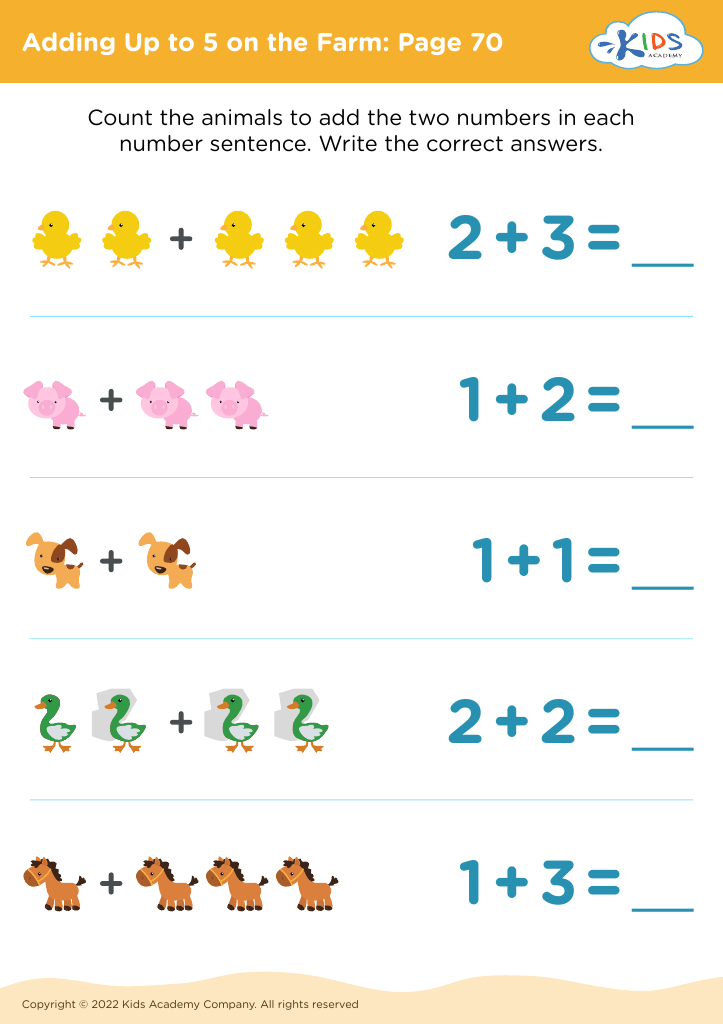
Adding Up to 5 on the Farm: Page 70
Worksheet
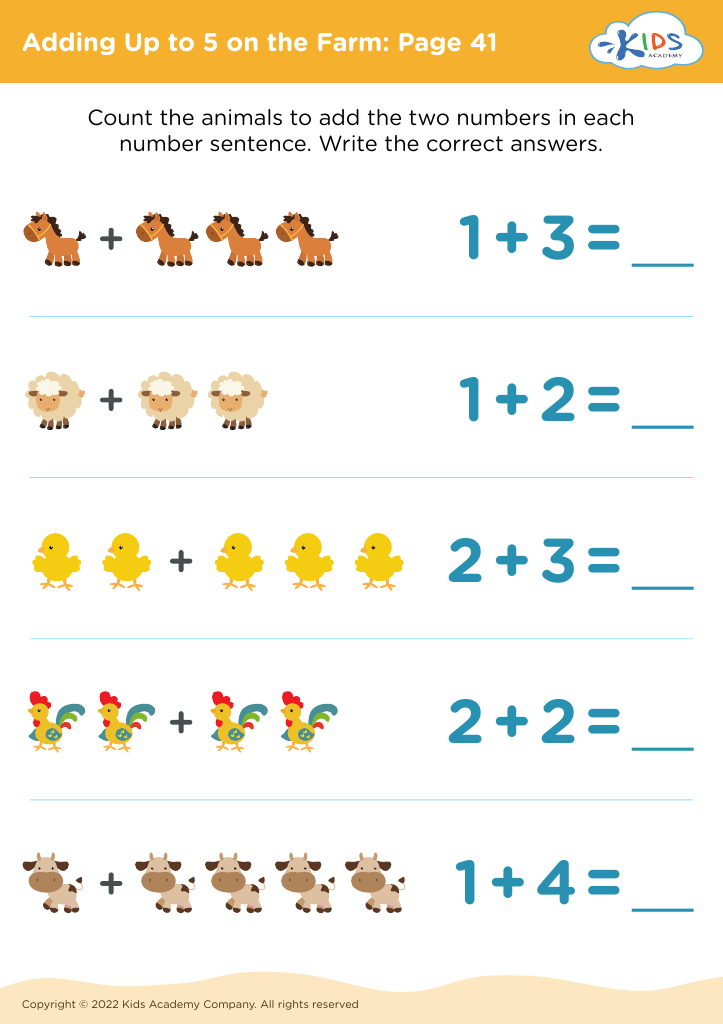
Adding Up to 5 on the Farm: Page 41
Worksheet
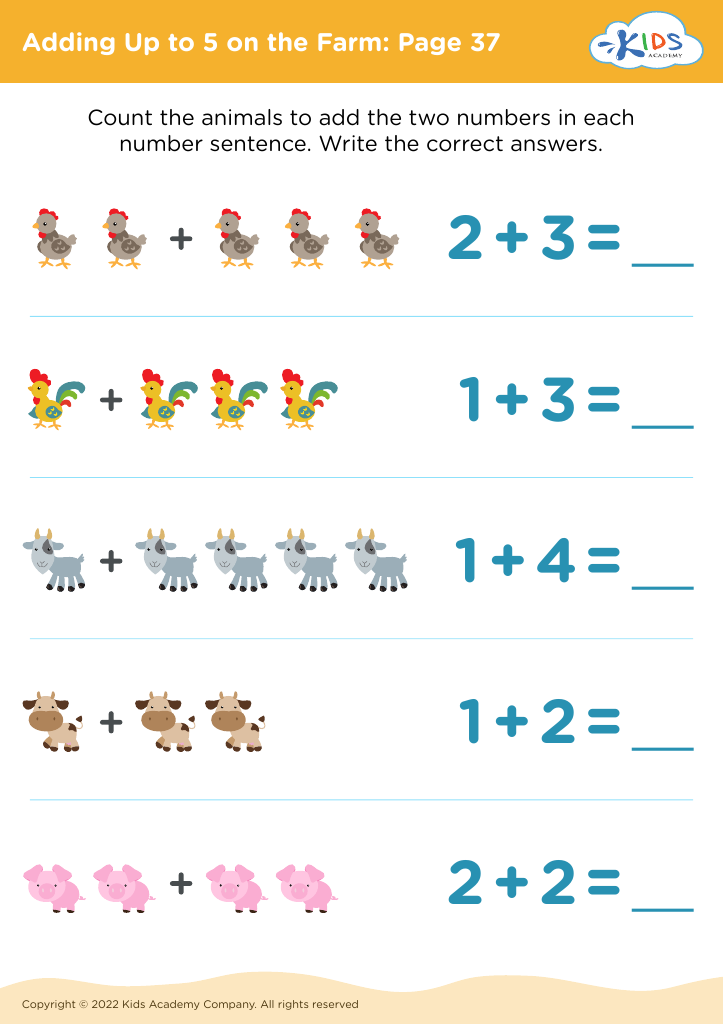
Adding Up to 5 on the Farm: Page 37
Worksheet
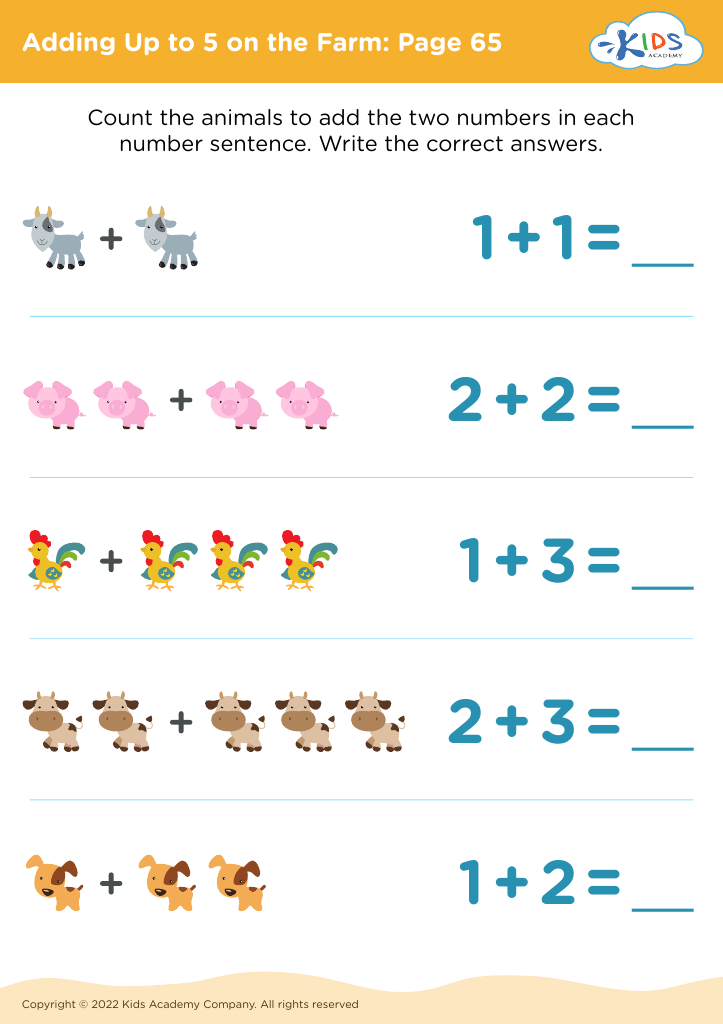
Adding Up to 5 on the Farm: Page 65
Worksheet
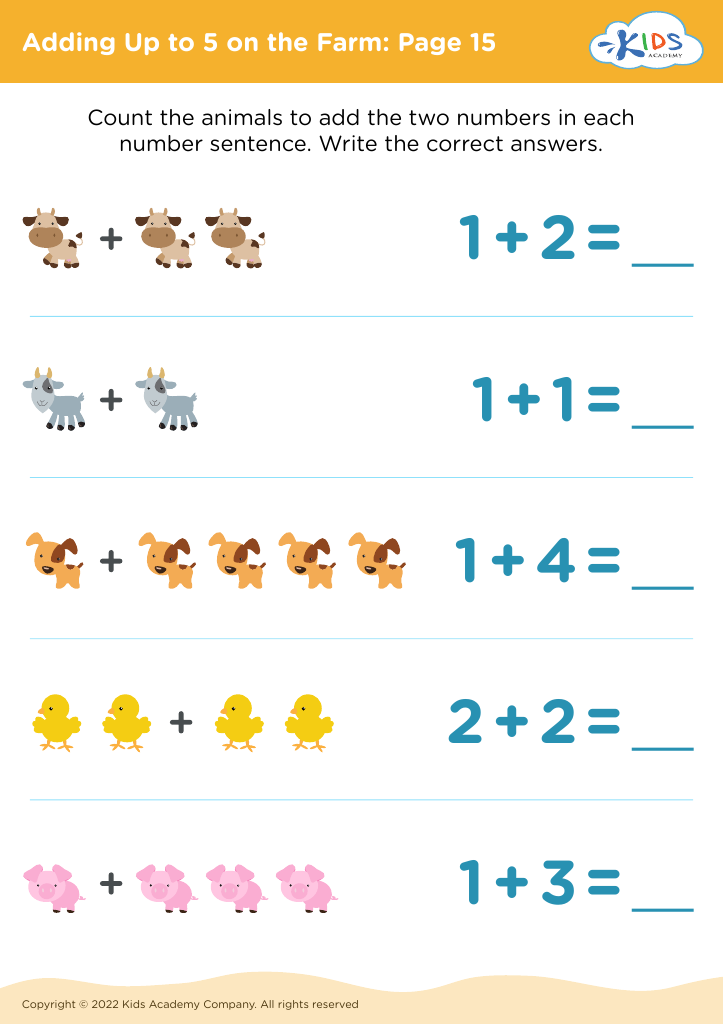
Adding Up to 5 on the Farm: Page 15
Worksheet
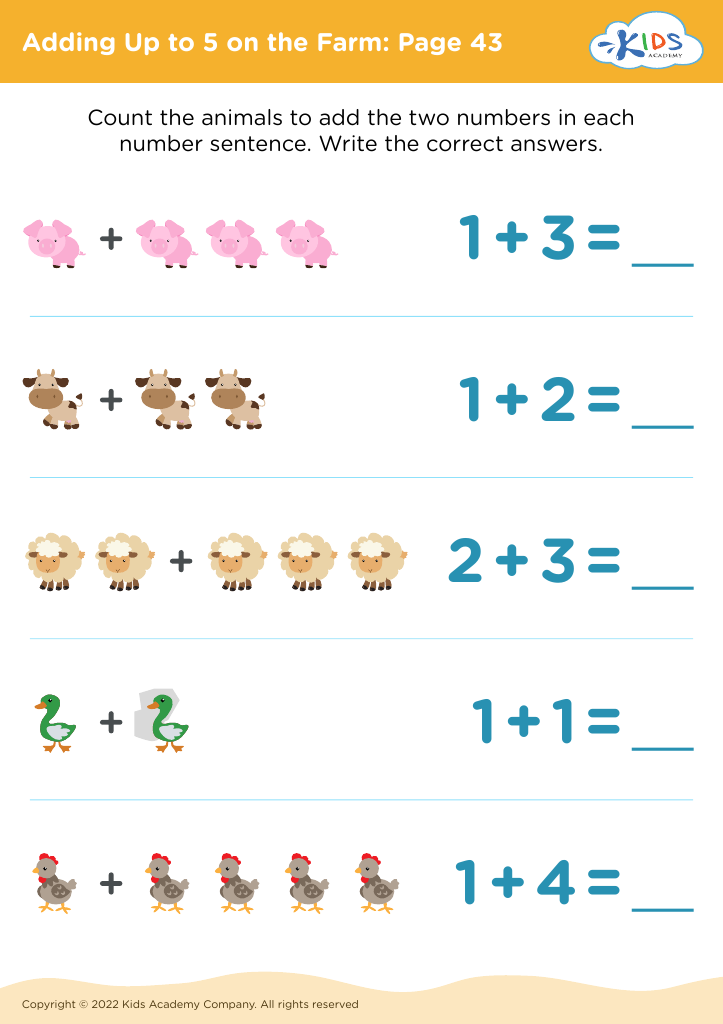
Adding Up to 5 on the Farm: Page 43
Worksheet


Animal recognition on a farm is crucial for young children aged 3-4, as it serves as a foundational aspect of their cognitive and social development. By learning to identify different farm animals, children engage in active learning that enhances their vocabulary, memory, and observational skills. Recognizing animals like cows, pigs, sheep, and chickens helps enrich their understanding of their environment and fosters curiosity about the world around them.

Moreover, animal recognition promotes emotional intelligence. Children can develop empathy by understanding that animals have needs, behaviors, and characteristics. This aspect can lead to discussions about the importance of caring for animals and their role in our lives, bridging the connection between humans and nature.

For parents and teachers, integrating animal recognition into the learning environment encourages imaginative play and creativity. It allows for active participation through storytelling, songs, and hands-on experiences, making learning enjoyable and engaging. Additionally, farm animals can be tied to lessons on responsibility, such as the importance of caring for living creatures. Ultimately, promoting animal recognition nurtures a sense of wonder, laying the groundwork for environmental awareness and ethical consideration as children grow.