Understanding quantity Adding Up to 5 Worksheets for Ages 3-4
17 filtered results
-
From - To
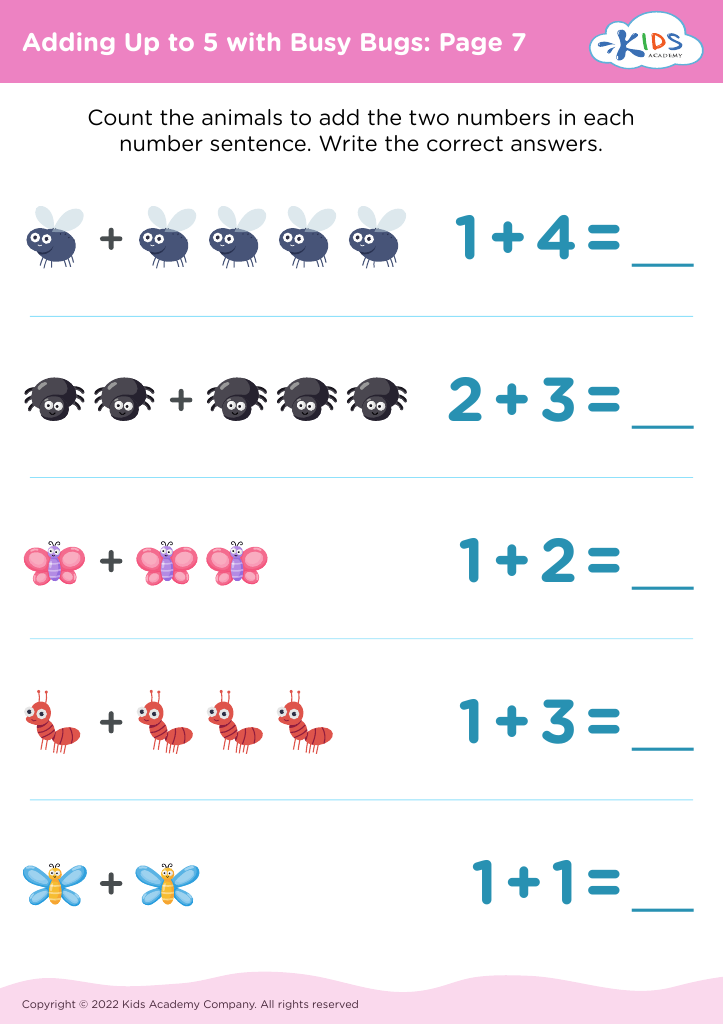
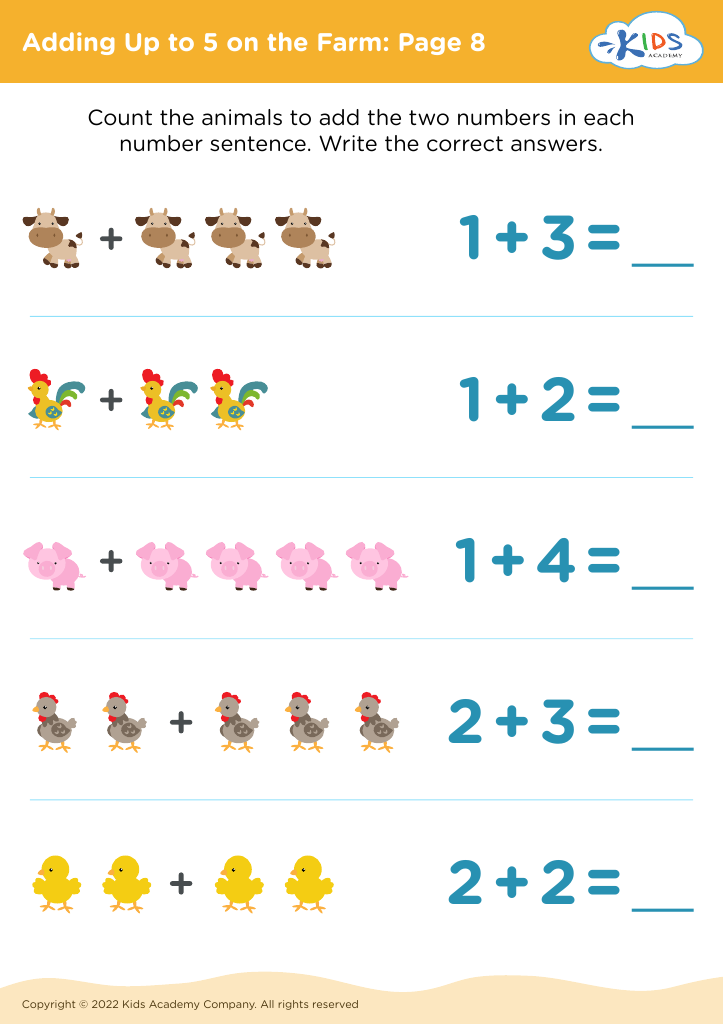
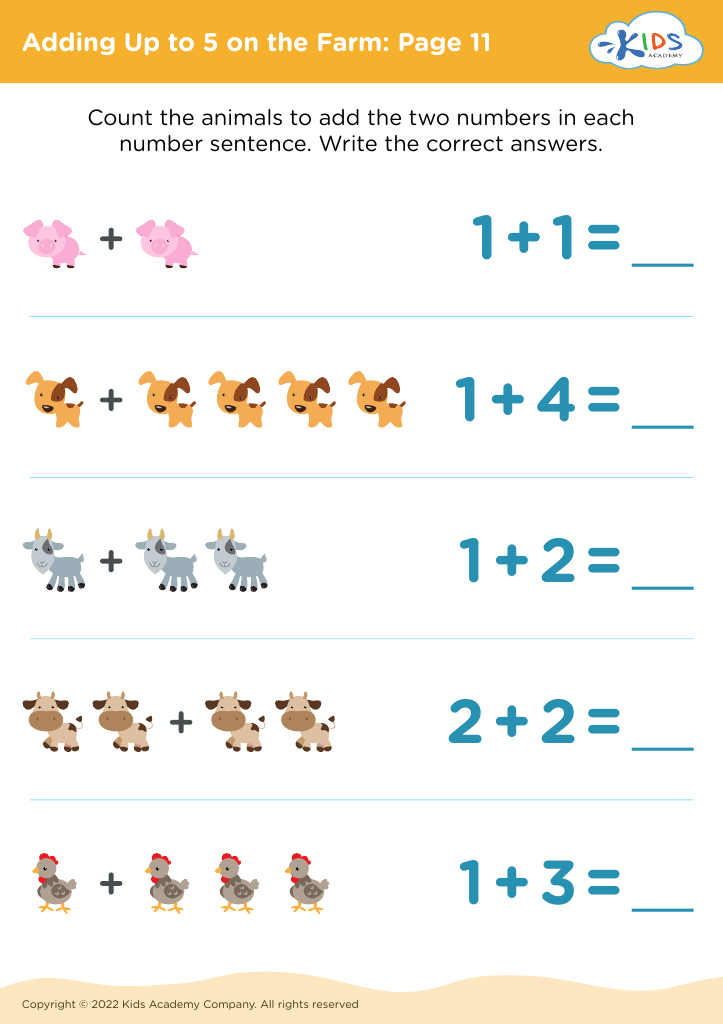
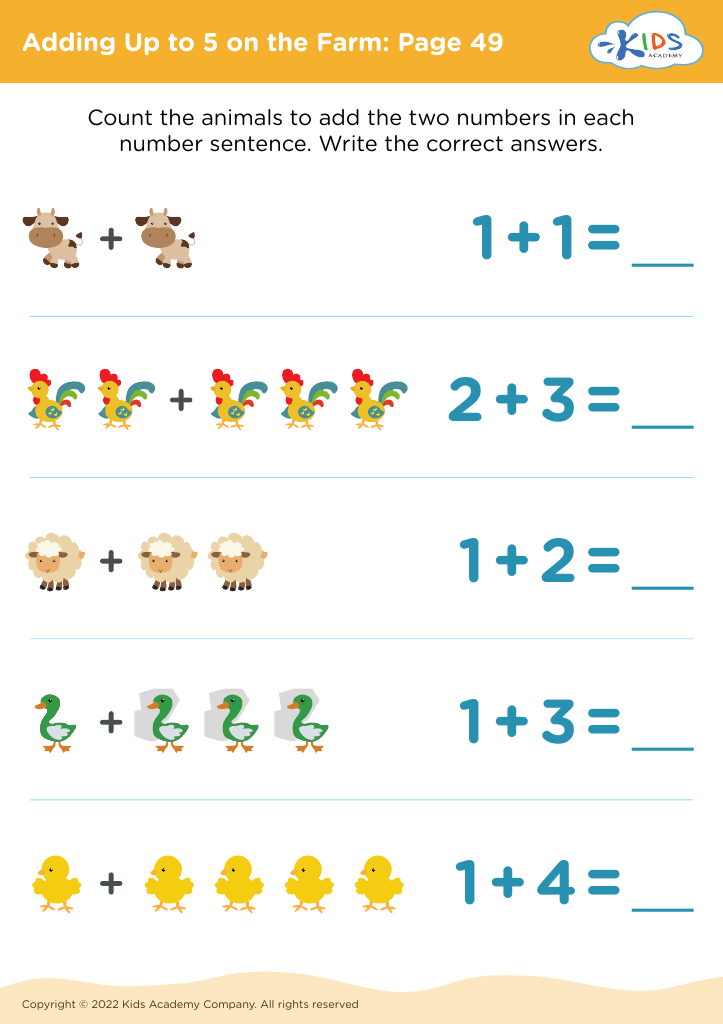
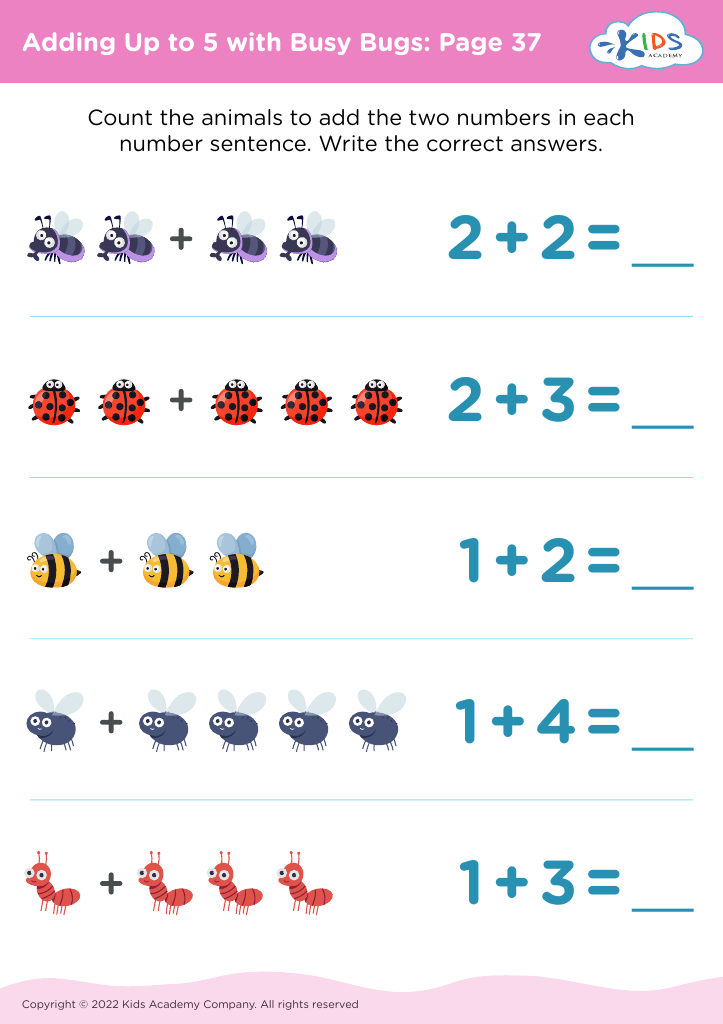
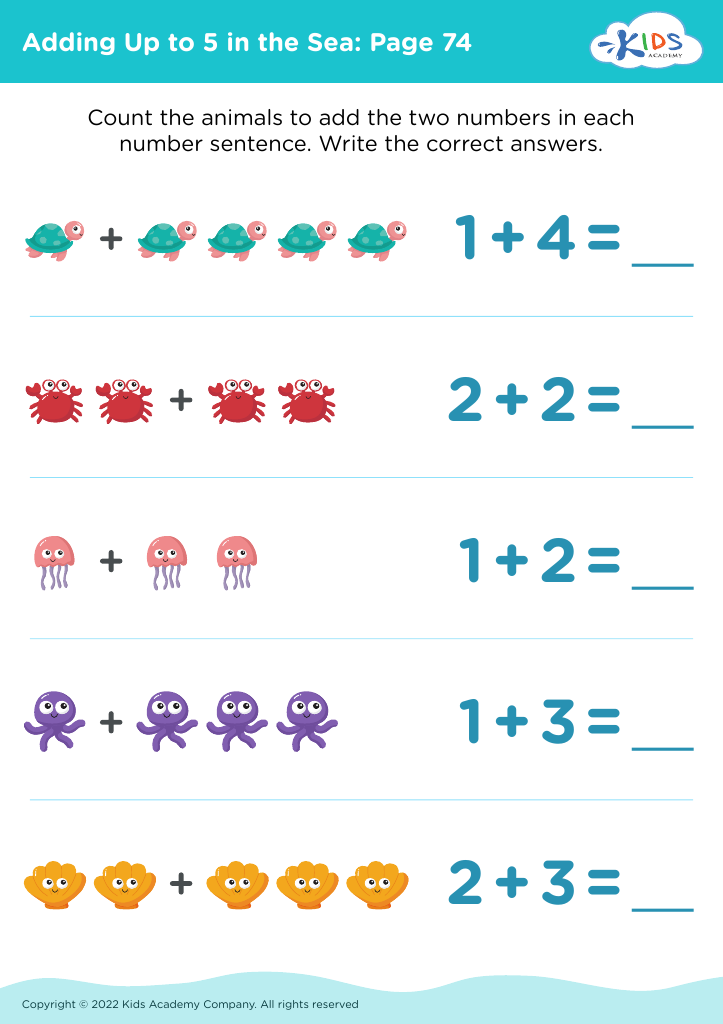
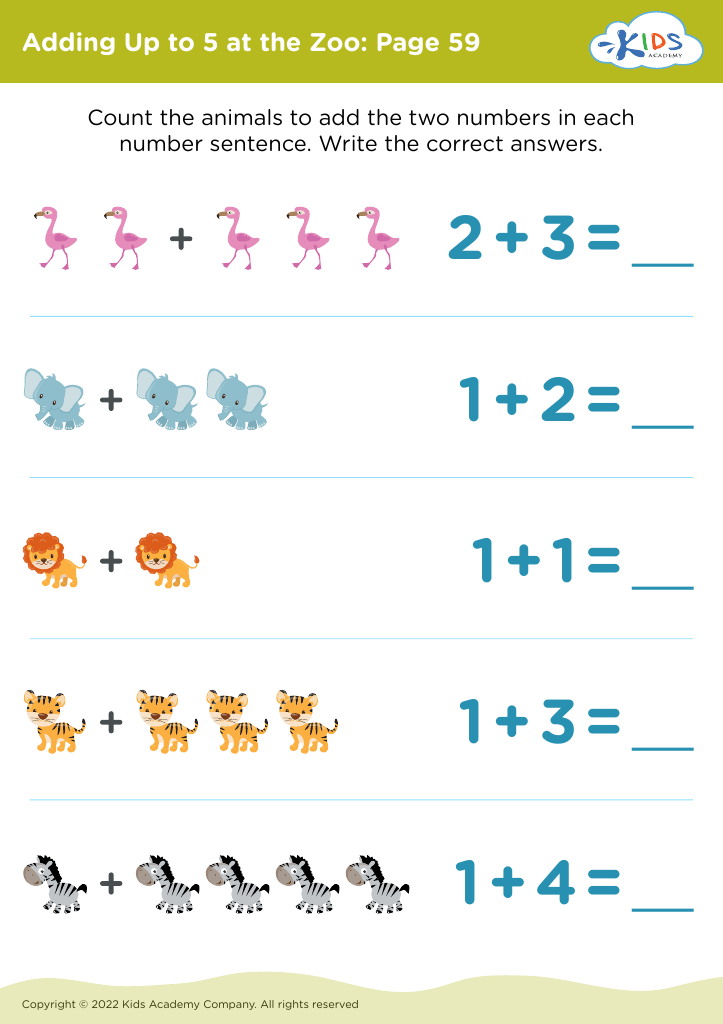
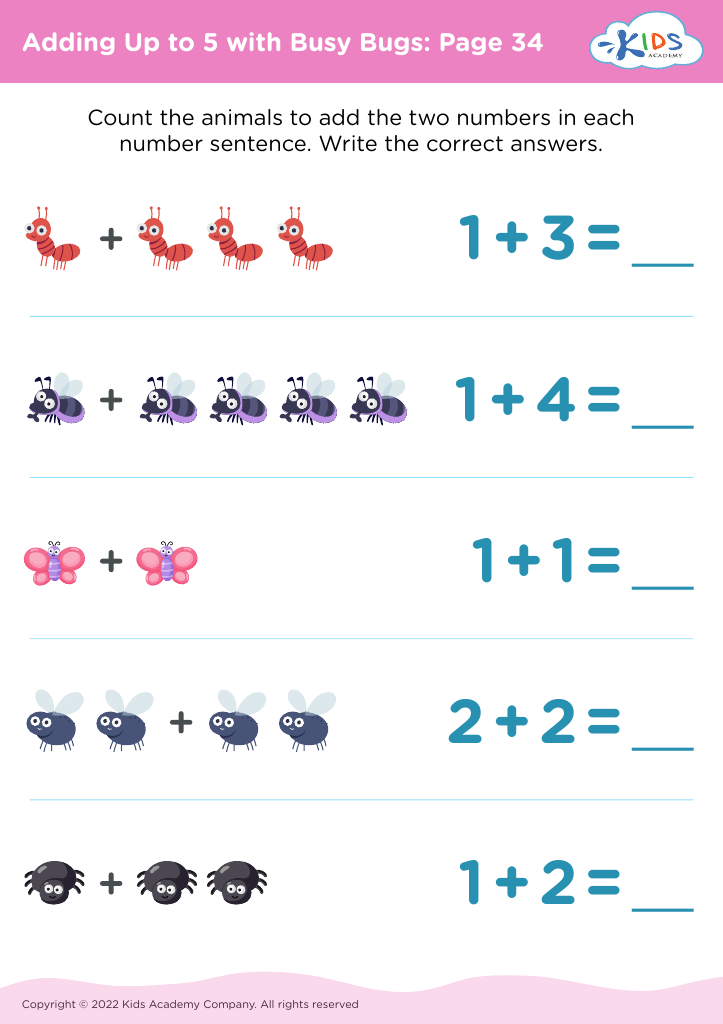
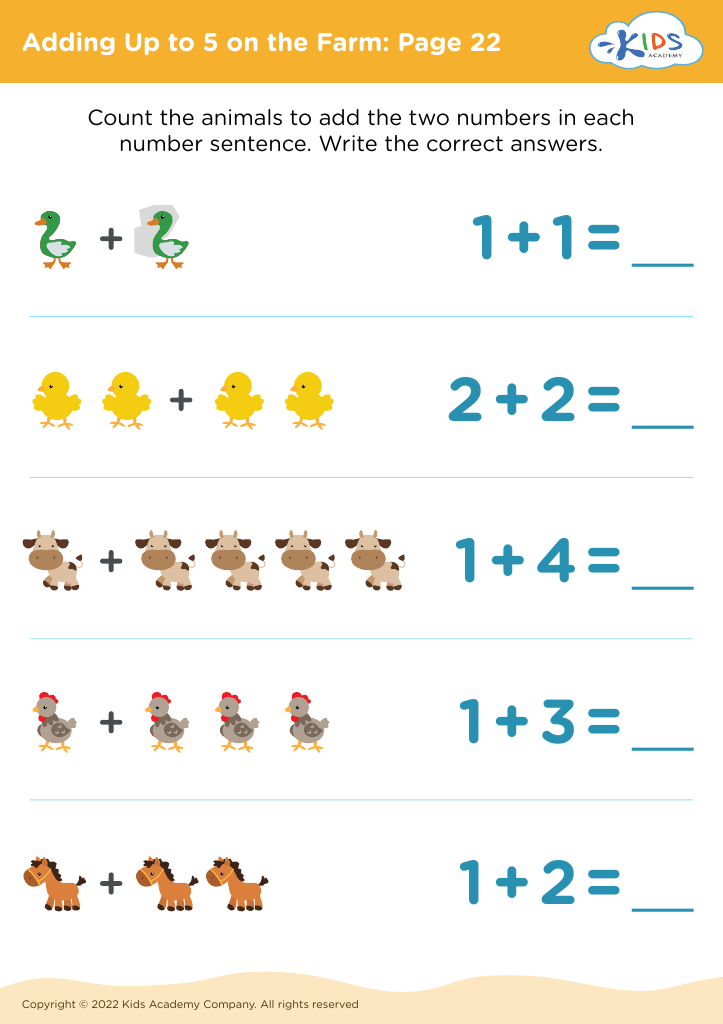
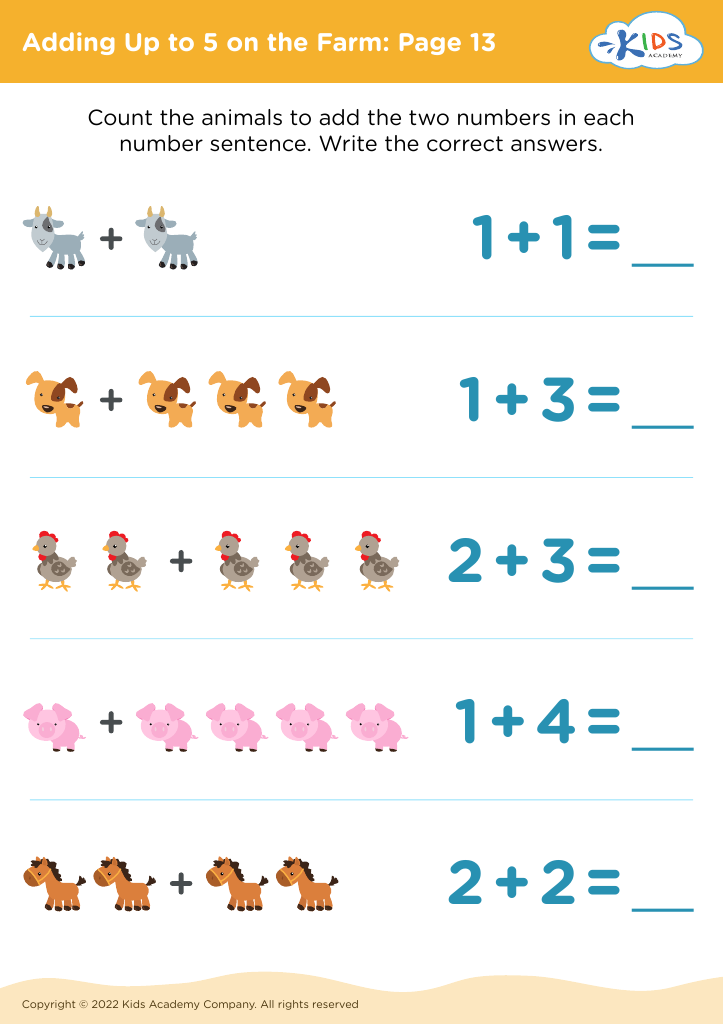
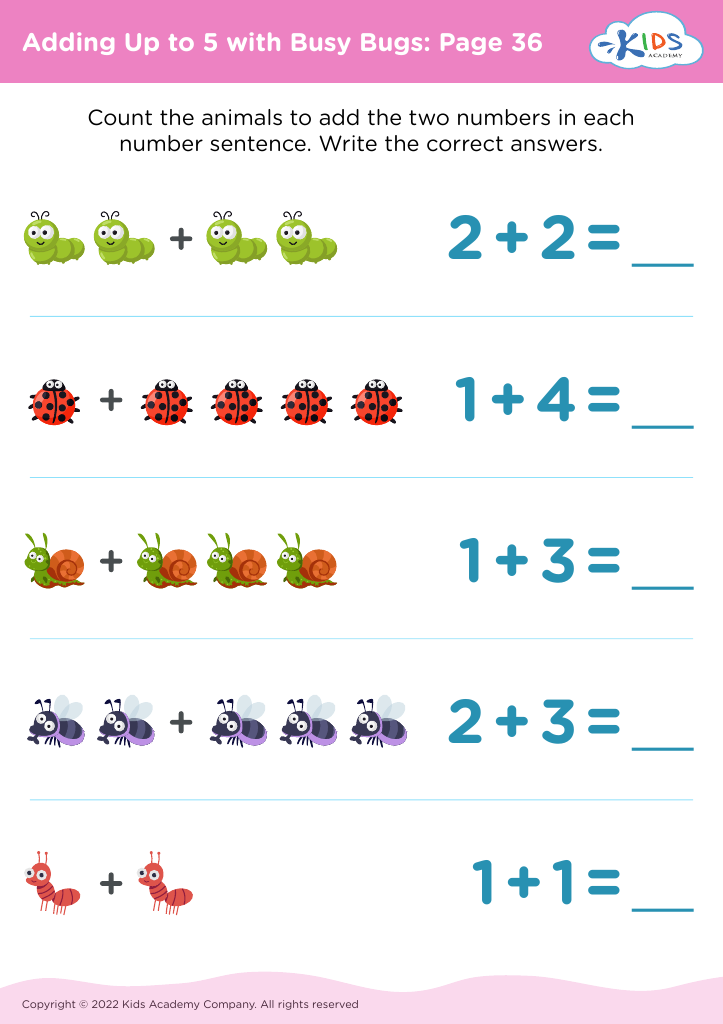
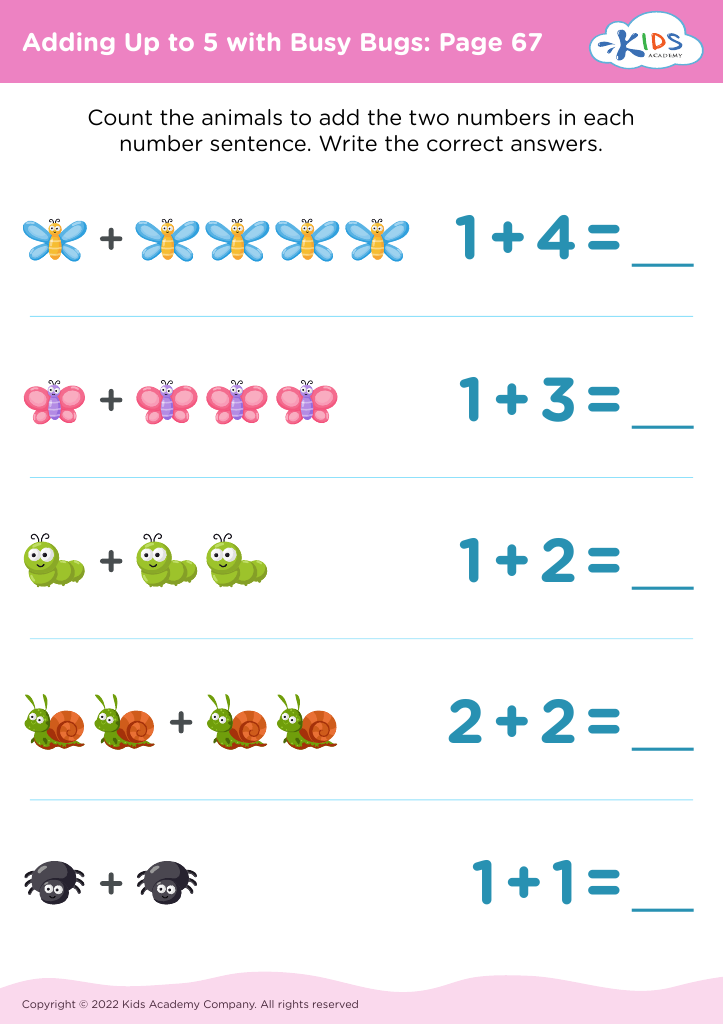
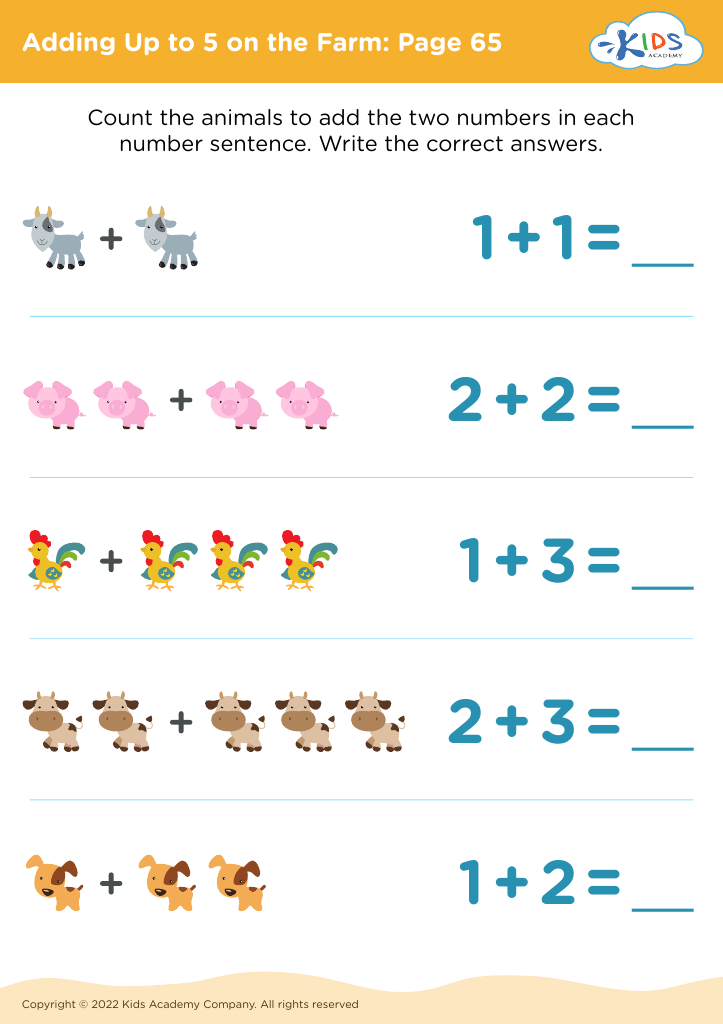
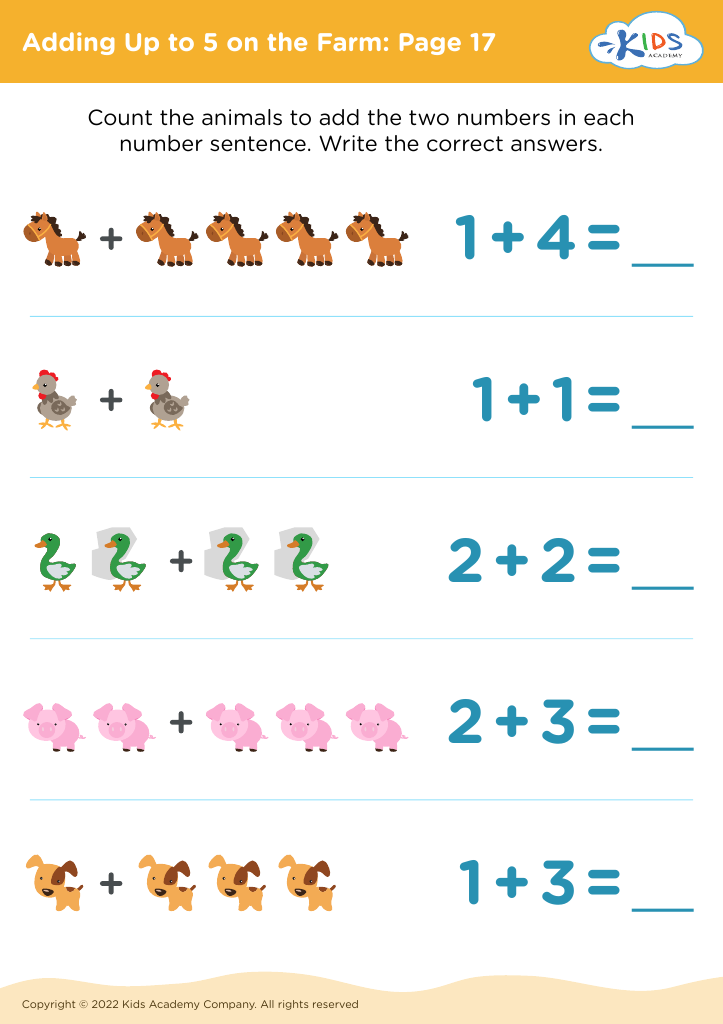
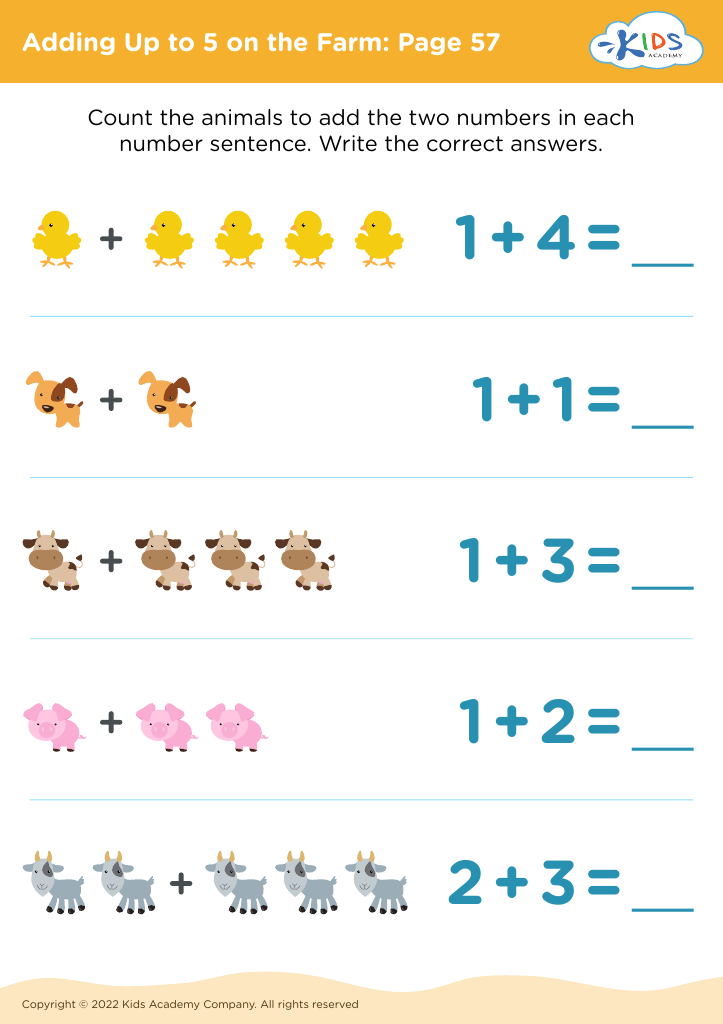
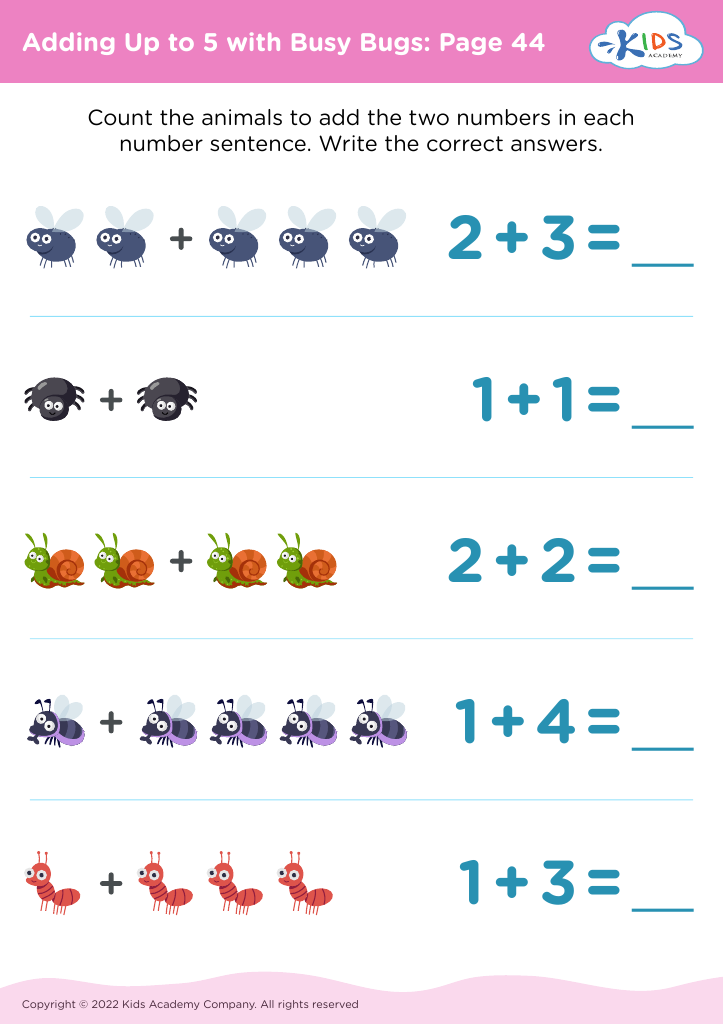
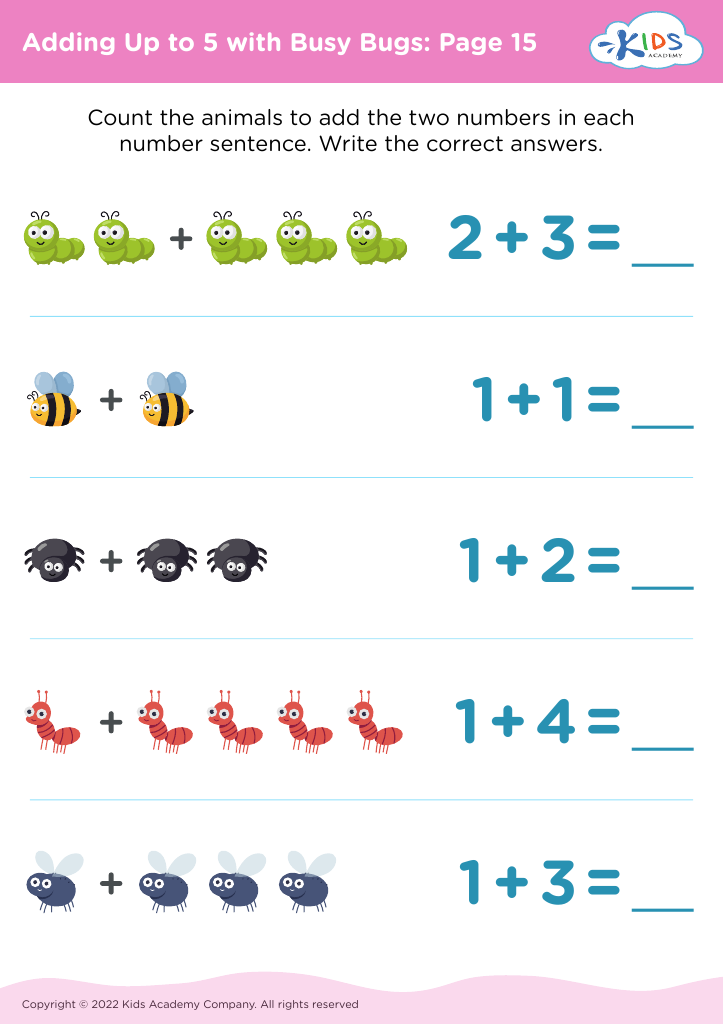
Introduce your little learners to the concept of quantity with our engaging "Understanding Quantity Adding Up to 5 Worksheets" designed for ages 3-4. These foundational worksheets help children grasp basic addition skills by visualizing and combining quantities up to five. Tailored to foster early math confidence, the activities feature vibrant illustrations and fun themes, ensuring kids stay entertained while they learn. Perfect for home or classroom use, our worksheets provide practical practice in counting, recognizing numbers, and understanding simple addition. Start building a strong math foundation for your child with our expertly crafted resources.





.jpg)


Understanding quantity up to 5 is a fundamental skill that parents and teachers should prioritize for children aged 3-4. At this early stage, children are developing their foundational math skills, and mastering quantities up to 5 helps to build a strong numerical foundation. This skill is crucial for the development of number sense, which is the ability to understand and work with numbers fluently.
By recognizing, comparing, and adding quantities up to 5, children begin to grasp the concept of more and less, which are vital for everyday decision-making and problem-solving. It also establishes a precursory understanding of addition and subtraction, setting them on a path toward more complex mathematical operations in the future.
Moreover, learning these basic quantities can boost a child's confidence and enjoyment of math. Activities involving counting and number sequencing can be fun, engaging, and collaborative, fostering a positive attitude towards learning. Interactive and hands-on learning using objects, counting games, and visual aids cater to a young child’s learning style.
Therefore, focusing on quantities up to 5 is not just about numbers; it forms part of a holistic learning approach that supports cognitive development, fine motor skills, and social-emotional growth. Early mastery in this area can bridge to longer academic success, particularly in mathematics, and encompassing everyday life skills.








