Basic Addition Addition and Subtraction Word Problems Worksheets for Ages 3-4
5 filtered results
-
From - To
Discover our engaging Basic Addition and Subtraction Word Problems Worksheets designed for children ages 3-4. These fun and interactive activities introduce young learners to essential math concepts through relatable scenarios. Each worksheet helps kids practice addition and subtraction via colorful illustrations and easy-to-understand language, fostering cognitive skills and early math development. By solving age-appropriate word problems, children strengthen their analytical thinking and number sense in a playful way. Perfect for home or classroom use, our worksheets make learning math enjoyable and build a solid foundation for future success. Start your child's math journey today with our delightful resources!
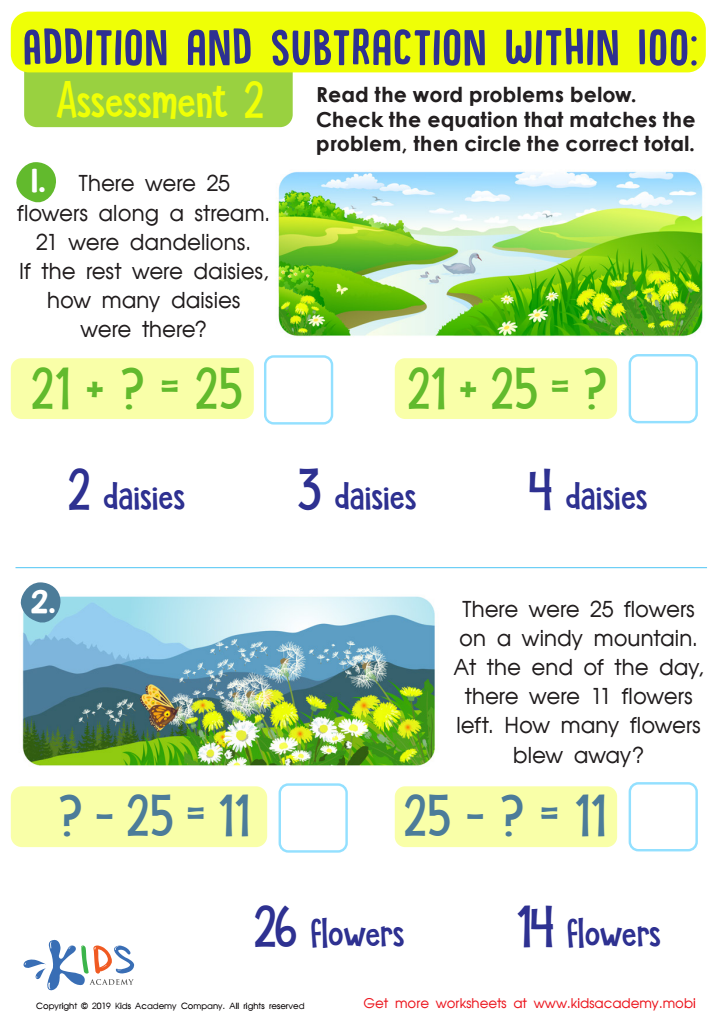
Assessment 2 Math Worksheet
 Assign to My Students
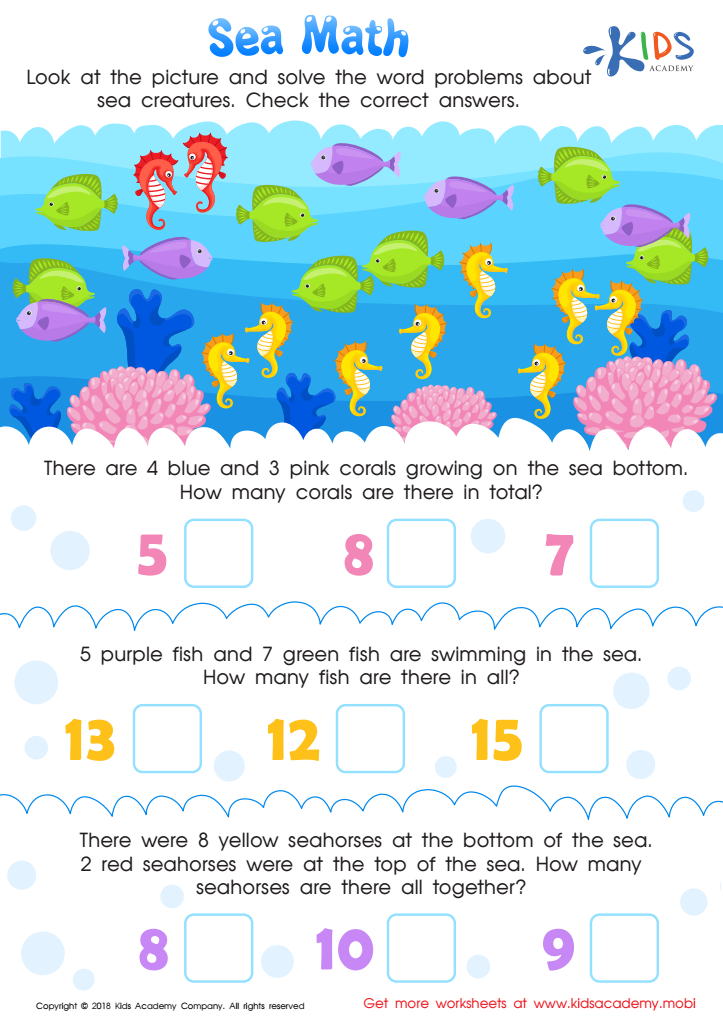
Sea Math Worksheet
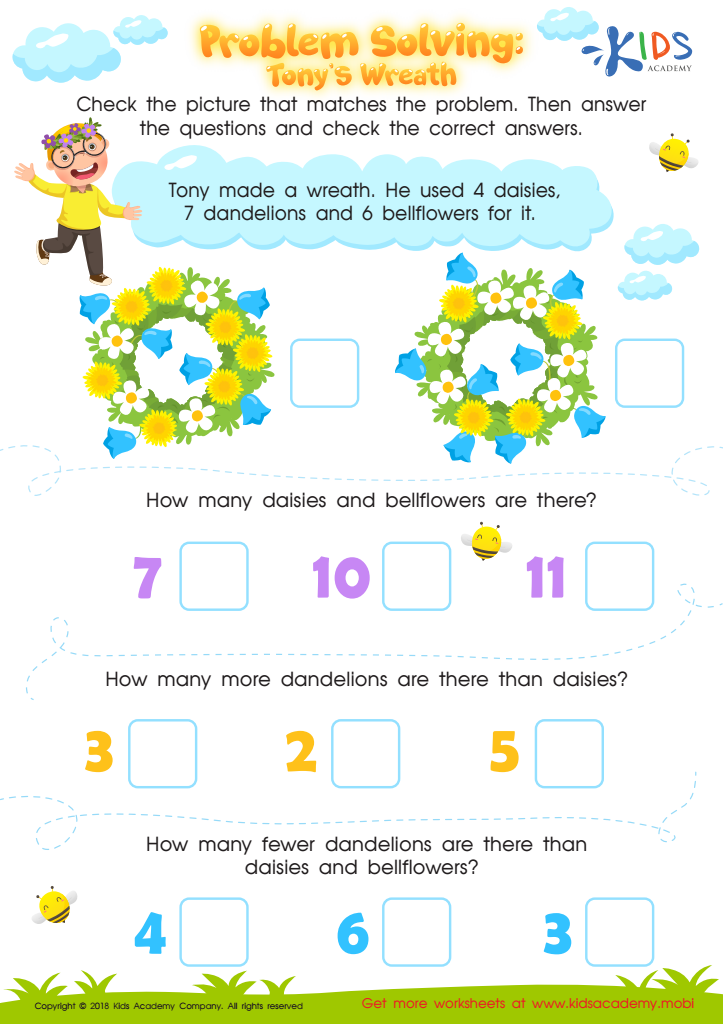
Problem Solving: Tony's Wreath Worksheet
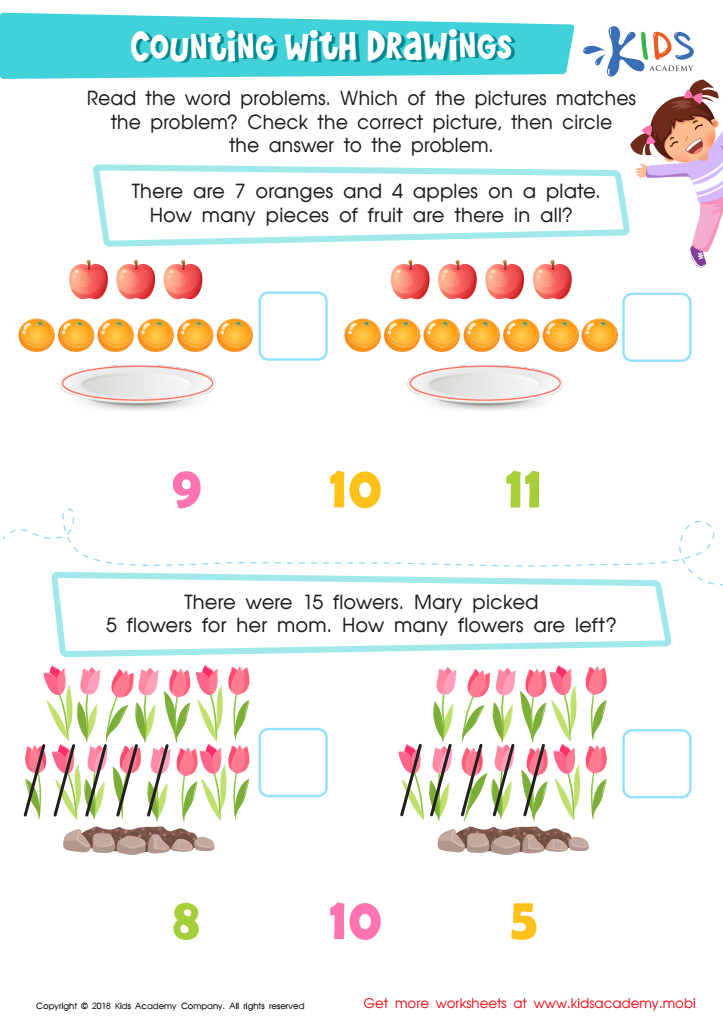
Counting with Drawings:Fruits & Flowers Worksheet
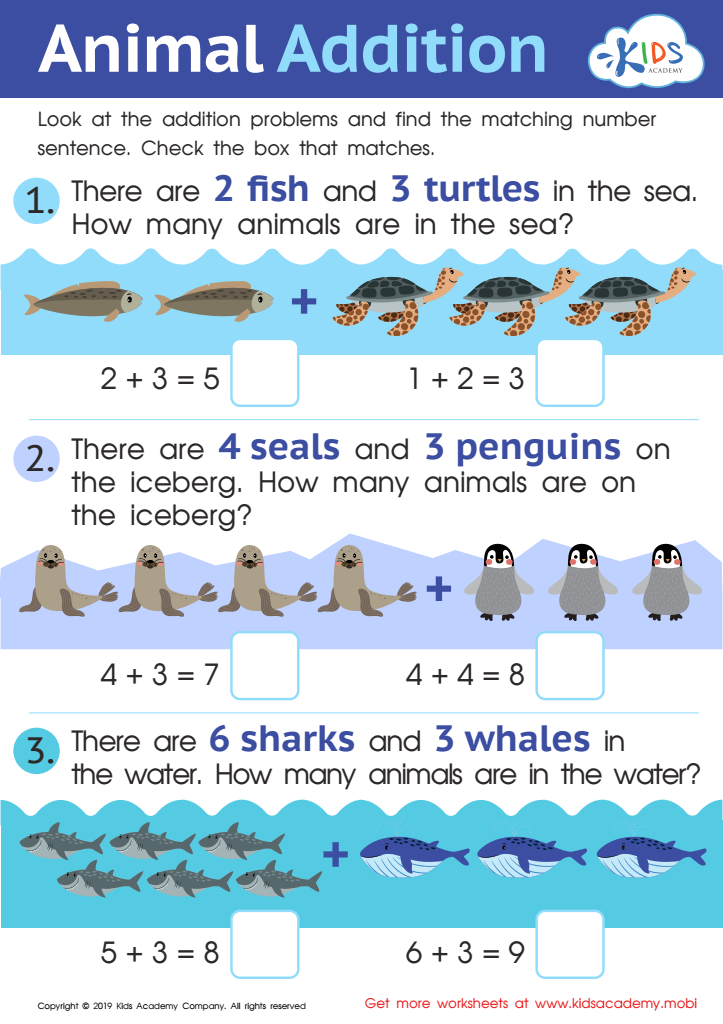
Animal Addition Worksheet








Parents and teachers should prioritize Basic Addition and Subtraction word problems for children aged 3-4 because these foundational math skills are crucial for early cognitive development. At this age, children are naturally curious and eager to learn through play and exploration. Introducing simple math concepts through word problems helps develop critical thinking skills and encourages children to engage with numbers in a meaningful way.
Engaging with addition and subtraction word problems nurtures language development by contextualizing math within everyday situations, enhancing vocabulary related to numbers and math operations. It also promotes creativity as children visualize scenarios, improving their ability to comprehend and solve problems.
Furthermore, mastering these basic math skills lays the groundwork for future success in more complex mathematical concepts. The ability to understand and manipulate numbers fosters confidence, which is essential for lifelong learning. When children learn to approach problems and find solutions, they build resilience and perseverance.
By including parents in this learning process, teachers can create a supportive environment that reinforces math skills at home, making learning a collaborative endeavor. Ultimately, promoting these early mathematical skills equips children with the tools they need to navigate academic challenges as they grow, leading to better educational outcomes over time.