Subtraction skills Addition and Subtraction Word Problems Worksheets for Ages 3-4
6 filtered results
-
From - To
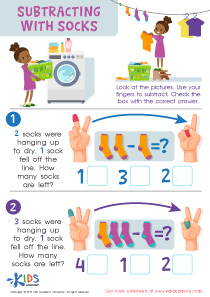
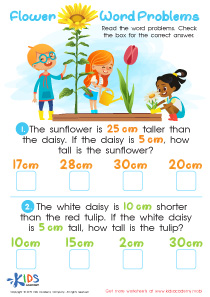
Introduce your little one to basic subtraction with our engaging worksheets designed for ages 3-4. These fun activities help children develop essential problem-solving skills while practicing subtraction. Each worksheet features simple, colorful illustrations and easy-to-understand word problems, making learning interactive and enjoyable. Perfect for parents and teachers, these printable resources are ideal for enhancing early math skills at home or in the classroom. Encourage confidence in math from an early age with our expertly crafted subtraction skills worksheets. Visit Kids Academy today to get started on your child's math journey!
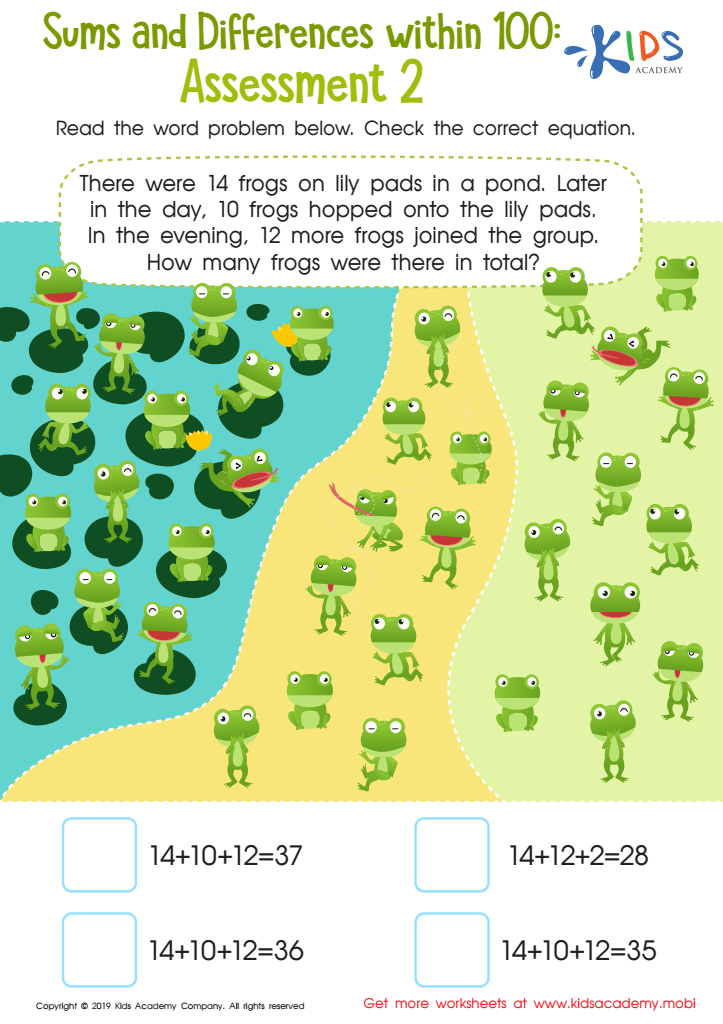
Sums and Differences Within 1 - Assessment 2 Worksheet
 Assign to My Students
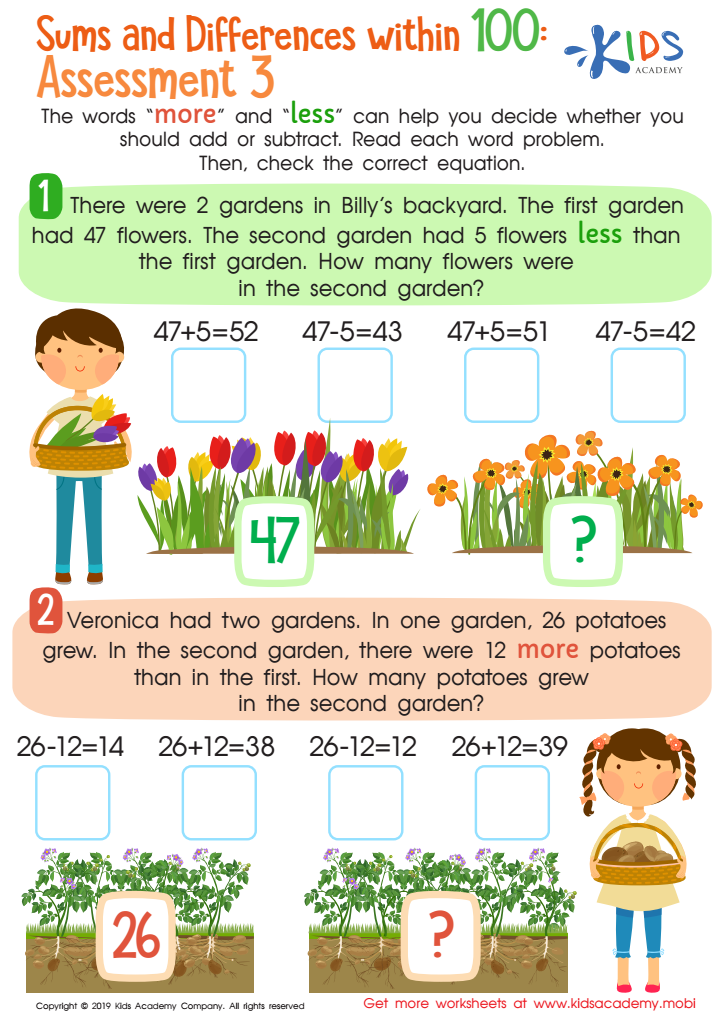
Sums and Differences Within 1 - Assessment 3 Worksheet
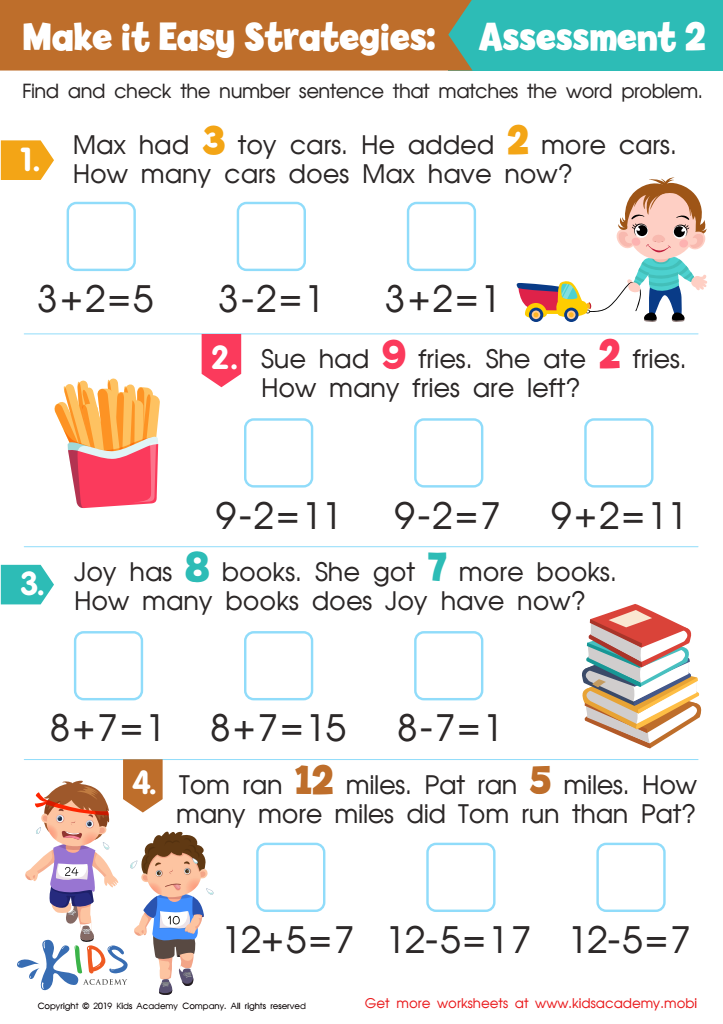
Make it Easy Strategies: Assessment 2 Worksheet
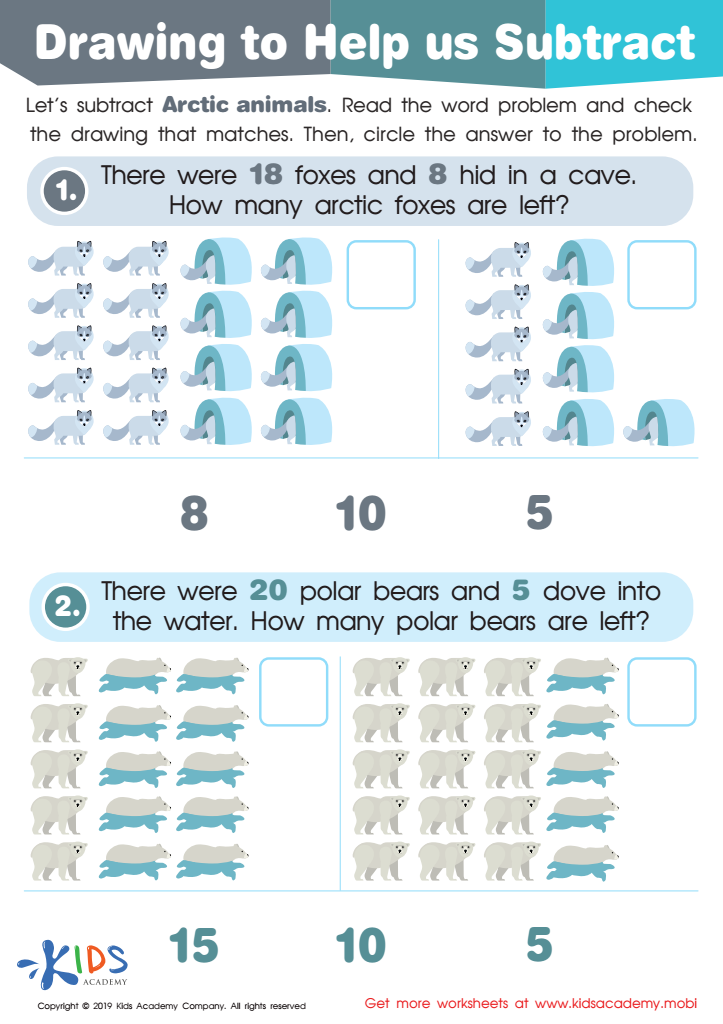
Drawing to Help Us Subtract Worksheet
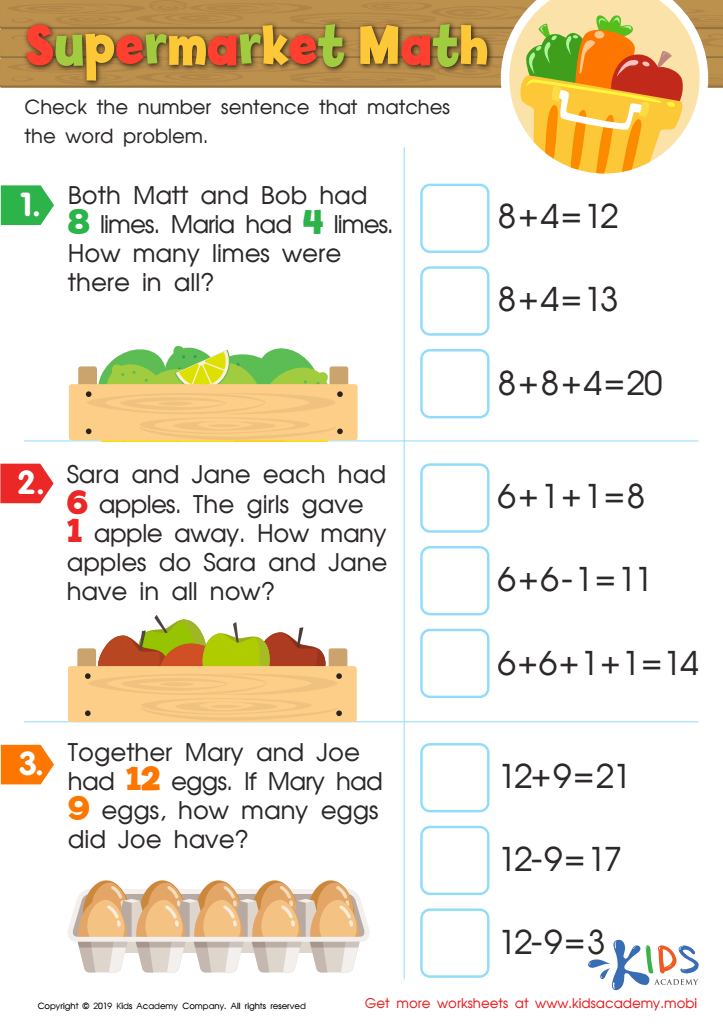
Supermarket Math Worksheet
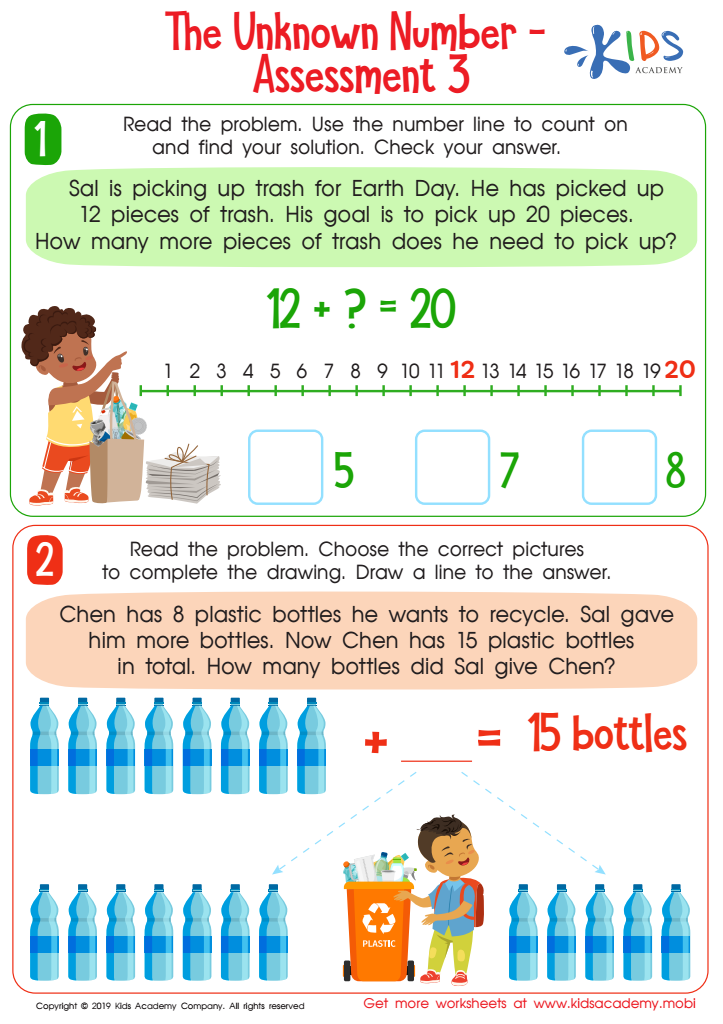
The Unknown Number - Assessment 3 Worksheet








Parents and teachers should prioritize subtraction skills and addition, as well as subtraction word problems for children ages 3-4 because these foundational math skills stimulate cognitive development and problem-solving abilities. At this early age, kids are rapidly developing their brains and establishing neural connections. Early exposure to basic math concepts fosters logical thinking and improves their ability to understand more complex mathematical problems in the future.
Moreover, these skills enhance their ability to follow multi-step instructions, an important trait not only for math but for overall academic success. Handling word problems, specifically, helps children contextualize math in everyday situations, building practical understanding and application. For instance, knowing how to subtract apples in a story engages their imagination while showing them how math operates in the real world. This approach makes learning interactive and enjoyable.
Early comprehension of these math skills encourages self-confidence and independence in problem-solving. It reduces math anxiety by breaking down abstract concepts into simple, manageable steps. Ultimately, teaching these skills at a young age equips children with the necessary tools to achieve academic success and foster a lifelong appreciation of learning. Parents and teachers play a critical role in setting these building blocks early, ensuring that children are prepared for future educational milestones.