Counting proficiency Addition & Subtraction Worksheets for Ages 3-4
11 filtered results
-
From - To
Boost your child's early math skills with our Counting Proficiency Addition & Subtraction Worksheets, specially designed for ages 3-4! These engaging worksheets introduce fundamental concepts of addition and subtraction while making learning fun. Through playful activities, children will develop essential counting skills, understand number relationships, and improve their confidence in math. Each worksheet features colorful illustrations and simple instructions to keep young learners enchanted and focused. Perfect for parents and educators, our resources encourage repetitive practice in a rewarding way. Watch as your child builds a solid foundation in math that will support their future learning endeavors. Start exploring today!
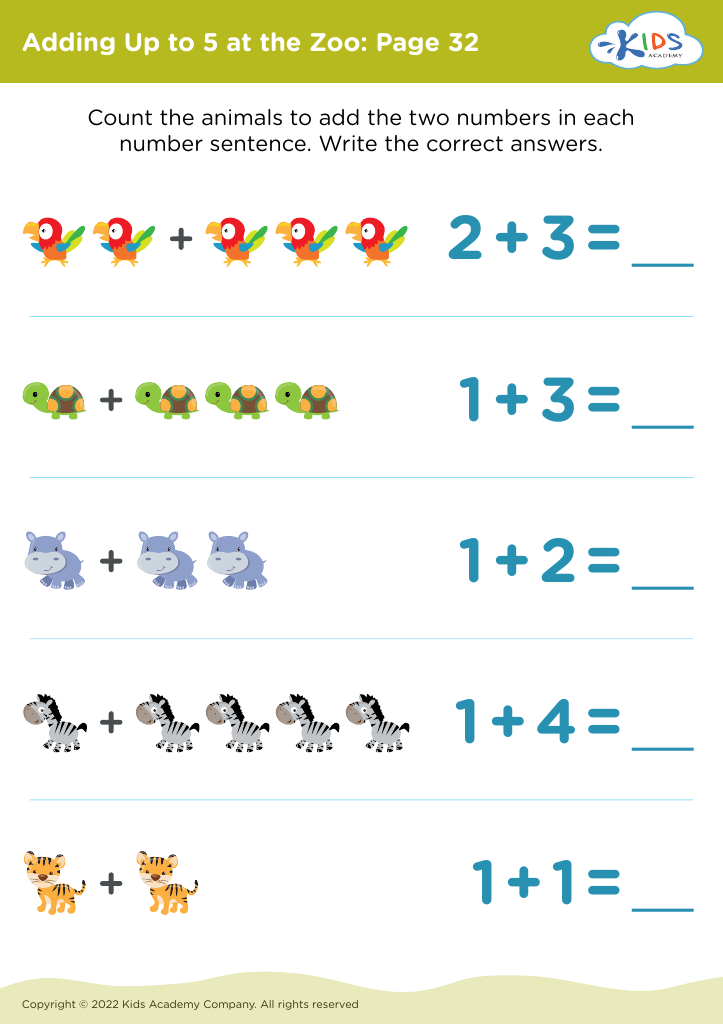
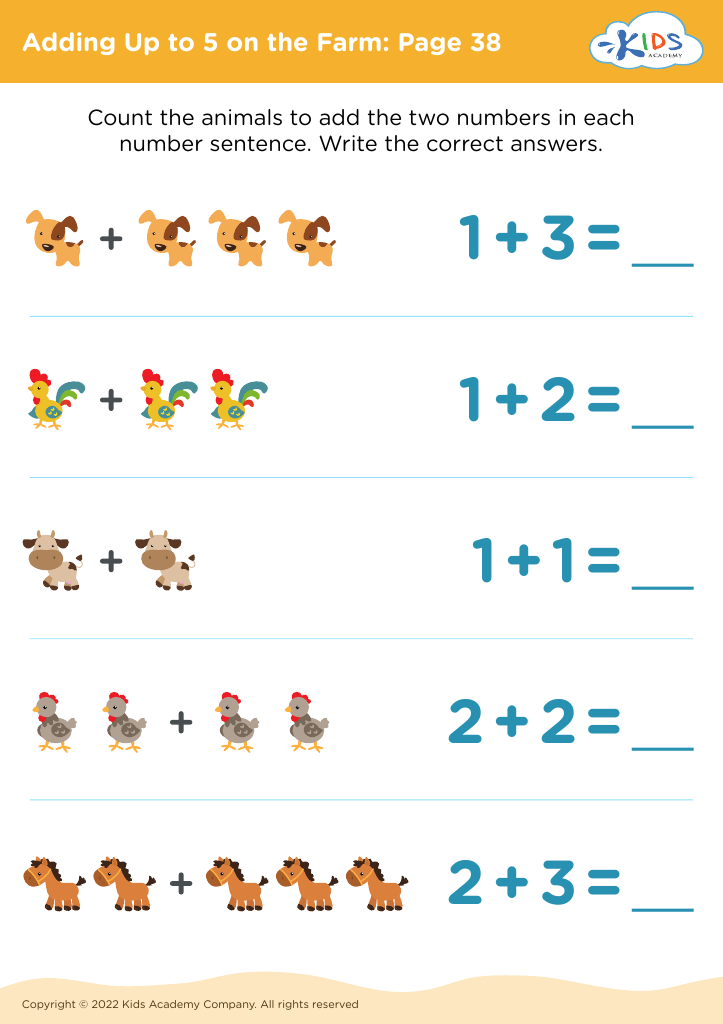
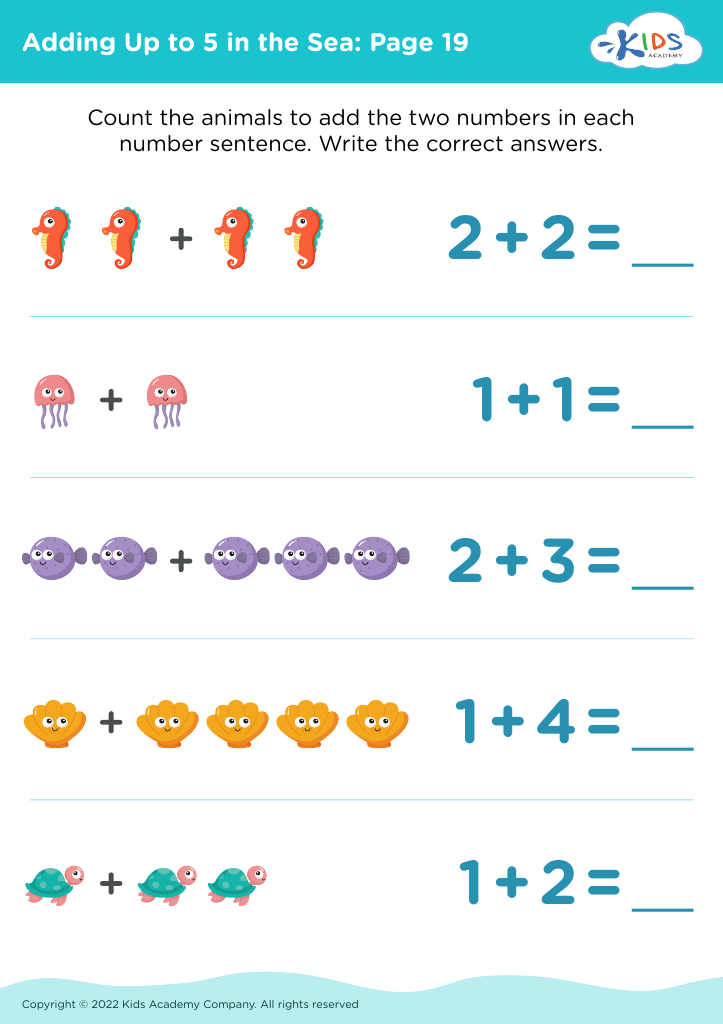
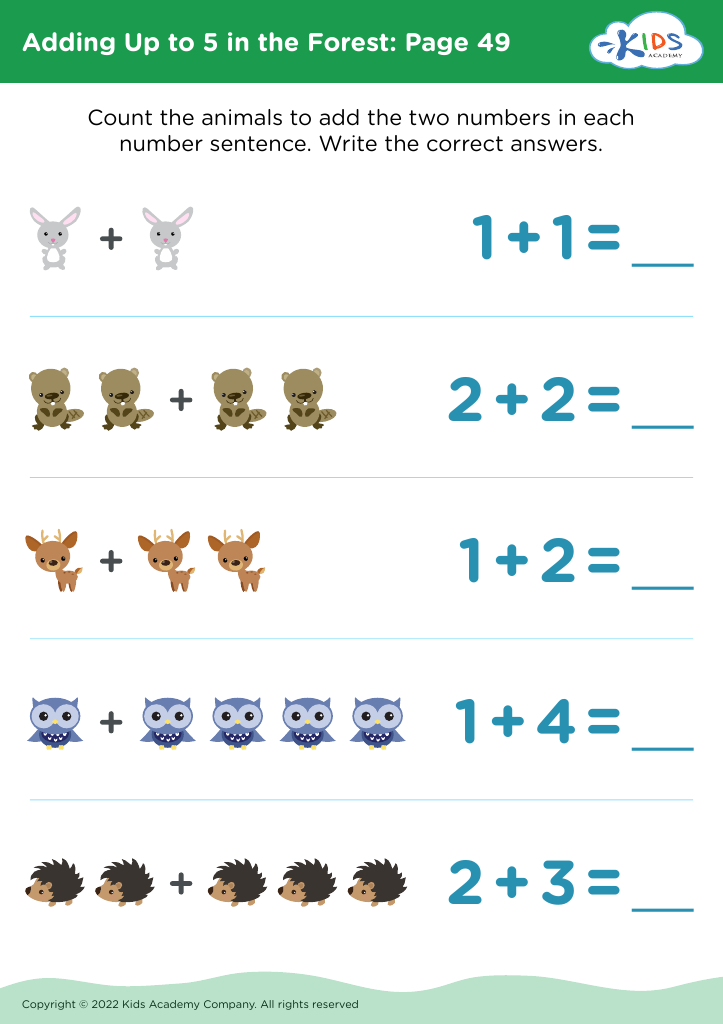
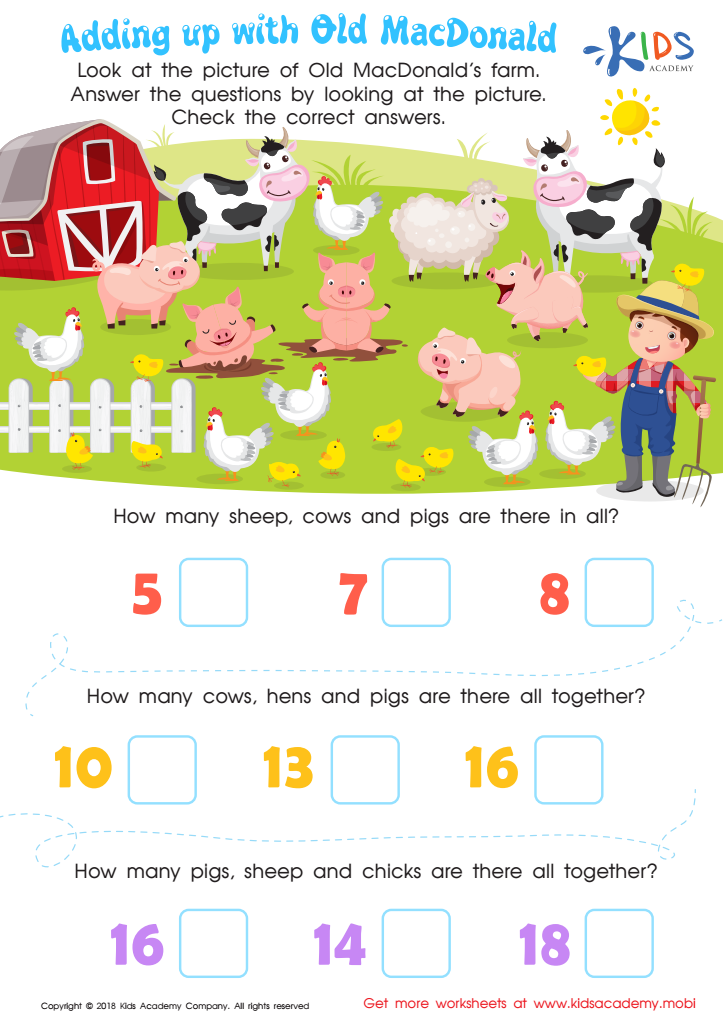
Adding Up with Old MacDonald Worksheet
 Assign to My Students
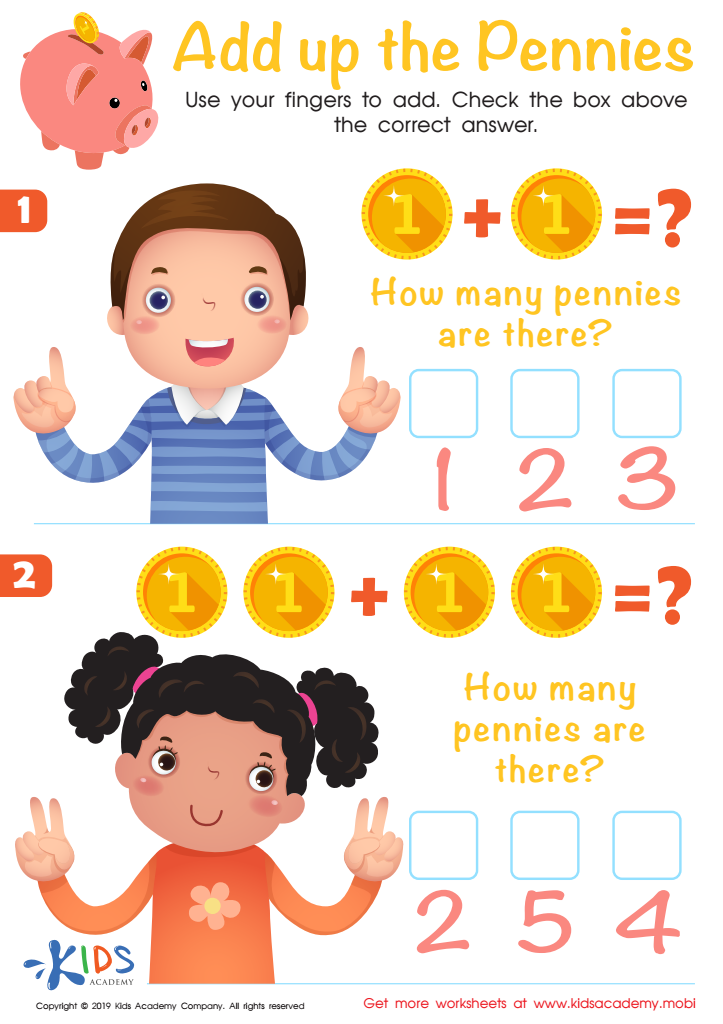
Add up the Pennies Worksheet
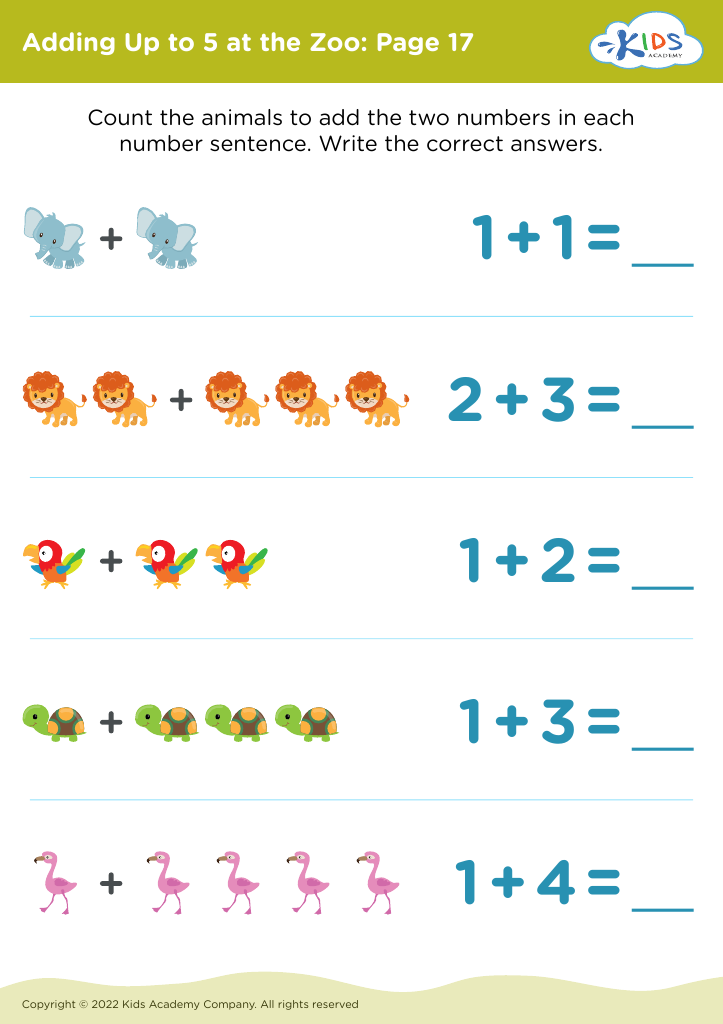
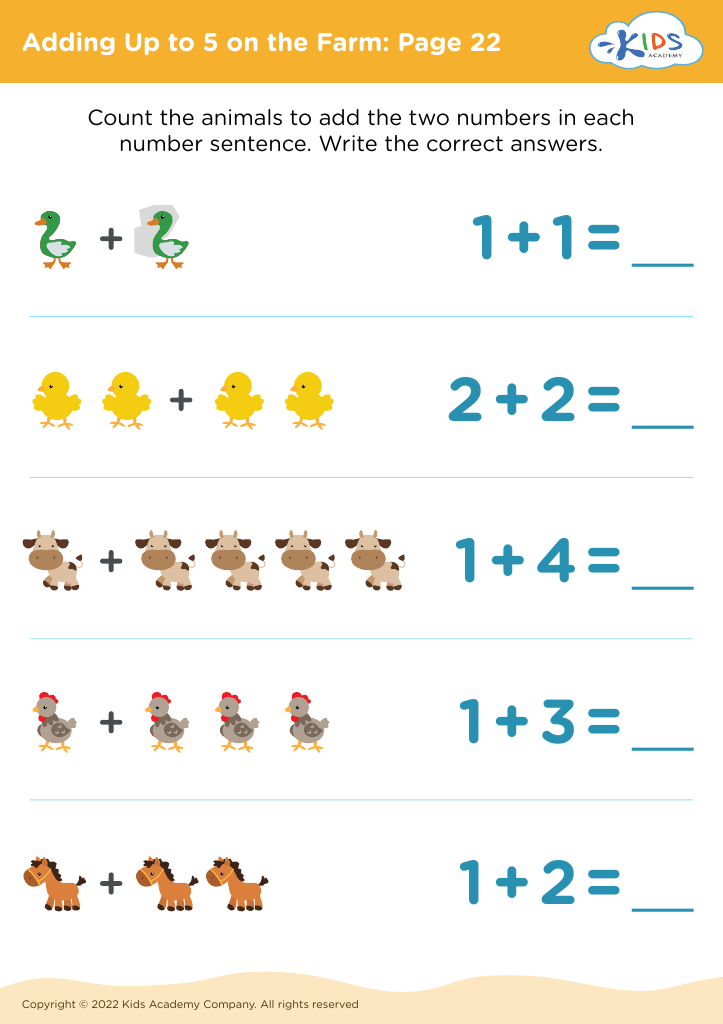
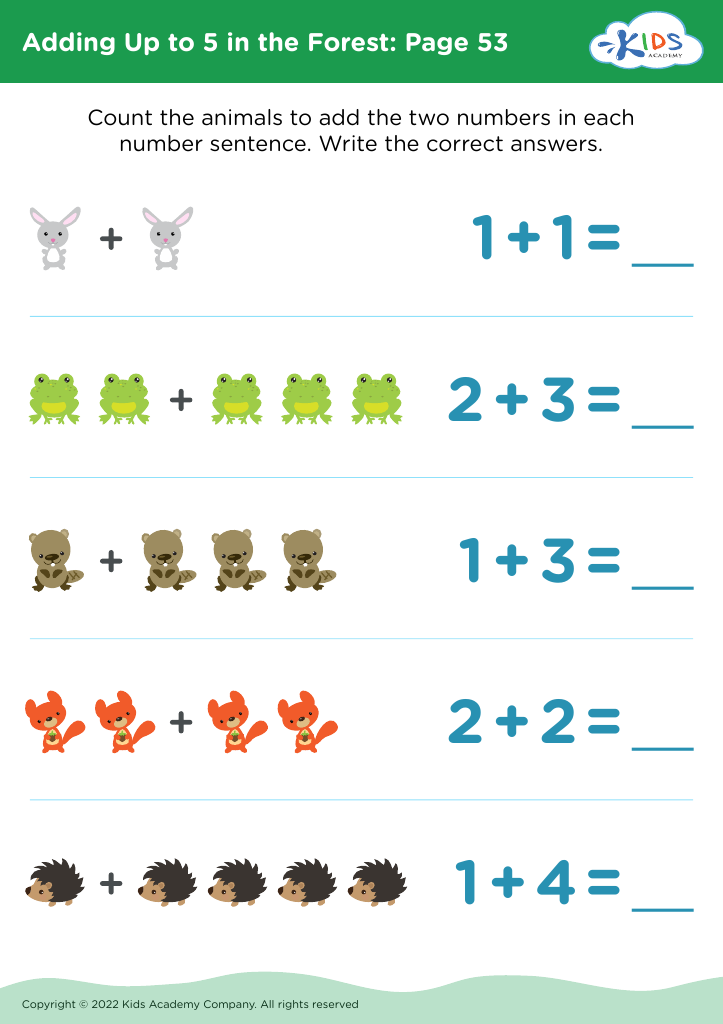
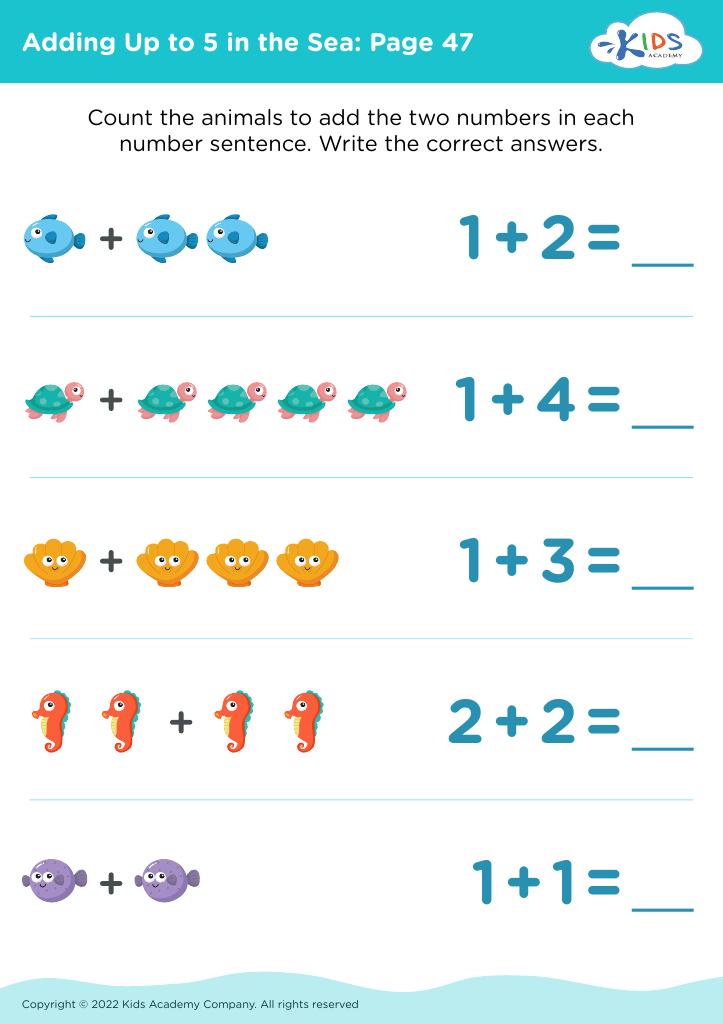
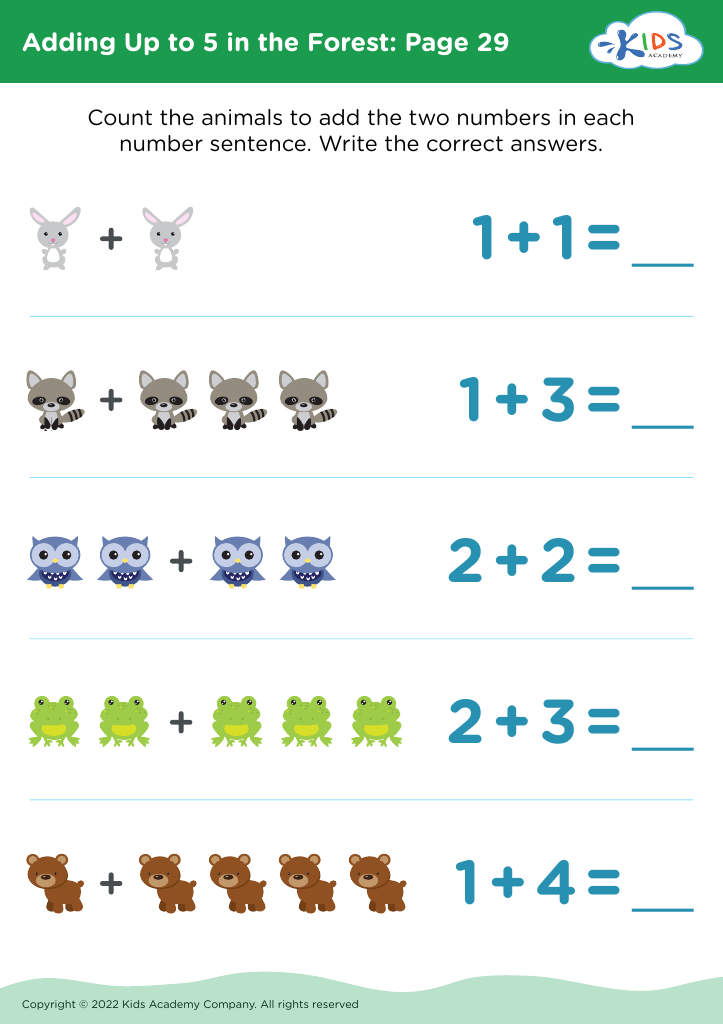








Counting proficiency, along with fundamental addition and subtraction skills, is vital for children aged 3-4, serving as the bedrock for later mathematical understanding. These early concepts not only foster a love for numbers but also enhance cognitive development, critical thinking, and problem-solving abilities.
When children learn to count, they develop essential one-to-one correspondence, understanding that each number corresponds to a distinct quantity. This foundational skill acts as a springboard for addition and subtraction, where children learn to combine and separate groups of objects, laying the groundwork for future arithmetic. Early proficiency in these areas can significantly boost a child's confidence in handling numbers, making them more receptive to learning complex math concepts later on.
Moreover, counting and simple math exercises can improve language skills as adults introduce mathematical vocabulary and concepts during play. Encouraging daily practice through interactive games, songs, or storytelling promotes a positive learning atmosphere. Teachers and parents can cultivate strong mathematical minds by emphasizing these early skills, ultimately contributing to a child's overall academic success and enthusiasm for learning. Early mastery of counting, addition, and subtraction can also influence future attitudes towards math, paving the way for proficient math learners in later years.








