Following instructions Addition & Subtraction Worksheets for Ages 3-4
6 filtered results
-
From - To
Explore our engaging "Following Instructions Addition & Subtraction Worksheets" designed specifically for ages 3-4. These interactive resources help young learners build foundational math skills while enhancing their ability to follow instructions. Each worksheet features bright, colorful visuals and fun activities that promote critical thinking and comprehension. As children solve addition and subtraction problems, they'll grasp basic math concepts while practicing essential listening and following directions. Our worksheets are perfect for early education settings or at-home learning, encouraging a love for math from a young age. Empower your child’s learning journey today with our thoughtfully designed worksheets for preschoolers!
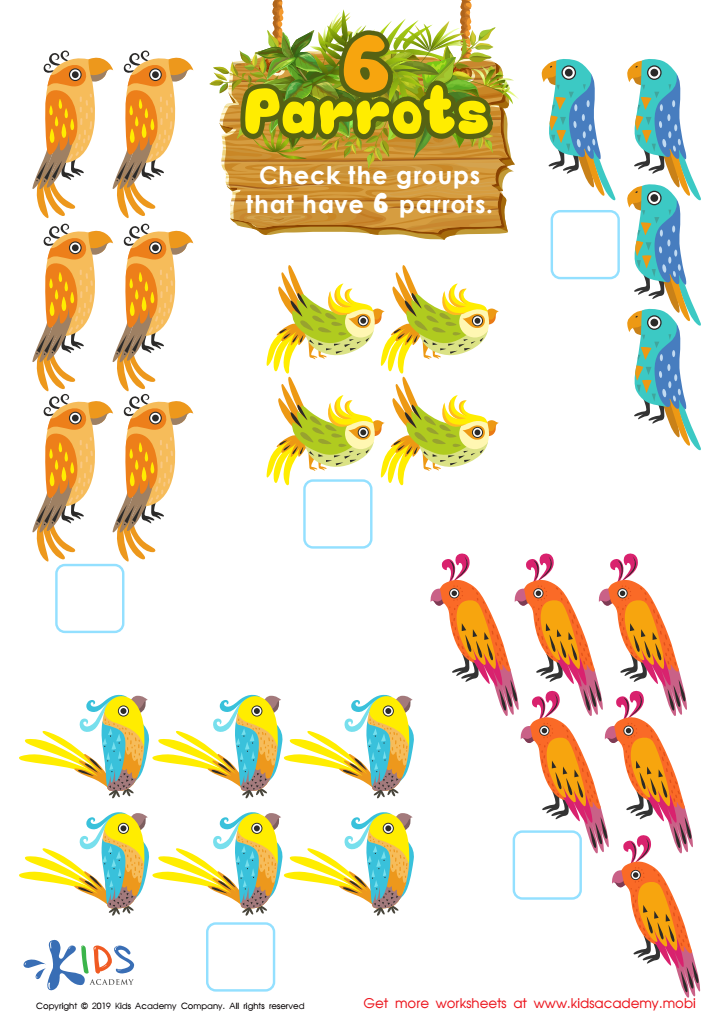
6 Parrots Worksheet
 Assign to My Students
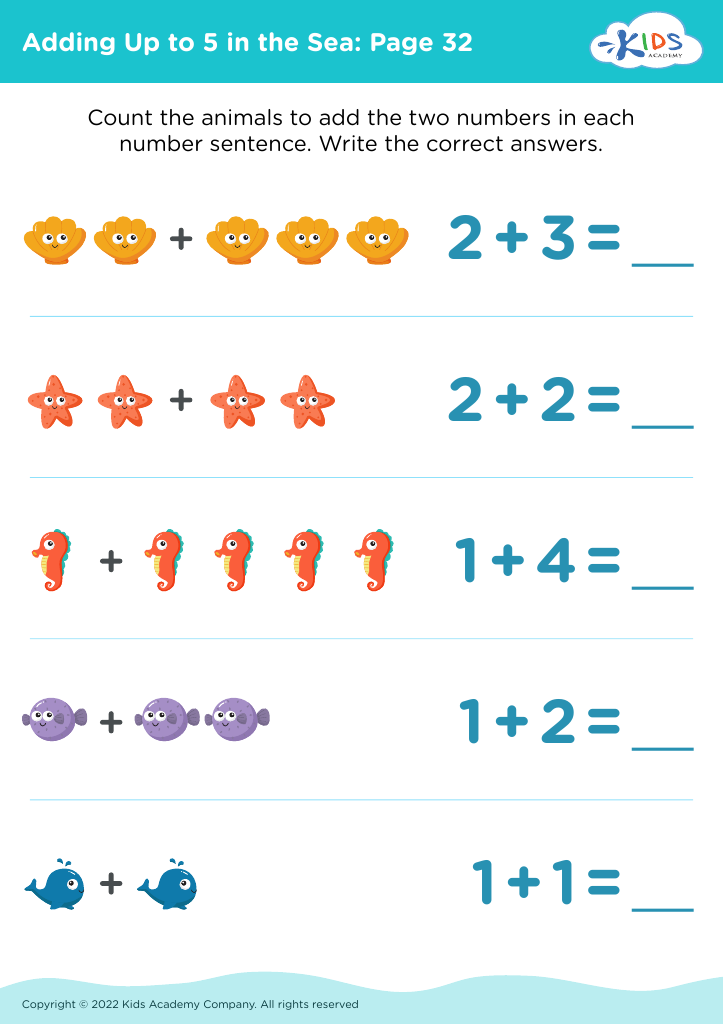
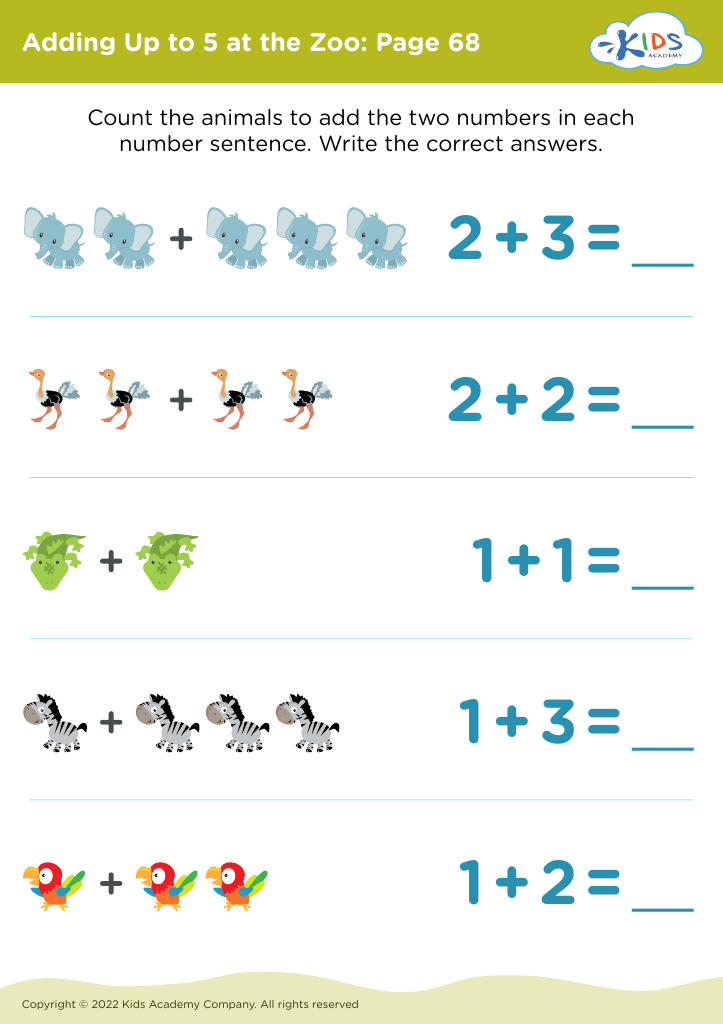
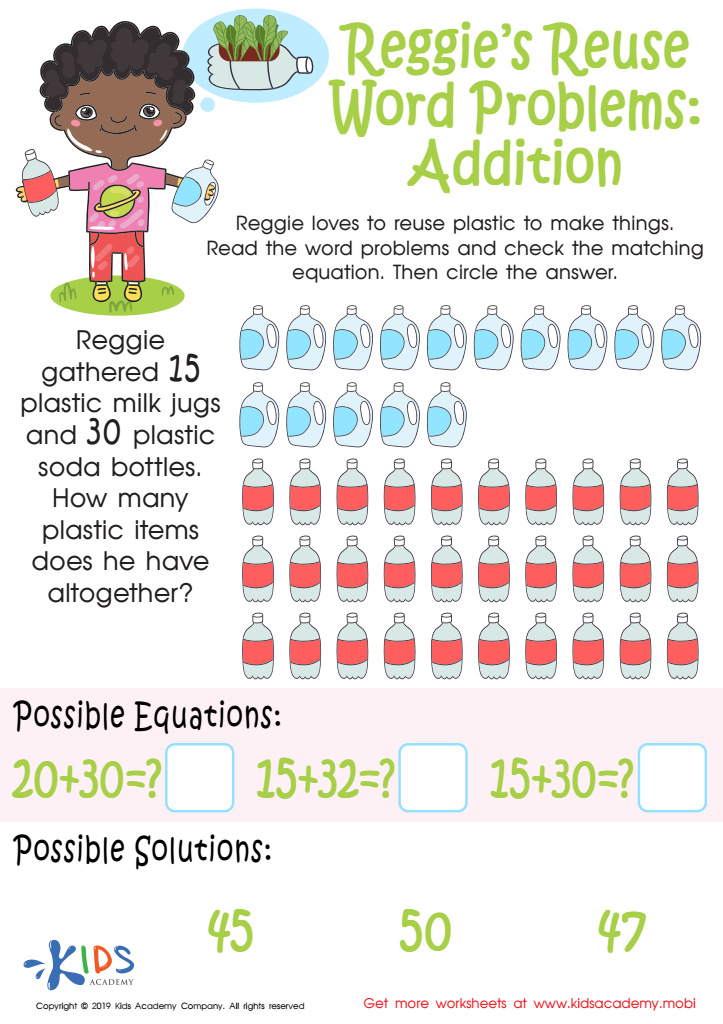
Reggie's Reuse Word Problems: Addition Worksheet
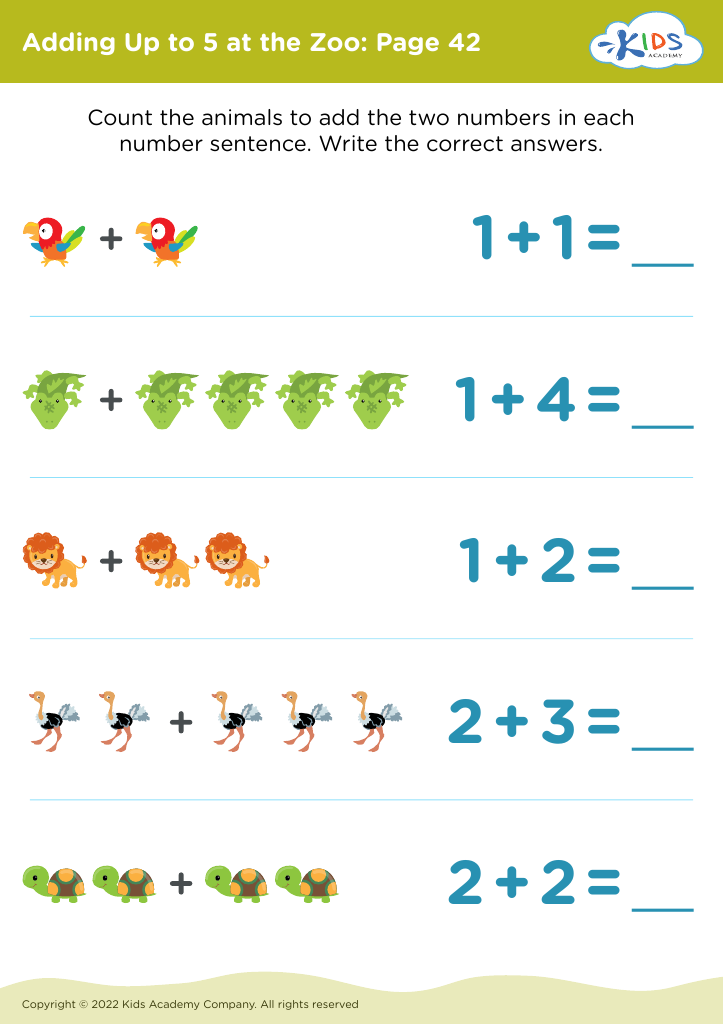
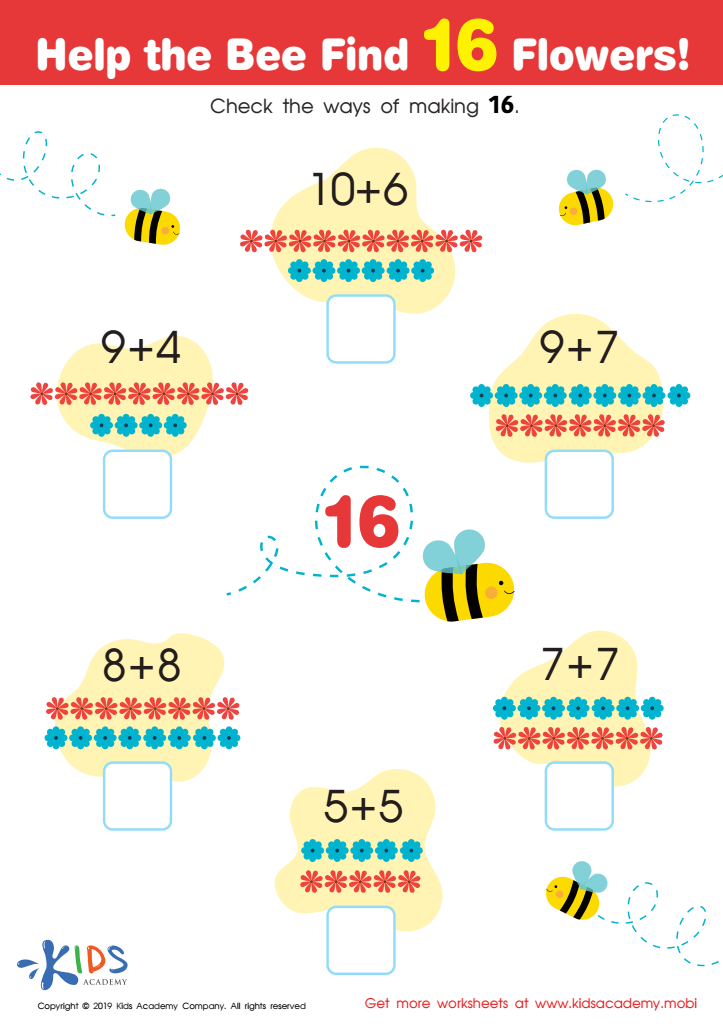
Help the Bee Find 16 Flowers Worksheet








Parents and teachers should prioritize teaching addition and subtraction to children ages 3-4 because these foundational skills set the stage for future learning in mathematics and critical thinking. At this age, children are naturally curious and eager to engage with their surroundings. By incorporating simple addition and subtraction concepts into their daily routines, educators can nurture this curiosity and enhance cognitive development.
Understanding basic math operations encourages problem-solving skills and helps young learners develop logical reasoning. Recognizing how to follow instructions while engaging in these activities also fosters essential skills like listening, comprehension, and sequential thinking that are crucial for success in school and beyond.
Moreover, early exposure to math concepts helps children build confidence and a positive attitude toward learning. Incorporating playful activities, such as counting toys or sharing snacks, allows for a joyful learning environment. This approach not only aids in retaining complex information but also promotes social and emotional growth, as children learn to collaborate, communicate, and share ideas.
Ultimately, investing time and effort into teaching addition and subtraction at such an early age can significantly impact a child's academic journey, laying the groundwork for a lifetime of learning and curiosity about the world around them.








