Math problem-solving Addition & Subtraction Worksheets for Ages 3-4
7 filtered results
-
From - To
Discover our engaging Math Problem-Solving Worksheets designed for children aged 3-4, focusing on addition and subtraction skills. Tailored for early learners, these worksheets introduce foundational math concepts through fun, interactive activities. Parents and educators can download and print a variety of exercises that promote critical thinking and problem-solving abilities. Each worksheet encourages hands-on learning with colorful illustrations and age-appropriate challenges that make mastering math concepts enjoyable! Ideal for reinforcing learning at home or in the classroom, these materials are perfect to cultivate confidence in young learners as they embark on their mathematical journey. Start nurturing your child's math skills today!
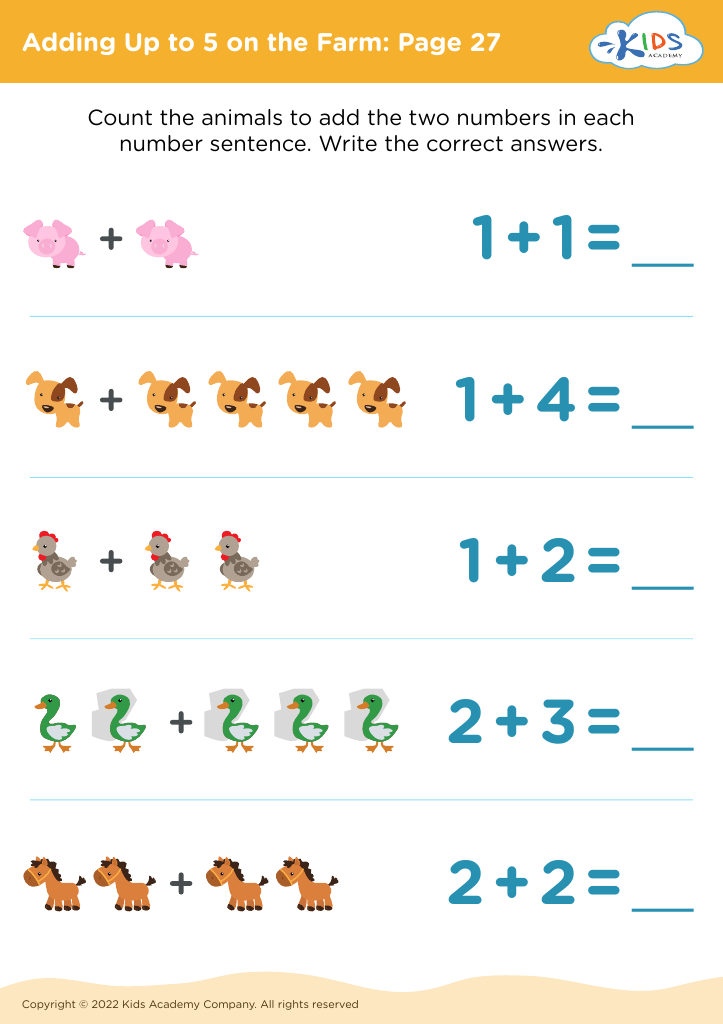
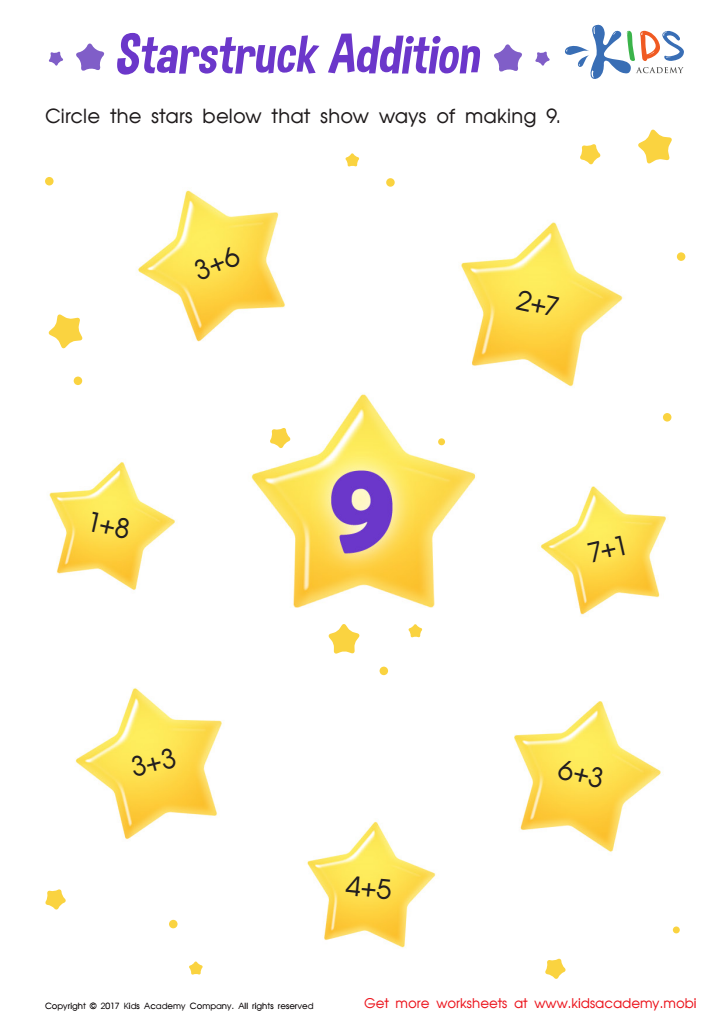
Starstruck Addition Printable
 Assign to My Students
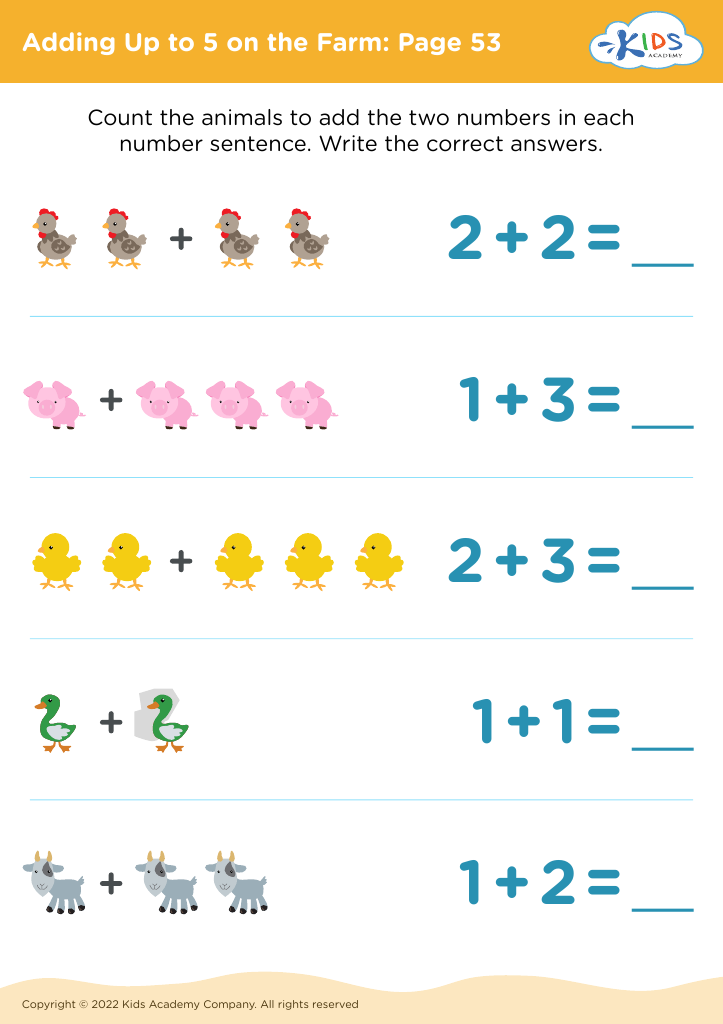
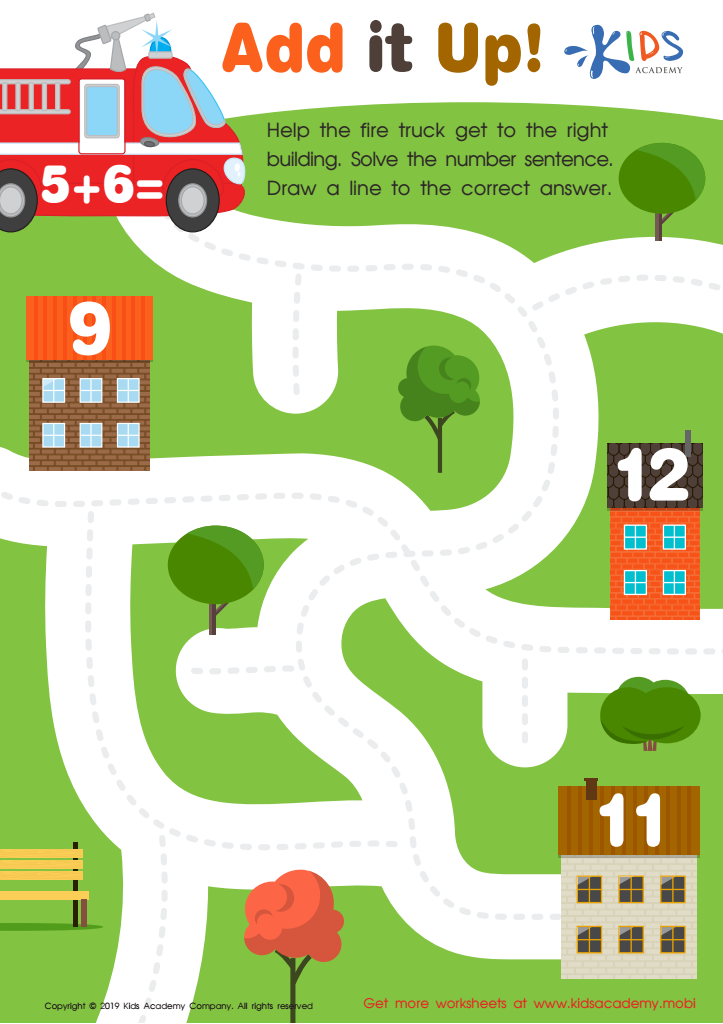
Add it Up Worksheet
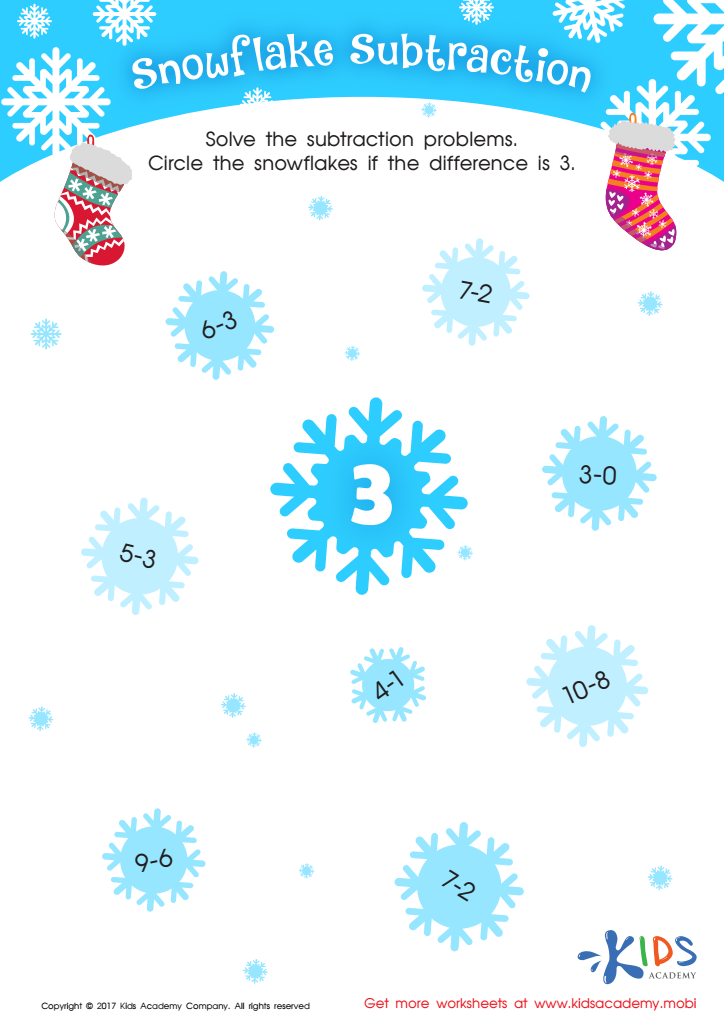
Snowflake Subtraction Worksheet
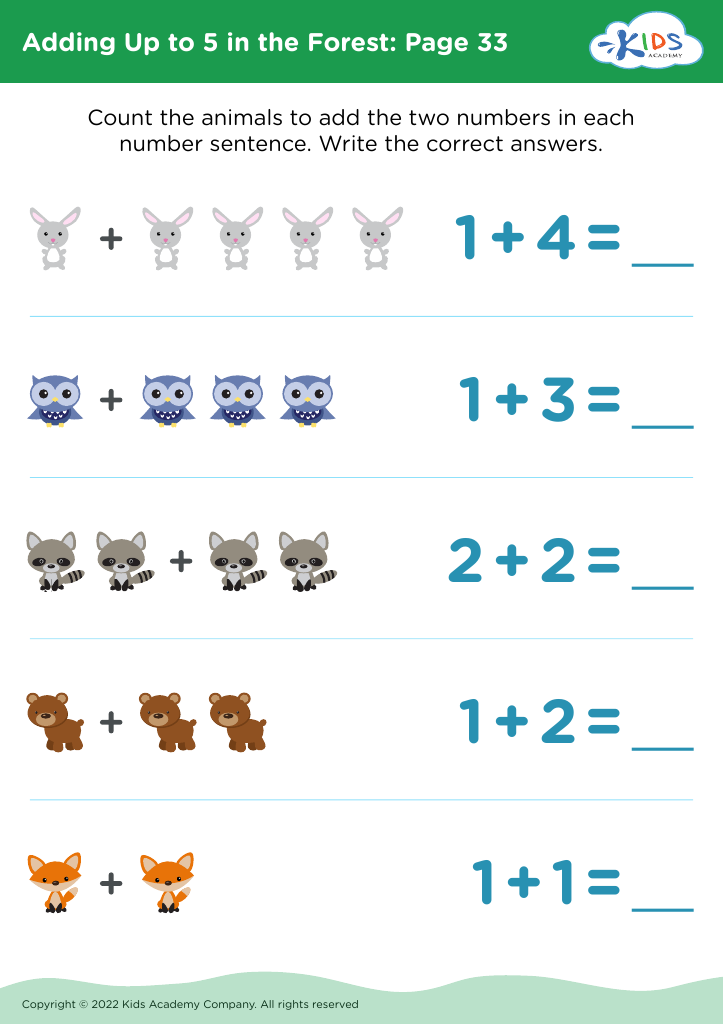
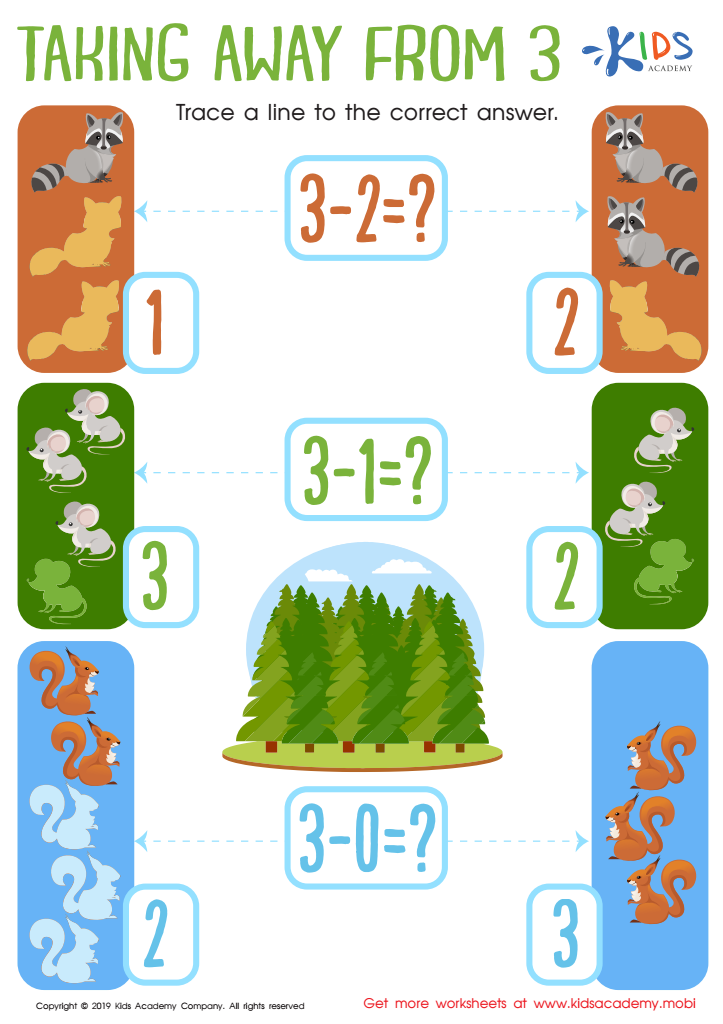
Taking Away From 3 Worksheet








Developmentally, children aged 3-4 are at a critical stage for foundational math skills, particularly in addition and subtraction. These early experiences with problem-solving are essential for developing number sense, which enhances their ability to understand and work with numbers later in life. Engaging youth in simple math activities promotes cognitive skills, such as reasoning and analytical thinking, which are vital for lifelong learning.
Furthermore, math problem-solving at this stage cultivates a child’s confidence and encourages a positive attitude toward mathematics. By participating in fun, hands-on activities that integrate addition and subtraction, parents and teachers can make mathematics an enjoyable experience, reducing potential math anxiety in the future.
Additionally, practical problem-solving aids in the development of fine motor skills and language development, as children learn to articulate their thought processes and understand math vocabulary. It also provides a foundation for social skills, as children engage with peers or adults when solving math-related puzzles.
Ultimately, instilling these basic math skills early on lays a strong foundation for academic achievement and prepares children for future learning experiences, enabling them to tackle more complex mathematical concepts with ease. Therefore, nurturing problem-solving skills in young children is essential for both personal and academic growth.








