Numeracy development Addition & Subtraction Worksheets for Ages 3-4
3 filtered results
-
From - To
Discover our engaging Addition and Subtraction Worksheets designed specifically for children ages 3-4. These worksheets are perfect for nurturing early numeracy skills in young learners. Each activity fosters a fun and interactive learning environment, helping children grasp basic math concepts through playful exercises. Utilizing colorful illustrations and simple instructions, our resources make addition and subtraction accessible and enjoyable, encouraging little ones to explore numbers with confidence. Perfect for parents and educators alike, these worksheets are an excellent way to reinforce math skills at home or in the classroom. Start your child's mathematical journey today with our thoughtfully crafted activities!
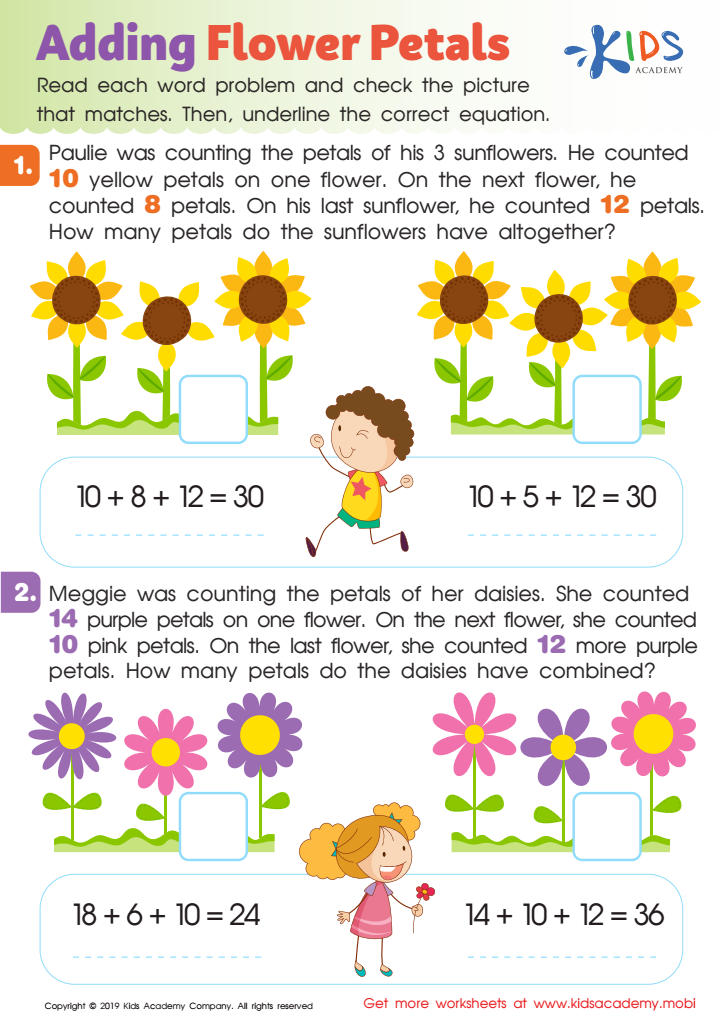
Adding Flower Petals Worksheet
 Assign to My Students
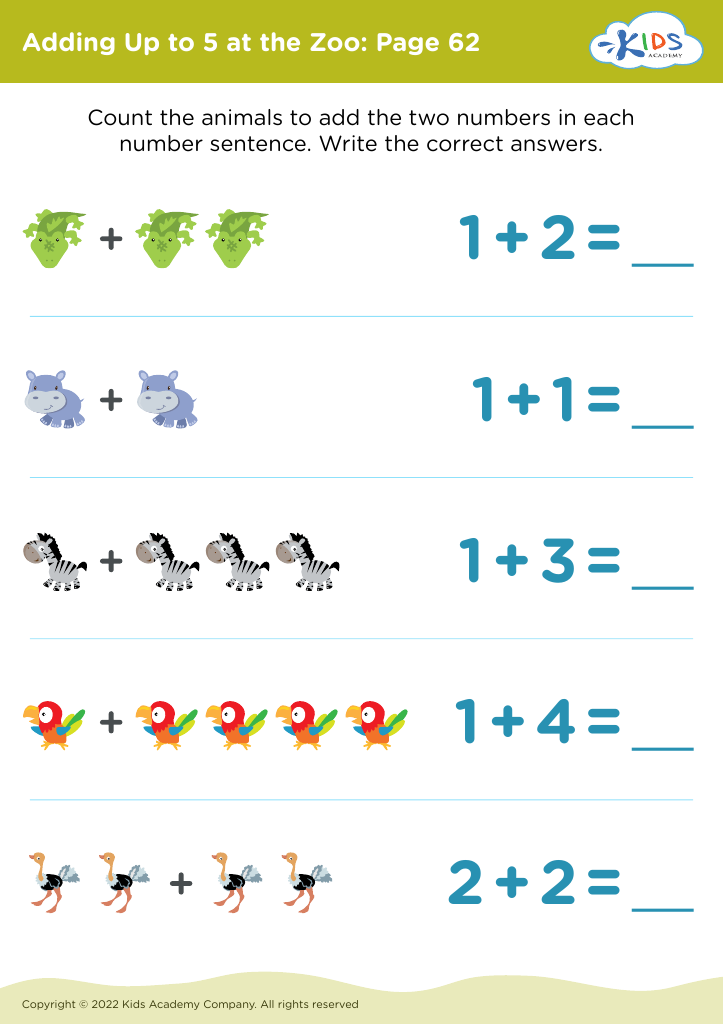
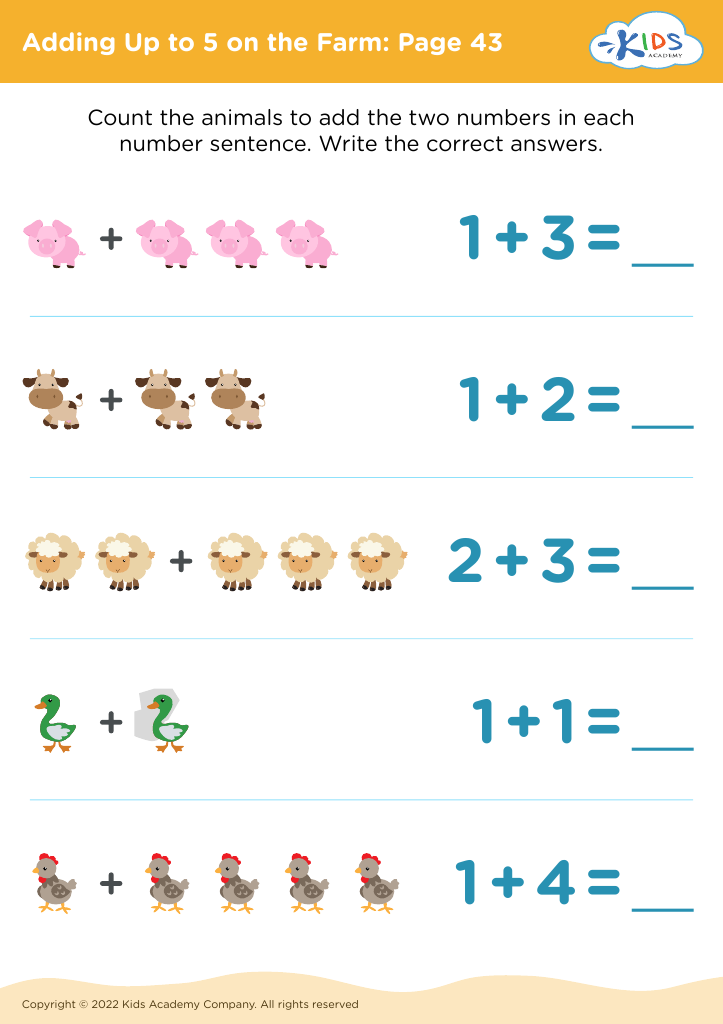








Numeracy development in young children, particularly in areas such as addition and subtraction, plays a crucial role in their overall cognitive and social growth, making it essential for parents and teachers to prioritize these skills for ages 3-4. At this developmental stage, children are naturally curious and eager to explore the world around them, and introducing basic math concepts harnesses this curiosity, laying the foundation for future academic success.
Addition and subtraction are central to daily life and help children learn problem-solving skills, logical thinking, and comparisons. Engaging young learners in simple math through play, storytelling, and hands-on activities fosters an understanding of quantity, number relationships, and basic operations. This foundational knowledge not only boosts their confidence but also enhances their critical thinking and reasoning abilities.
Moreover, early numeracy skills significantly predict later academic achievement in math. Research links strong numeracy skills in preschool to greater success in elementary school and beyond, making this a prime opportunity to instill a positive attitude toward math. Teachers and parents who actively support and encourage numeracy can better prepare children for an increasingly math-focused world, thereby nurturing well-rounded, capable learners ready to tackle future educational challenges.








