
Observational skills Addition & Subtraction Worksheets for Ages 3-4
3 filtered results
Difficulty Level
Grade
Age
-
From - To
Subject
Activity
Standards
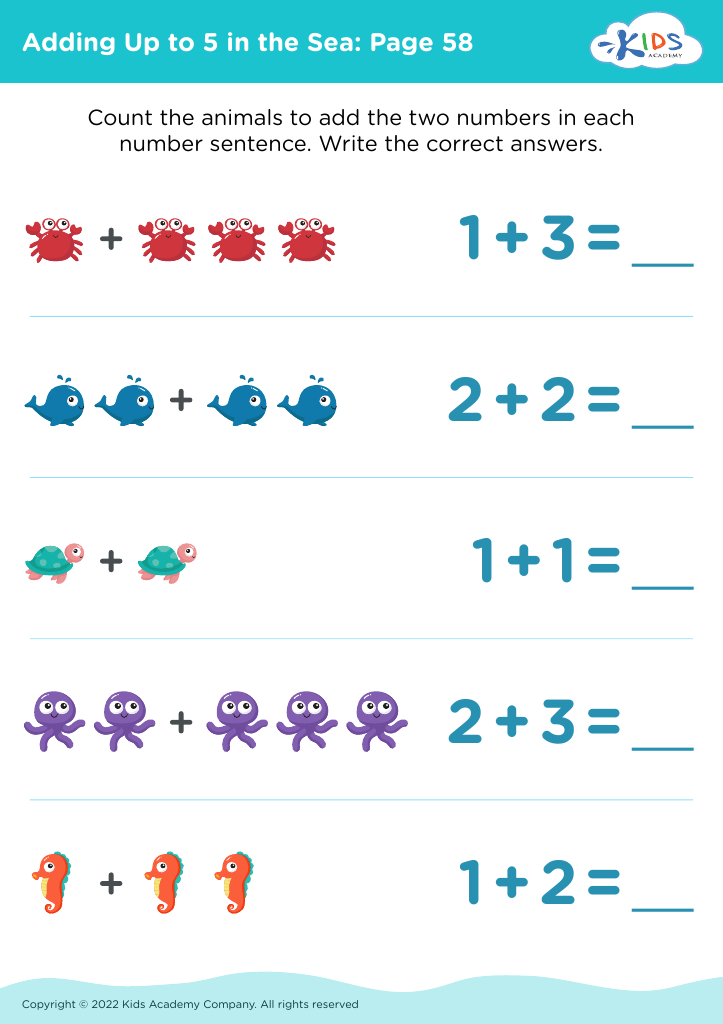
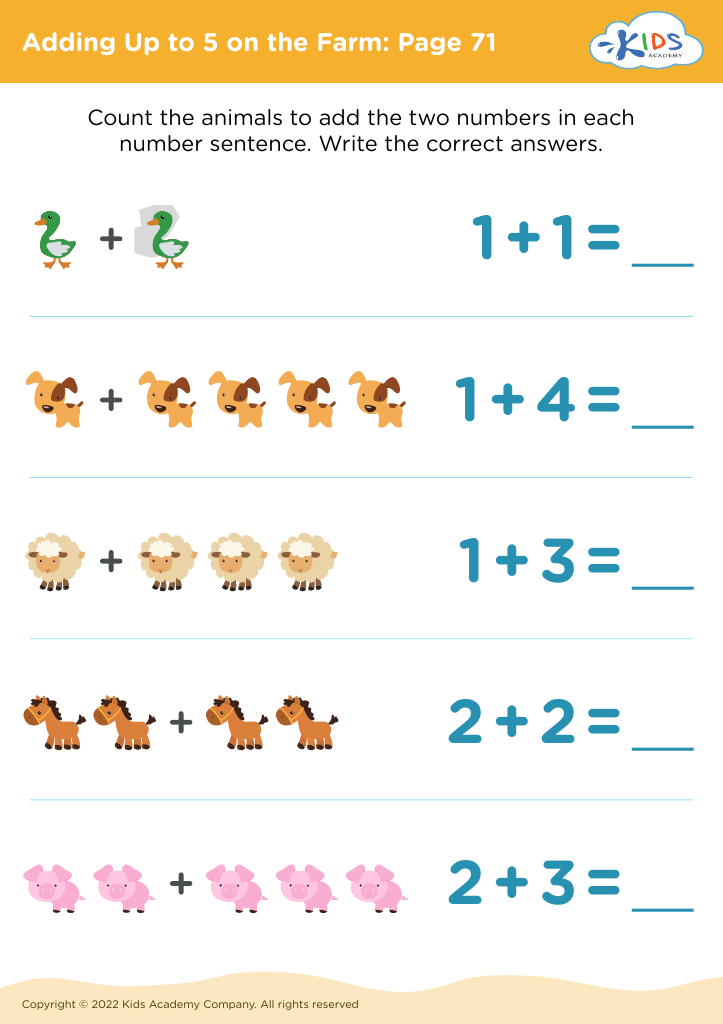
Enhance your child's early math journey with our "Observational Skills Addition & Subtraction Worksheets" designed specifically for ages 3-4. These engaging, age-appropriate activities encourage young learners to strengthen their observational skills while mastering fundamental addition and subtraction concepts. Each worksheet is crafted to boost critical thinking, focusing on identifying patterns, counting items, and recognizing quantity differences. Filled with colorful visuals and fun themes, your little one will enjoy every moment of learning. Watch them develop confidence in math concepts as they interact with real-world scenarios, laying a strong foundation for future math success. Download our worksheets today and make learning fun!
Favorites
With answer key
Interactive
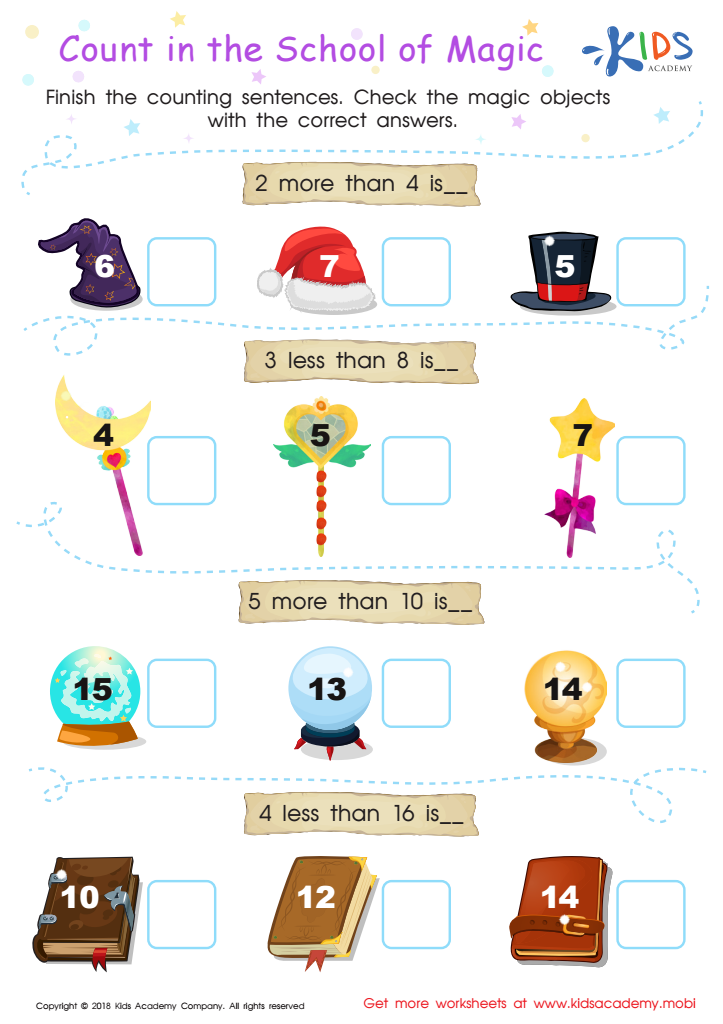
Count in the School of Magic Worksheet
Your math learners can explore the School of Magic with this worksheet. They'll read equations with addition and subtraction numbers under 20, count back and forth to find the answer, then complete the counting sentences. Fun pictures and easy accuracy make it an enjoyable and successful learning experience.
 Assign to My Students
Count in the School of Magic Worksheet
Worksheet
Join Kids Academy for Free
Who is primarily going to use this learning content?








Observational skills in addition and subtraction are crucial for children aged 3-4, as they lay the foundation for mathematical understanding and critical thinking. At this age, children begin to explore numbers and basic operations through play and real-world experiences. Parents and teachers should care about developing these skills because they foster cognitive growth and problem-solving abilities.
When children refine their observational skills, they learn to recognize patterns, quantities, and relationships. For instance, by observing how many blocks are added or taken away during playtime, they develop a hands-on understanding of addition and subtraction. This tactile experience allows for engaging and meaningful learning, making mathematics intuitive rather than abstract.
Moreover, strong observational skills help children to verbalize their thinking, which enhances communication and vocabulary. Engaging with children through discussions about their observations can lead to deeper insights and encourage a love for learning.
Additionally, nurturing these skills early on can help build confidence and independence. As children experience success in understanding basic math concepts, they are more likely to engage in more complex problem-solving tasks in later stages. Ultimately, fostering observational skills in young children creates a solid foundation for future educational achievement.








