Pattern recognition Addition & Subtraction Worksheets for Ages 3-4
3 filtered results
-
From - To
Discover our engaging Pattern Recognition Addition & Subtraction Worksheets designed specifically for children aged 3-4! These interactive worksheets blend fun and learning to enhance your child's mathematical understanding through pattern recognition. Carefully crafted, they help preschoolers identify and extend sequences while practicing basic addition and subtraction skills. Our worksheets offer colorful visuals and playful themes that make math enjoyable, ensuring your child develops confidence and critical thinking. Perfect for classroom use or at-home learning, these resources promote early math education while challenging young minds. Encourage your kids to explore shapes, numbers, and patterns in a fun and stimulating way!
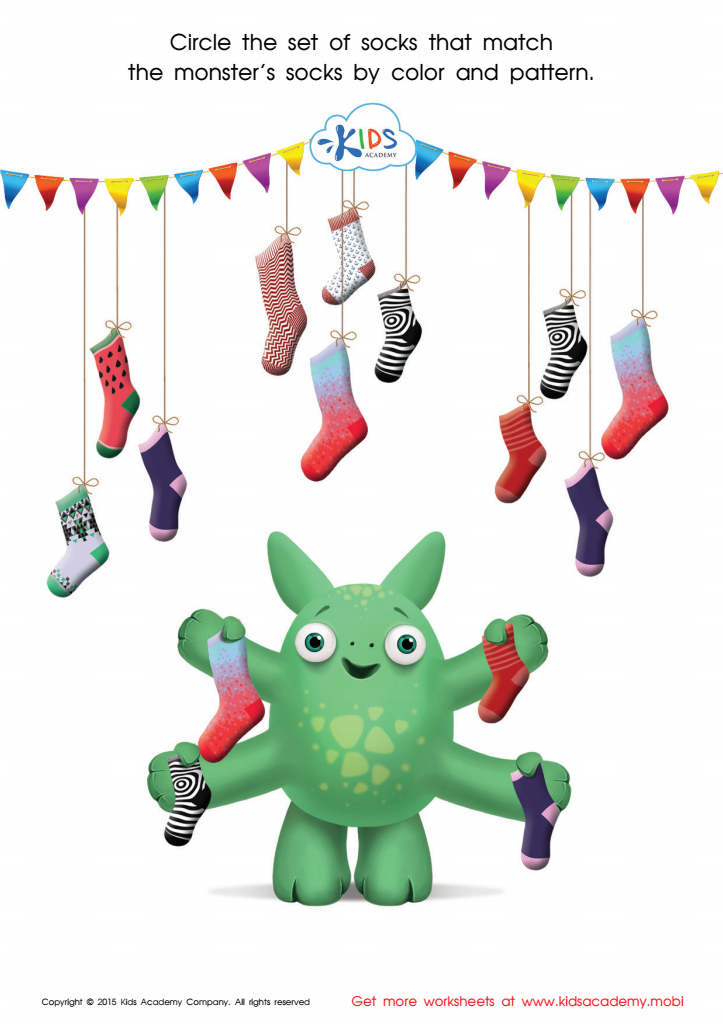
Sort the Monster's Socks Worksheet
 Assign to My Students
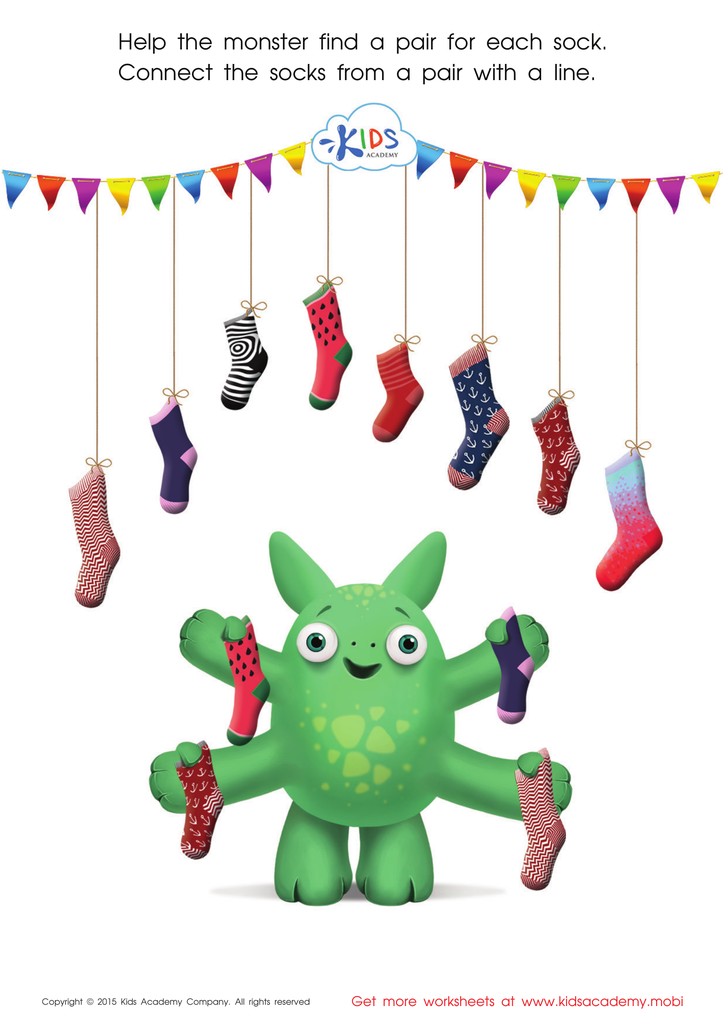
Math Matching Game: Monsterв's Socks Worksheet
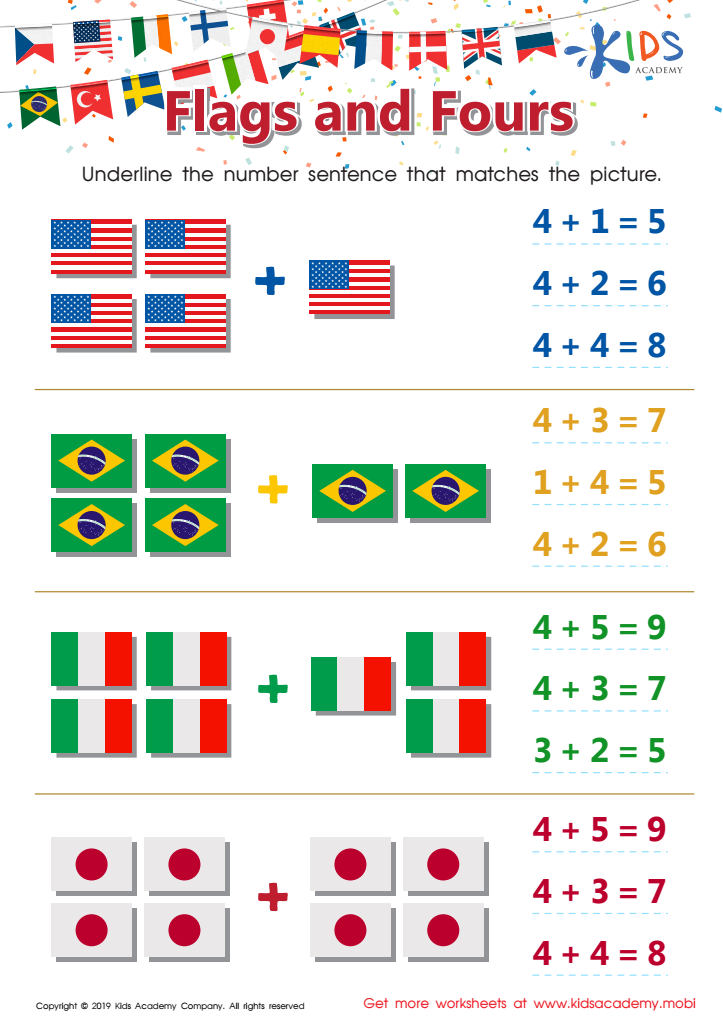
Flags and Fours Worksheet








Parents and teachers should prioritize pattern recognition in addition and subtraction for children aged 3-4 because it lays a crucial foundation for mathematical understanding. Young children are naturally inclined to notice patterns in their environment, and nurturing this ability enhances their cognitive skills. Recognizing patterns helps children identify numerical relationships, which is fundamental in grasping basic math operations.
When kids engage with addition and subtraction through patterns—such as counting objects or completing sequences—they develop critical problem-solving skills. This early exposure fosters confidence in their abilities to handle numbers and sharpen their analytical thinking.
Moreover, pattern recognition aids literacy development, as similar skills are used in reading and writing, where understanding sequences is essential. Introducing patterns through playful activities can make learning enjoyable, encouraging a positive attitude towards math. Parents and teachers actively support cognitive development and stimulate enthusiasm for learning by embedding these concepts into everyday experiences.
In conclusion, by focusing on pattern recognition in early math, caregivers can help children build a strong, interconnected knowledge of numbers that supports their academic growth and fosters essential life skills. This early intervention creates a solid groundwork for future learning, making math more accessible and engaging.








