Addition skills Addition Worksheets for Ages 3-4 - Page 4
89 filtered results
-
From - To
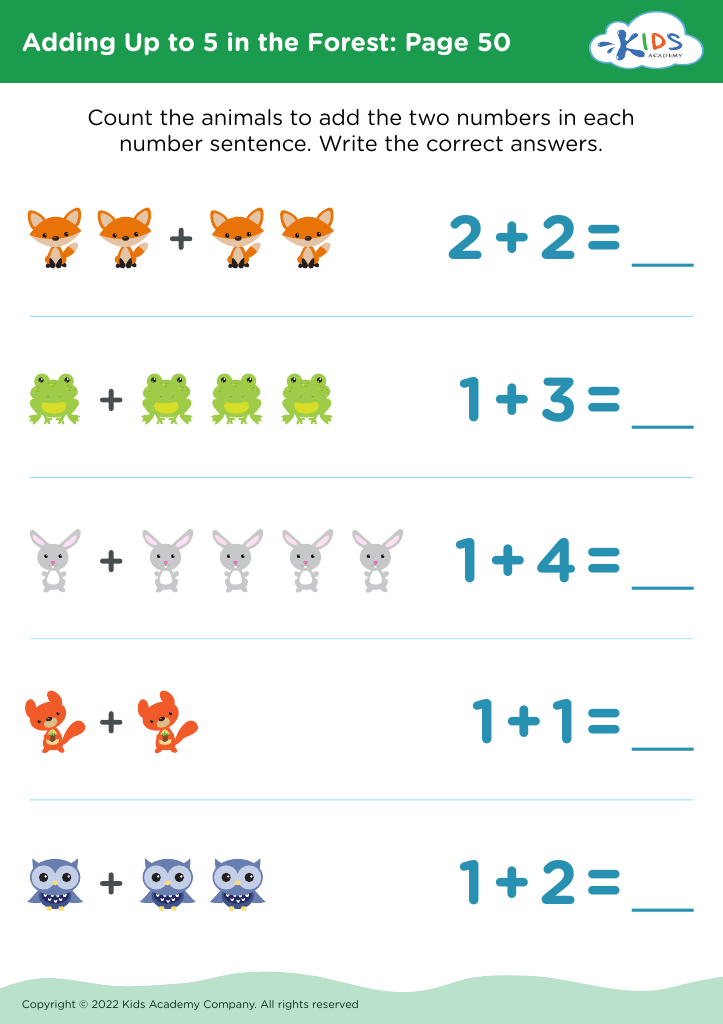
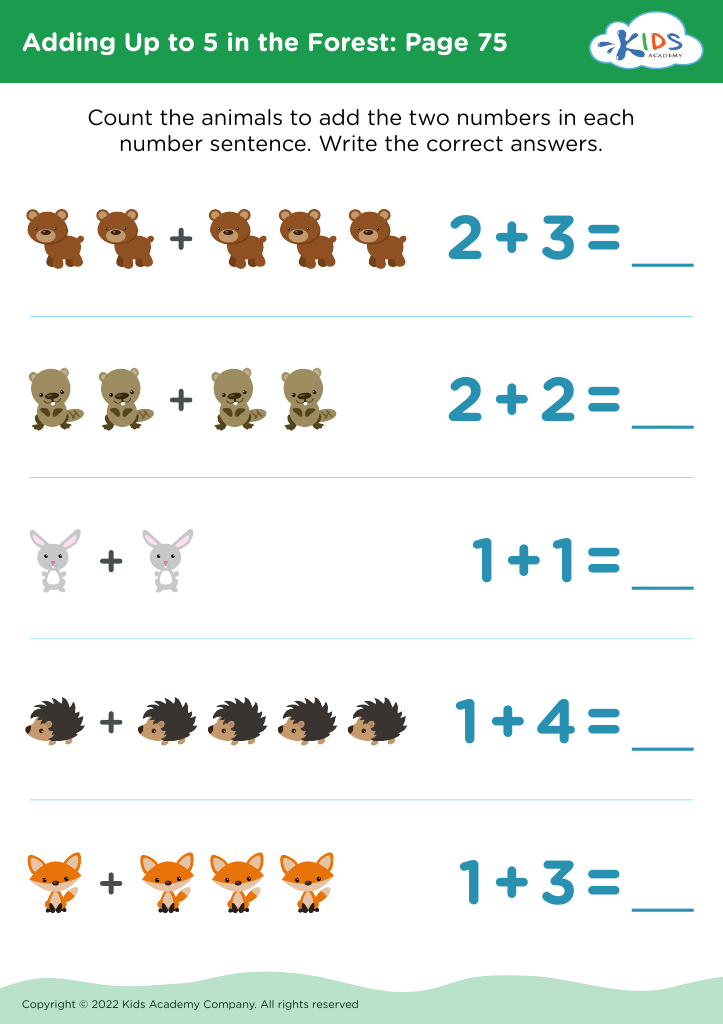
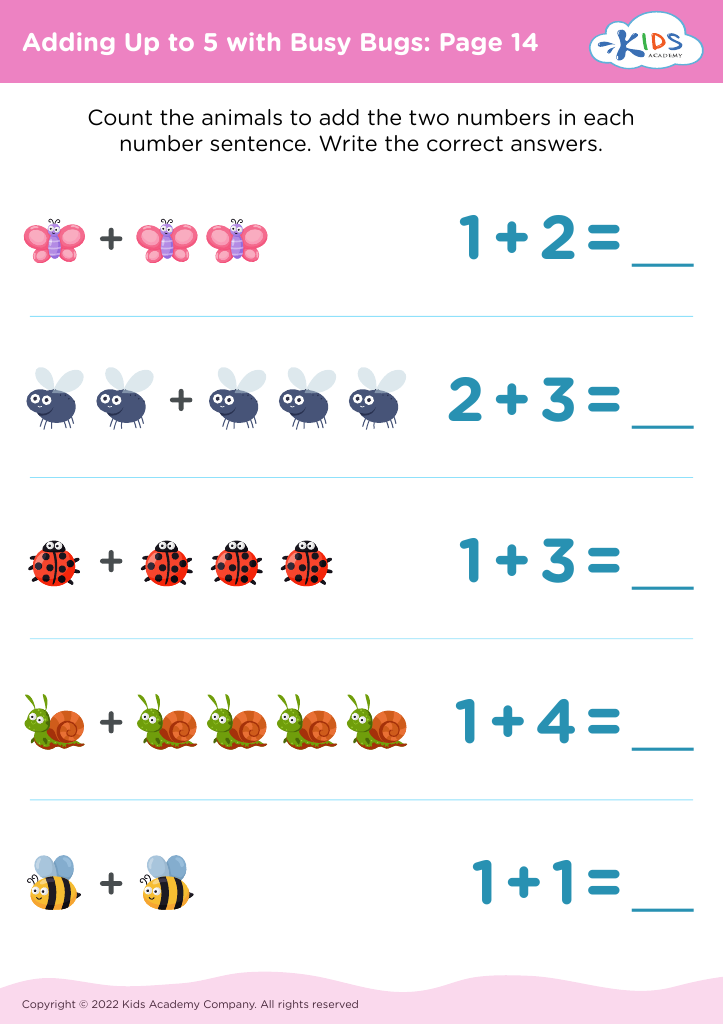
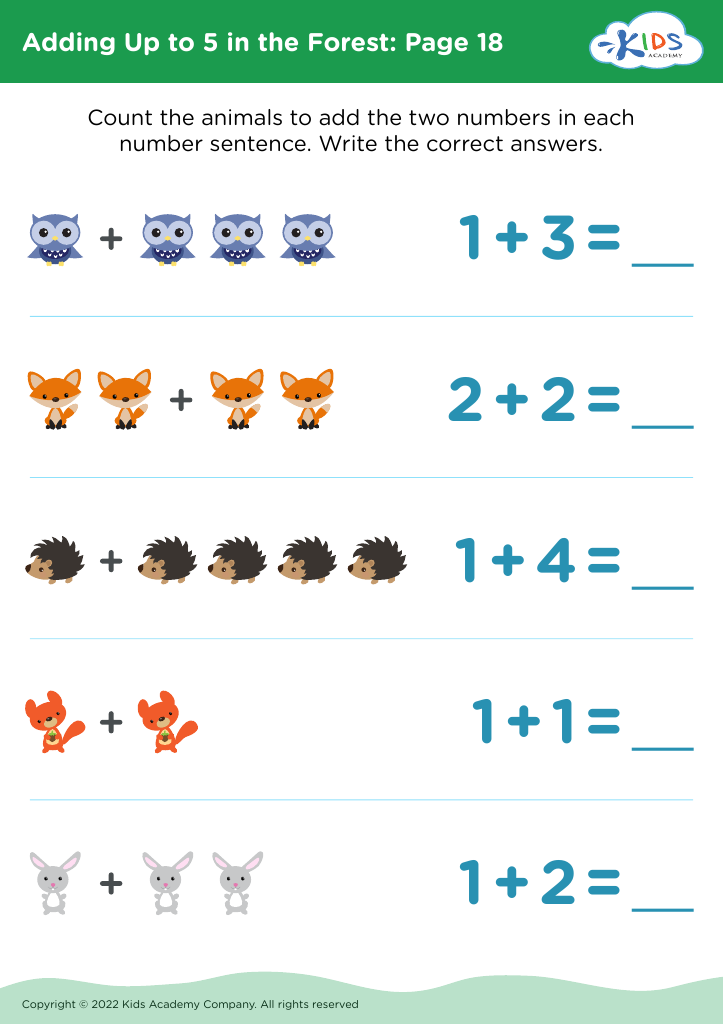
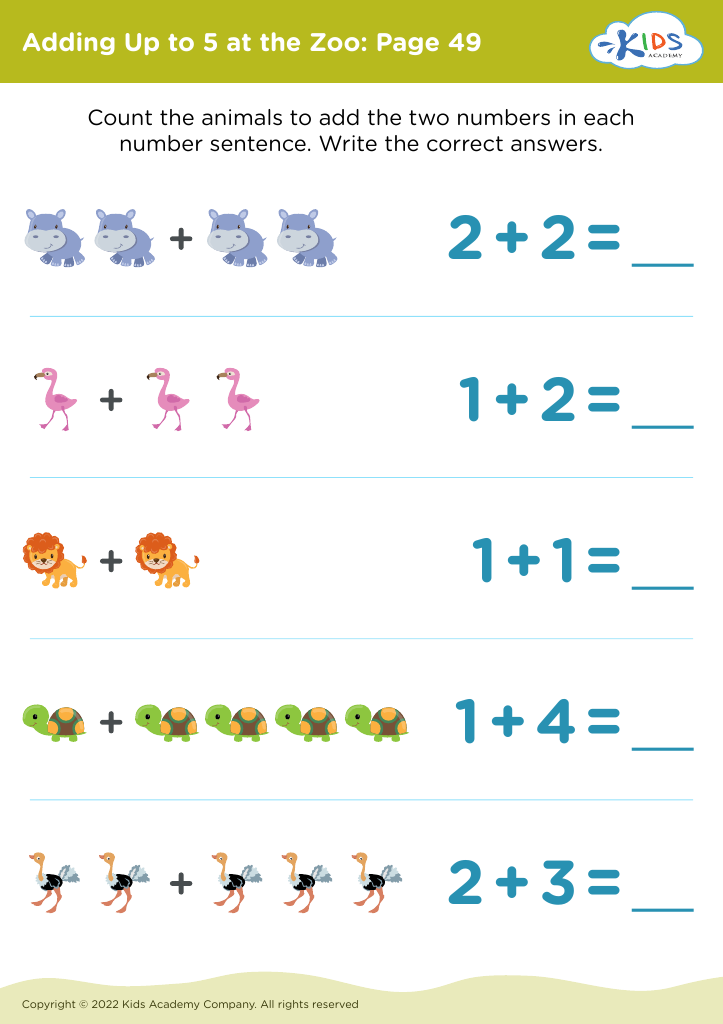
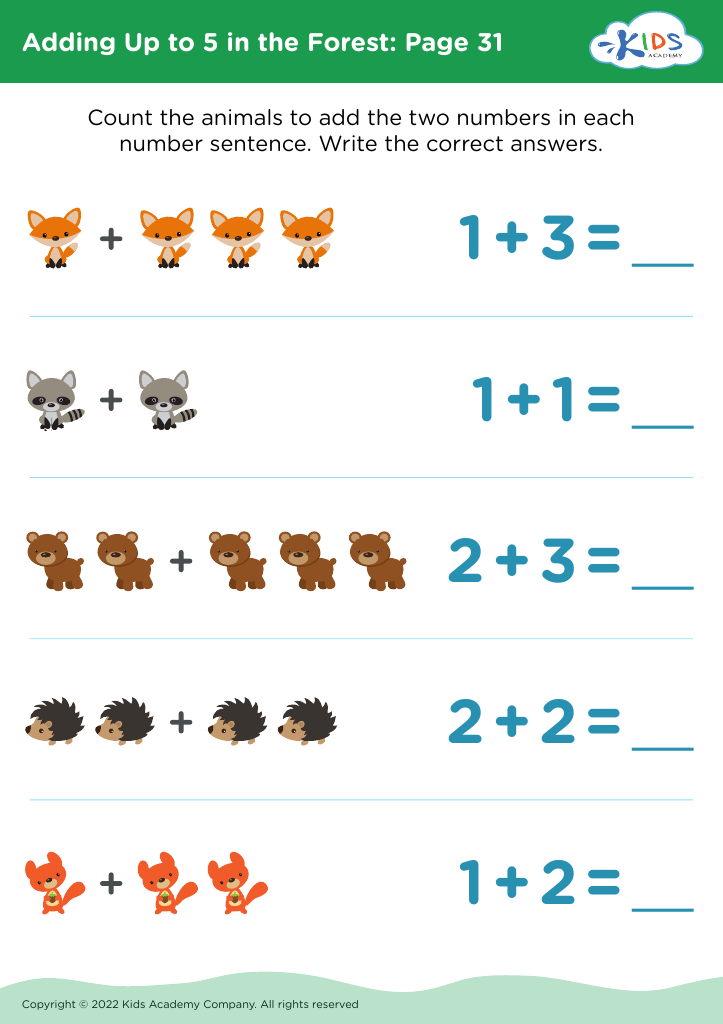
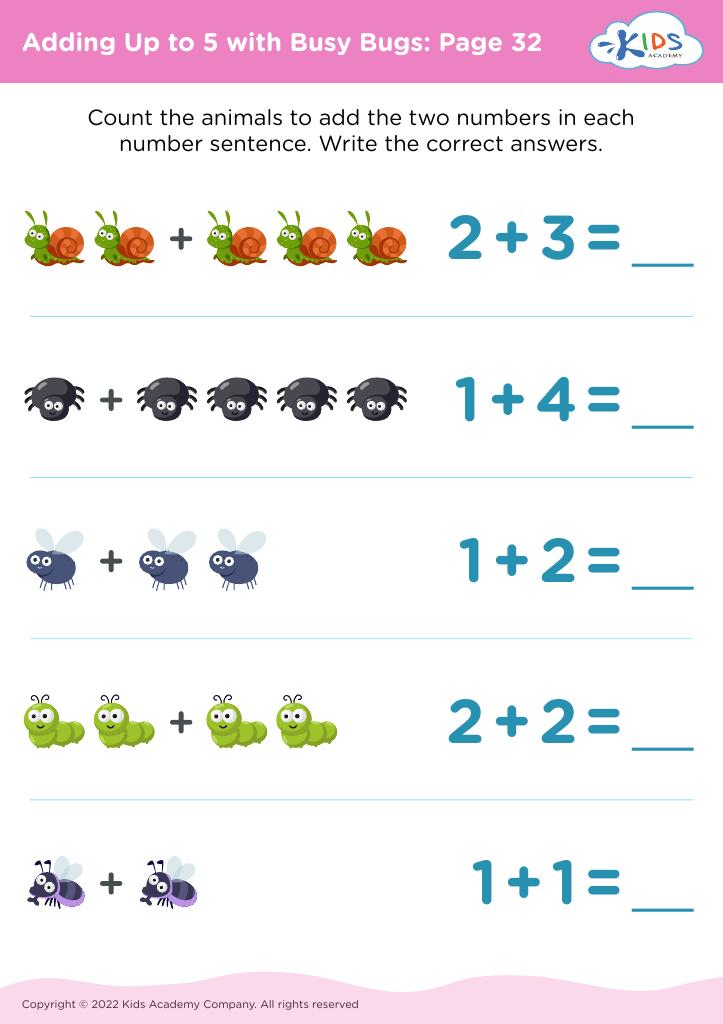
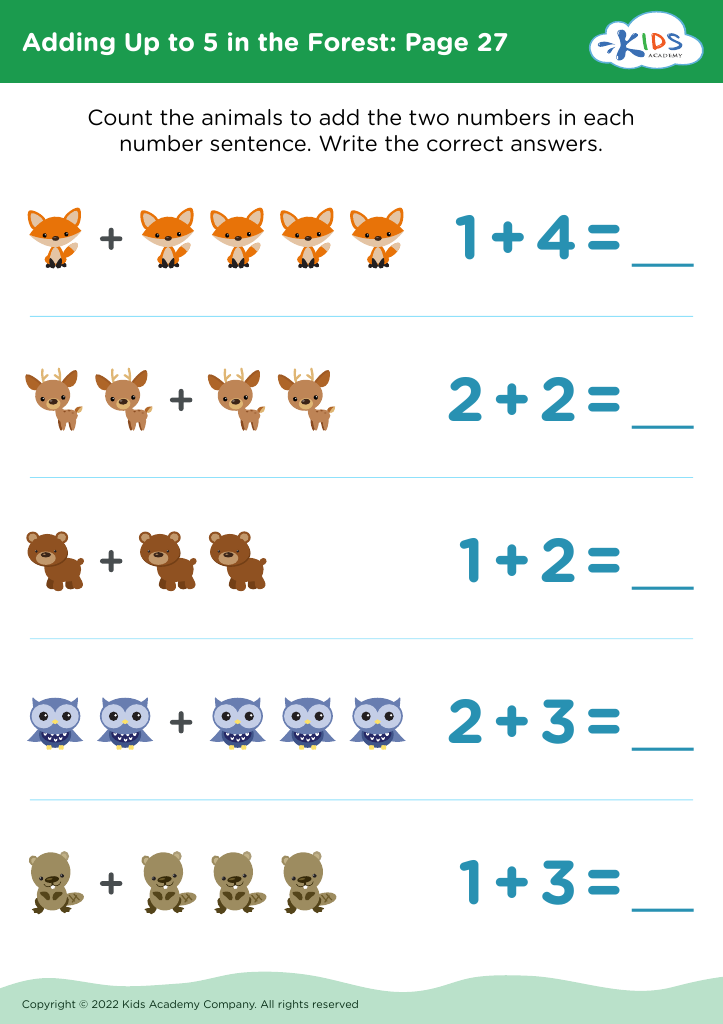
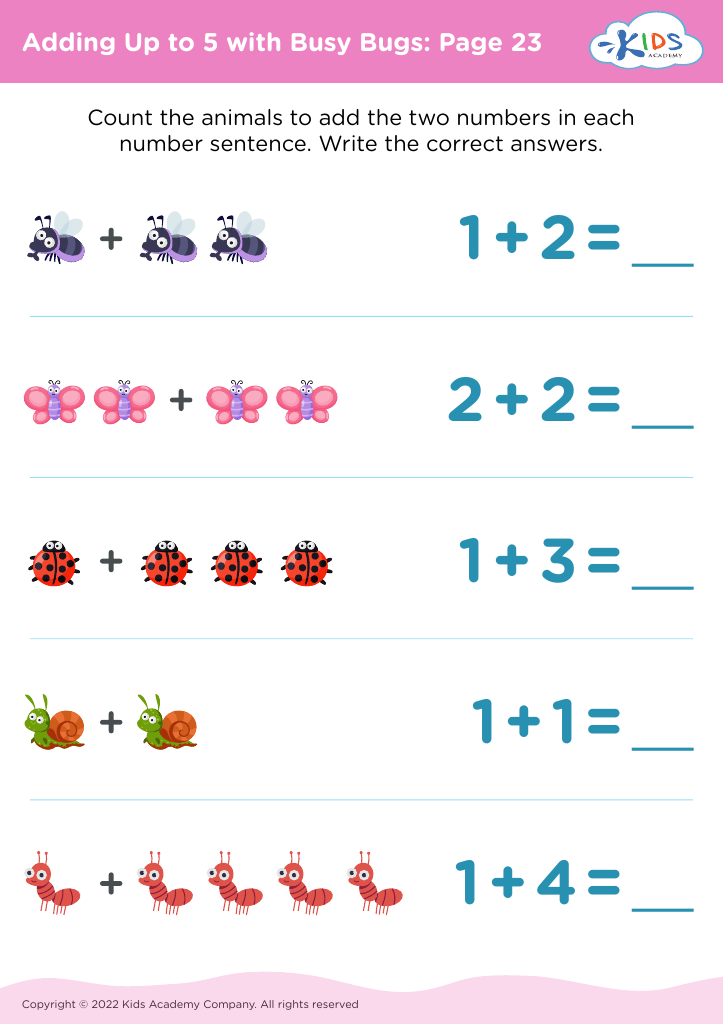
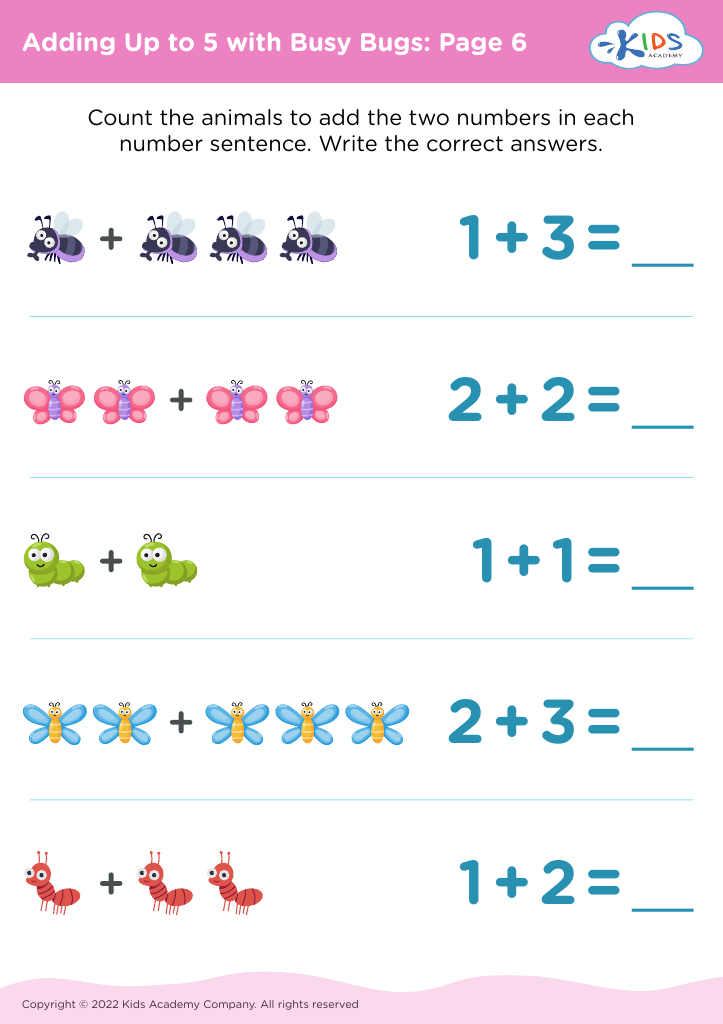
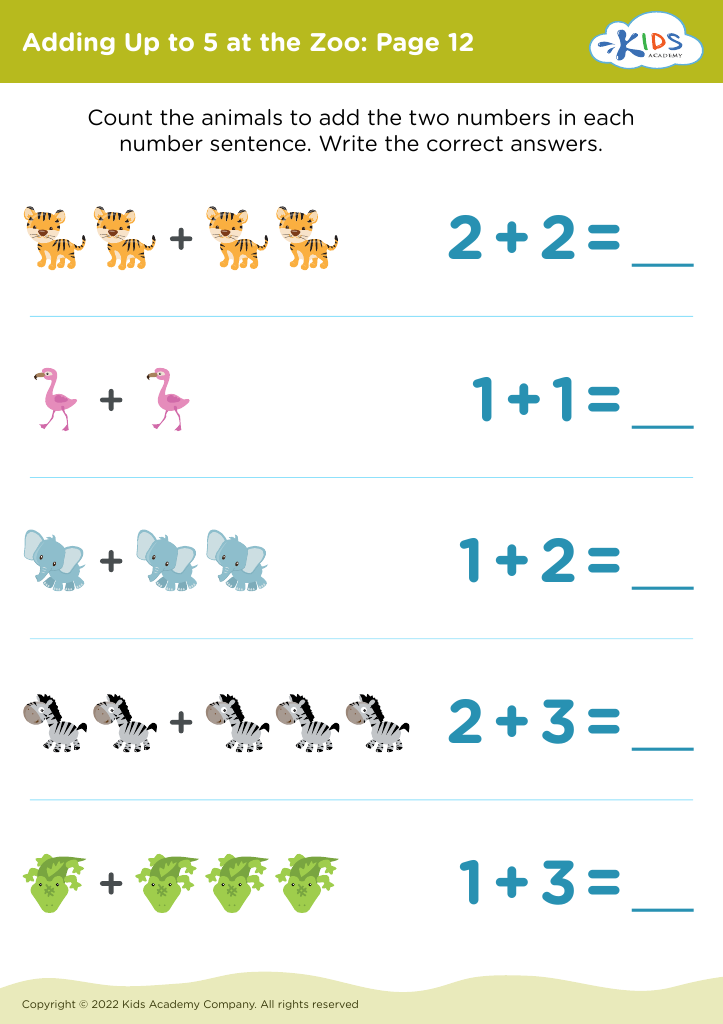
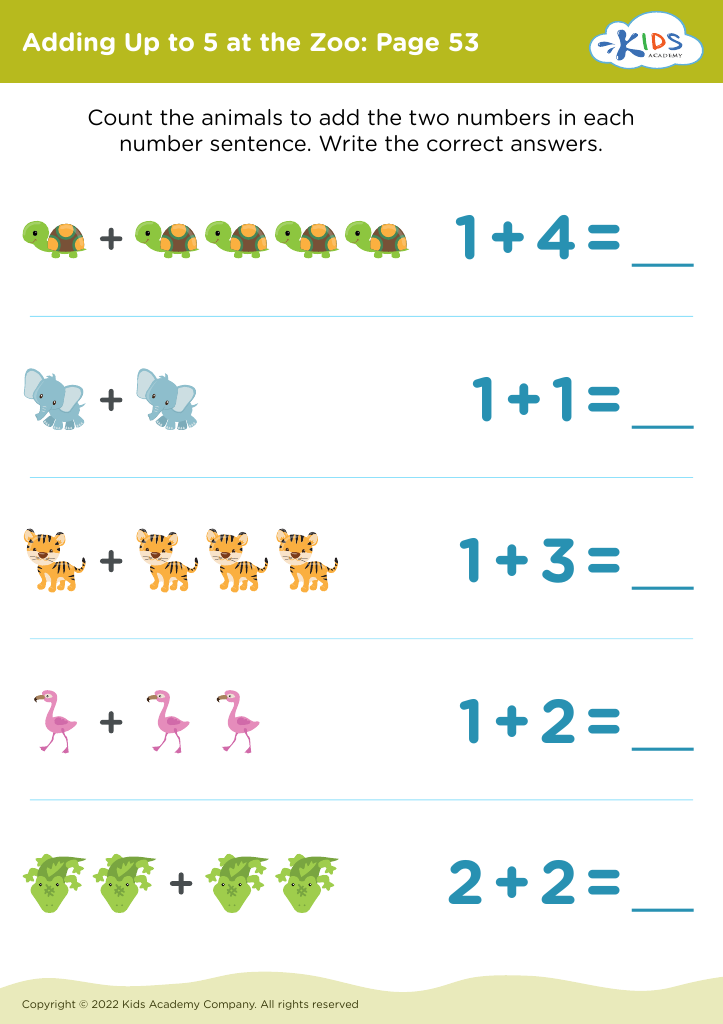
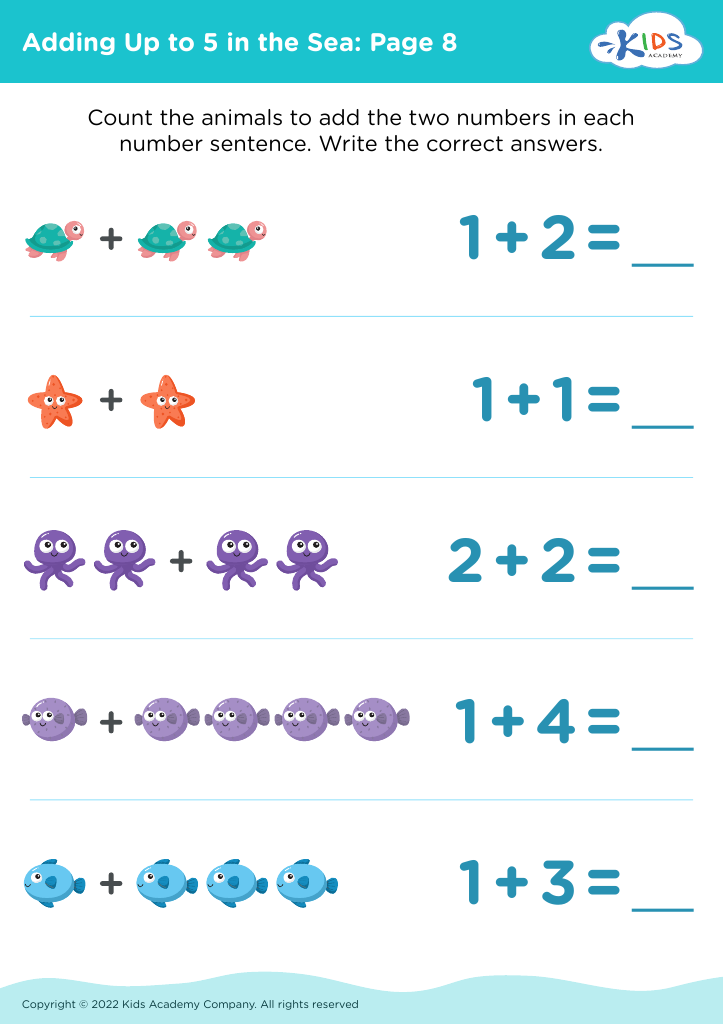
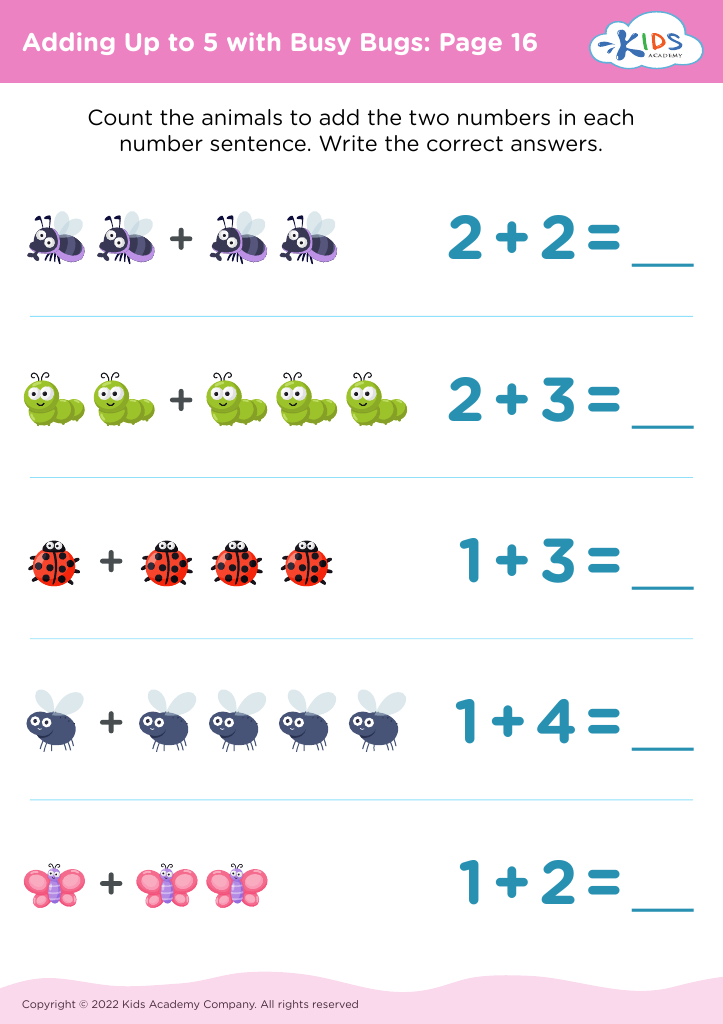
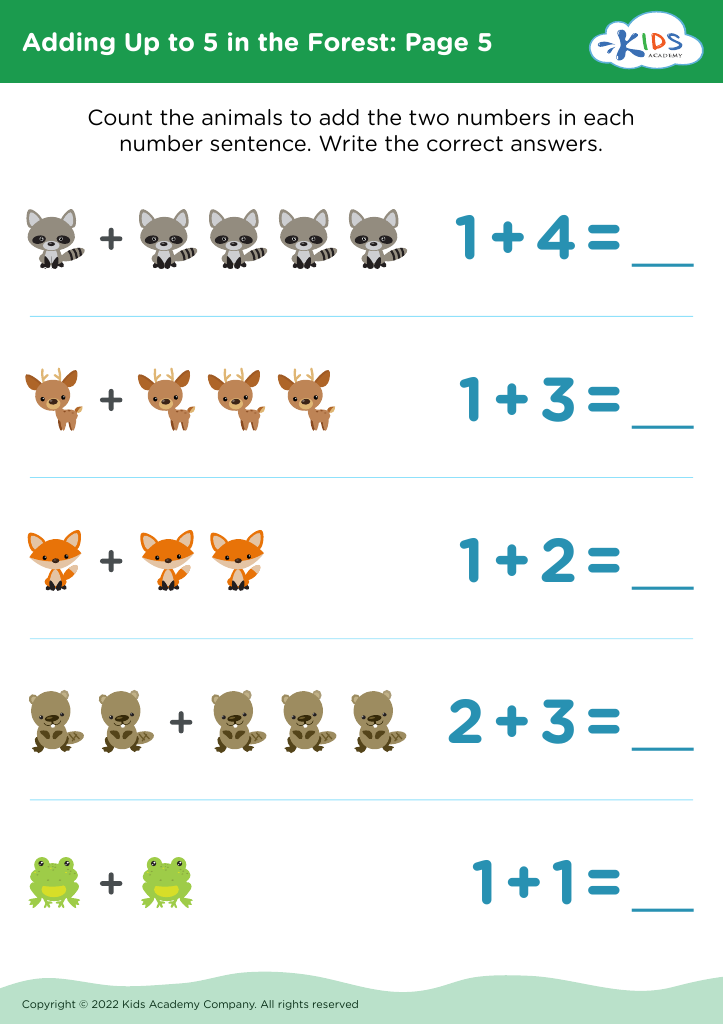
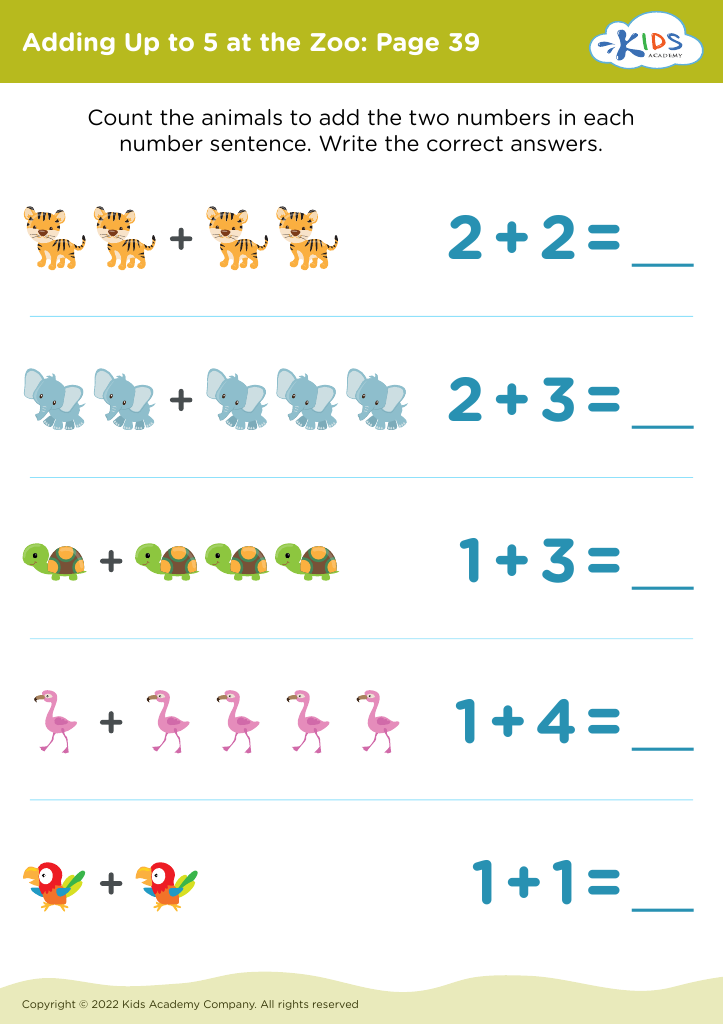
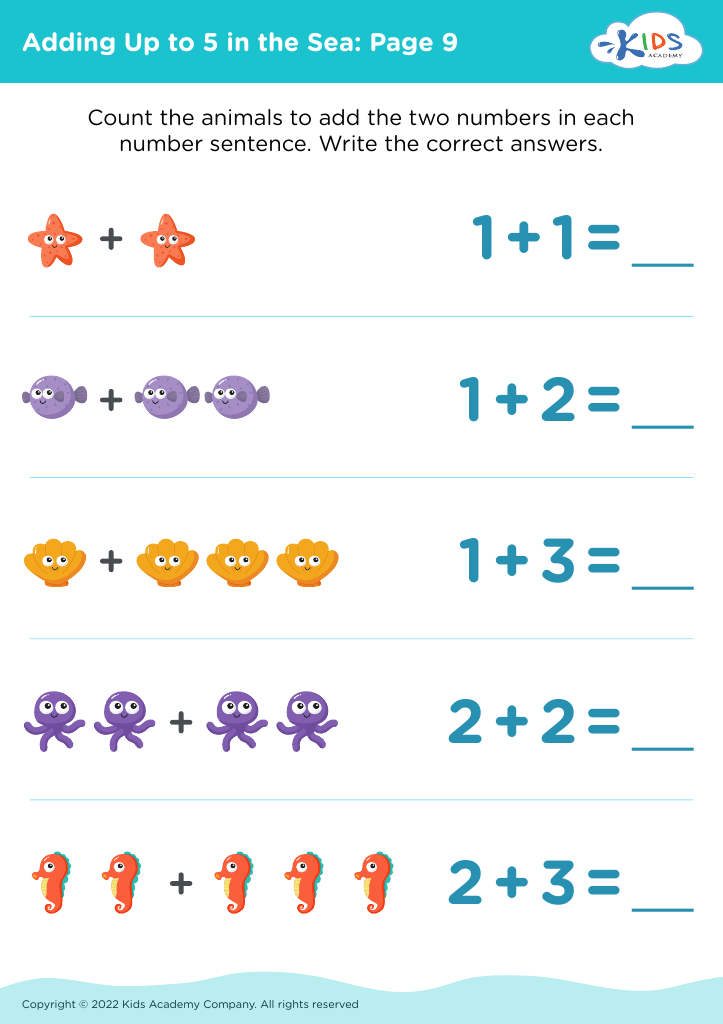








Addition skills are foundational for mathematical understanding and cognitive development in children aged 3-4 years. At this stage, young learners are starting to explore numbers and basic math concepts through playful activities. Encouraging early addition skills can significantly enhance their problem-solving abilities and critical thinking.
First, mastering addition builds a child’s confidence in their mathematical abilities. When children grasp simple addition, they feel a sense of accomplishment, which promotes a love for learning. This positive experience can lead to a lifelong interest in mathematics.
Second, early exposure to addition fosters cognitive development. It helps children understand quantities, improve memory, and enhance logical reasoning. These skills are essential as they advance through their educational journey.
Finally, addition forms the building blocks for more complex mathematical concepts in later years. As children begin school, a strong grasp of basic addition will ease their transition into formal math learning, preventing future struggles in subjects such as arithmetic, geometry, and algebra.
In summary, parents and teachers should prioritize the development of addition skills in early childhood to lay a robust foundation for future academic success, enhance cognitive skills, and instill a positive attitude toward learning.








