Filters

89 filtered results

Clear all filters
Favorites
With answer key
Interactive

89 filtered results

Difficulty Level

Grade


Check out this FREE Trial Lesson on Addition for age 3-4!

My Family

Favorites
With answer key
Interactive
  • 3-4
  • Addition skills
  • Addition
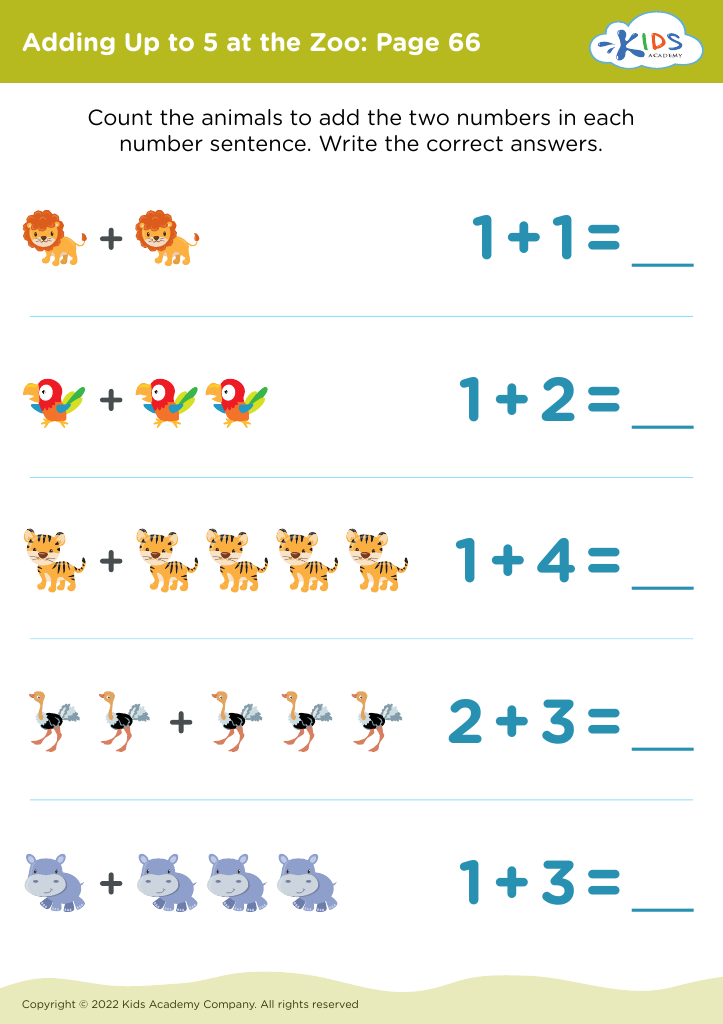
Adding Up to 5 at the Zoo: Page 66
Worksheet
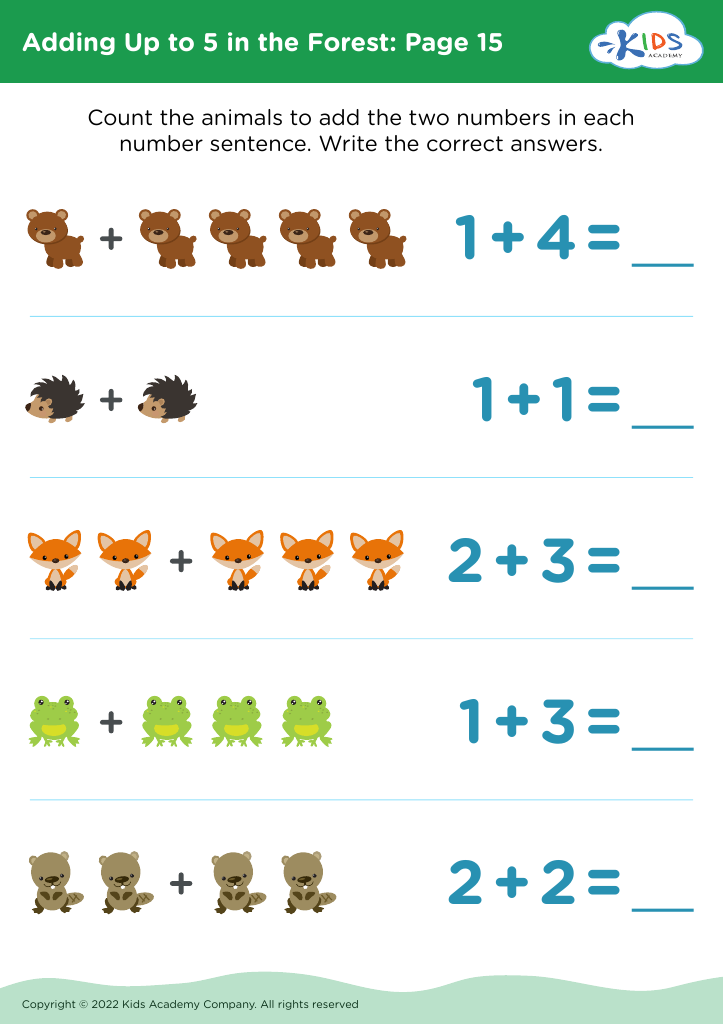
Adding Up to 5 in the Forest: Page 15
Worksheet
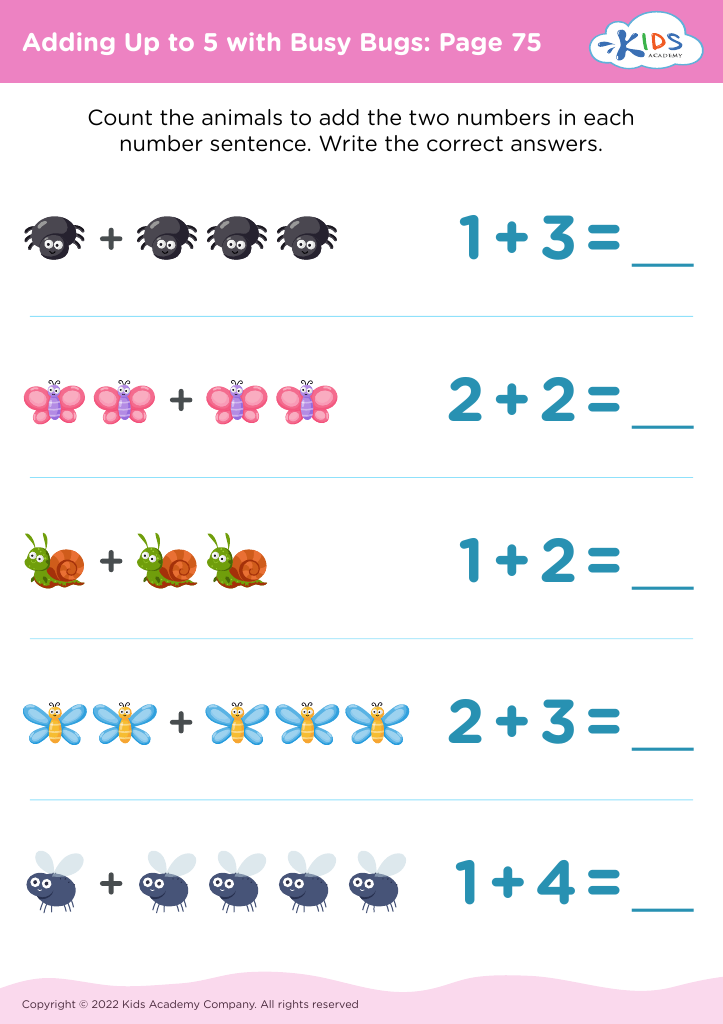
Adding Up to 5 with Busy Bugs: Page 75
Worksheet
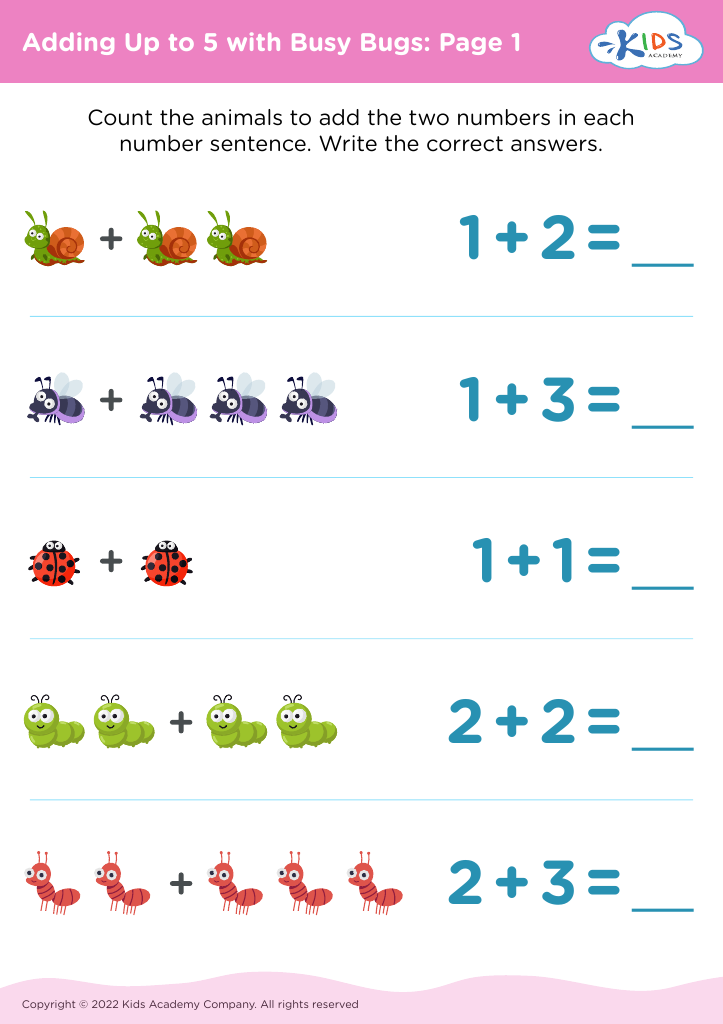
Adding Up to 5 with Busy Bugs: Page 1
Worksheet
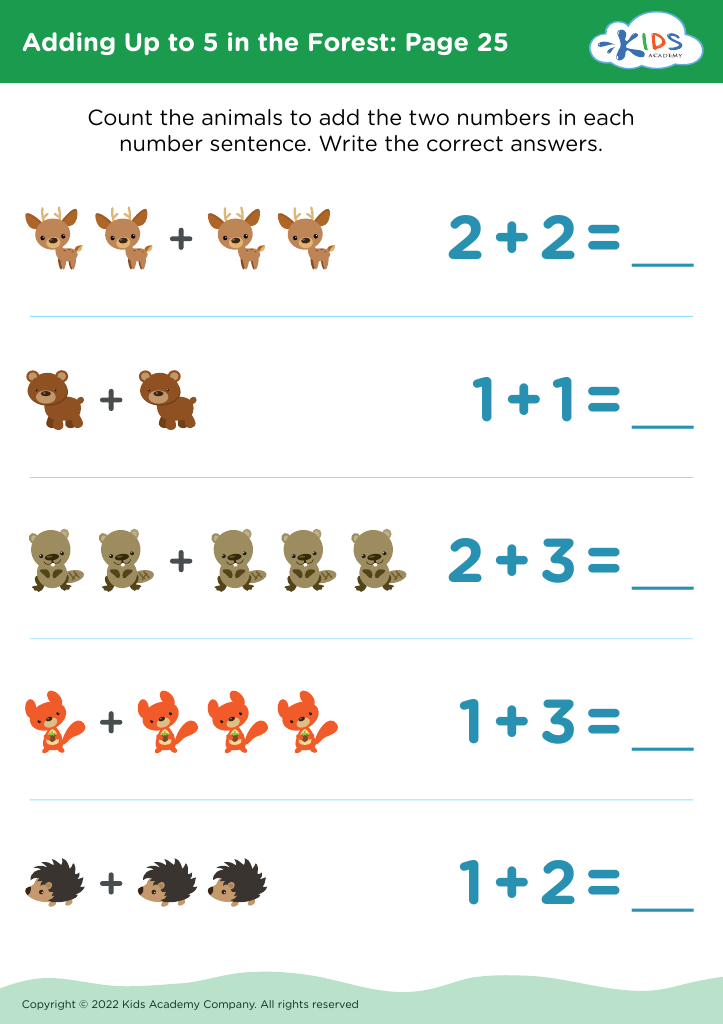
Adding Up to 5 in the Forest: Page 25
Worksheet
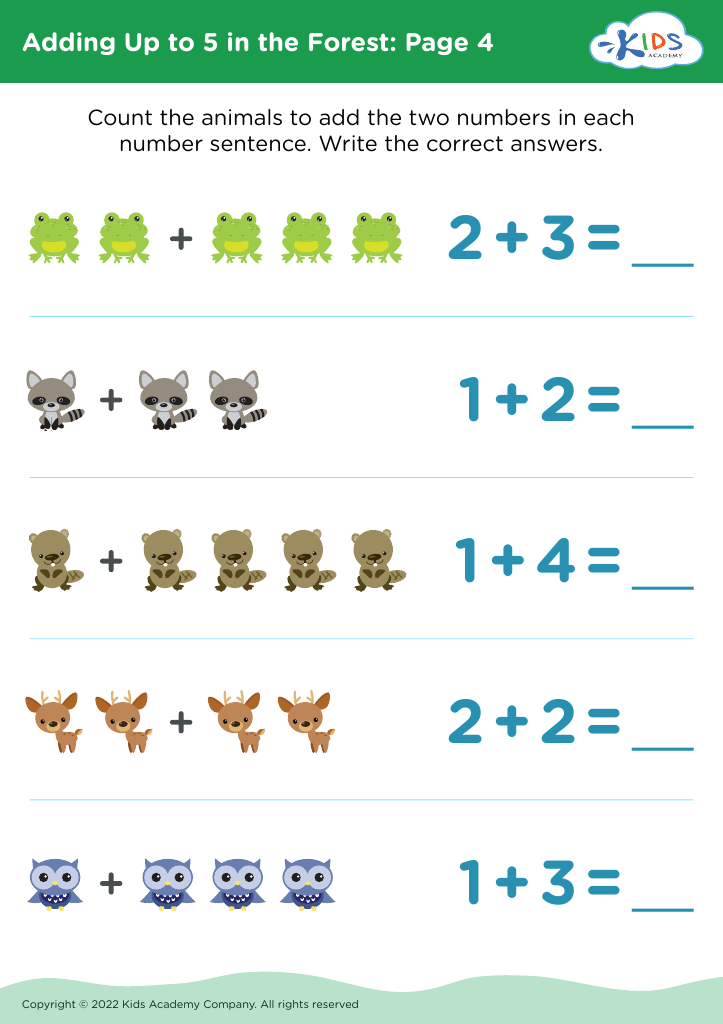
Adding Up to 5 in the Forest: Page 4
Worksheet
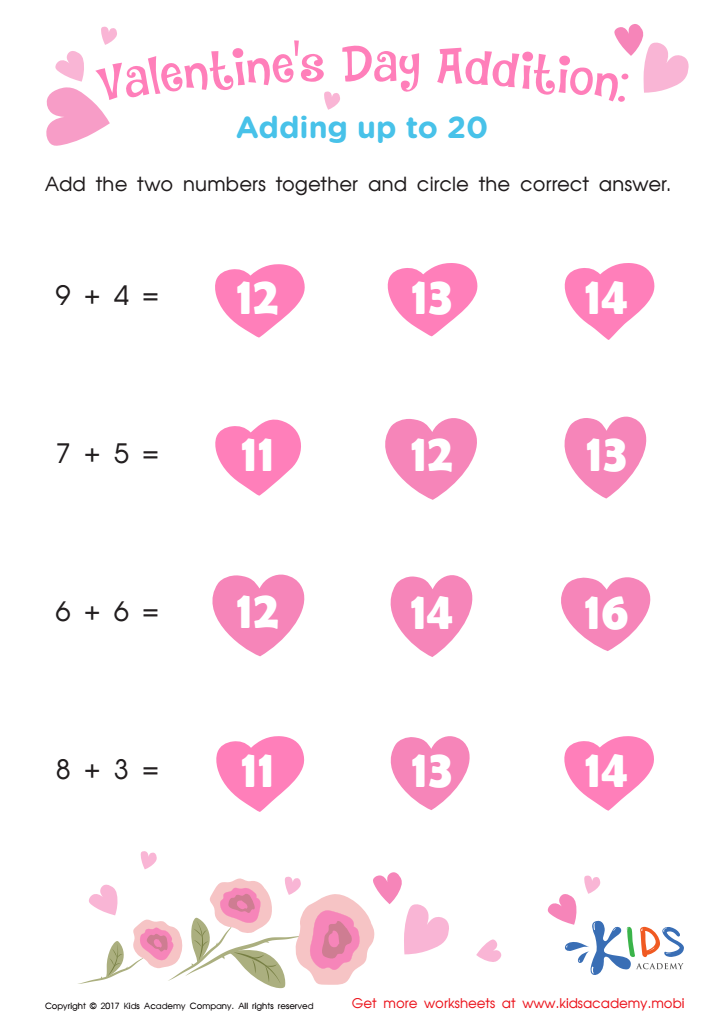
Addition up to 20 worksheet

Valentine's Day Addition Worksheet

This Valentine's Day themed worksheet is a fun way for your child to practice adding single digits up to 20! Hearts feature to help your child increase their math skills and have fun at the same time.
Valentine's Day Addition Worksheet
Worksheet
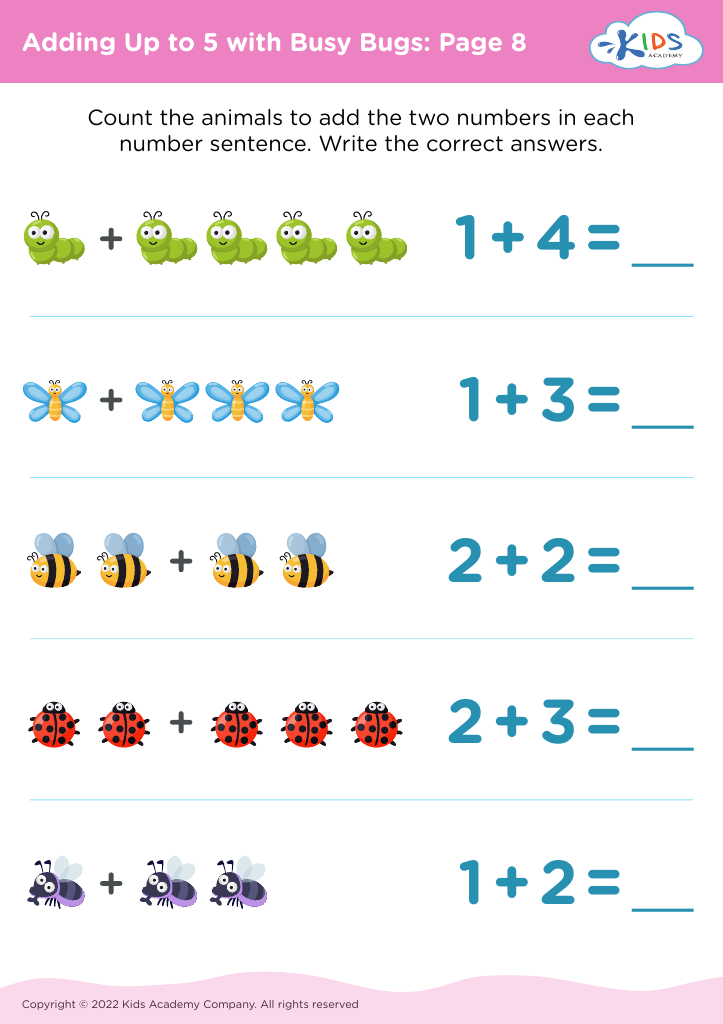
Adding Up to 5 with Busy Bugs: Page 8
Worksheet
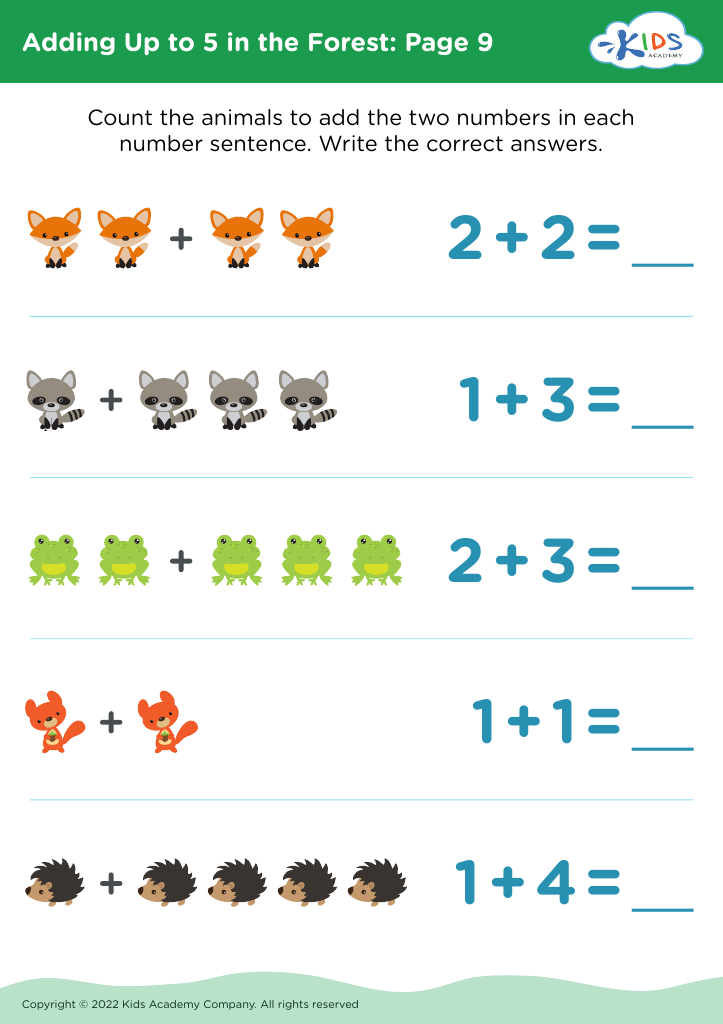
Adding Up to 5 in the Forest: Page 9
Worksheet
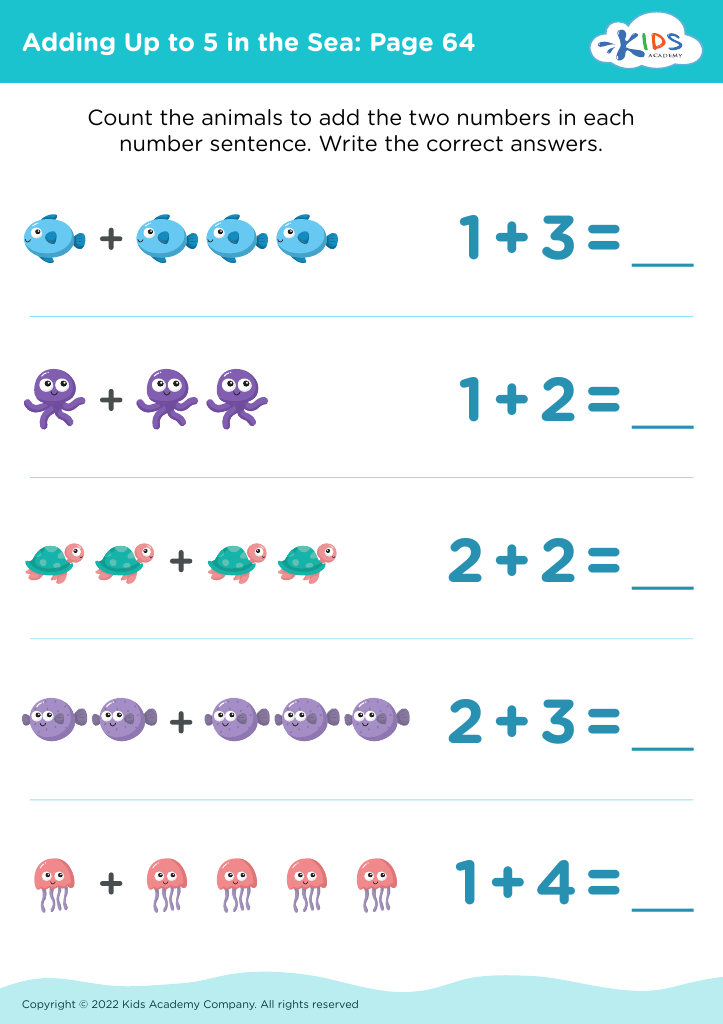
Adding Up to 5 in the Sea: Page 64
Worksheet
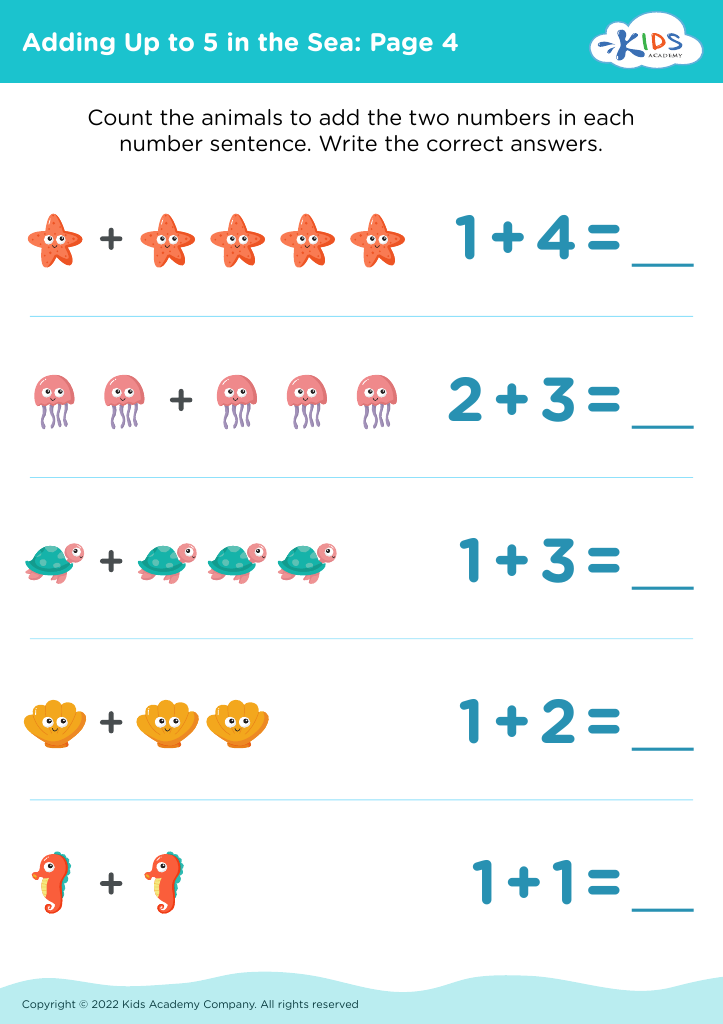
Adding Up to 5 in the Sea: Page 4

Adding Up to 5 in the Sea: Page 4

Adding Up to 5 in the Sea: Page 4
Worksheet
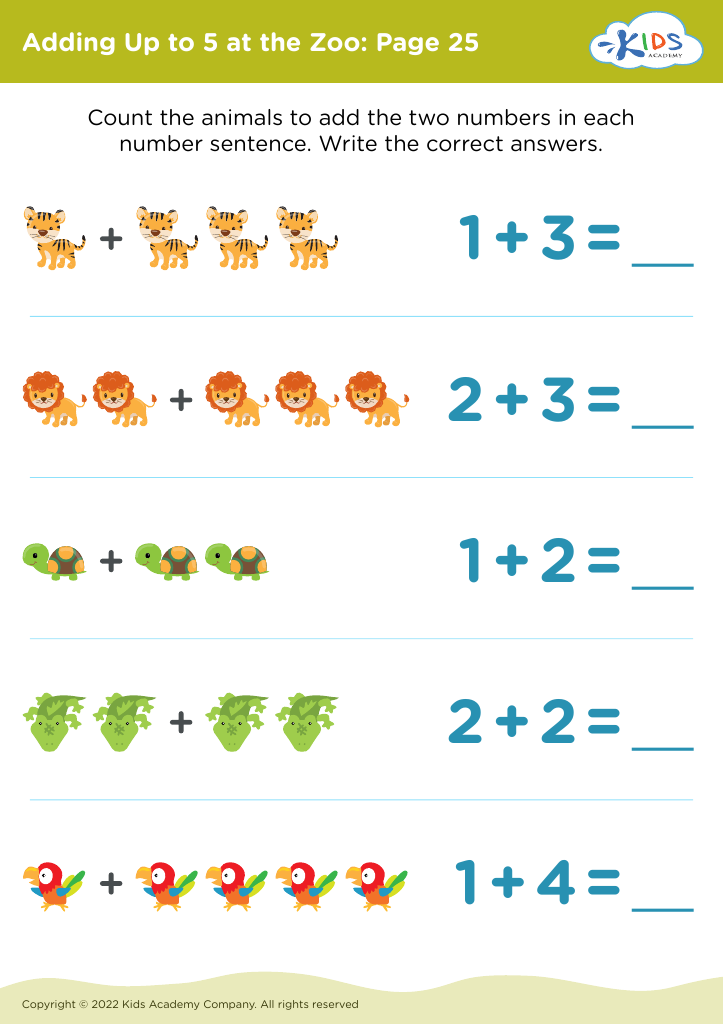
Adding Up to 5 at the Zoo: Page 25
Worksheet
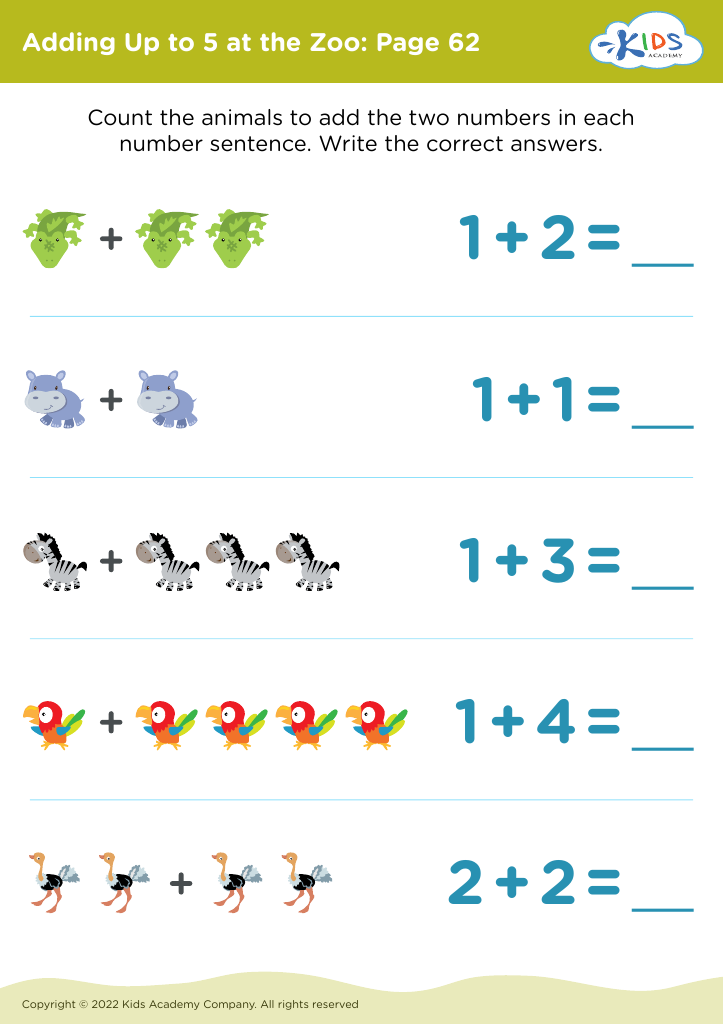
Adding Up to 5 at the Zoo: Page 62
Worksheet
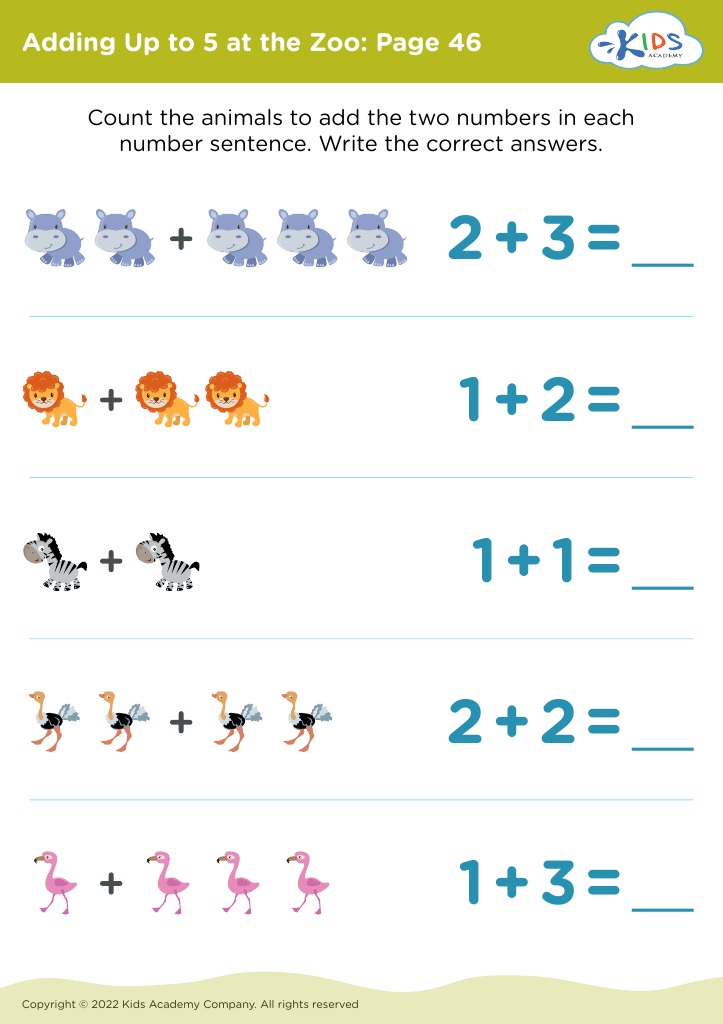
Adding Up to 5 at the Zoo: Page 46
Worksheet
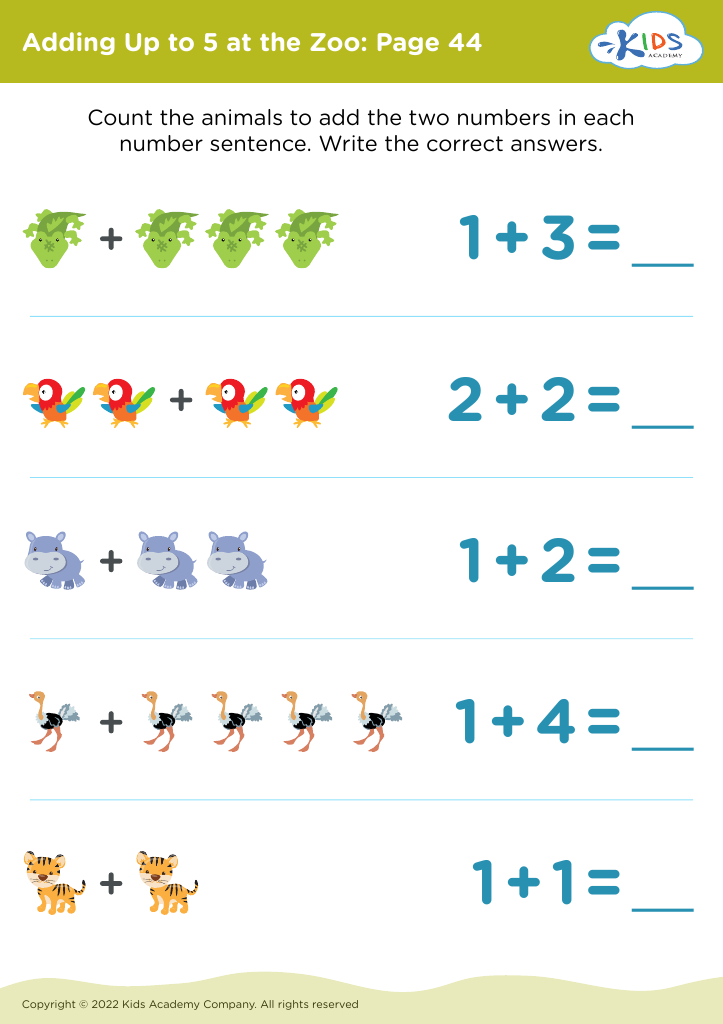
Adding Up to 5 at the Zoo: Page 44
Worksheet
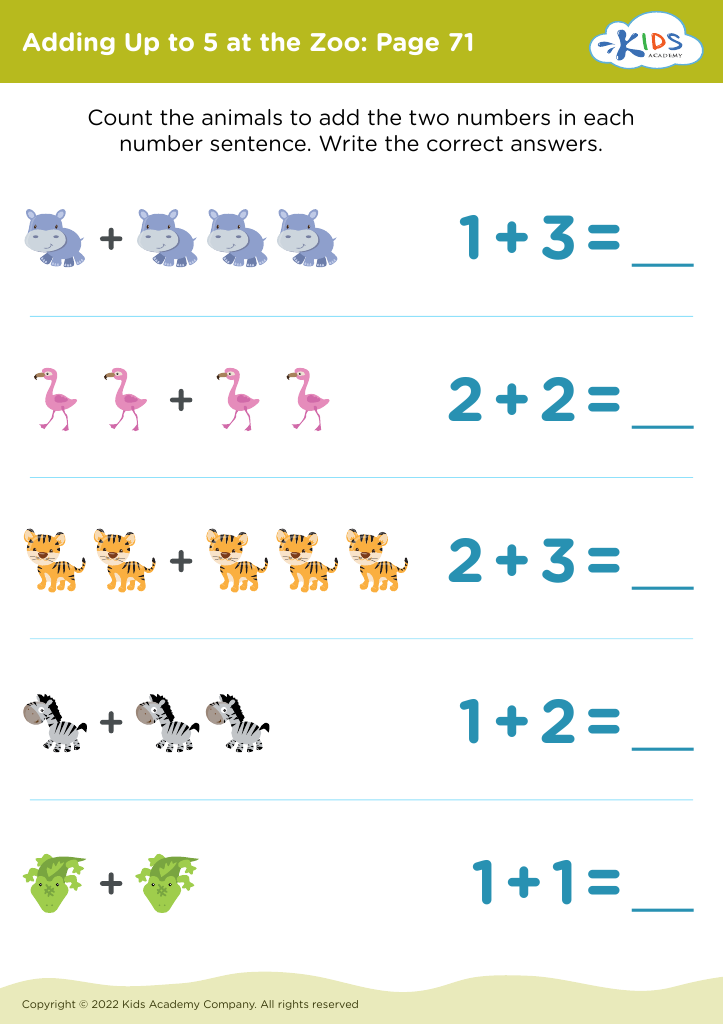
Adding Up to 5 at the Zoo: Page 71
Worksheet
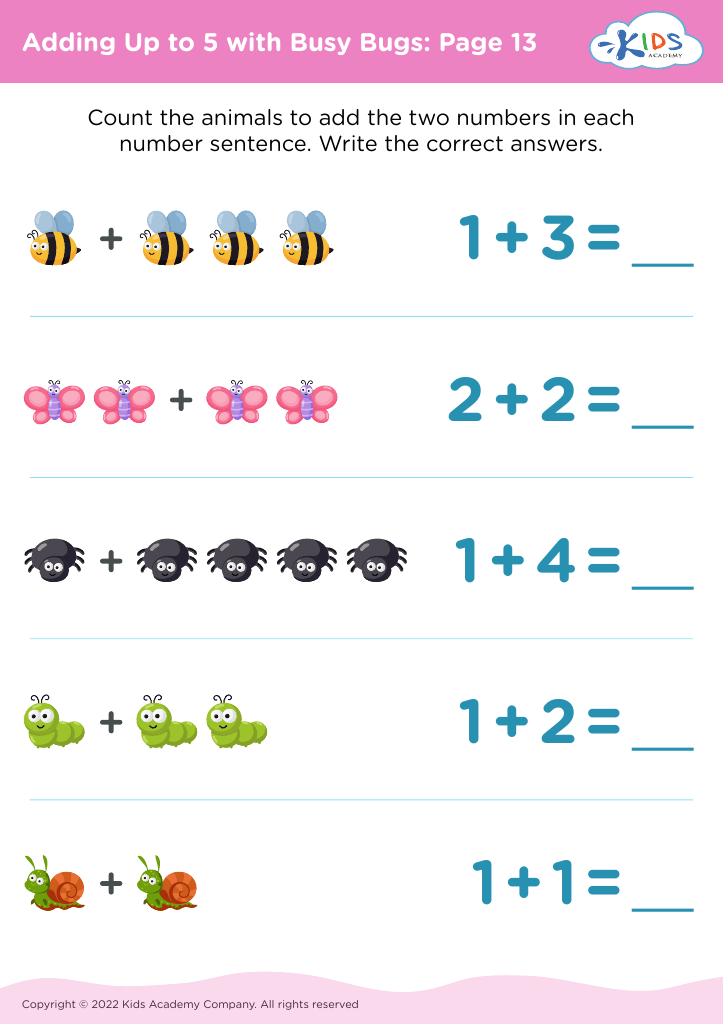
Adding Up to 5 with Busy Bugs: Page 13
Worksheet
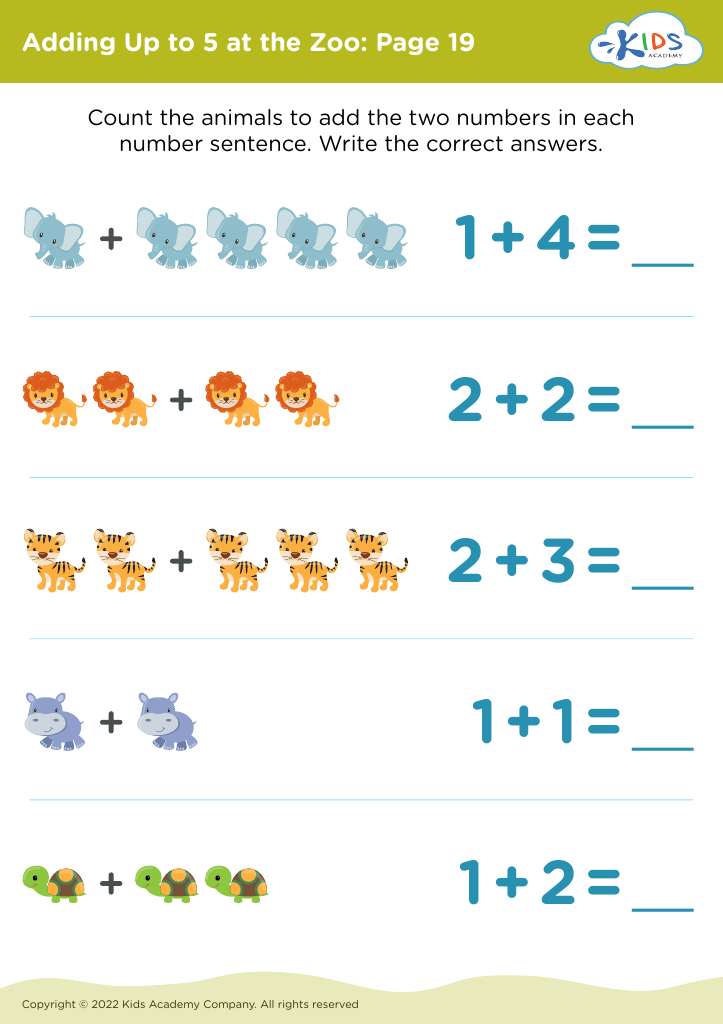
Adding Up to 5 at the Zoo: Page 19
Worksheet
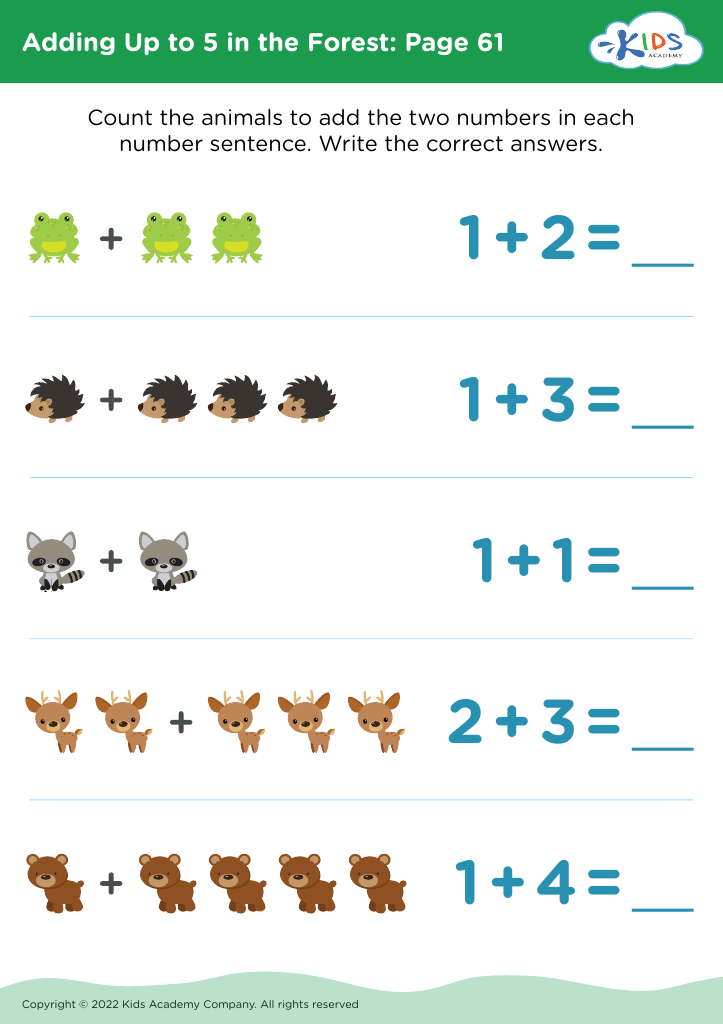
Adding Up to 5 in the Forest: Page 61
Worksheet
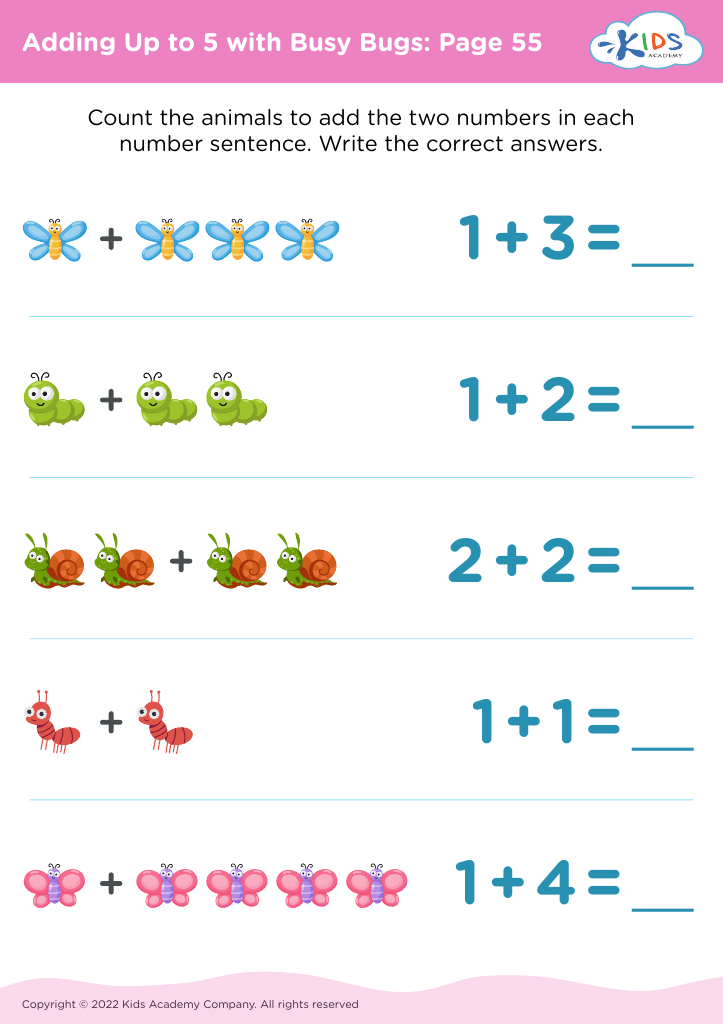
Adding Up to 5 with Busy Bugs: Page 55
Worksheet
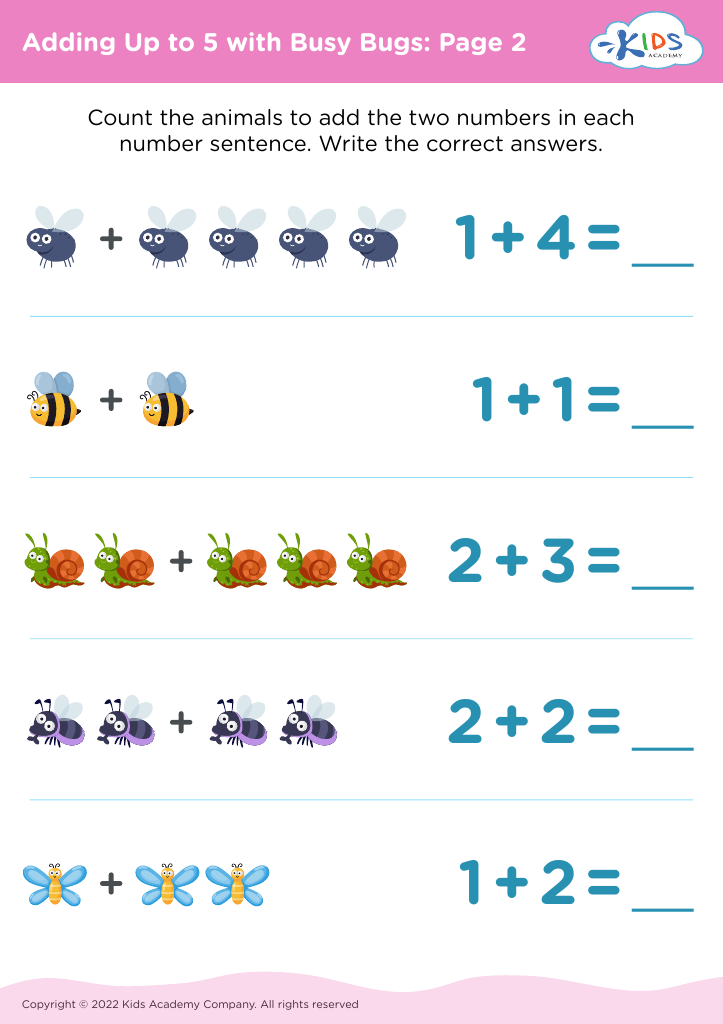
Adding Up to 5 with Busy Bugs: Page 2
Worksheet
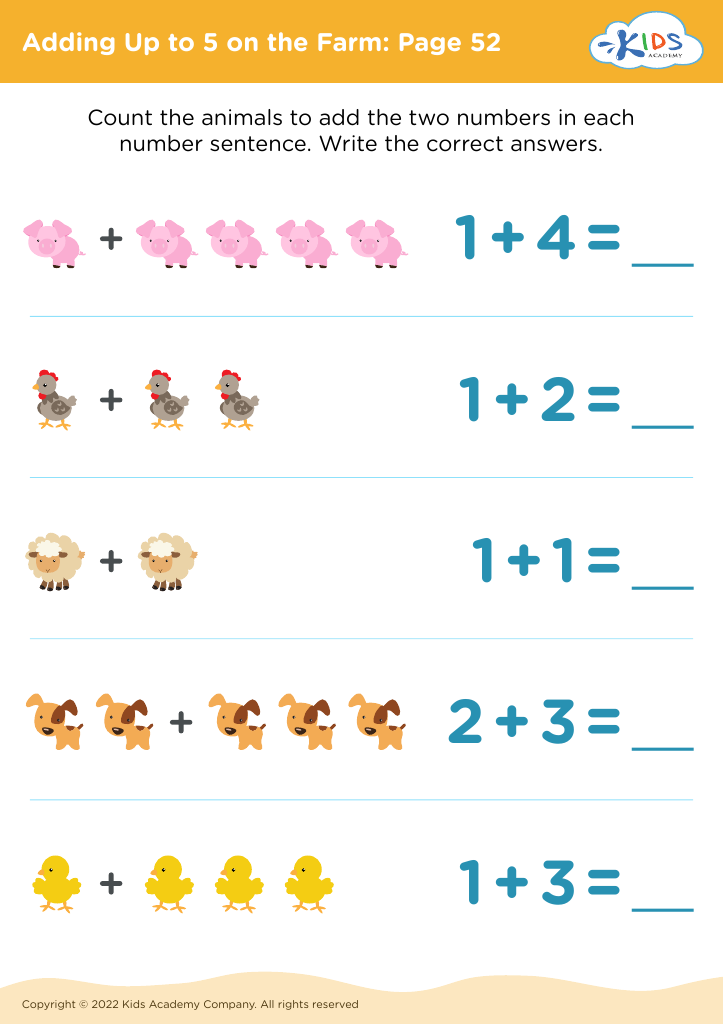
Adding Up to 5 on the Farm: Page 52
Worksheet
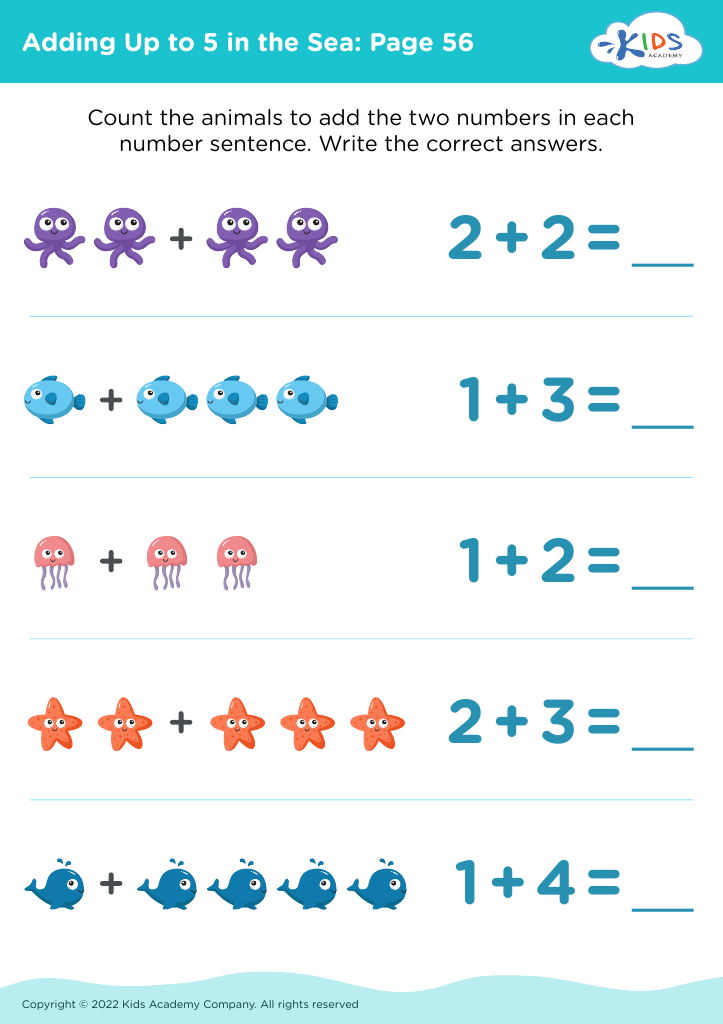
Adding Up to 5 in the Sea: Page 56
Worksheet
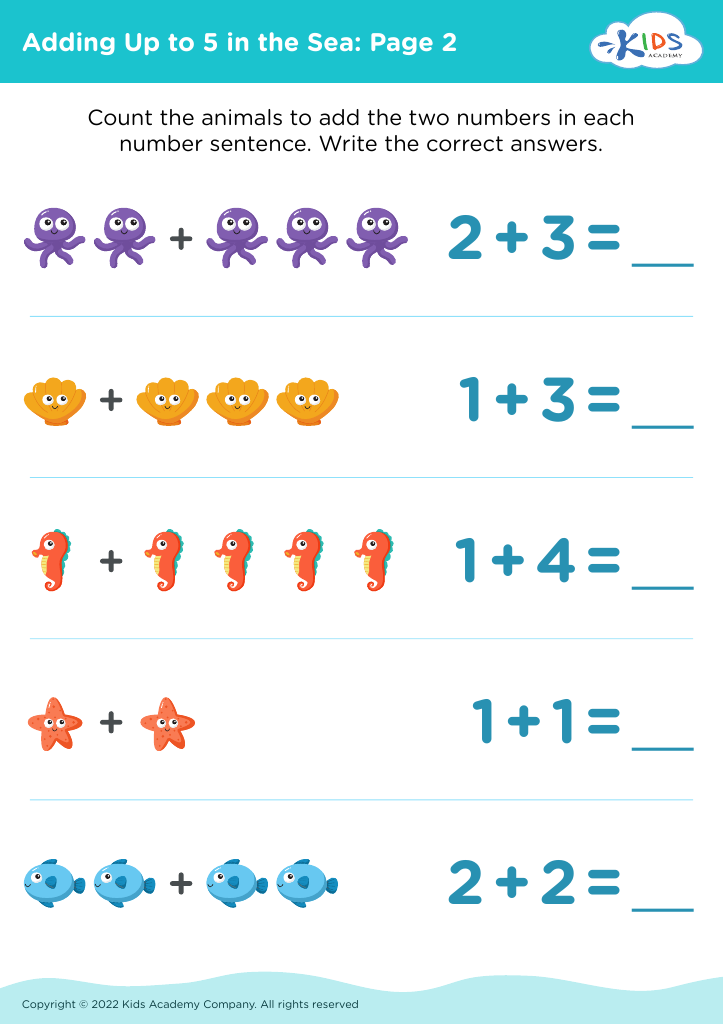
Adding Up to 5 in the Sea: Page 2

Adding Up to 5 in the Sea: Page 2

Adding Up to 5 in the Sea: Page 2
Worksheet


Addition skills are foundational for mathematical understanding and cognitive development in children aged 3-4 years. At this stage, young learners are starting to explore numbers and basic math concepts through playful activities. Encouraging early addition skills can significantly enhance their problem-solving abilities and critical thinking.

First, mastering addition builds a child’s confidence in their mathematical abilities. When children grasp simple addition, they feel a sense of accomplishment, which promotes a love for learning. This positive experience can lead to a lifelong interest in mathematics.

Second, early exposure to addition fosters cognitive development. It helps children understand quantities, improve memory, and enhance logical reasoning. These skills are essential as they advance through their educational journey.

Finally, addition forms the building blocks for more complex mathematical concepts in later years. As children begin school, a strong grasp of basic addition will ease their transition into formal math learning, preventing future struggles in subjects such as arithmetic, geometry, and algebra.

In summary, parents and teachers should prioritize the development of addition skills in early childhood to lay a robust foundation for future academic success, enhance cognitive skills, and instill a positive attitude toward learning.