Counting proficiency Addition Worksheets for Ages 3-4
11 filtered results
-
From - To
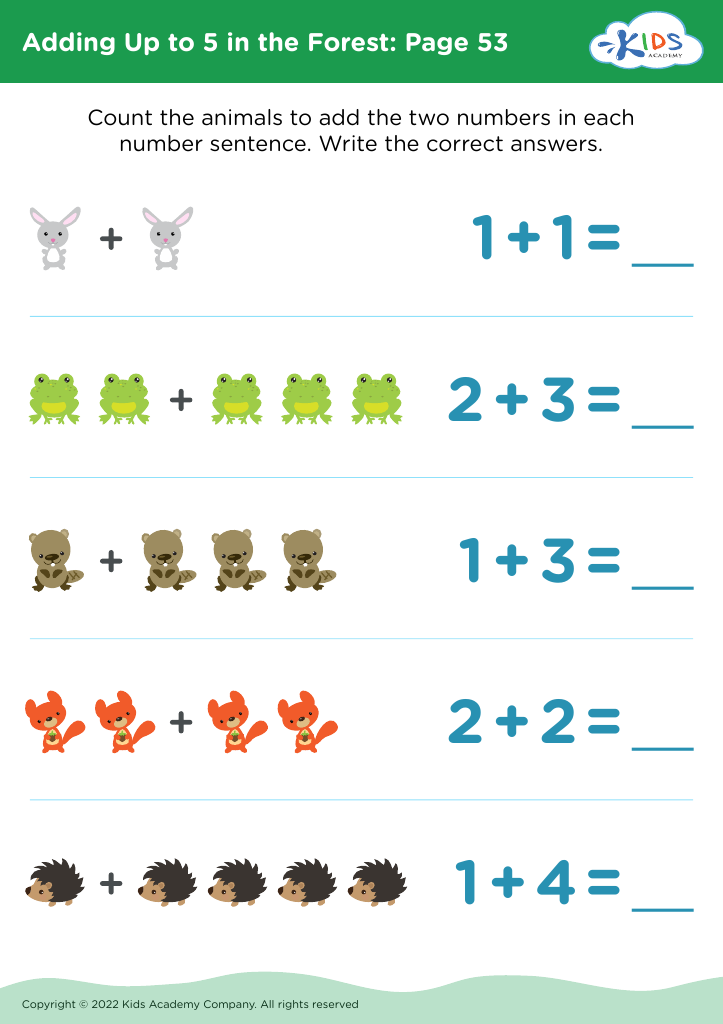
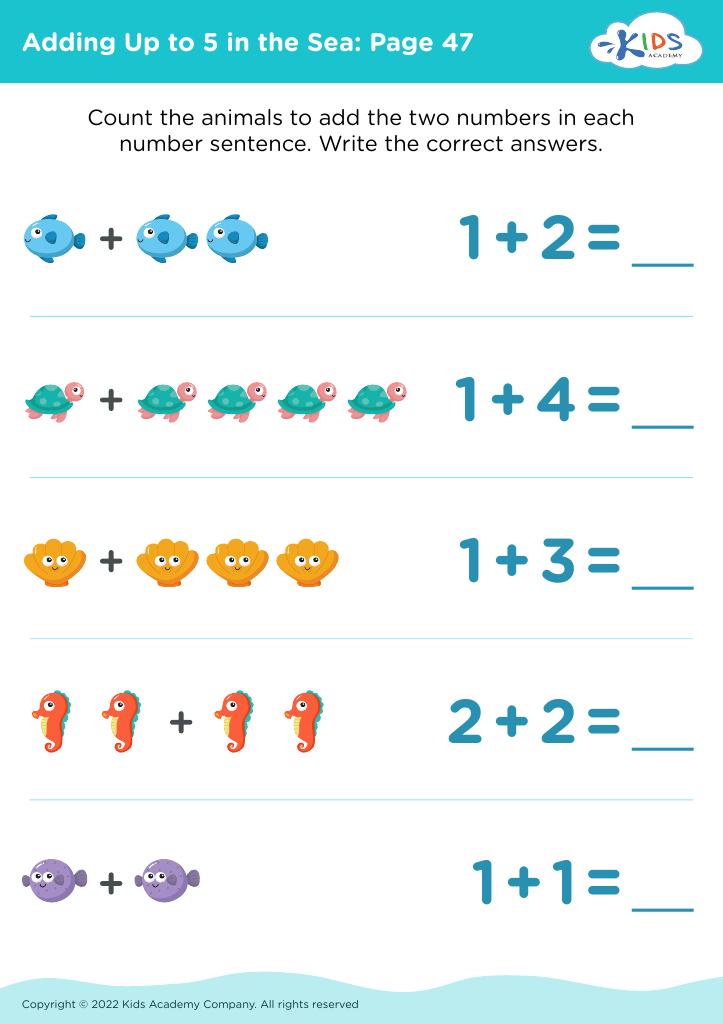
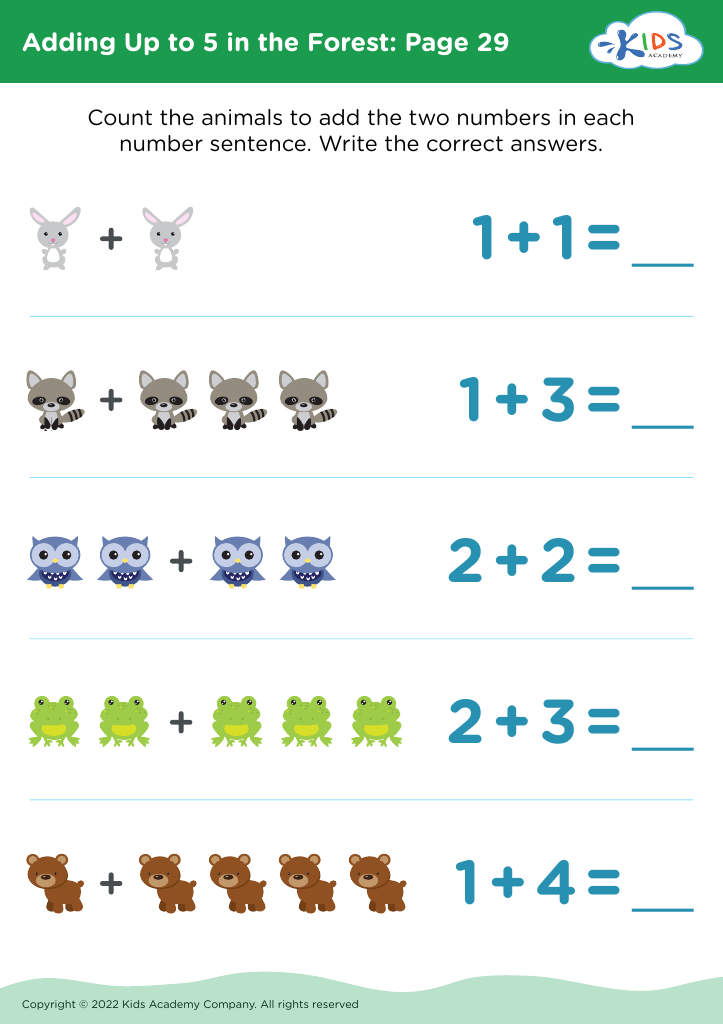
Introducing our "Counting Proficiency Addition Worksheets for Ages 3-4"! These expertly designed printable worksheets offer engaging and educational activities to help your little learners master basic addition skills. Perfect for preschoolers, our worksheets incorporate vibrant visuals and simple exercises tailored to enhance counting proficiency and numeracy. With a clear focus on interactive learning, each activity promotes number recognition, counting skills, and foundational math concepts in an enjoyable way. Ideal for both classroom and home use, these worksheets provide a fun and effective way to boost your child's confidence in math. Help your child excel with Kids Academy's top-rated resources!
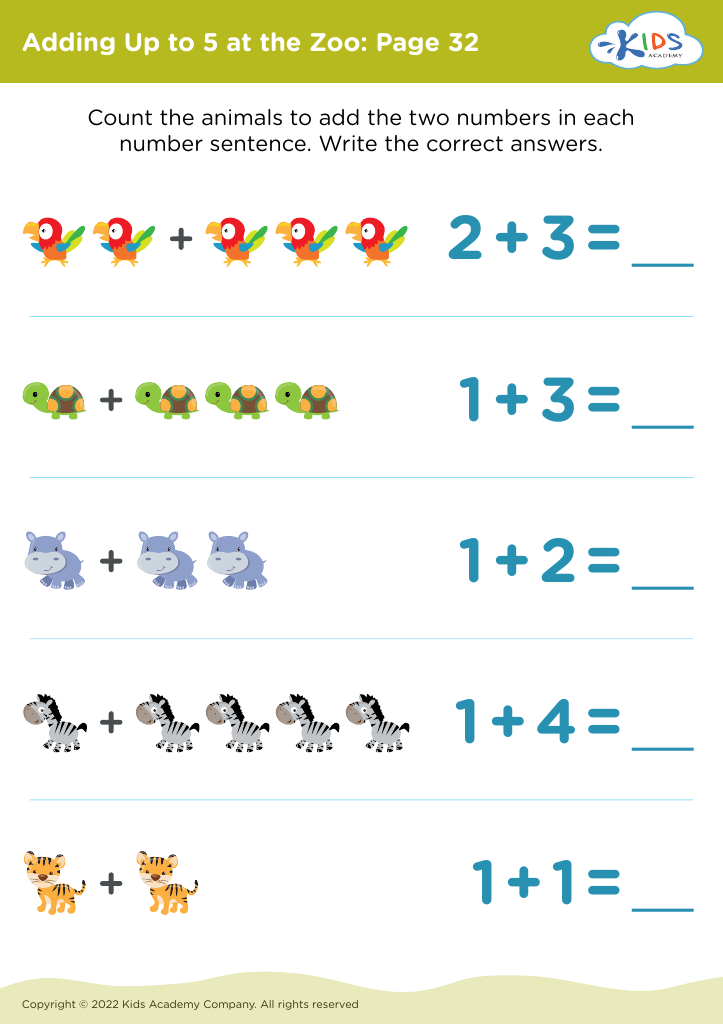
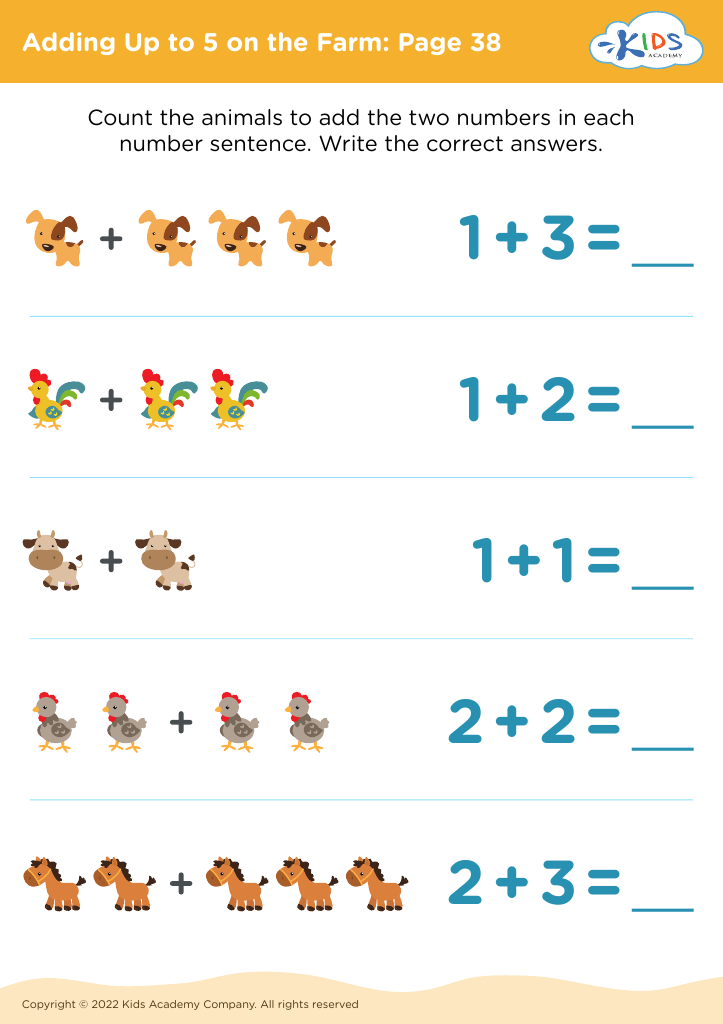
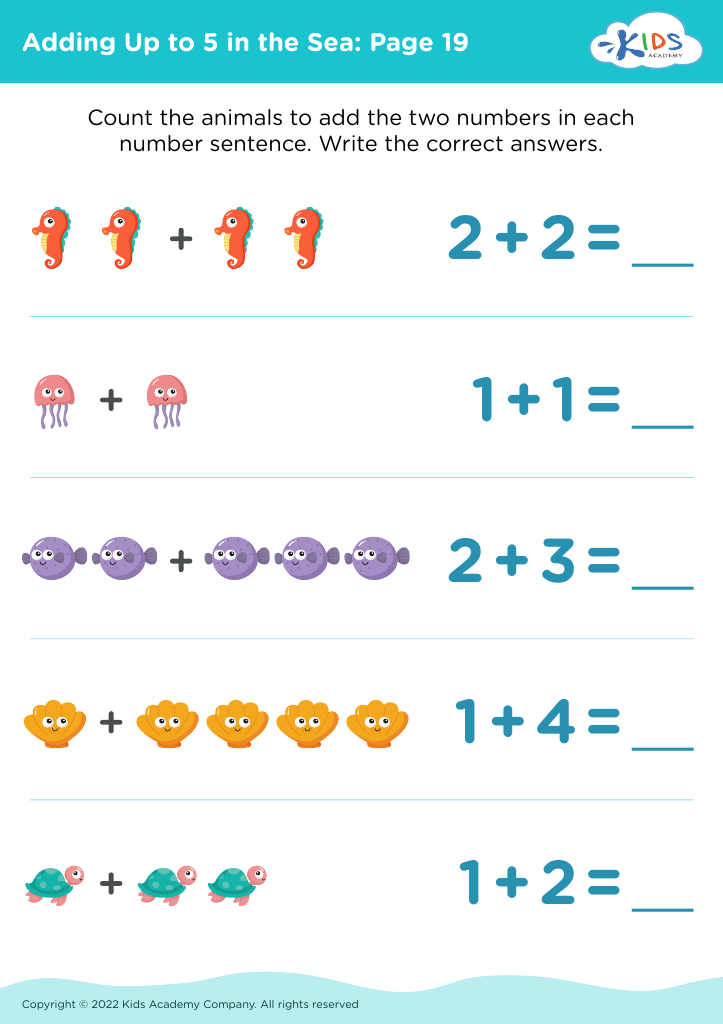
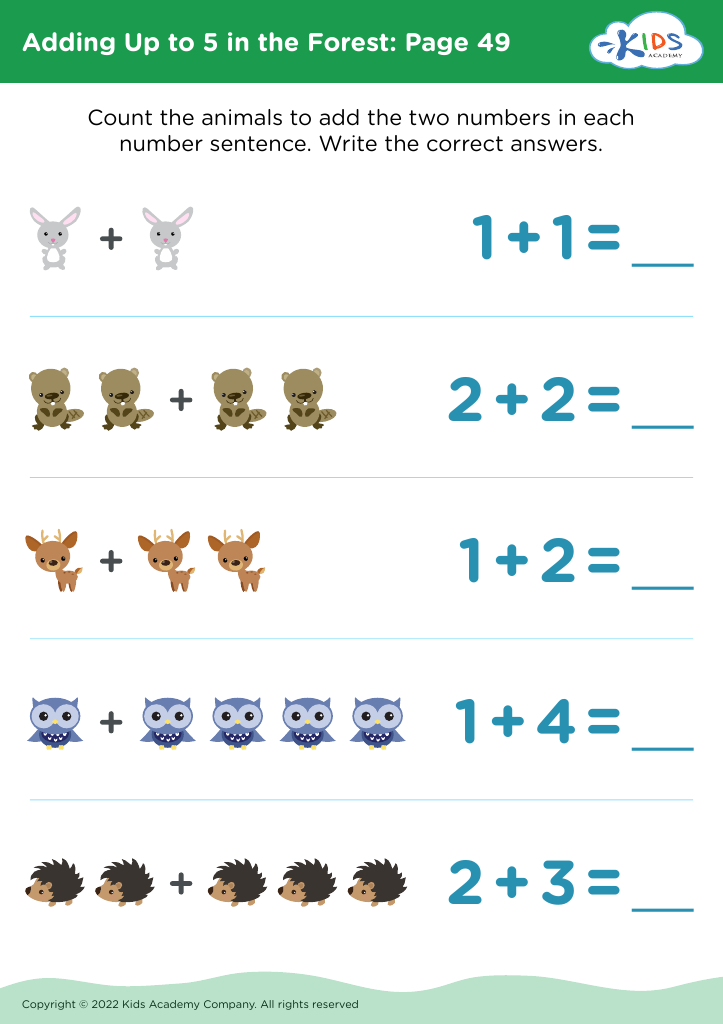
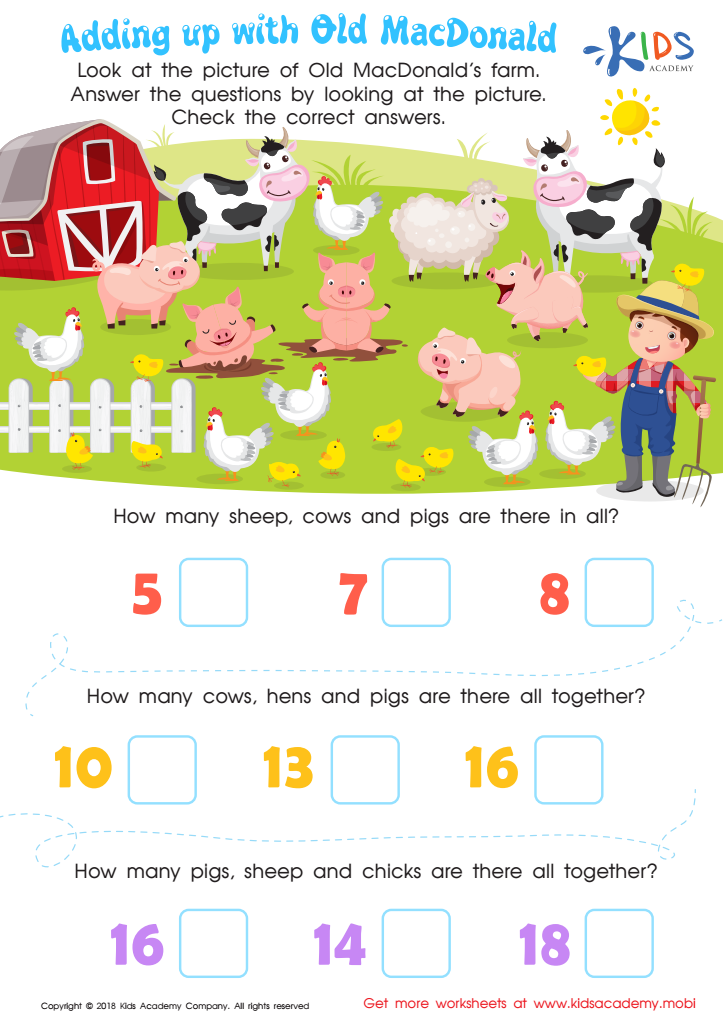
Adding Up with Old MacDonald Worksheet
 Assign to My Students
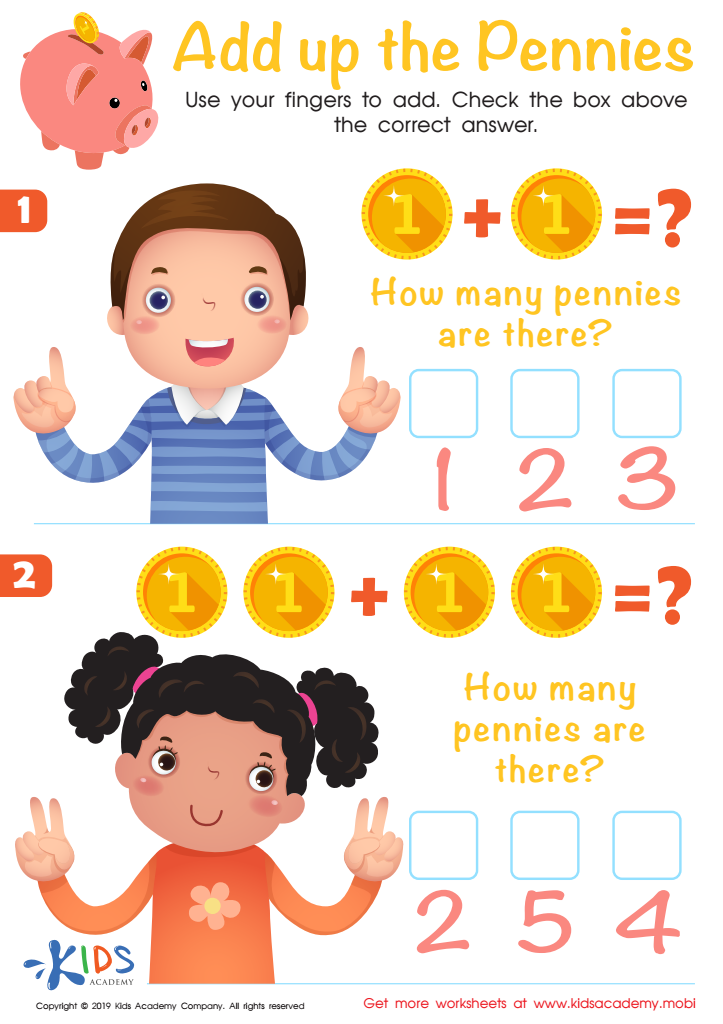
Add up the Pennies Worksheet
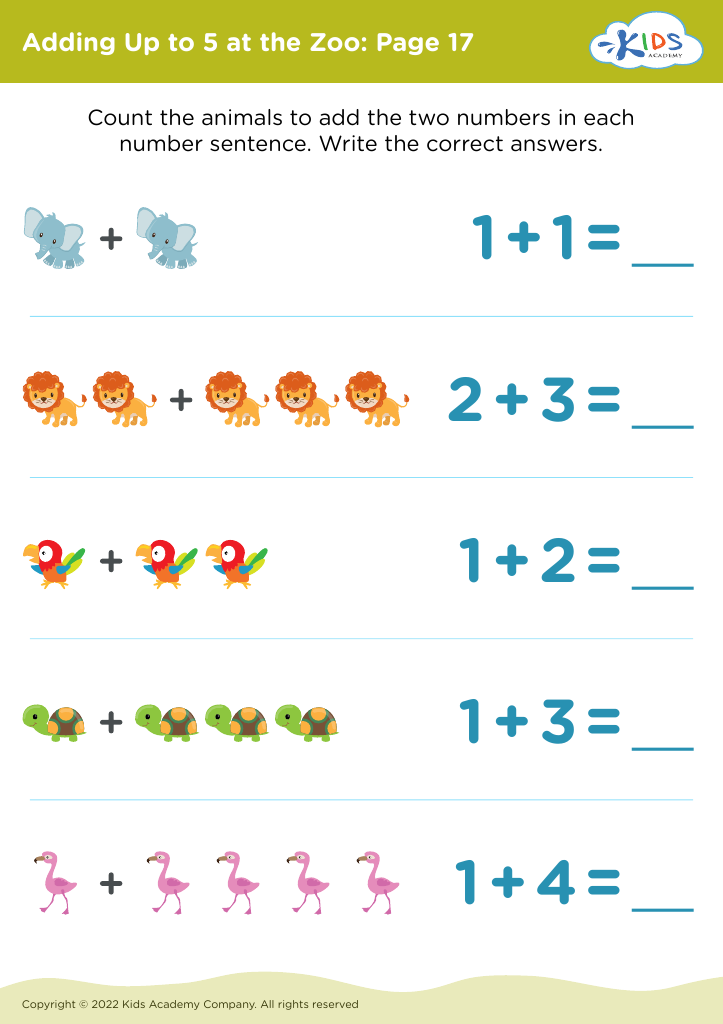
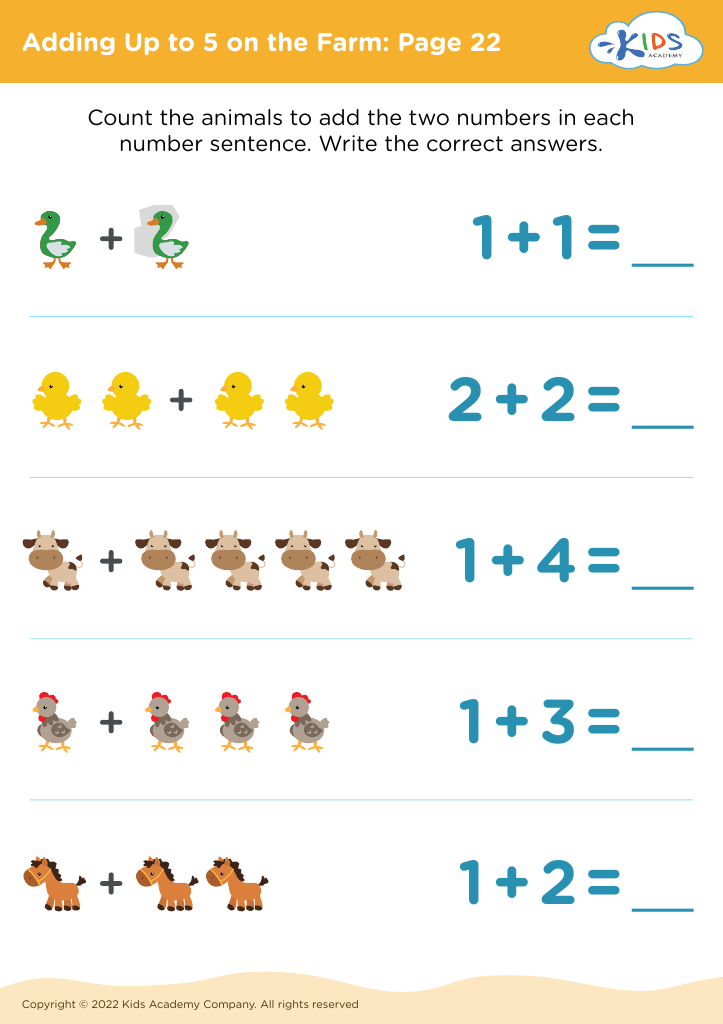








Counting proficiency and early addition skills are vital cornerstones in a child's cognitive development, especially at the ages of 3-4. For parents and teachers, fostering these skills can significantly influence a child’s future success in mathematics and problem-solving in general.
At this developmental stage, children are rapidly expanding their ability to understand the world around them through categorization and pattern recognition. Proficiency in counting paves the way for more complex mathematical concepts, enabling kids to perform basic math operations with confidence. This foundational skill also fosters numerous other cognitive abilities including critical thinking, memory, and attention to detail.
Addition, a fundamental arithmetic operation, introduces children to the concept of combining sets, which is essential for advanced mathematics. When children grasp the idea of adding numbers, they learn to develop and follow logical number sequences, enhancing their analytical abilities. Moreover, these skills are interlinked with other key learning areas such as reading, as understanding quantities and order helps in comprehending textual information.
For parents and teachers, promoting counting and early addition through playful, engaging activities not only stimulates mathematical curiosity but also ensures the child develops a positive attitude towards learning from an early age. Hence, spending time on these elementary numerical skills is an investment in their holistic educational growth.








