Numeracy development Addition Worksheets for Ages 3-4
3 filtered results
-
From - To
Welcome to our Numeracy Development Addition Worksheets for Ages 3-4! Designed to lay a strong foundation in early math skills, these engaging worksheets introduce children to the concept of addition through fun illustrations and interactive activities. Our resources help young learners develop number recognition, counting, and basic addition skills in a playful and enjoyable way. Each worksheet is tailored to meet the developmental needs of preschoolers, ensuring that learning is both effective and fun. With a variety of exercises, parents and educators can easily support children in mastering essential numeracy skills as they embark on their mathematical journey!
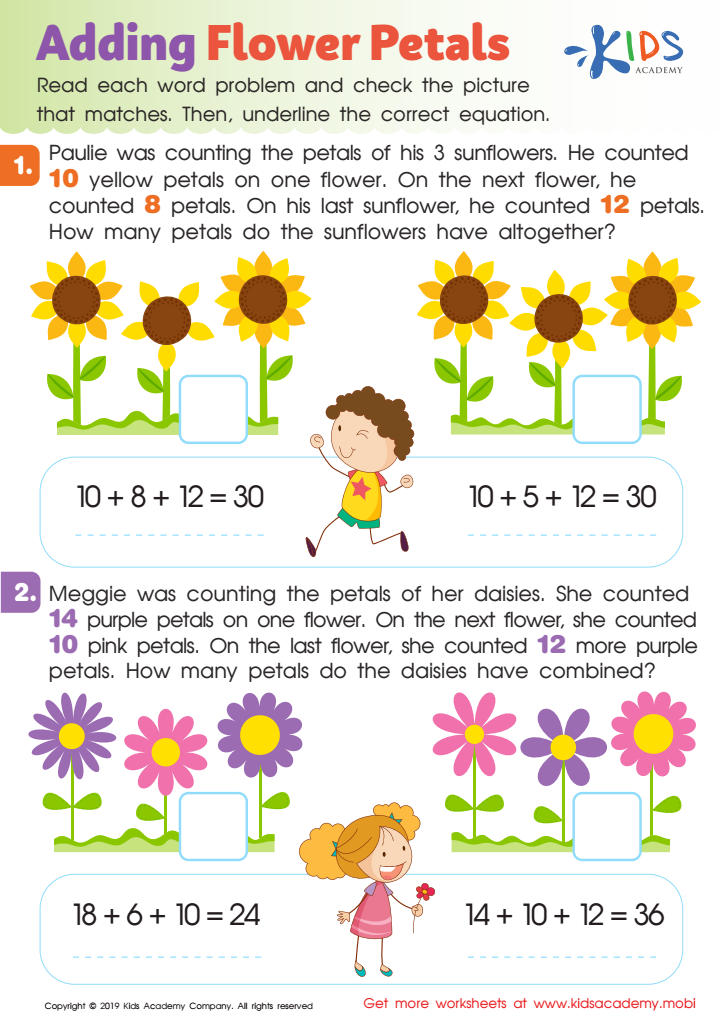
Adding Flower Petals Worksheet
 Assign to My Students
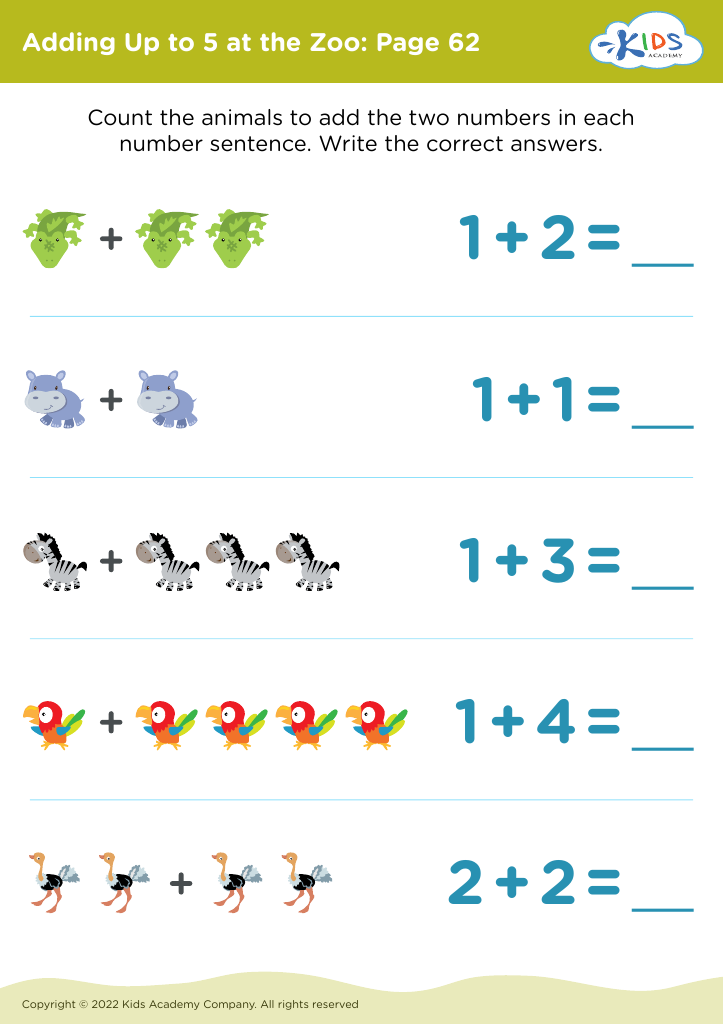
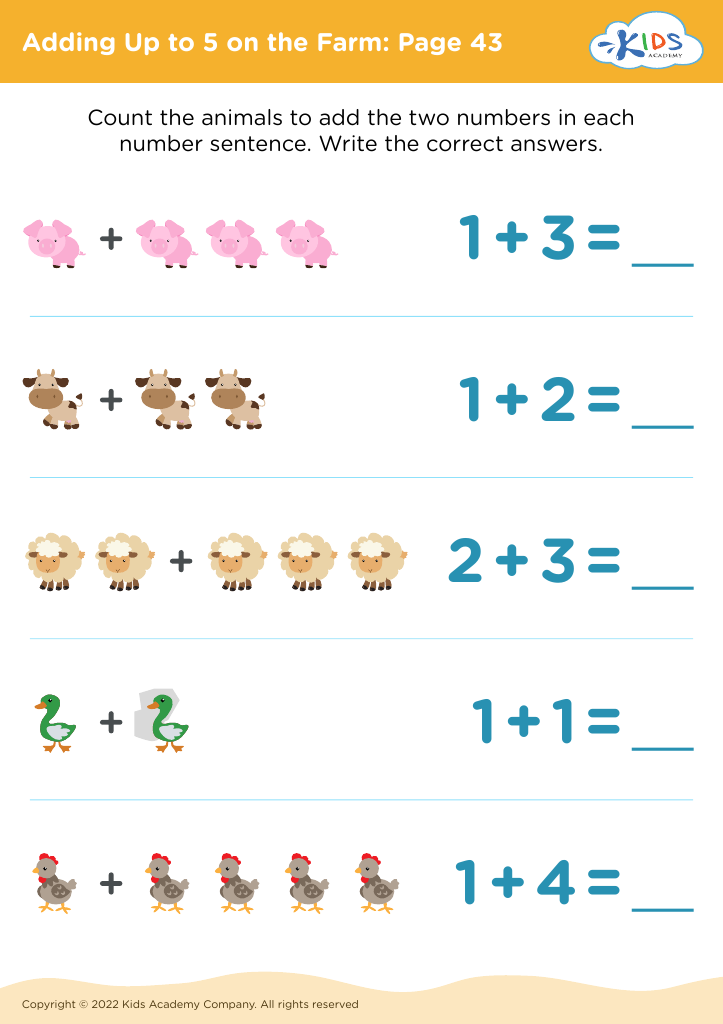








Numeracy development, particularly in addition, is a critical foundation for young children aged 3-4. During this stage, children are naturally curious and eager to explore mathematical concepts through play and everyday experiences. Parents and teachers should care about promoting addition skills as this lays the groundwork for future mathematical understanding and problem-solving abilities.
Engaging children in simple addition through objects, visuals, and interactive games enhances their cognitive skills, fostering a sense of number sense and quantities. Furthermore, early exposure to addition helps develop a positive attitude towards mathematics, counteracting potential math anxiety later in life.
Additionally, numeracy skills support other areas of learning, including literacy and critical thinking. Parents can integrate addition into daily routines, such as counting fruits at snack time or using toys to solve problems, making learning meaningful and relevant.
Ultimately, nurturing early numeracy skills not only prepares children for academic success but also promotes confidence and persistence in tackling challenges. By prioritizing addition development, parents and teachers are equipping children with essential tools that reflect both in their classrooms and daily lives, encouraging a lifelong appreciation and understanding of mathematics.








