
Observational skills Addition Worksheets for Ages 3-4
3 filtered results
Difficulty Level
Grade
Age
-
From - To
Subject
Activity
Standards
Enhance your child's learning with our Observational Skills Addition Worksheets tailored for ages 3-4! These engaging resources invite young learners to explore basic addition concepts through fun activities that sharpen their observational skills. Discover bright visuals, simple addition exercises, and interactive tasks designed to captivate your child's attention while fostering critical thinking. These worksheets not only support early math skills but also encourage children to observe patterns and relationships in numbers. For parents and educators, our printable resources are perfect for reinforcing foundational math skills at home or in the classroom. Start your child's learning journey today!
Favorites
With answer key
Interactive
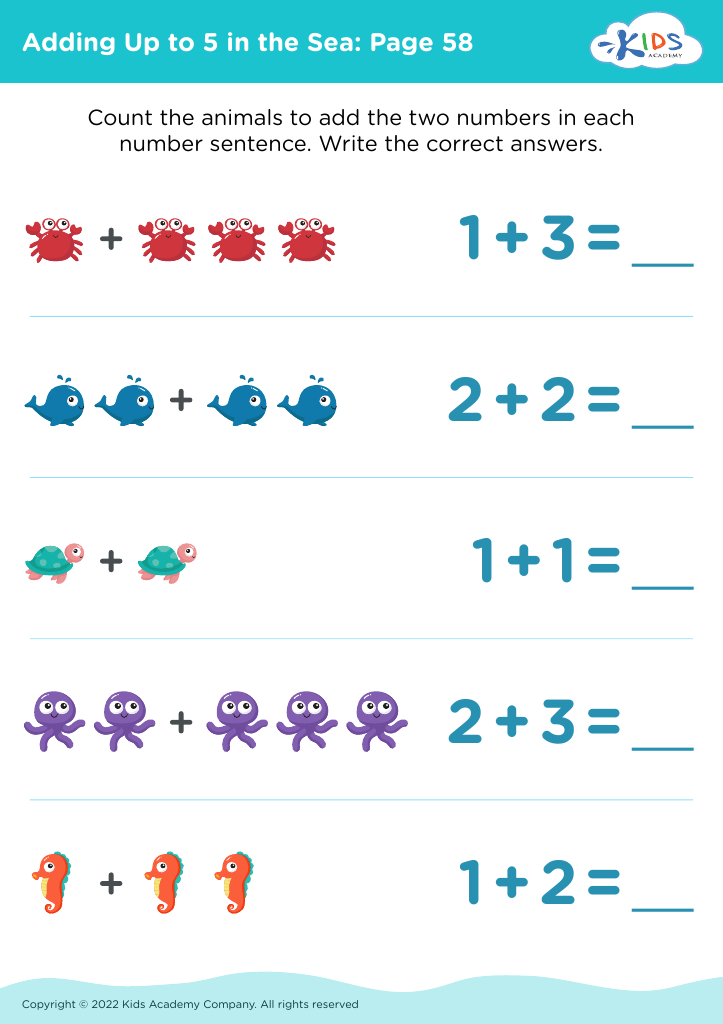
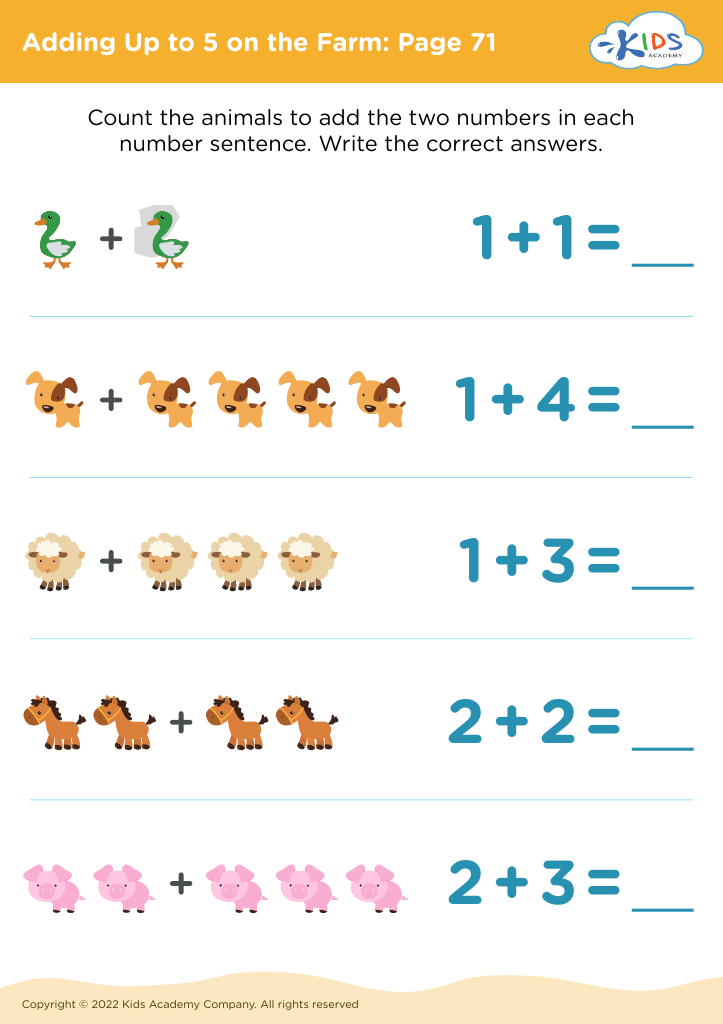
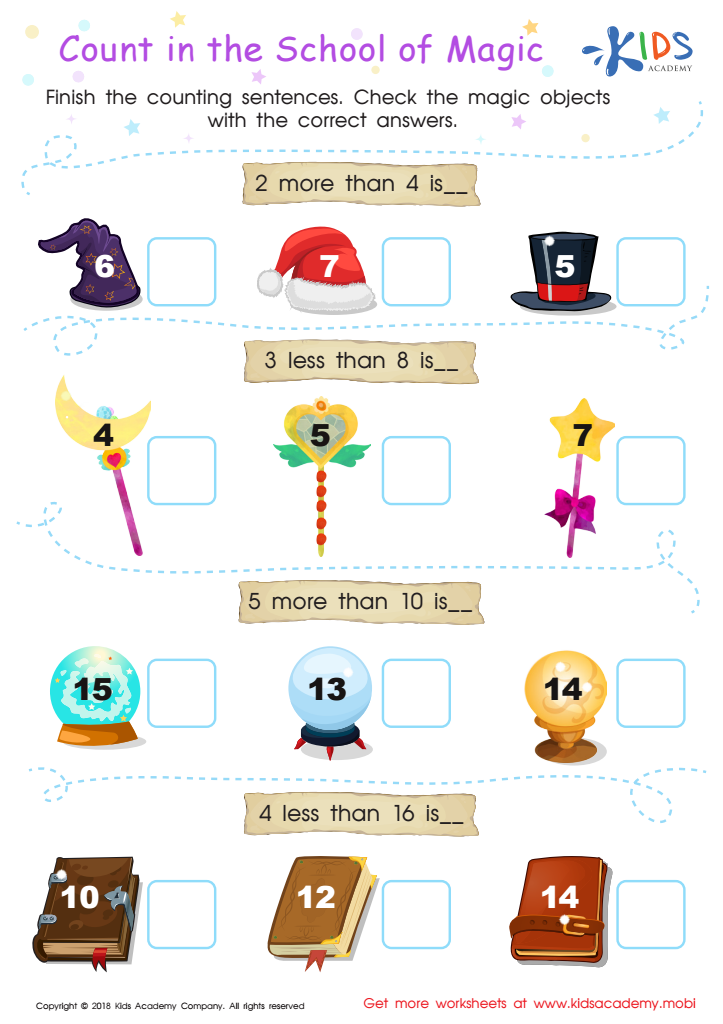
Count in the School of Magic Worksheet
Your math learners can explore the School of Magic with this worksheet. They'll read equations with addition and subtraction numbers under 20, count back and forth to find the answer, then complete the counting sentences. Fun pictures and easy accuracy make it an enjoyable and successful learning experience.
 Assign to My Students
Count in the School of Magic Worksheet
Worksheet
Join Kids Academy for Free
Who is primarily going to use this learning content?








Observational skills are crucial for children aged 3-4, as they form the foundation for developing critical thinking and problem-solving abilities. For parents and teachers, nurturing these skills enables children to refine their understanding of the world around them. By actively observing their environment, young learners can identify patterns, make connections, and enhance their ability to communicate their thoughts.
Encouraging these skills through activities such as sorting objects, playing matching games, or simple nature walks helps children practice concentration and attention to detail. When adults engage with children during these activities, they foster meaningful discussions, promote vocabulary development, and enhance social skills, facilitating a rich learning experience.
Furthermore, observational skills are vital for mathematical concepts such as addition. For instance, recognizing that combining groups of objects results in a larger quantity is foundational for understanding arithmetic. As children enhance their observational skills, they become more adept at noticing differences and similarities, which sets the stage for later cognitive development in math.
In summary, cultivating observational skills in early childhood not only enriches learning experiences but also prepares children for future academic success, making it an essential focus for both parents and teachers.








