Problem-Solving Skills Addition Worksheets for Ages 3-4 - Page 3
54 filtered results
-
From - To
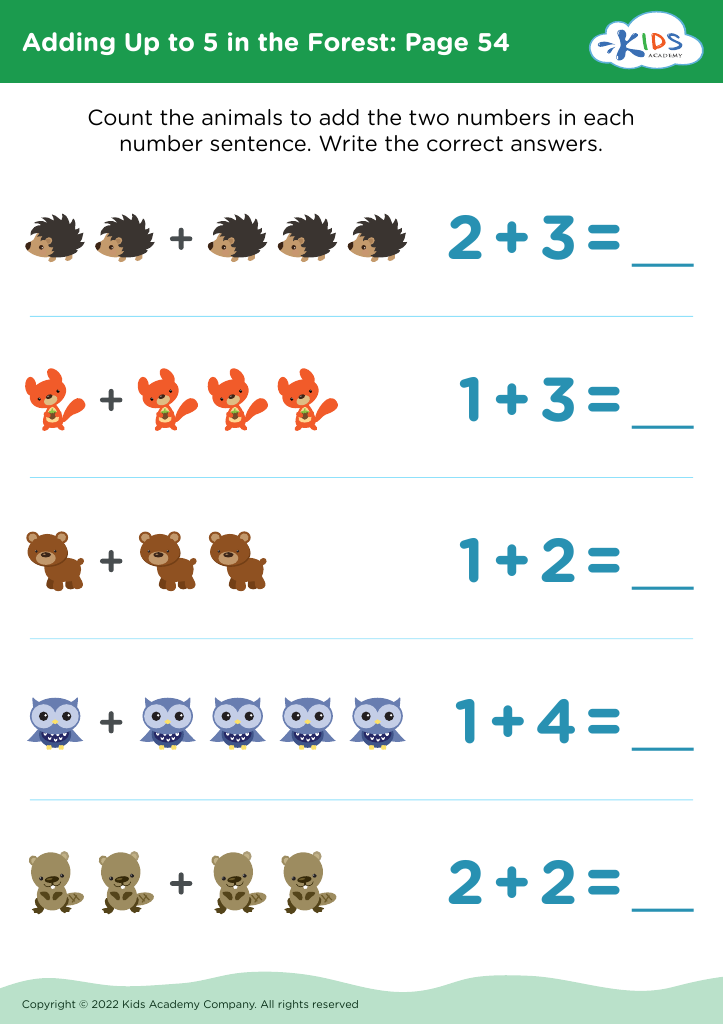
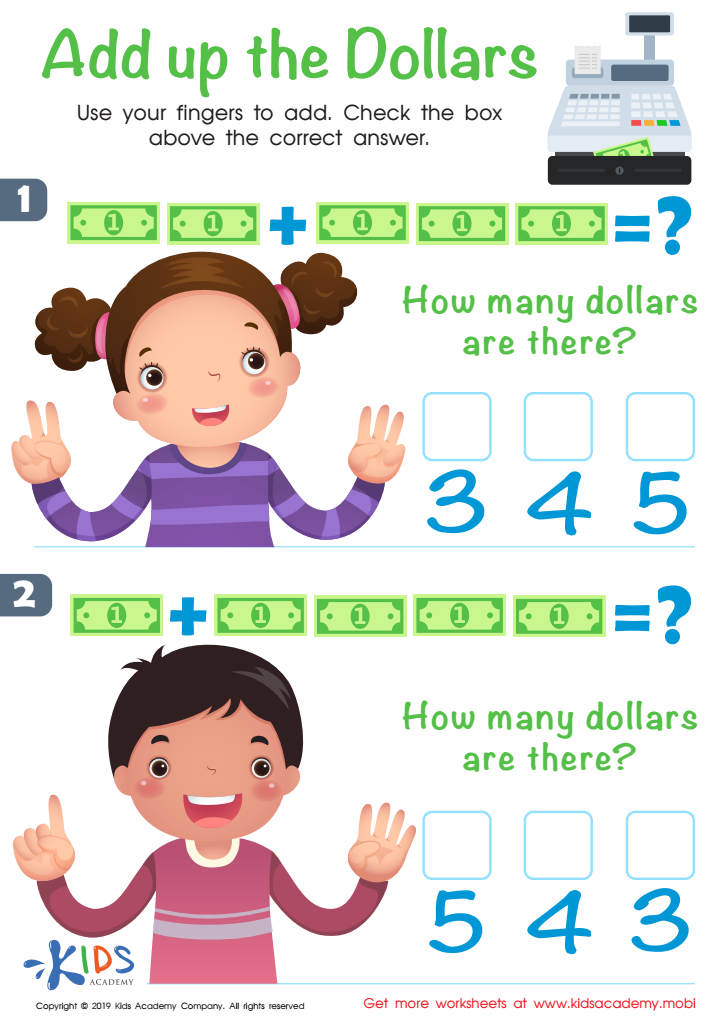
Add up the Dollars Worksheet
 Assign to My Students
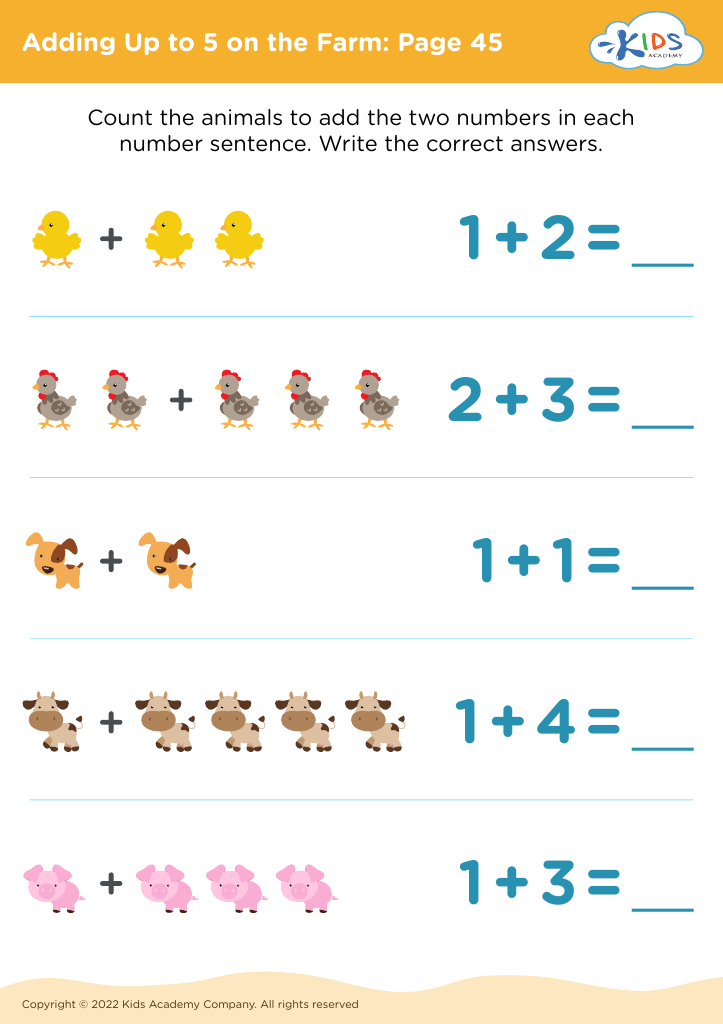
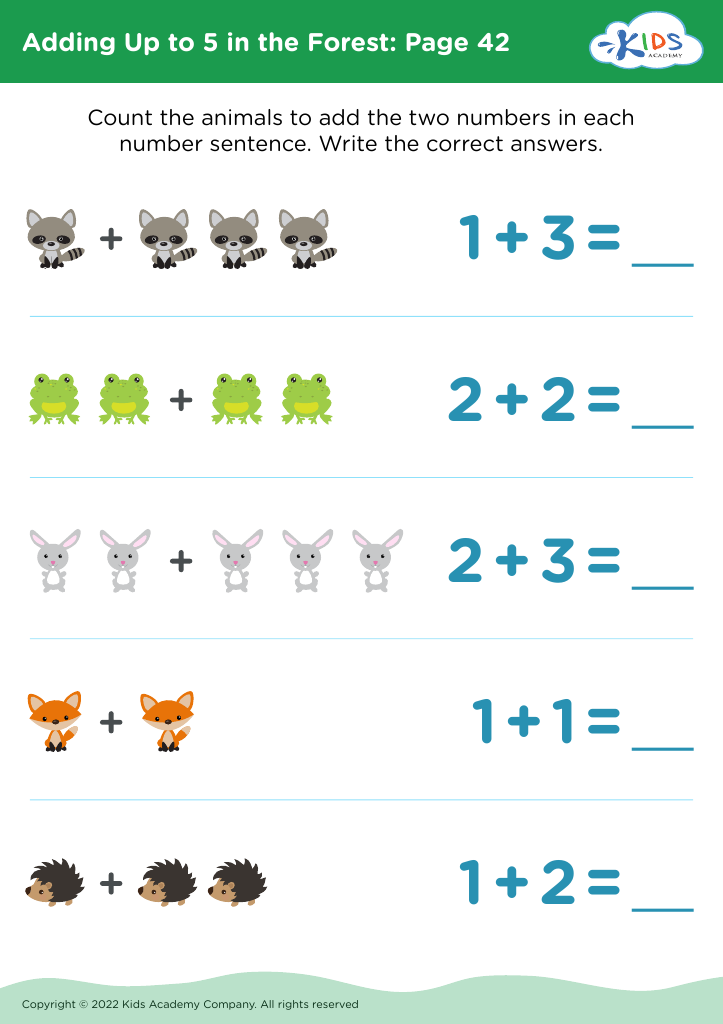
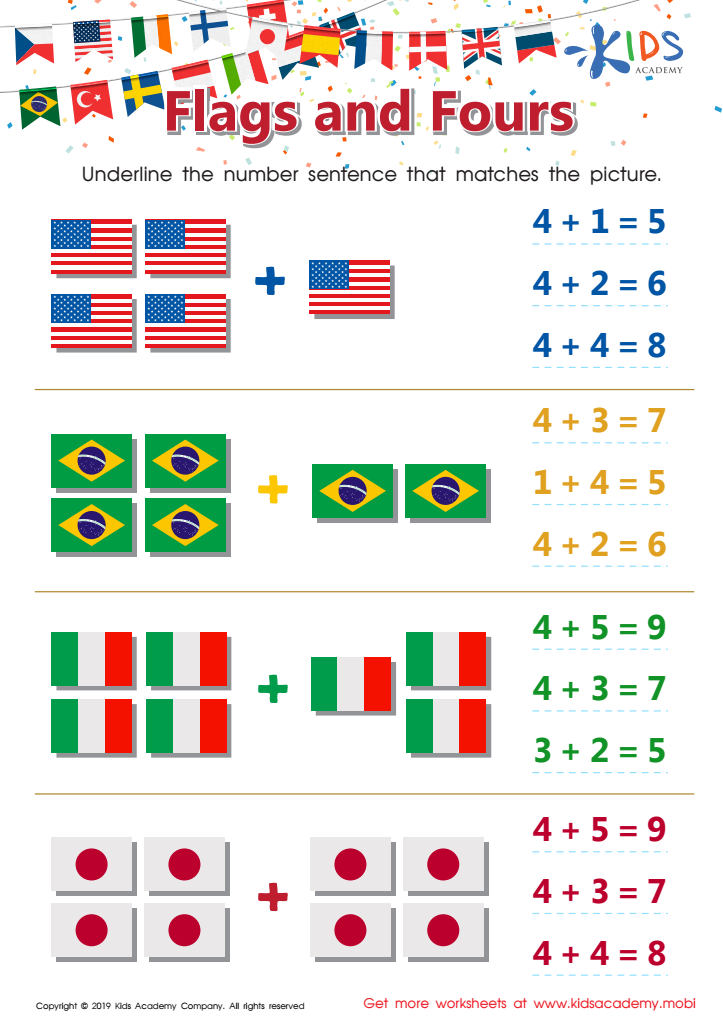
Flags and Fours Worksheet
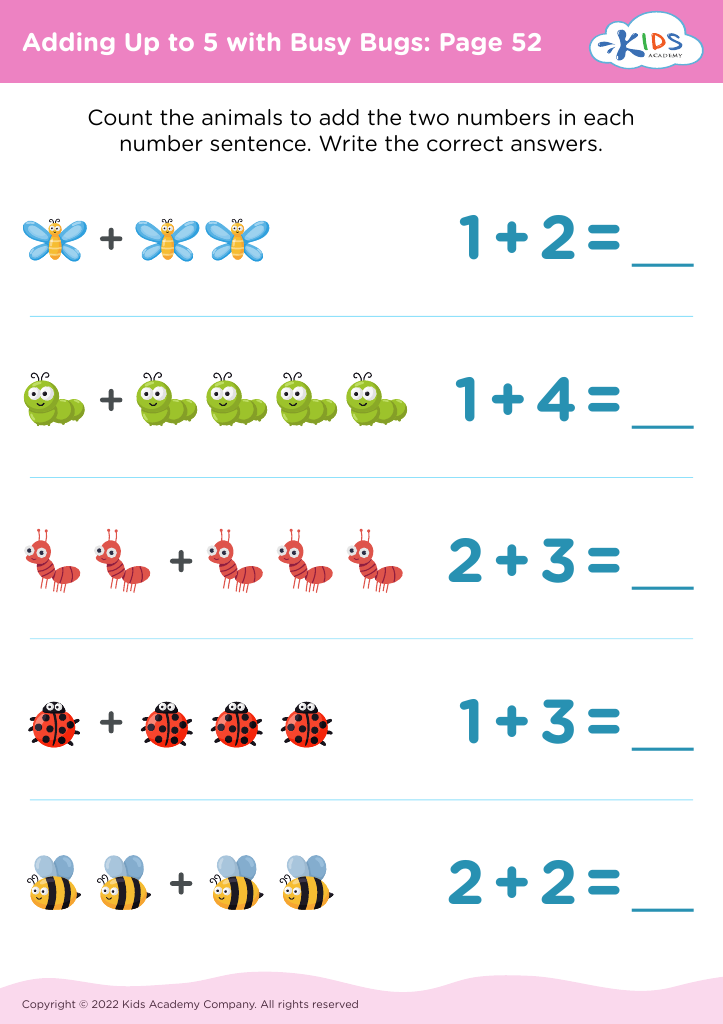








Problem-solving skills are crucial for children aged 3-4 as they lay the groundwork for cognitive development and future learning. During this stage, children's brains are incredibly receptive, and developing these skills can significantly influence their intellectual growth. Parents and teachers should focus on nurturing problem-solving abilities in young children because they foster critical thinking, creativity, and resilience.
Introducing problem-solving through simple addition tasks, for example, helps young children enhance their numerical understanding and reasoning abilities. When children learn to add, they don't just memorize numbers; they start to see patterns, understand cause and effect, and develop logical thinking. These skills are transferable across various aspects of life, assisting in decision-making, predicting outcomes, and analyzing situations.
Furthermore, mastering basic problem-solving skills can boost a child's self-esteem and confidence. When children successfully solve simple addition problems, they experience a sense of achievement, which motivates them to tackle more complex challenges. This creates a positive feedback loop, encouraging continuous learning and persistence.
Overall, by prioritizing problem-solving skills through engaging and age-appropriate activities, parents and teachers can set children on a path toward lifelong learning and adaptability, equipping them to handle academic and everyday challenges more effectively.








