Underwater animal identification Addition Worksheets for Ages 3-4
3 filtered results
-
From - To
Discover a world of fun with our Underwater Animal Identification Addition Worksheets for ages 3-4! These engaging worksheets combine the excitement of learning about marine life with foundational math skills. Designed specifically for young learners, each worksheet encourages children to identify vibrant underwater animals while practicing basic addition. The playful illustrations spark curiosity and make learning enjoyable. Perfect for parents and educators, these worksheets help develop essential cognitive skills, promote literacy in math, and support early childhood education. Dive into a unique educational experience that merges creativity with math, providing an effective way for toddlers to explore numbers alongside fascinating sea creatures!
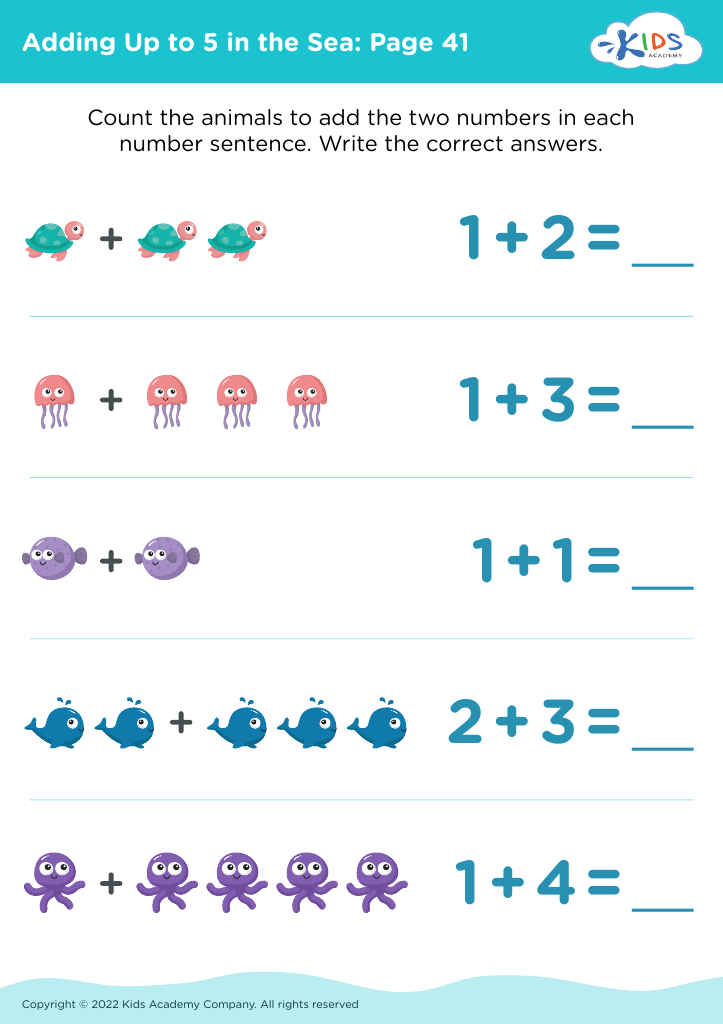
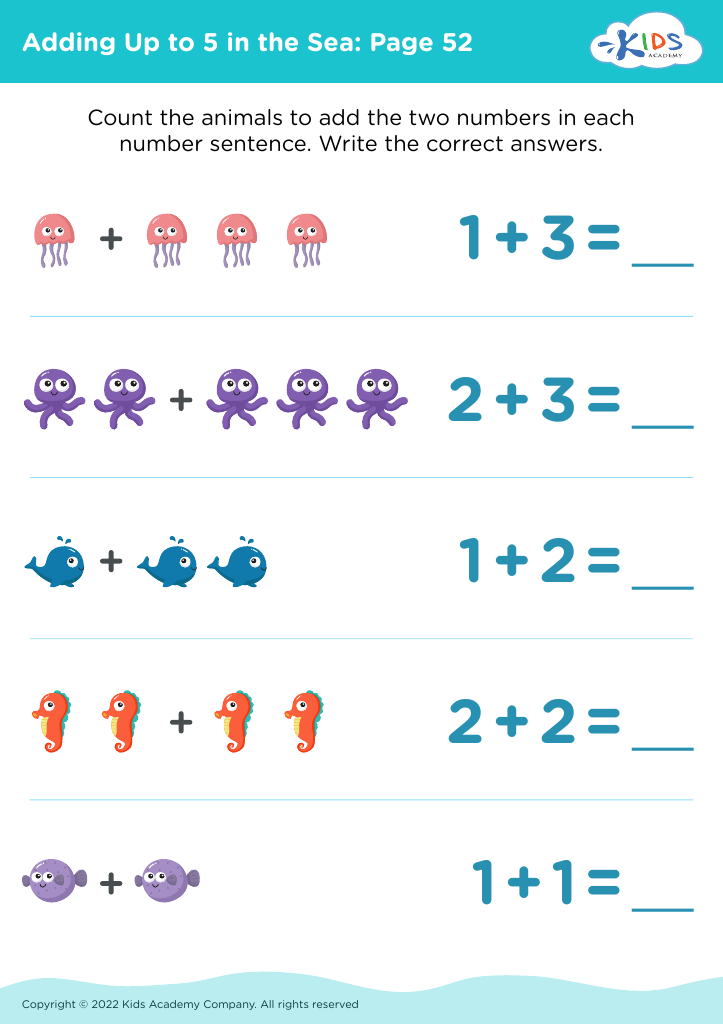
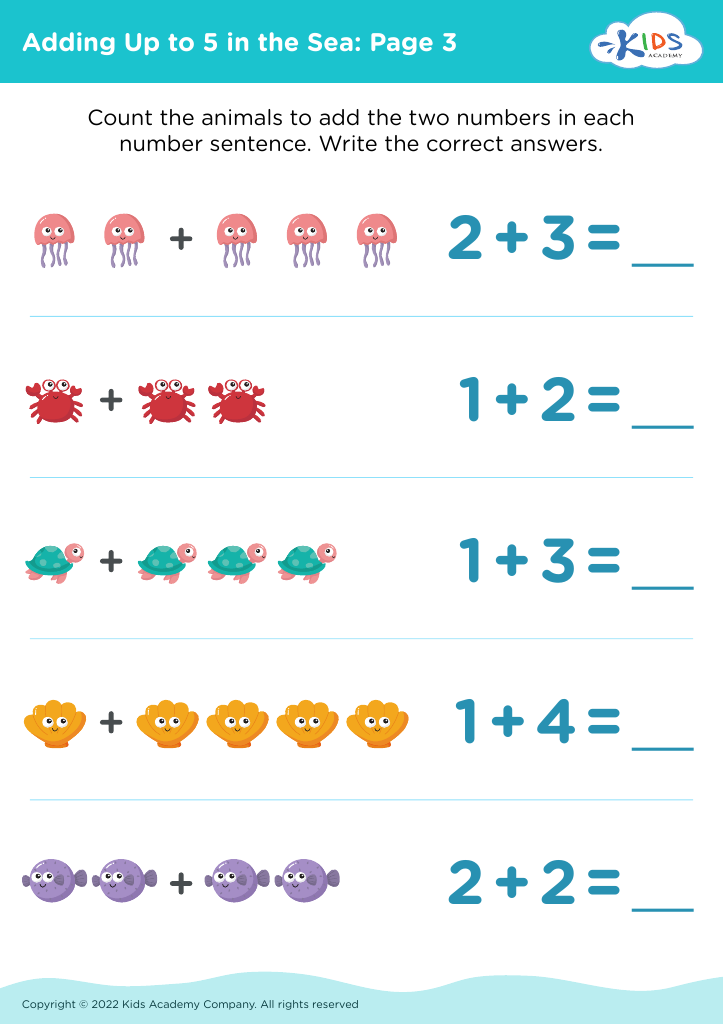








Underwater animal identification activities for children aged 3-4 are crucial for several reasons. Firstly, they spark early interest in marine biology and environmental awareness, fostering a love for nature that can influence lifelong behavior toward conservation. By engaging in these activities, children enhance their observation skills, develop cognitive abilities, and begin to understand the diversity of life in our oceans.
Additionally, identifying underwater animals supports language development. As children learn the names and characteristics of various species, they expand their vocabulary and improve their communication skills. Interactive activities combining identification with art or storytelling can make learning both enjoyable and memorable.
These early educational experiences also promote fine motor skills when children engage in drawing, coloring, or manipulating models of aquatic animals. Furthermore, group activities offer a chance for social interaction, teaching teamwork and collaborative skills.
Ultimately, introducing kids to underwater animal identification not only enriches their knowledge but also builds a foundation of curiosity and respect for the environment. It empowers the next generation with an appreciation for biodiversity and encourages them to be inspired advocates for ocean life conservation. Thus, parents and teachers should actively incorporate these activities into early childhood learning agendas.








