Visual learning reinforcement Addition Worksheets for Ages 3-4
5 filtered results
-
From - To
Explore our engaging Visual Learning Reinforcement Addition Worksheets designed specifically for children aged 3-4. These interactive resources make learning basic addition concepts fun and accessible. With vibrant illustrations and simple prompts, young learners will enhance their mathematical skills while enjoying hands-on activities that reinforce their understanding. Our worksheets boost confidence and encourage the development of critical thinking through visually appealing exercises. Ideal for parents and educators, these printable worksheets provide an excellent way to introduce addition in an enjoyable and effective manner. Empower your child’s learning journey today with our expertly designed addition worksheets tailored for early mathematicians!
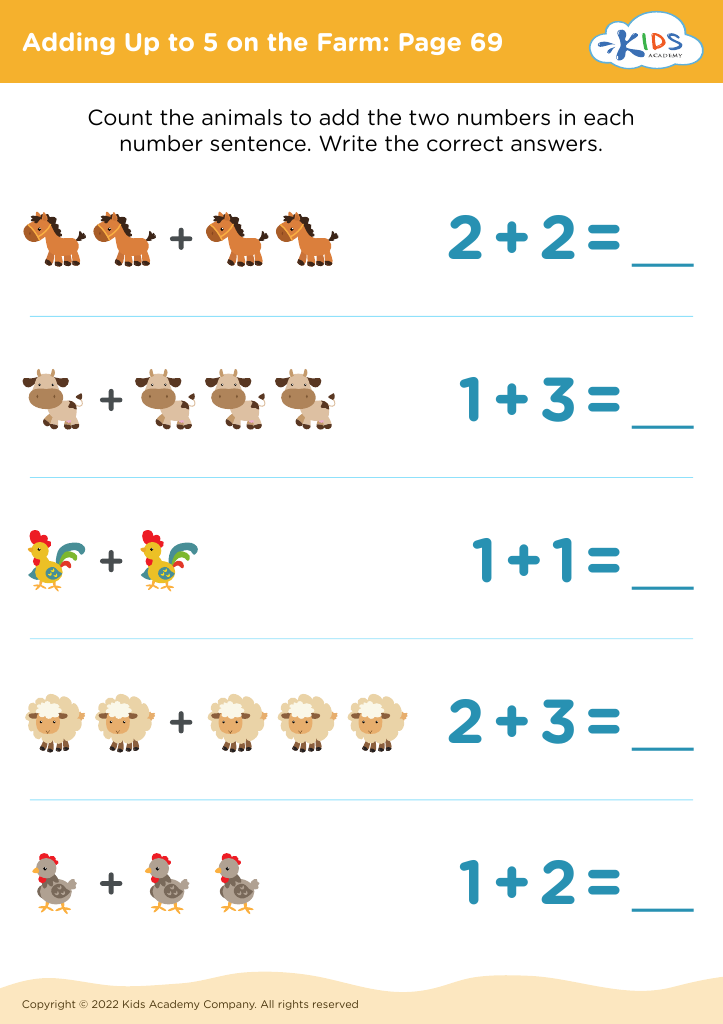
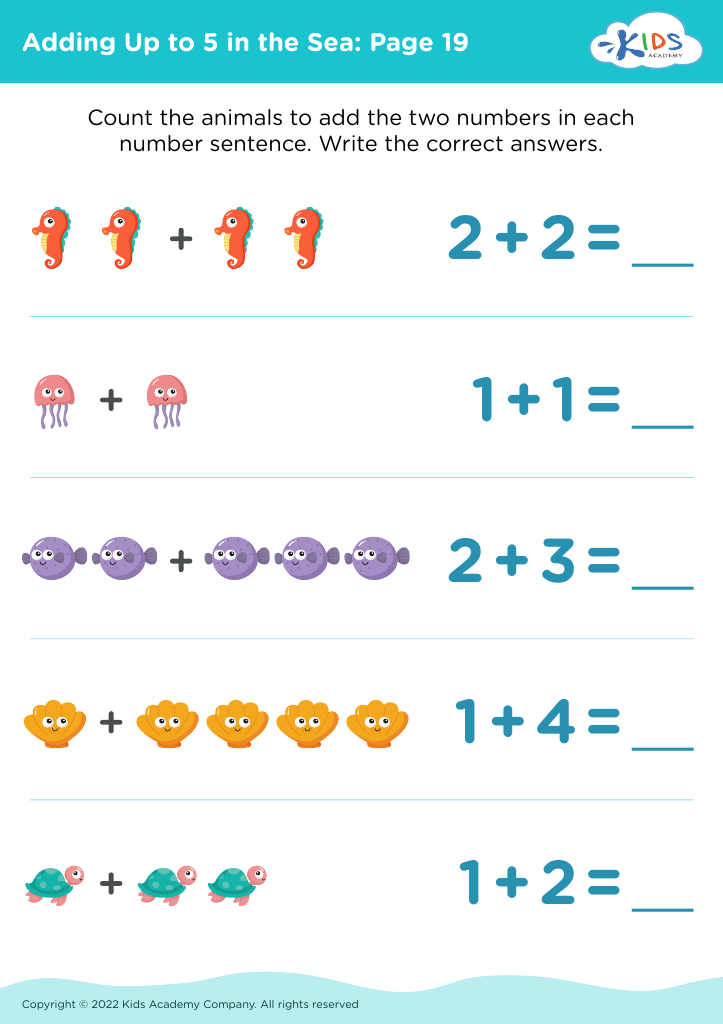
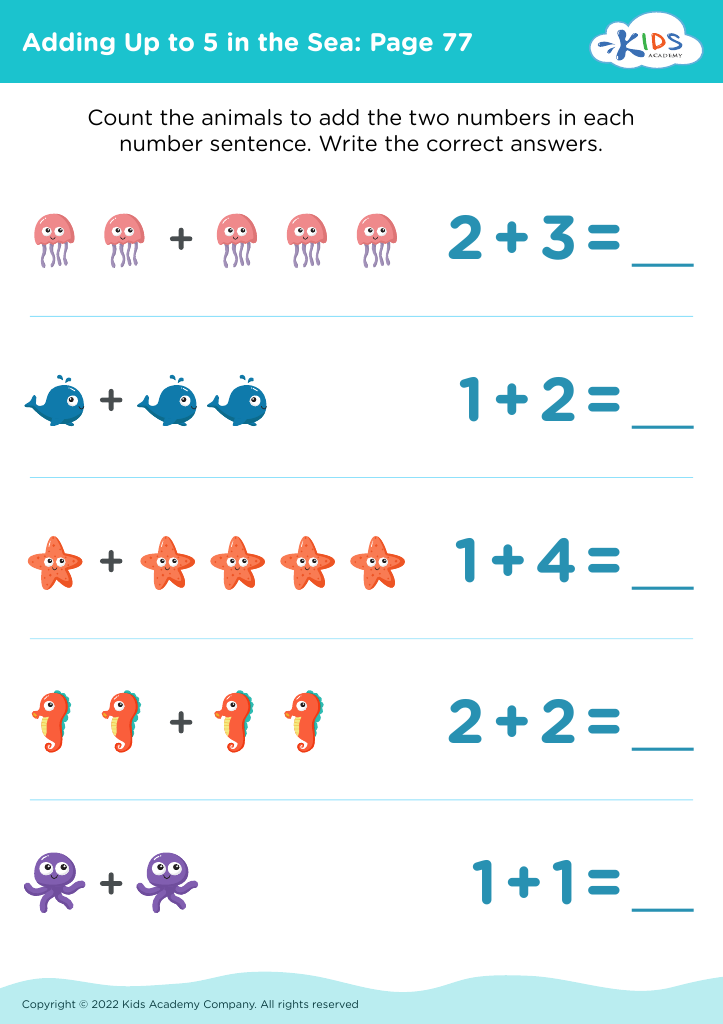
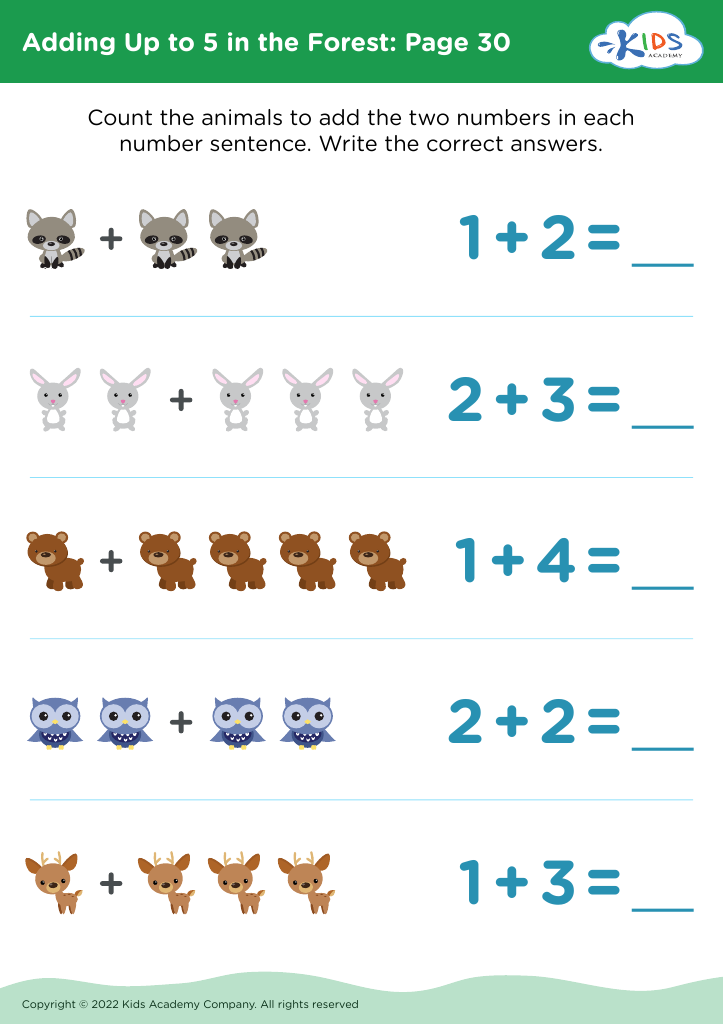
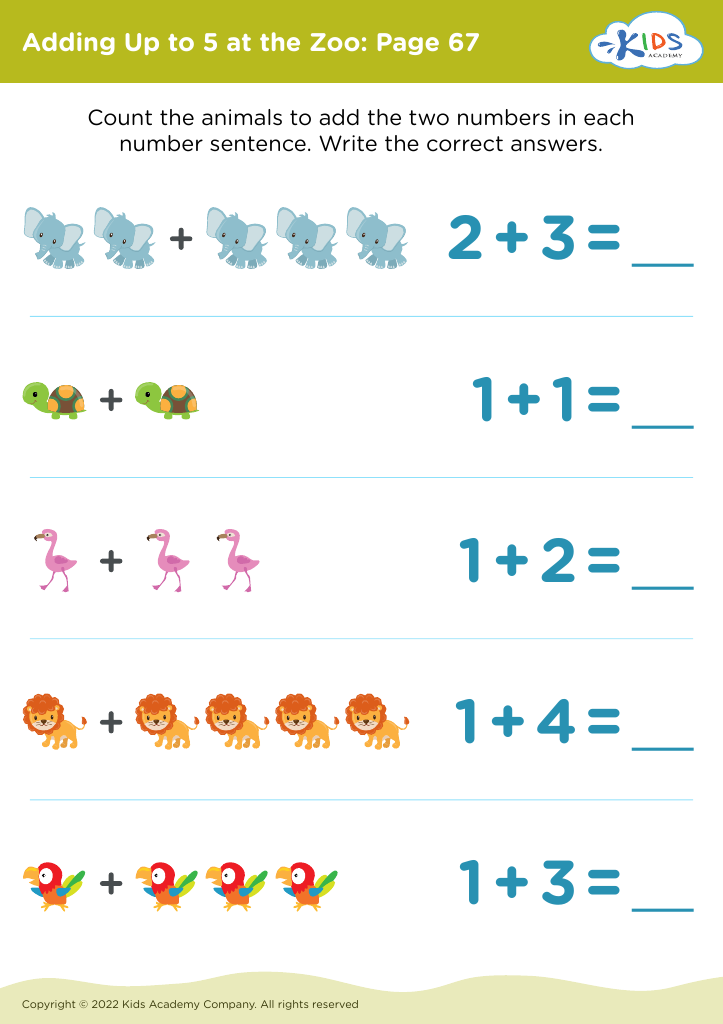








Parents and teachers should prioritize visual learning reinforcement for addition among children aged 3-4 due to its profound impact on cognitive development and early numeracy skills. At this stage, children are highly receptive to visual stimuli, making it an opportune time to introduce foundational math concepts. Visual aids, such as pictures, manipulatives, and colorful charts, can make abstract ideas more tangible, aiding comprehension and retention.
Incorporating visual learning in teaching addition helps children build a strong base in mathematics, fostering confidence and enthusiasm as they progress. Using visual tools, like counting blocks or number lines, allows young learners to engage with numbers in a hands-on way, encouraging them to explore mathematical concepts at their own pace.
Moreover, visual learning caters to diverse learning styles. Many children are visual learners, benefiting more from seeing and interacting with information rather than through traditional verbal explanations alone. By integrating engaging visuals into lessons, parents and teachers can create a stimulating learning environment, ensuring that children not only grasp addition but also develop critical thinking and problem-solving skills early on. Ultimately, this approach lays the groundwork for future success in mathematics and a lifelong love for learning.








