
Division practice Division Worksheets for Ages 3-4
4 filtered results
Difficulty Level
Grade
Age
-
From - To
Subject
Activity
Standards
Explore our engaging Division Practice Worksheets tailored for ages 3-4! Our interactive resources introduce young learners to the concept of division through fun and stimulating activities. Tailored specifically for preschoolers, these worksheets cater to early math skills, promoting visual learning and comprehension through colorful illustrations and engaging exercises. Kids will enjoy playful scenarios that make division simple and exciting. Support your child's foundational math skills in a supportive, hands-on manner, paving the way for future learning. Download our printable worksheets today and watch your little ones develop confidence in their math abilities while having fun!
Favorites
With answer key
Interactive
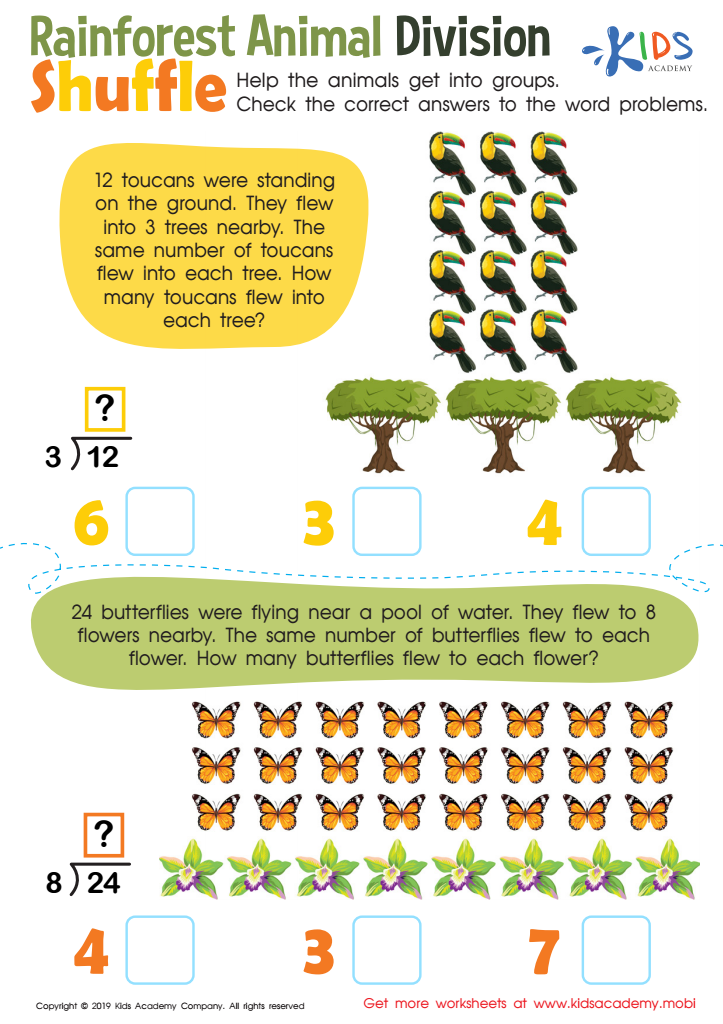
Rainforest Animal Division Worksheet
Children can save the rainforest and learn about division with this worksheet! It helps kids understand that division involves creating equal groups of specific numbers, and with its visual representation, they can grasp the concept more easily. They'll have fun learning about their place in the world and their role in protecting the environment.
 Assign to My Students
Rainforest Animal Division Worksheet
Worksheet
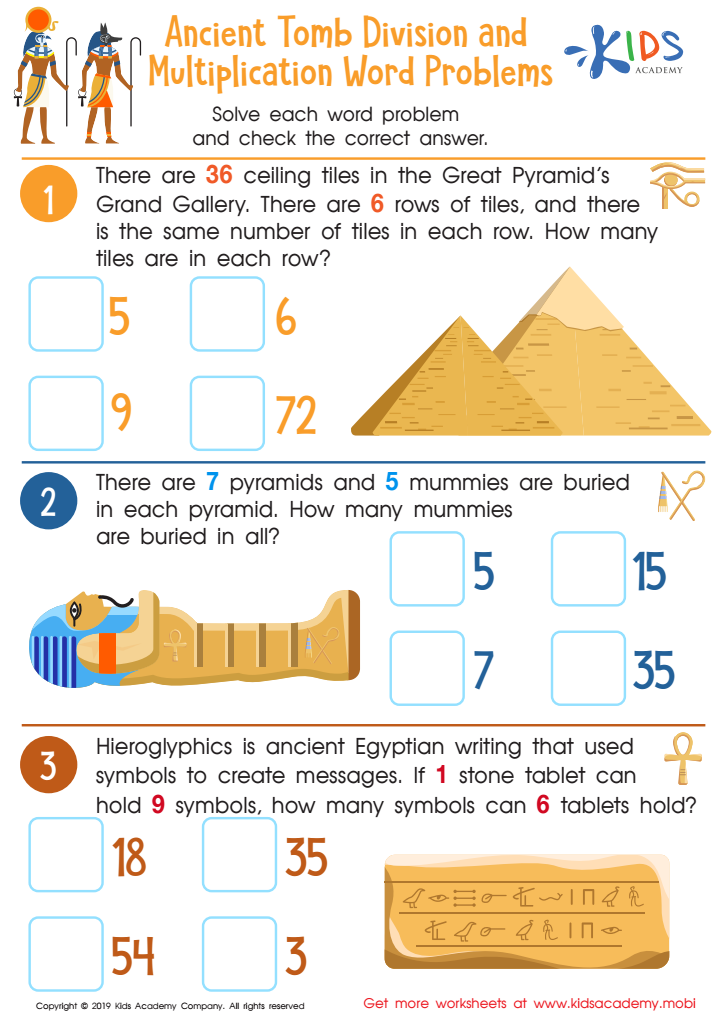
Ancient Tomb Division and Multiplication Word Problems Worksheet
This worksheet teaches kids math, plus a bit about ancient Egypt. Read the text and point to the pictures to explain them. There are three word problems - help kids interpret and solve each one, then find and check the answer. 80 words
Ancient Tomb Division and Multiplication Word Problems Worksheet
Worksheet
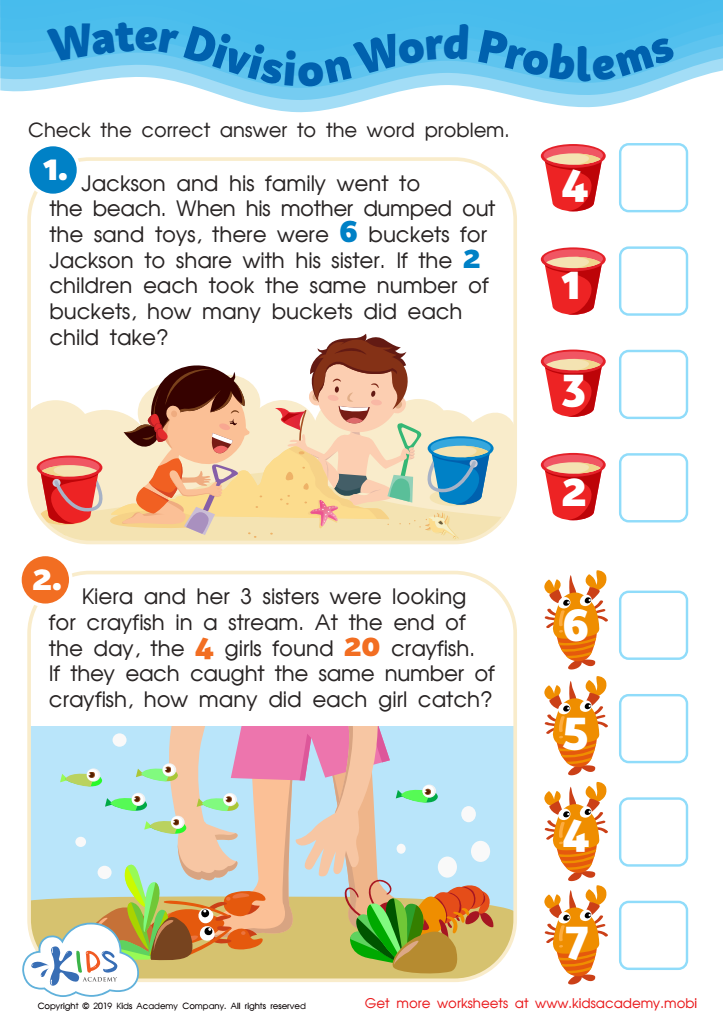
Water Division Word Problems Worksheet
Kids can sharpen their math skills with this fun PDF! They'll see pictures of friends at the beach, plus bold numbers and colorful pictures. All they need to do is read and understand the problem to find the answer - without even realizing they're doing division. A great way to make math enjoyable!
Water Division Word Problems Worksheet
Worksheet
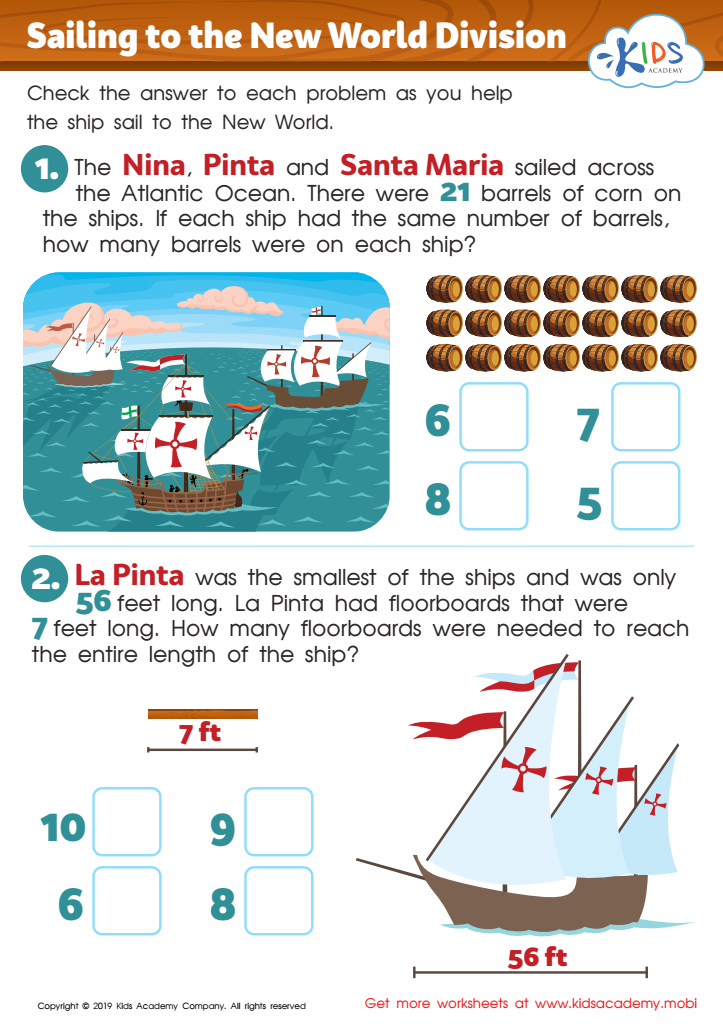
Sailing to the New World Division Worksheet
This worksheet combines history and math, helping kids make sense of problem-solving. Christopher Columbus sailing the ocean blue is combined with picture representations of division word problems in bold colors and highlighted numbers. Kids can learn while having fun figuring out the problems, regardless of whether it's math or history.
Sailing to the New World Division Worksheet
Worksheet
Join Kids Academy for Free
Who is primarily going to use this learning content?






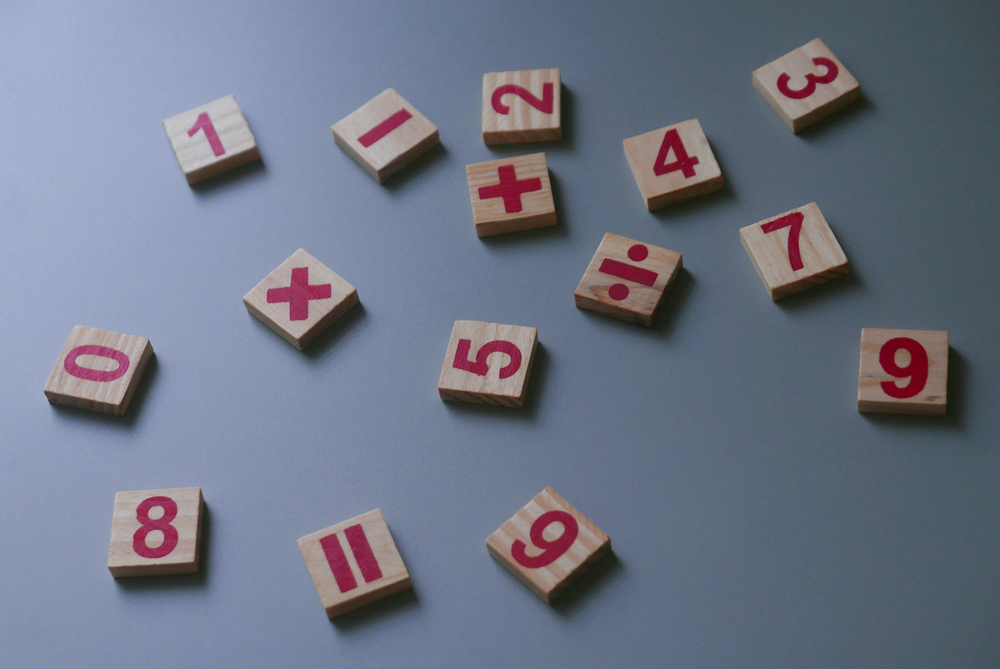

Division practice for preschoolers aged 3-4 may seem advanced, but introducing basic concepts early can foster a strong foundation for future math skills. At this age, children are developing critical thinking abilities and cognitive flexibility, and engaging them in early math activities helps cultivate those skills. Division, even in its simplest form, can be presented through playful activities such as sharing items equally (e.g., dividing snacks or toys). This everyday approach not only makes math relatable but also reinforces social skills like cooperation and communication.
Furthermore, engaging in division-related activities supports number sense, helping children understand the idea of grouping and separating quantities. It encourages them to think critically about how numbers work together. Early exposure can lead to increased confidence and a positive attitude toward math as they progress in their education.
By incorporating division into play and learning, parents and teachers set the stage for more complex mathematical concepts in later years. It promotes problem-solving skills, enhances fine motor skills through hands-on activities, and nurtures a lifelong love for learning. Therefore, engaging children in division practice, even in basic terms, is beneficial and essential to their overall developmental growth.








