Color Identification Geometry Worksheets for Ages 3-4
4 filtered results
-
From - To
Boost your child's development with our engaging Color Identification Geometry Worksheets for Ages 3-4! Designed to support early learning, these worksheets combine the foundational skills of color recognition and geometry. Young learners will explore shapes while identifying colors, enhancing their cognitive abilities and creative thinking. Parents and educators can effortlessly integrate these fun activities into daily routines, ensuring a well-rounded educational experience. Each worksheet is tailored for joyful learning, promoting fine motor skills and essential geometric concepts. Download our colorful, visually appealing worksheets today to inspire curiosity and confidence in your little one's early math journey! Perfect for home or classroom use.
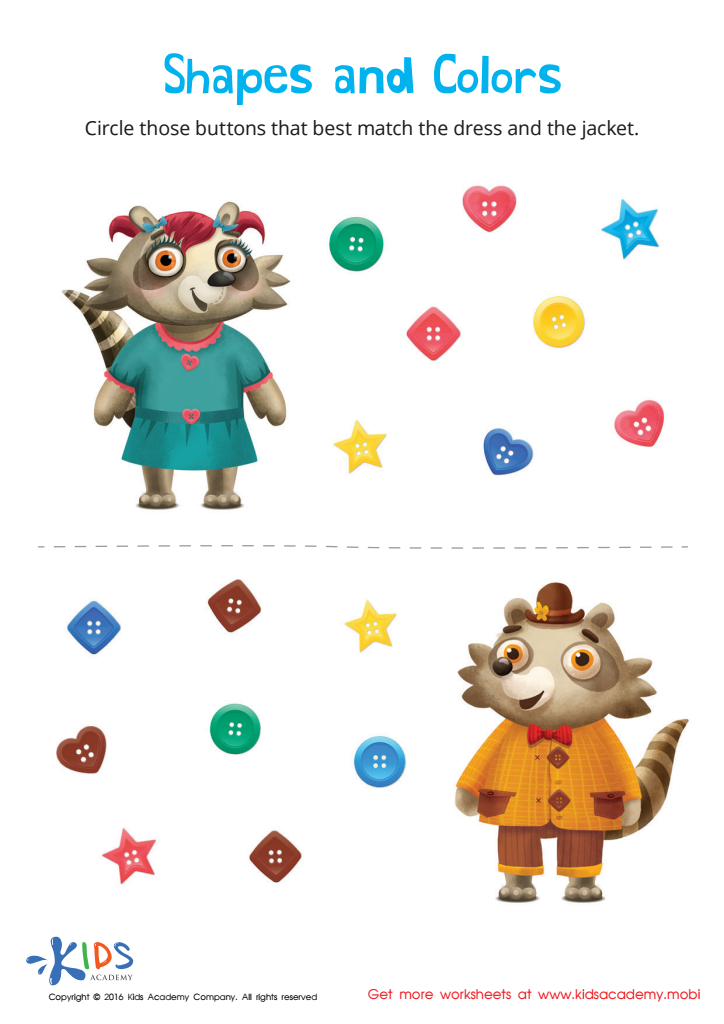
Matching: Shapes and Colors Worksheet











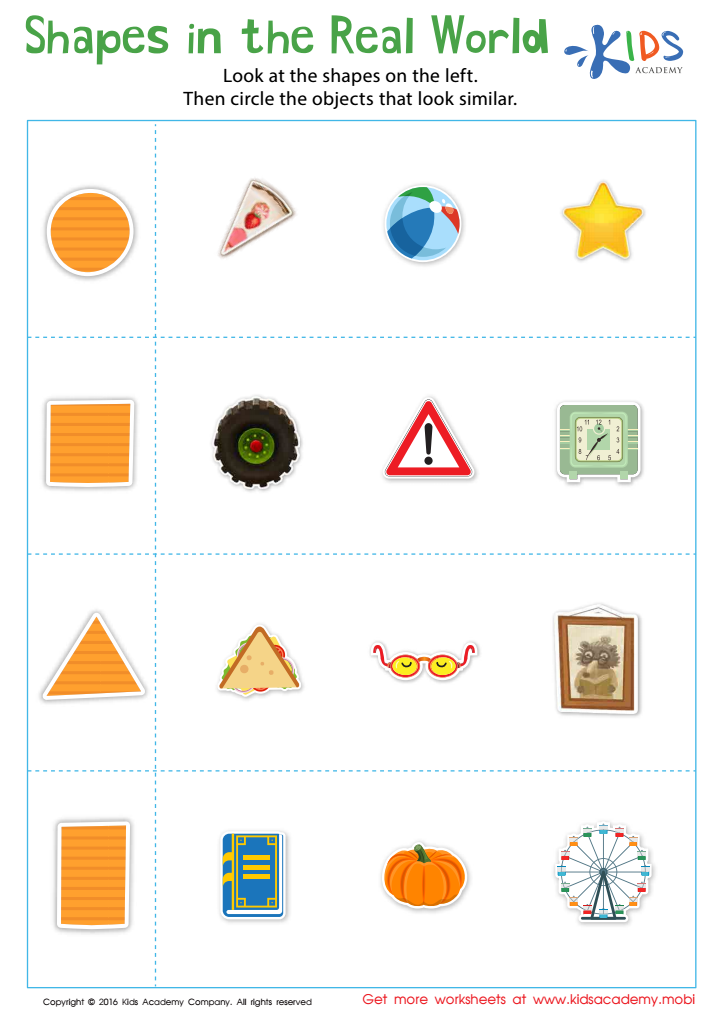
Shapes in the Real World Worksheet
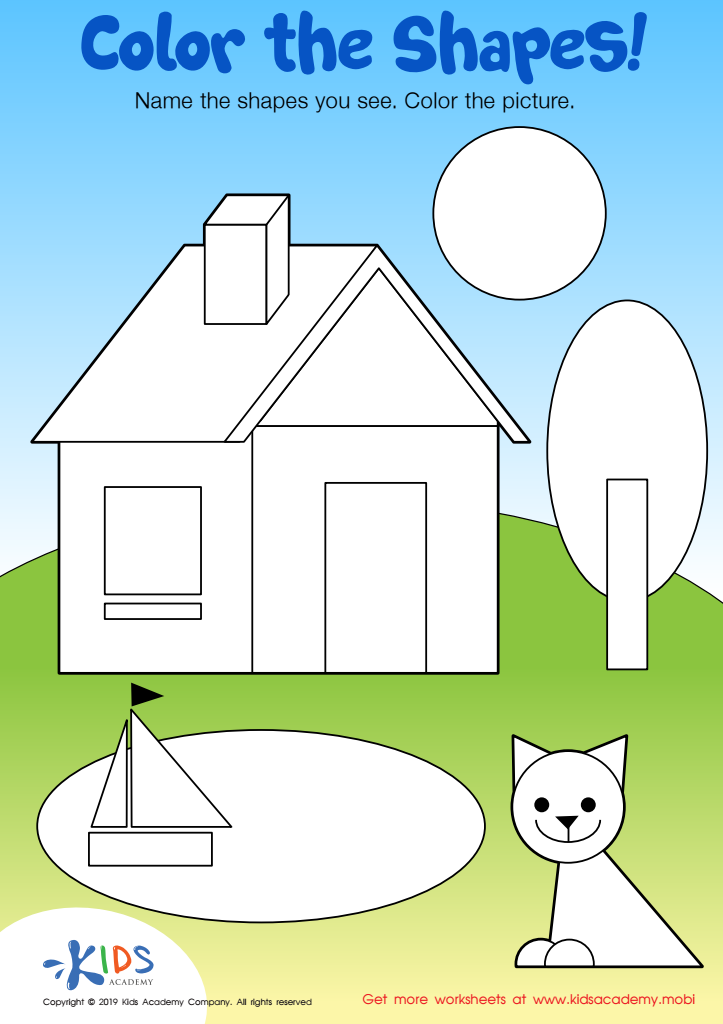
Color the Shapes Worksheet
 Assign to My Students
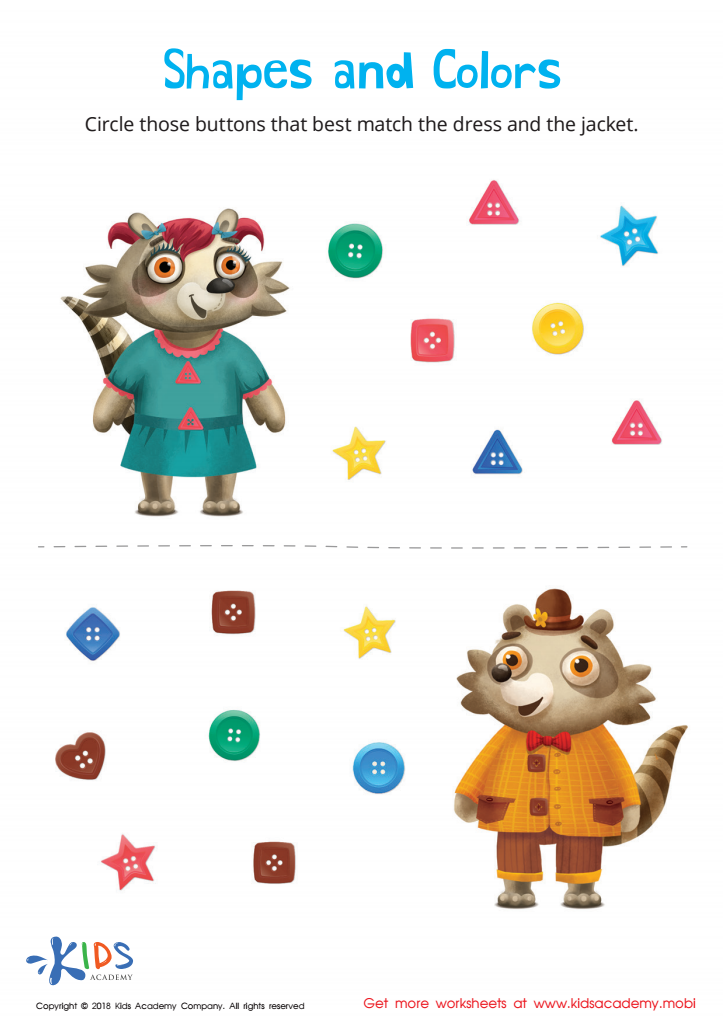
Shapes and Colors Worksheet








Color identification and geometry are foundational skills for children aged 3-4 that significantly impact their cognitive development. At this age, children are naturally curious and eager to make sense of the world around them. Engaging in color identification helps enhance their visual perception, develop observational skills, and boost their vocabulary as they learn to name and describe different colors. Recognizing colors also lays the groundwork for more complex concepts in art and design, fostering creativity.
Incorporating geometry at this stage introduces young learners to basic shapes and spatial awareness. Learning about shapes, such as circles, squares, and triangles, encourages problem-solving skills and critical thinking. It supports their ability to categorize and organize information, skills that are vital for later mathematics learning.
Parents and teachers play a crucial role in providing a rich environment where these skills can flourish. Simple activities, like sorting colorful blocks or creating shape collages, promote hands-on learning and engagement. By prioritizing color identification and geometry in early education, caregivers help nurture a child’s cognitive capabilities and build a strong foundation for future academic success in both math and creativity. These early experiences ultimately contribute to their overall development and confidence as learners.








