Hand-eye Coordination Geometry Worksheets for Ages 3-4
3 filtered results
-
From - To
Enhance your child's learning experience with our engaging Hand-Eye Coordination Geometry Worksheets, designed specifically for ages 3-4. These worksheets seamlessly blend fun and education, helping little ones develop essential hand-eye coordination skills while exploring basic geometric shapes. Through interactive activities such as tracing, matching, and coloring, children will build a solid foundation in geometry, all while improving their motor skills and visual perception. Our thoughtfully crafted resources not only promote early maths literacy but also encourage creativity and critical thinking. Ideal for both classroom settings and home learning, these worksheets will make geometry enjoyable for your young learners! Dive in now!
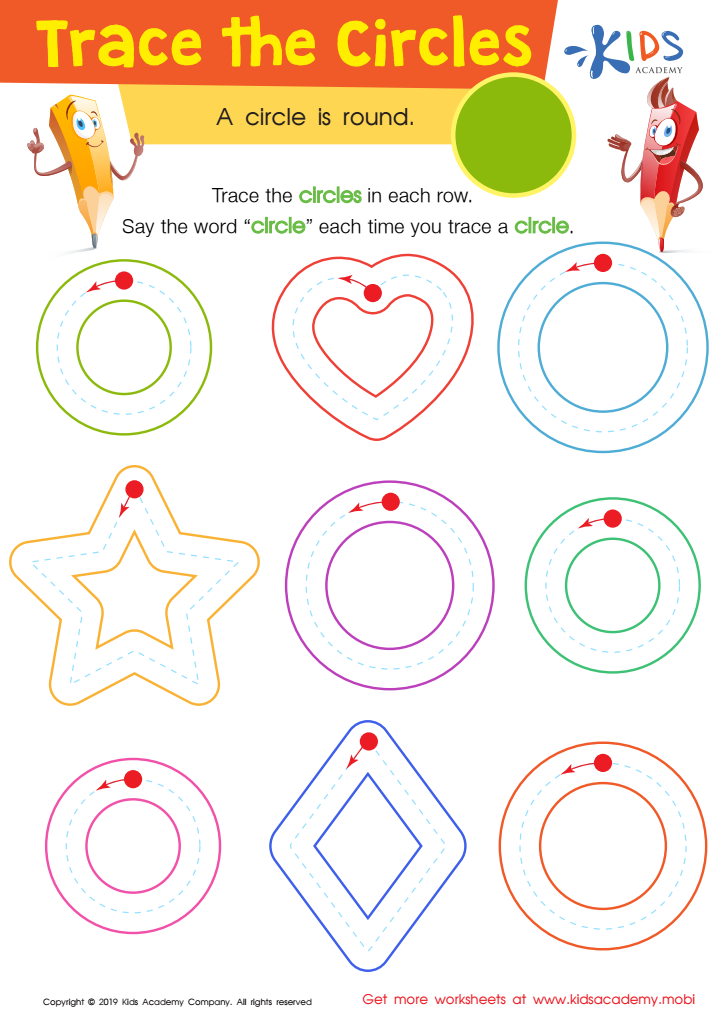
Trace The Circles Worksheet
 Assign to My Students











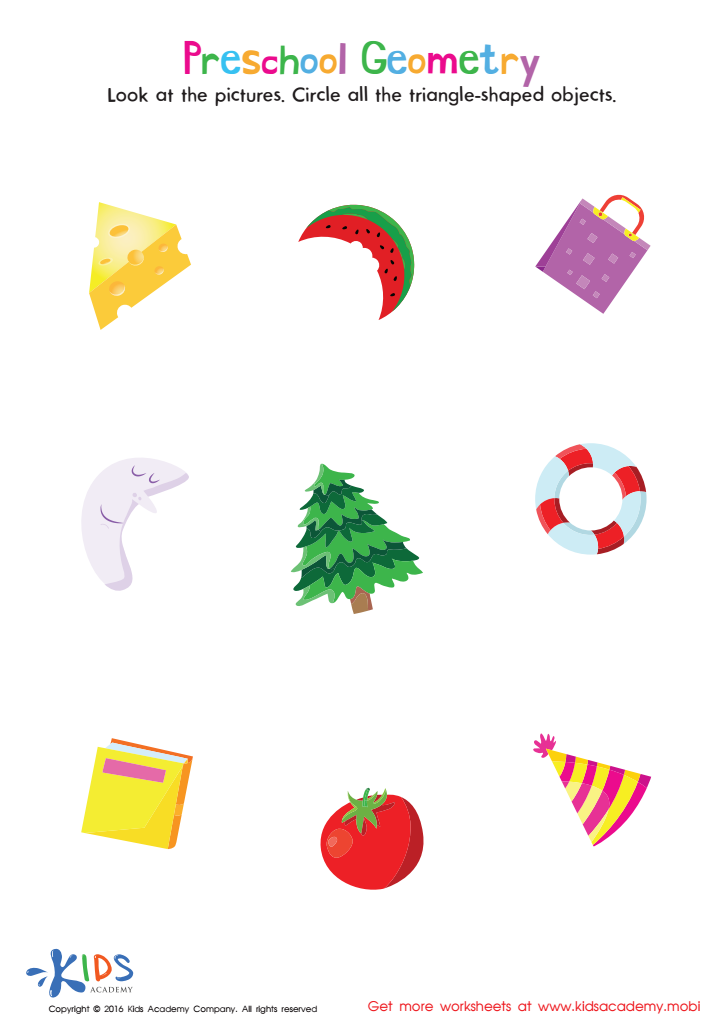
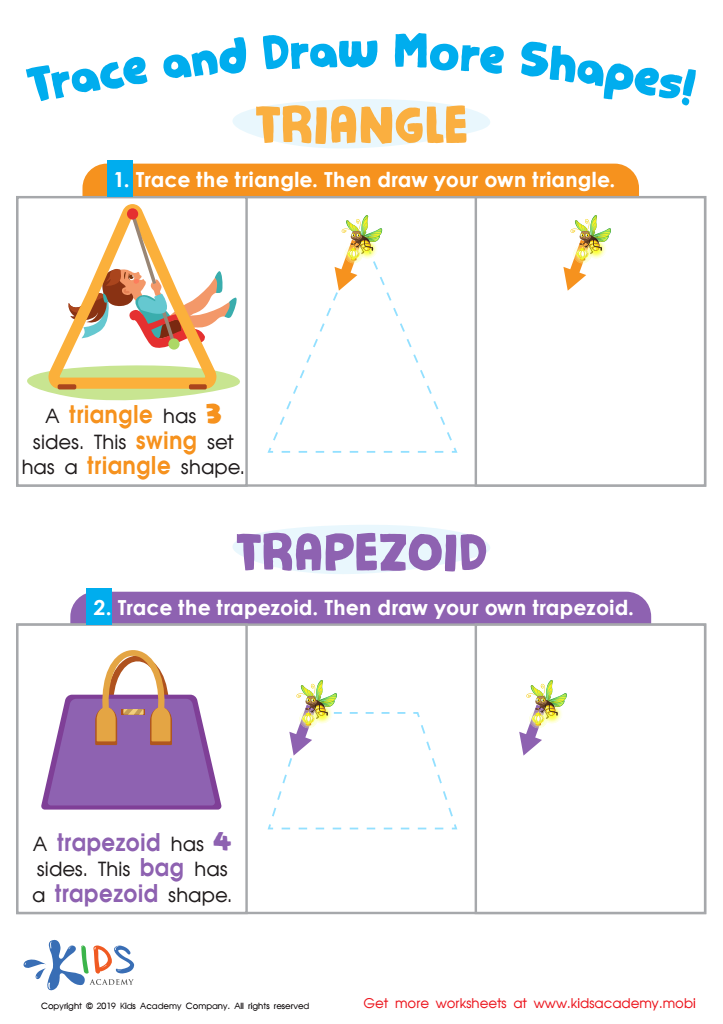
Trace and Draw More Shapes Worksheet








Hand-eye coordination is a crucial developmental skill that significantly impacts a child's learning journey, particularly in spatial reasoning and geometry starting from ages 3-4. At this young age, children begin to understand shapes, sizes, and the relationships between objects in space. Fostering hand-eye coordination aids them in manipulating objects, which is foundational for geometric understanding.
When parents and teachers focus on activities that promote hand-eye coordination, such as stacking blocks, puzzles, or shape sorting, they help children develop essential motor skills and enhance cognitive abilities. These activities involve visual discrimination and coordinated movement, key components in grasping geometric concepts.
Moreover, a strong foundation in hand-eye coordination can lead to increased confidence in engaging with math-related tasks and problem-solving as children progress into later educational stages. It assists in early literacy as well, as children learn to read and write with better control and precision.
Overall, supporting hand-eye coordination for ages 3-4 encourages a joyful exploration of the world, helping children become adept at understanding their environment and laying the groundwork for future academic success in mathematics and beyond. By emphasizing this important skill, both parents and teachers play a vital role in a child’s holistic growth and development.








