Comparing quantities Numbers Worksheets for Ages 3-4
3 filtered results
-
From - To
Welcome to our "Comparing Quantities Numbers Worksheets" for children aged 3-4! These engaging worksheets are designed to help young learners develop essential math skills by comparing different quantities. Through fun activities, kids will learn to identify larger and smaller amounts, fostering foundational number sense while refining their observational skills. Each worksheet features colorful visuals and simple exercises, tailored to capture your child’s interest and facilitate understanding. Perfect for home or classroom use, our resources make early math learning enjoyable and interactive. Start your child's journey towards confidence in numbers today with our carefully crafted worksheets!
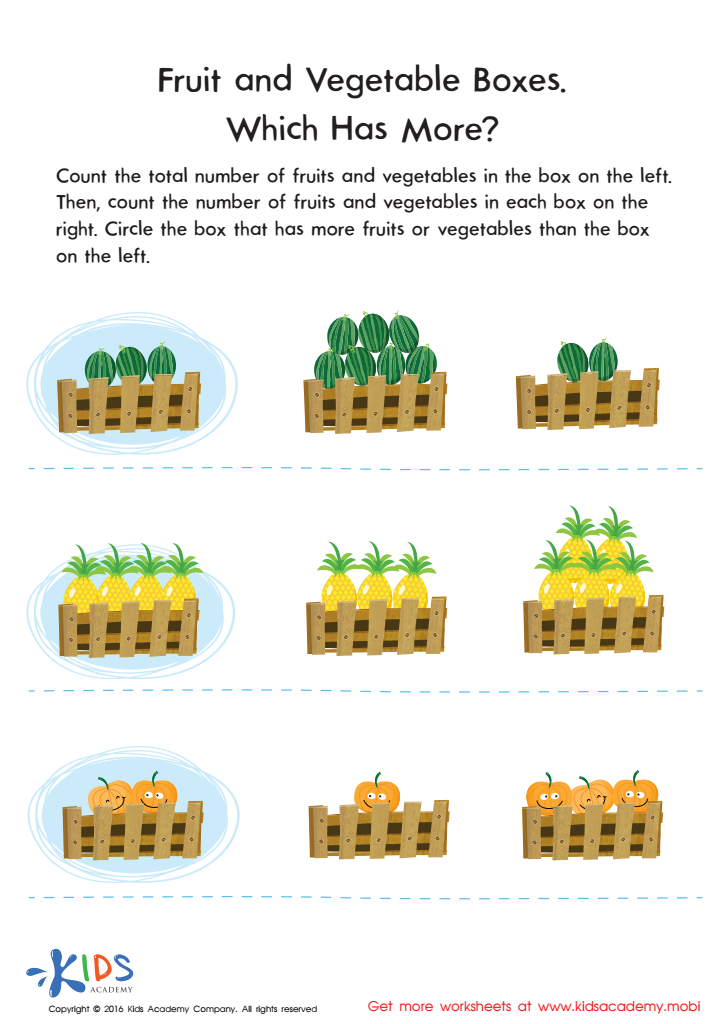
Which Has More? Size Worksheet
 Assign to My Students
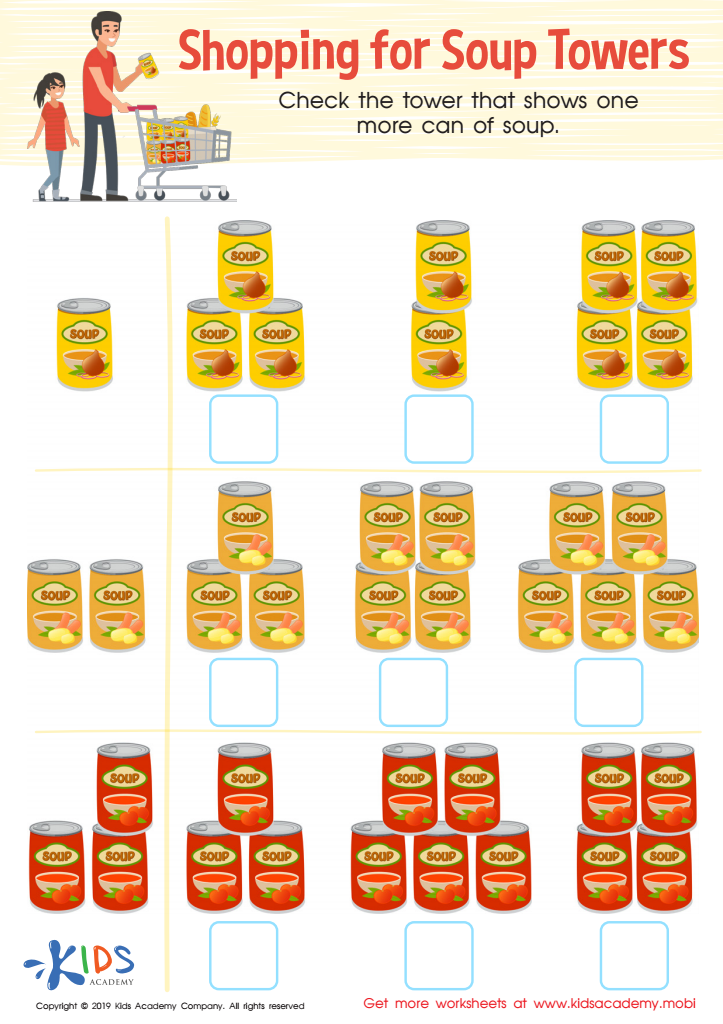
Soup Towers Worksheet
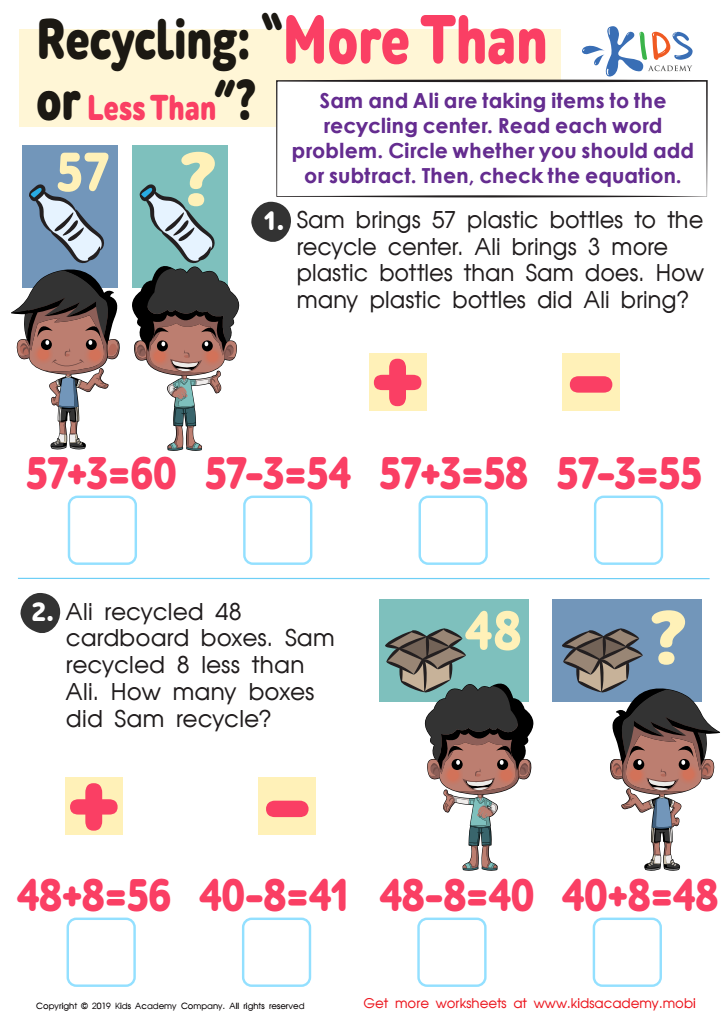
Recycling - More or Less Worksheet








Comparing quantities is a foundational skill that plays a crucial role in early childhood development, particularly for children aged 3-4. Parents and teachers should care about teaching this concept because it lays the groundwork for more advanced mathematical understanding, such as addition and subtraction, later in life.
At this age, children begin to explore the world around them and develop cognitive skills through play and interaction. Learning to compare quantities helps them grasp the idea of "more," "less," and "equal," which not only enhances their mathematical abilities but also sharpens critical thinking and problem-solving skills. Engaging in activities involving comparison fosters a sense of observation and reasoning, as children learn to assess and analyze their environment.
Additionally, introducing concepts of quantity and comparison at this age supports language development. Children learn to express their observations verbally, increasing their vocabulary and communication skills.
Moreover, these skills can lead to stronger social interactions. Whether sharing toys or negotiating turn-taking, understanding comparisons encourages cooperation and empathy among peers. Overall, fostering an early understanding of comparing quantities provides children with crucial tools that benefit their cognitive, social, and emotional development, making it an essential focus for parents and educators alike.








