Sorting skills Numbers Worksheets for Ages 3-4
5 filtered results
-
From - To
Introducing our engaging Sorting Skills Numbers Worksheets for Ages 3-4, designed to enhance early mathematical understanding through fun activities! These worksheets provide a playful approach to sorting and categorizing numbers, helping young learners develop essential skills. Children will enjoy hands-on experience as they identify, compare, and sort numbers while fostering critical thinking and problem-solving abilities. Our age-appropriate exercises encourage creativity and promote cognitive development, making learning enjoyable. Perfect for classroom or home use, these worksheets support foundational math skills while keeping little ones captivated. Help your child build a strong early math foundation with our Sorting Skills Numbers Worksheets today!
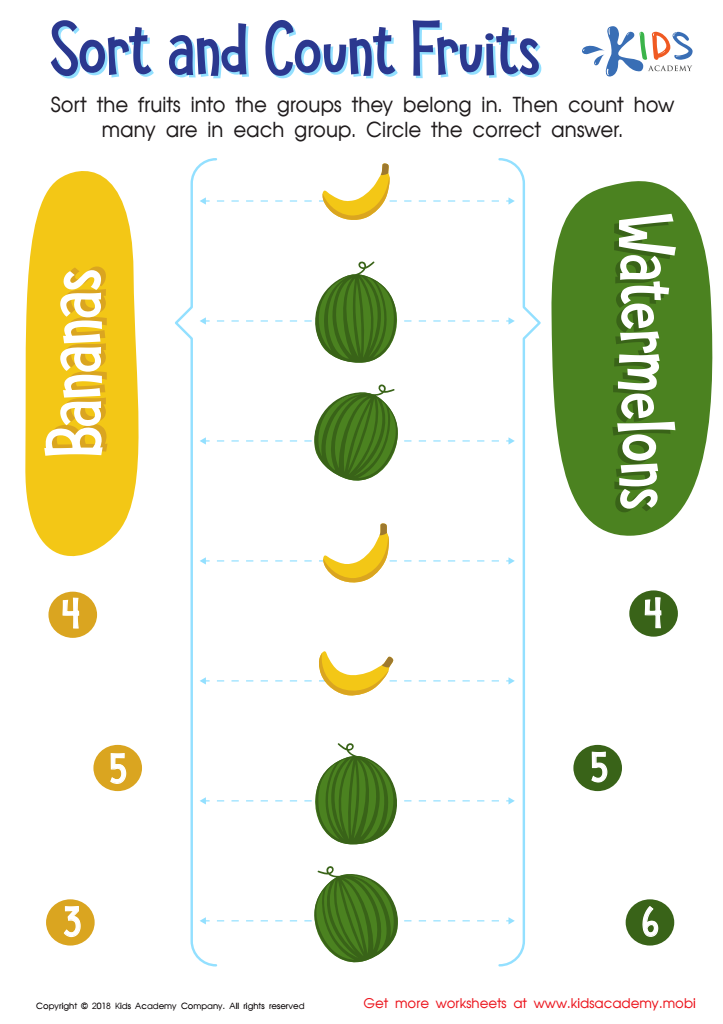
Sort and Count Fruits Worksheet
 Assign to My Students
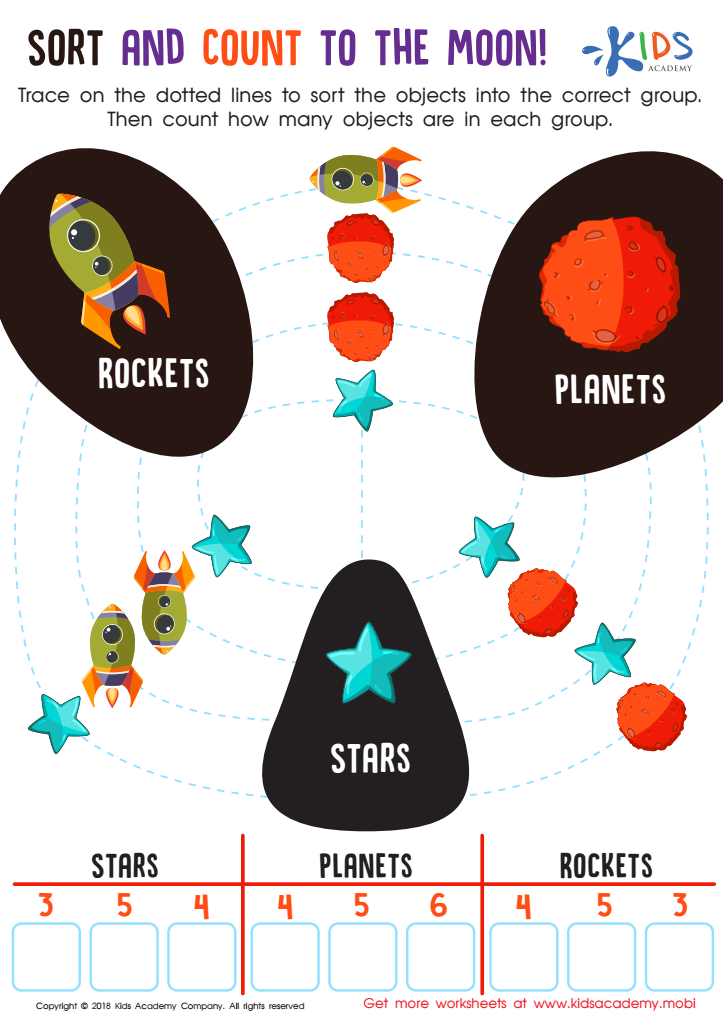
Sort and Count to the Moon Worksheet
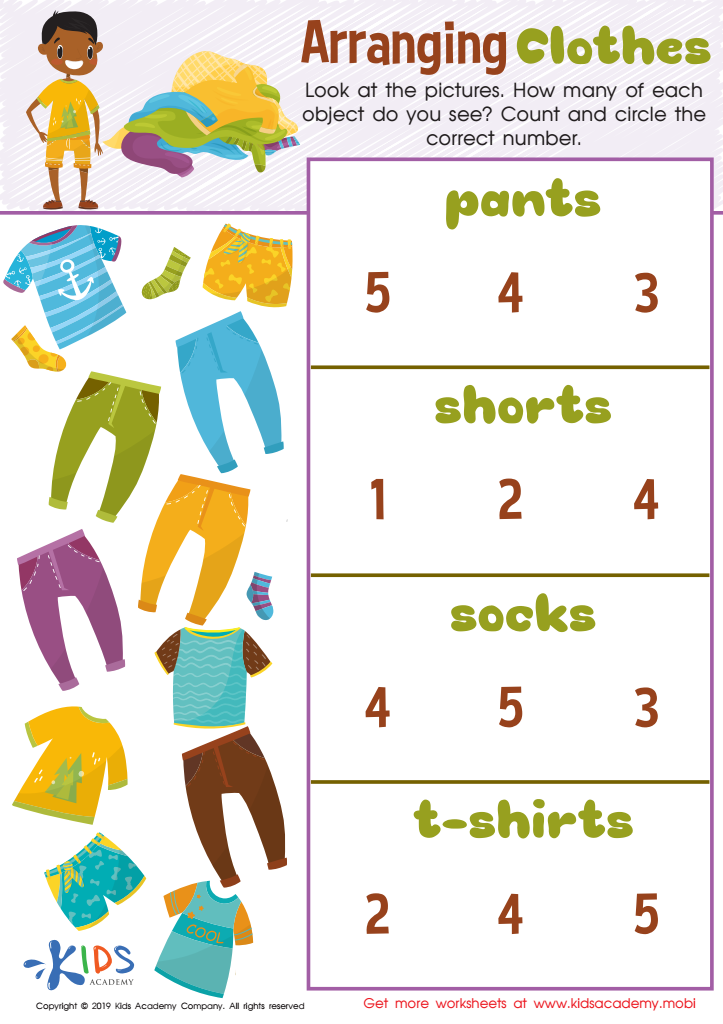
Arranging Clothes Worksheet
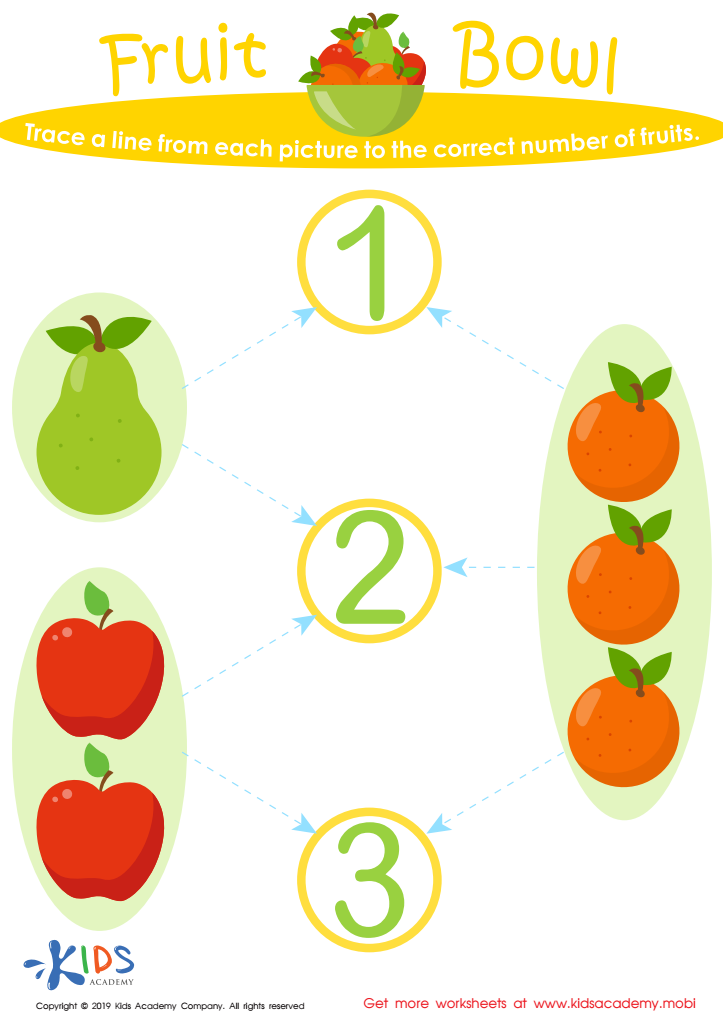
Fruit Bowl Worksheet
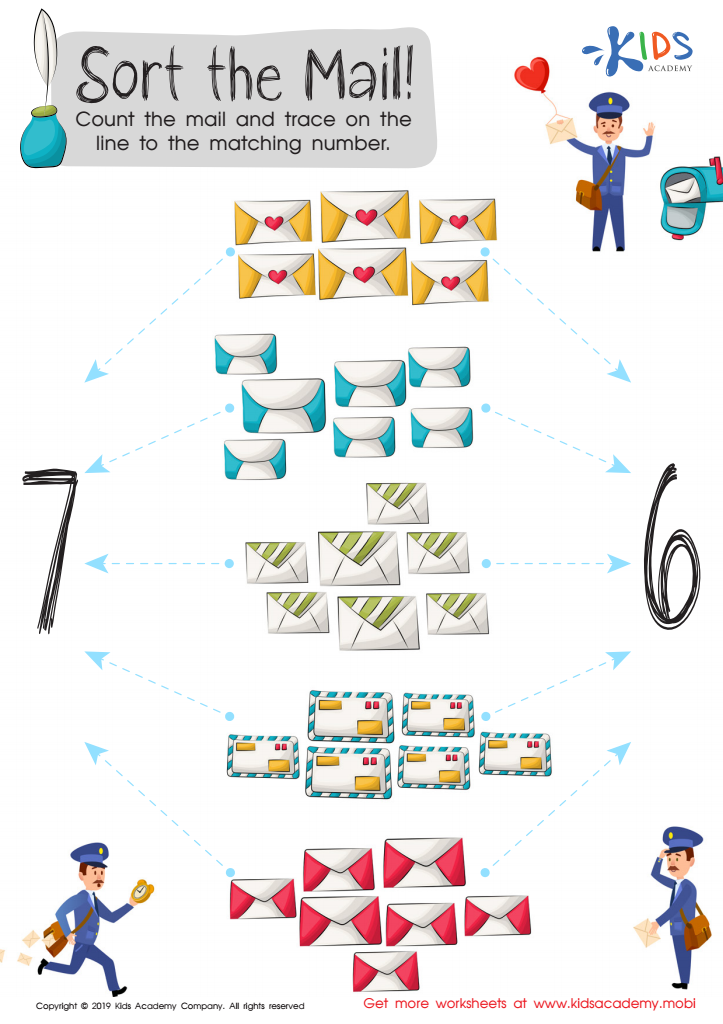
Sort the Mail Worksheet








Sorting skills are fundamental for young children's cognitive development and can significantly influence their mathematical understanding as they grow. For children aged 3-4, sorting involves grouping objects based on attributes such as color, shape, or size, which lays the groundwork for more complex reasoning skills. Parents and teachers should care about nurturing these skills because they help children recognize patterns and categorize information, essential elements in problem-solving and critical thinking.
Moreover, sorting enhances a child's ability to make comparisons, leading to improved verbal communication as they describe their reasoning. Engaging in sorting activities encourages fine motor skills as children manipulate objects, promote early numeracy by introducing concepts of classification, and develop prediction skills—key aspects of scientific literacy.
Additionally, fostering sorting skills can boost a child's confidence, as they learn through play and exploration. This active engagement helps build a solid foundation for future mathematical concepts, as children become adept at distinguishing and organizing items, simplifying the transition to more advanced sorting techniques, such as counting and sequencing.
In essence, investing time in sorting activities benefits children's overall development, education, and social skills, making it a crucial focus for early educators and parents alike.








