
Spatial awareness Numbers Worksheets for Ages 3-4
3 filtered results
Difficulty Level
Grade
Age
-
From - To
Subject
Activity
Standards
Enhance your child's spatial awareness with our engaging spatial awareness numbers worksheets, specifically designed for ages 3-4! These fun and interactive worksheets help young learners recognize and understand numbers through various spatial concepts. Activities focus on identifying shapes, patterns, and colors while developing essential skills such as counting, sorting, and comparison. By exploring the relationship between numbers and their positions, children build a strong foundation for future math success. Our printable resources are perfect for parents and educators looking to creatively engage little ones in learning numbers and enhancing their cognitive skills. Start your child's journey to mathematical confidence today!
Favorites
With answer key
Interactive
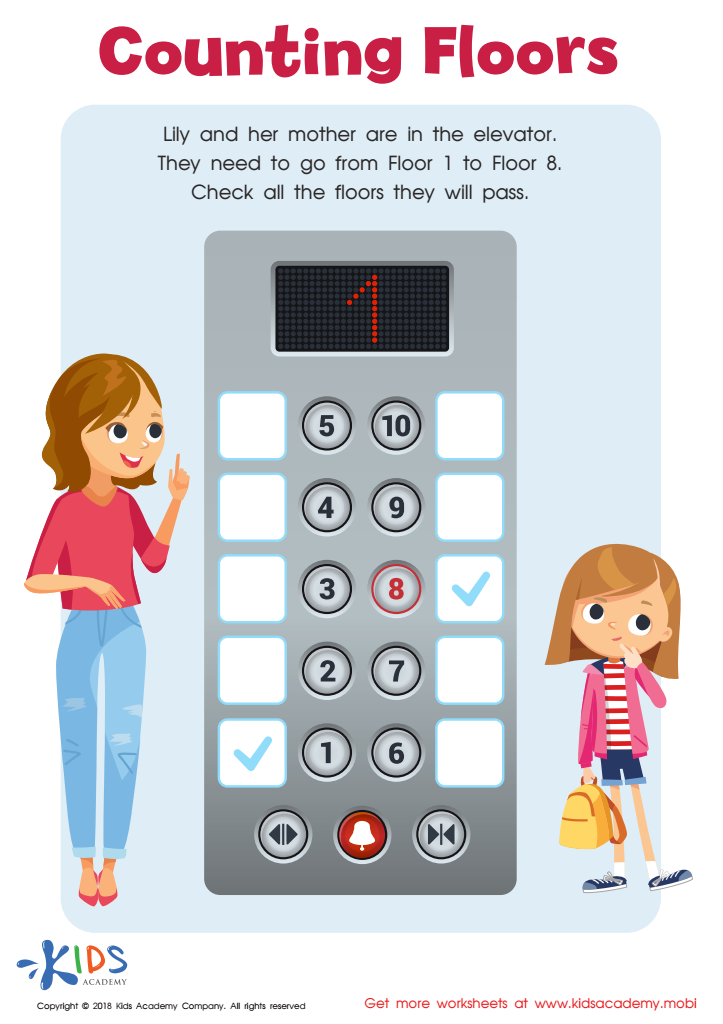
Counting Floors Worksheet
Take your kids on an elevator ride and have them help you. With this worksheet, little ones meet Lily and her mom. They're taking an elevator from Floor 1 to Floor 8. Ask them to check the floors they pass and help the two reach their destination.
 Assign to My Students
Counting Floors Worksheet
Worksheet
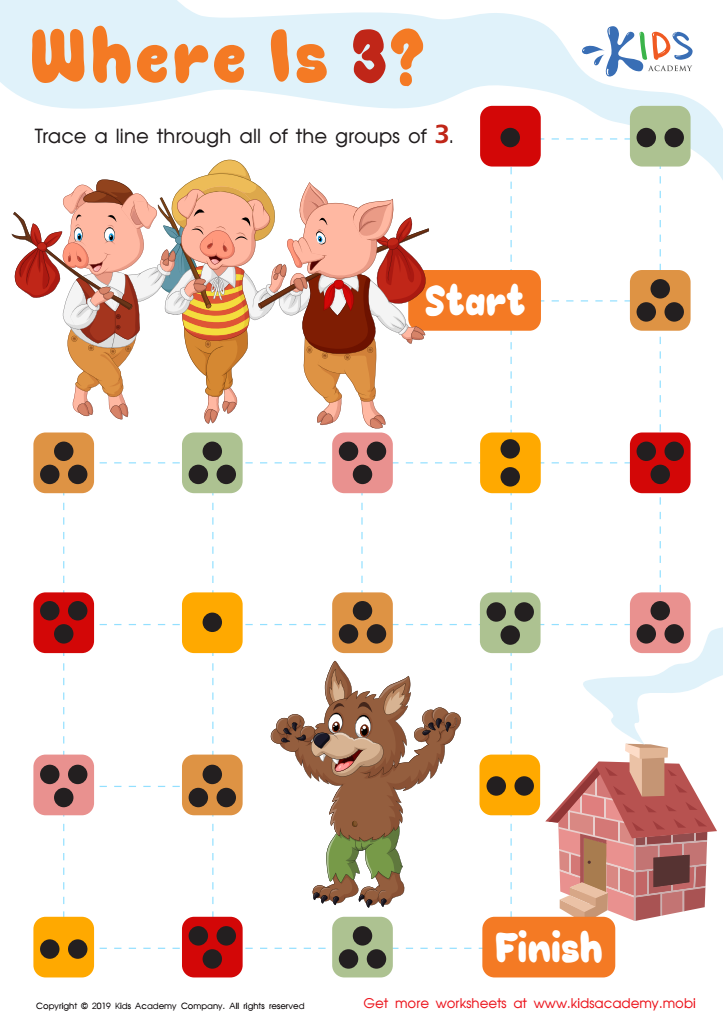
Where Is 3? Worksheet
Let your little mathematician join the Three Little Pigs on an adventure! With this free worksheet, they'll guide the pigs through a maze of numbered bricks, using one-to-one representation to get to the sturdy house. Have fun helping the piggy friends past the wolf!
Where Is 3? Worksheet
Worksheet
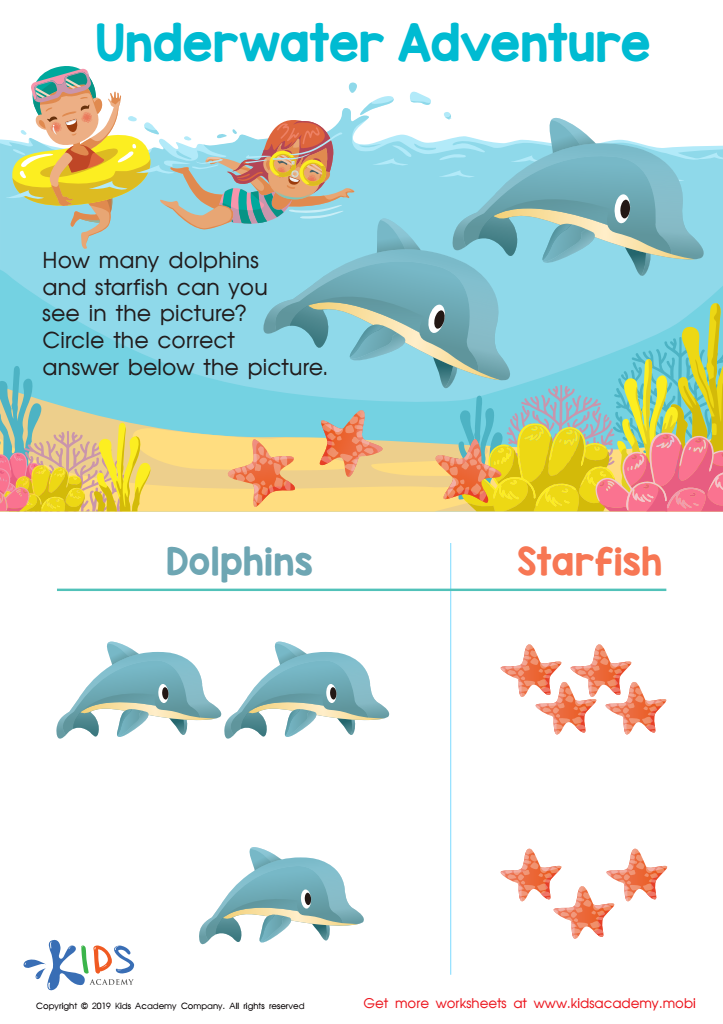
Underwater Adventure Worksheet
Kids can explore the ocean without realizing they're doing math! This free worksheet takes them on an underwater adventure with dolphins and starfish. They count using pictures and answer questions by circling the right images. Along the way, they'll have a blast!
Underwater Adventure Worksheet
Worksheet
Join Kids Academy for Free
Who is primarily going to use this learning content?








Spatial awareness is a crucial skill for children aged 3-4, and it significantly impacts their cognitive development and future learning. As educators and parents, fostering spatial awareness can enhance children's ability to understand positions, shapes, and sizes, laying the groundwork for more complex mathematical concepts later on. Children with strong spatial skills can better visualize relationships between objects, which is essential in subjects like math, science, and art.
In early childhood, spatial awareness is closely linked to motor skills as kids navigate their environment—climbing, running, and manipulating objects. When engaging in activities that encourage this type of awareness, such as puzzles, block-building, or playing with shape sorters, children learn to recognize patterns and develop problem-solving abilities.
Additionally, spatial awareness supports language development. As children describe the location and attributes of objects, such as "above," "below," or "between," they enhance their vocabulary and comprehension.
By incorporating spatial awareness activities into daily routines, parents and teachers can provide engaging learning experiences. This holistic approach not only aids in the child’s overall development but also prepares them for academic success, making spatial awareness a vital focus in early education.








