Animal Classification Math Worksheets for Ages 3-4
3 filtered results
-
From - To
Discover our engaging "Animal Classification Math Worksheets" designed specifically for children aged 3-4! These interactive worksheets blend early math skills with the fun of learning about animals. Through colorful illustrations and simple counting activities, young learners will practice classifying animals by type, size, and habitats. Our resources encourage critical thinking and enhance visual recognition, making learning about the animal kingdom both enjoyable and educational. Ideal for parents and educators, these worksheets foster a strong foundation in math while promoting curiosity about nature. Dive into the world of animal classification with our worksheets and watch your little ones flourish in their learning journey!
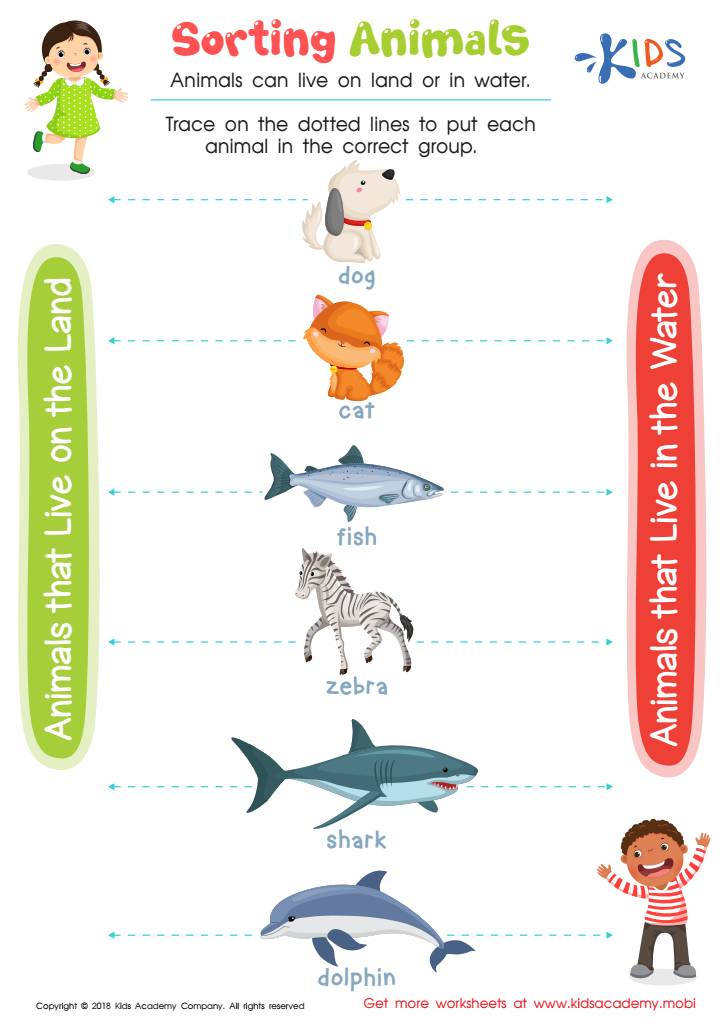
Sorting Animals Worksheet
 Assign to My Students
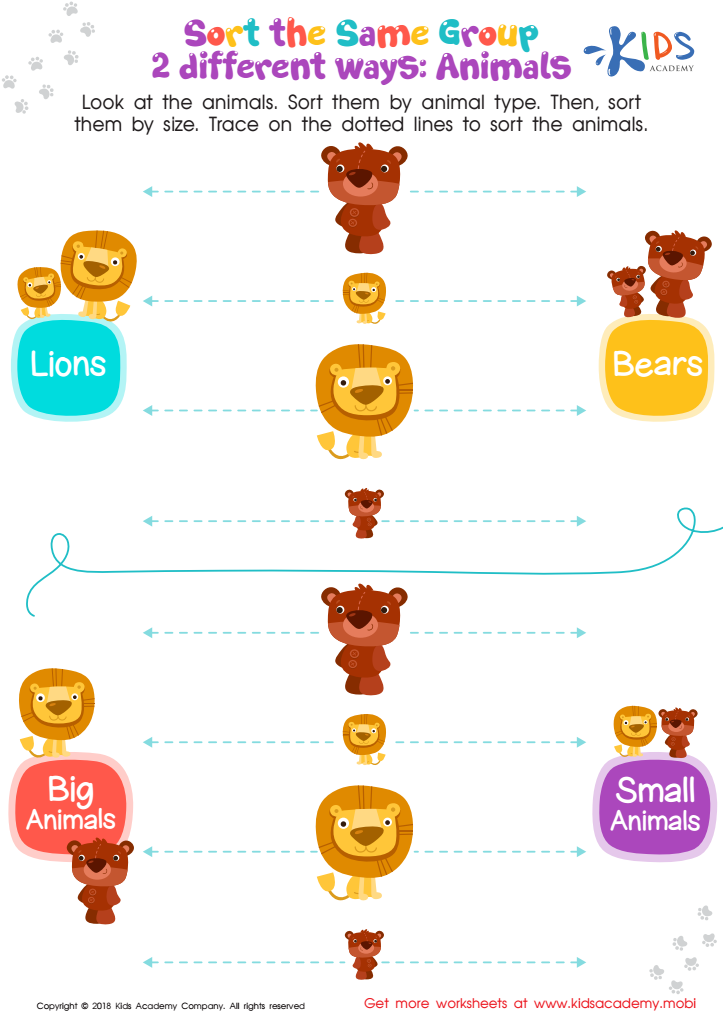
Sort the Same Group 2 Different Ways: Animals Worksheet
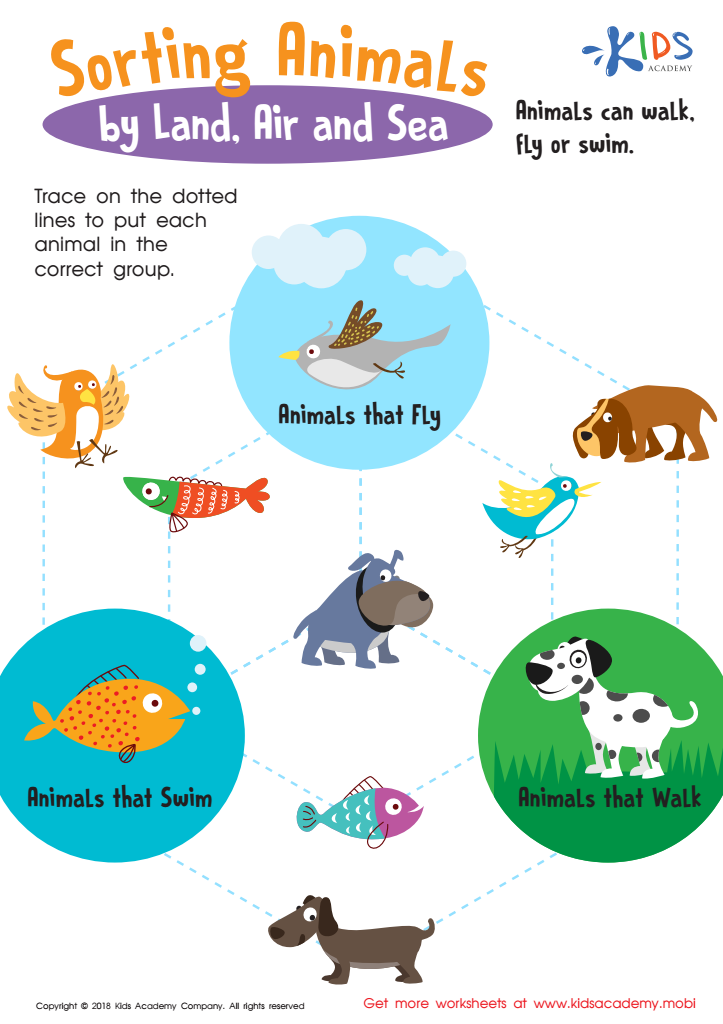
Sorting Animals by Land, Air and Sea Worksheet







Animal Classification Math for ages 3-4 is a vital educational tool that serves multiple developmental purposes. At this age, children are naturally curious about the world around them, and introducing them to animal classification taps into this intrinsic curiosity. Engaging with animals helps young learners develop early math skills such as sorting, grouping, and comparing, fostering a foundational understanding of categorization that extends beyond numbers.
Parents and teachers should care about this topic because it intertwines learning with play, making abstract concepts tangible and enjoyable. It promotes critical thinking as children classify animals by traits, such as size, shape, and family types (mammals, birds, etc.). This process not only builds cognitive skills but also enhances language development as children learn vocabulary related to animals and their classifications.
Moreover, animal classification nurtures social skills through collaborative activities, where children share observations and contribute to group discussions. Ultimately, this foundational approach encourages curiosity, analytical thinking, and a love for learning—skills essential for future academic success. By emphasizing animal classification math early on, caregivers play a crucial role in preparing children to explore more complex concepts in science and math as they grow.








