Animal identification Math Worksheets for Ages 3-4 - Page 2
31 filtered results
-
From - To





.jpg)

Understanding animal identification and integrating it into math lessons for children aged 3-4 provides numerous developmental benefits that parents and teachers should enthusiastically support. At this stage of early childhood education, kids are naturally curious and receptive to learning about their environment, making it an ideal time to introduce them to the richness of the animal kingdom.
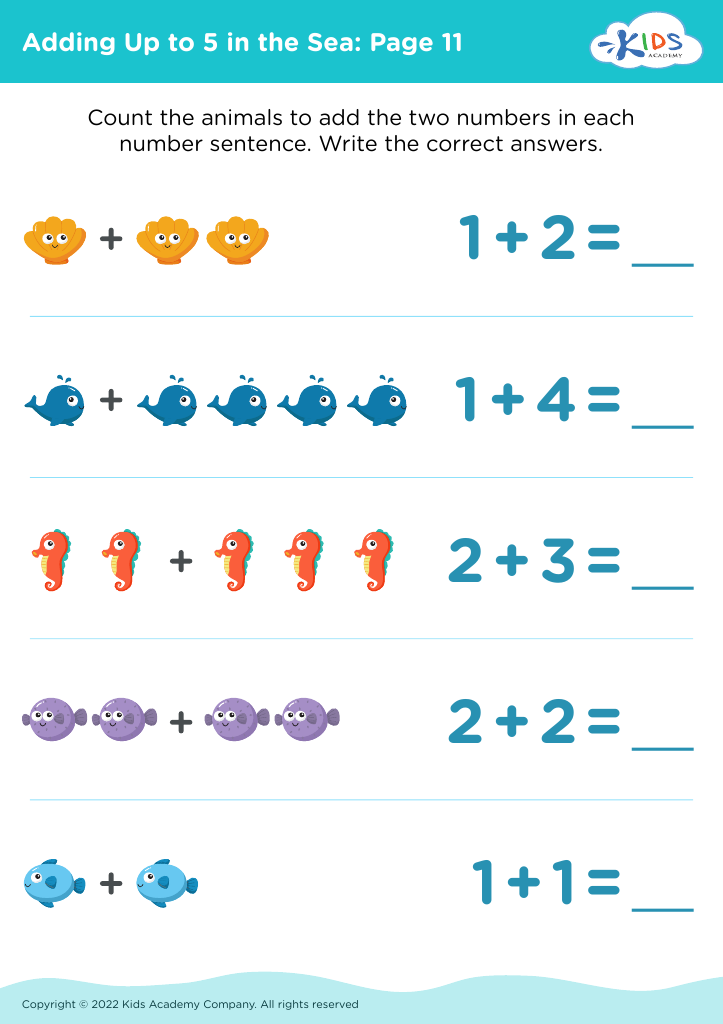
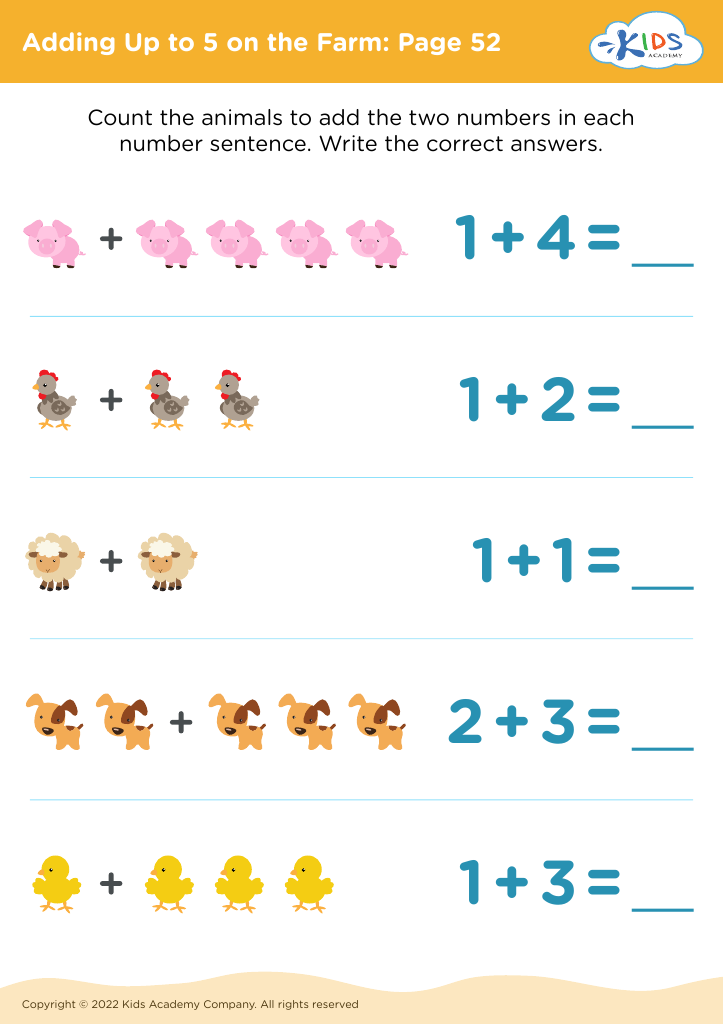
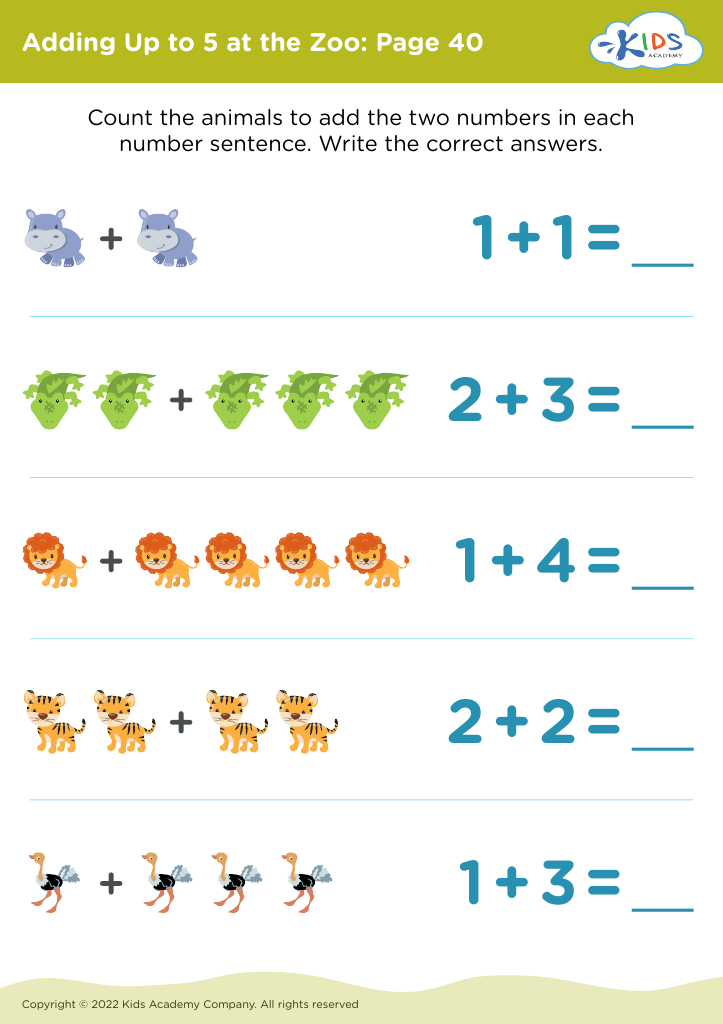
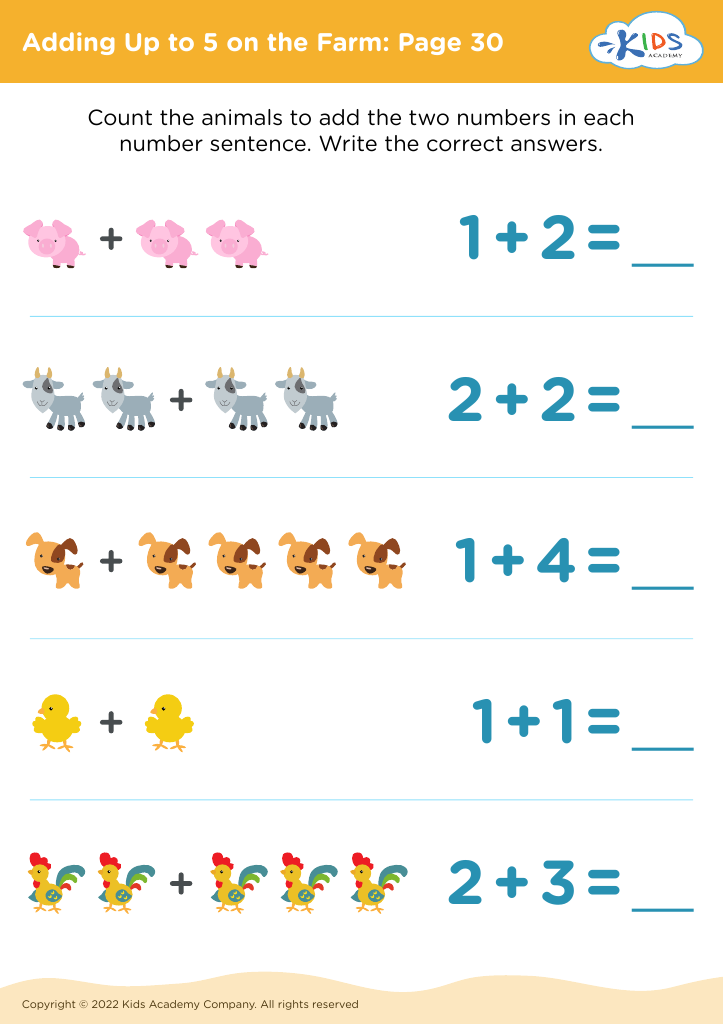
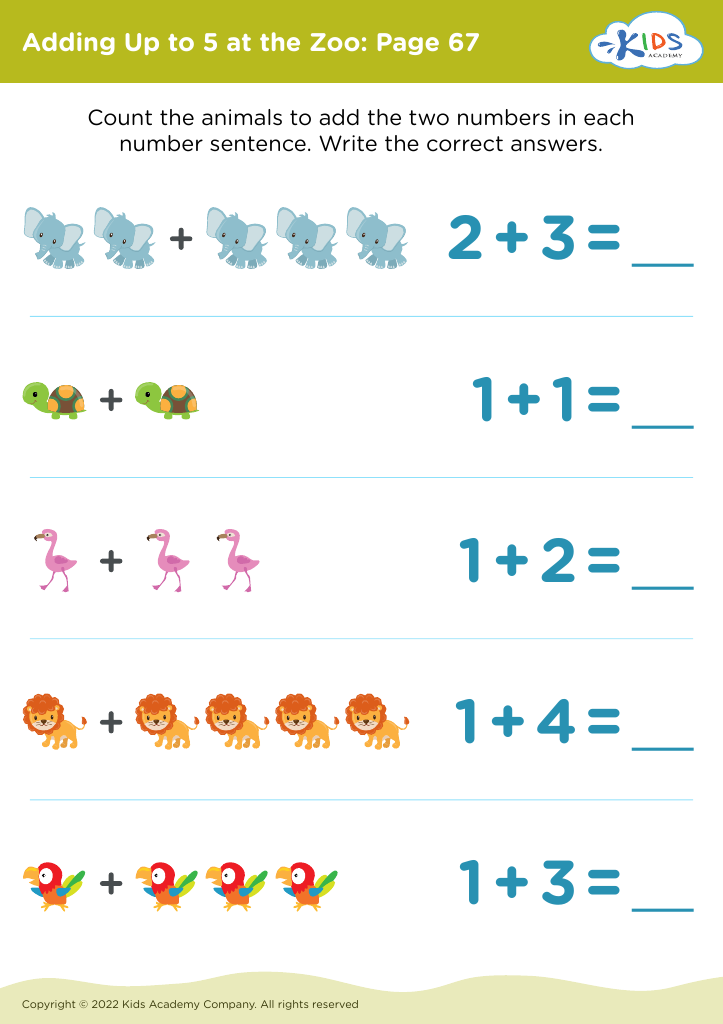
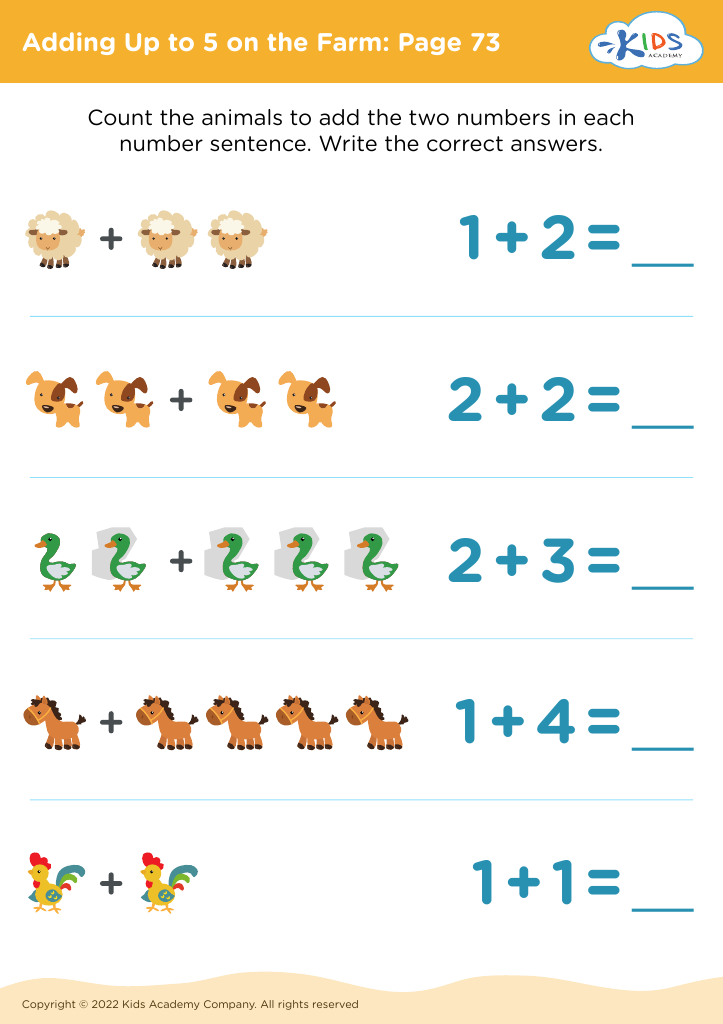
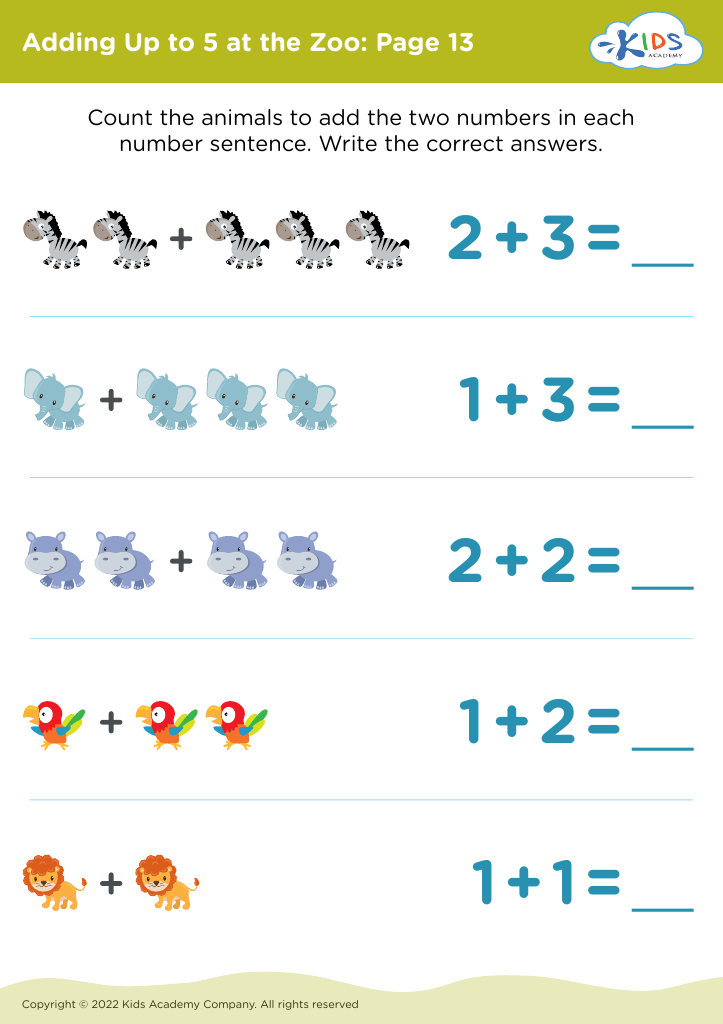
Animal identification fosters cognitive development, as young minds begin to categorize and distinguish between different species. When merged with math, this practice strengthens foundational skills like counting, recognizing patterns, and understanding classifications. For instance, children can count the number of legs on various animals, group animals based on their types (mammals, birds, insects), or compare sizes and quantities, instilling basic arithmetic concepts in a fun and engaging manner.
Beyond cognitive gains, connecting math to animals helps reinforce memory and retention. Kids are more likely to remember mathematical principles when they are associated with interesting and vivid examples. Additionally, this fusion nurtures a holistic educational approach, promoting linguistic development as children learn animal names and descriptive vocabulary, alongside fostering emotional growth through empathy and care for living creatures.
In essence, early incorporation of animal identification with math fortifies a multi-dimensional understanding and appreciation of the world for young learners, setting a solid groundwork for future academic and personal growth.








