Comparing objects Math Worksheets for Ages 3-4
6 filtered results
-
From - To
Explore our engaging "Comparing Objects Math Worksheets" designed specifically for children ages 3-4! These worksheets provide young learners with fun and interactive activities to develop their comparison skills. By sorting, comparing sizes, and identifying similarities and differences, preschoolers will strengthen their critical thinking and observation abilities. Our colorful illustrations and hands-on exercises make learning enjoyable while building the foundation for future math concepts. Perfect for parents and teachers alike, these worksheets can be easily printed for at-home or classroom use. Start your child’s mathematical journey today with these essential comparison activities that promote early math success!
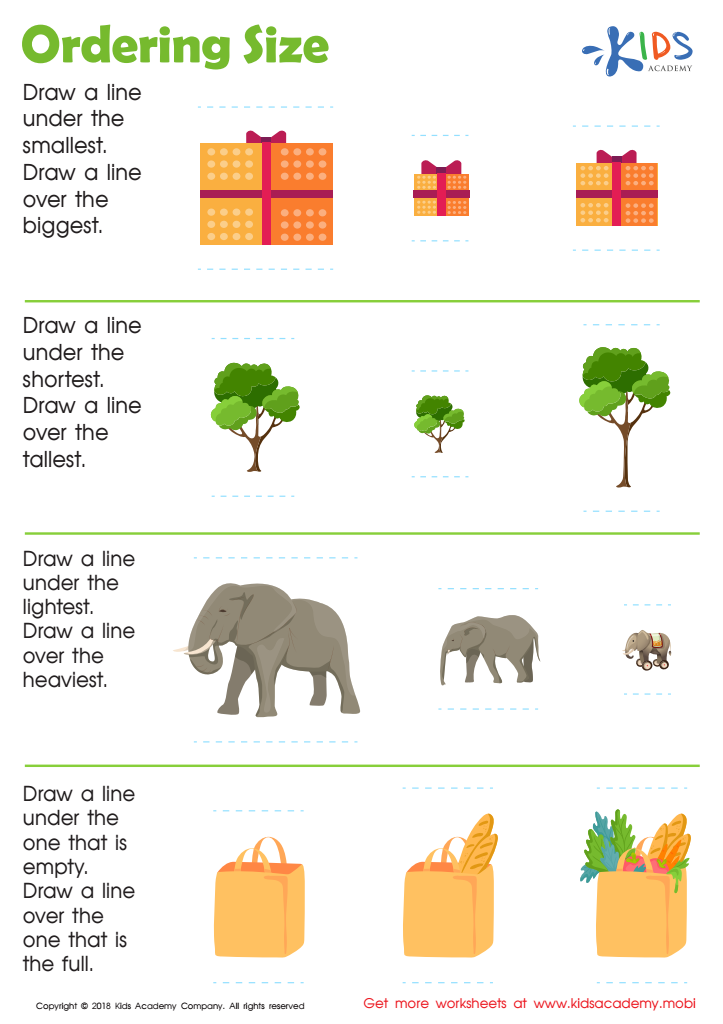
Ordering Size Worksheet
 Assign to My Students
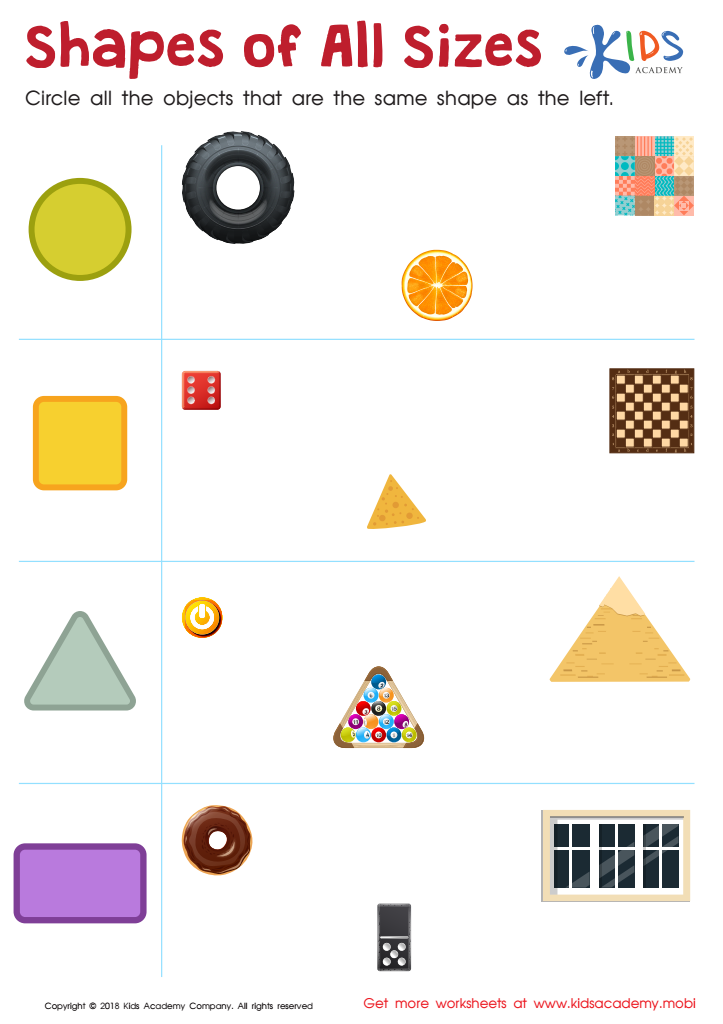
Shapes of All Sizes Worksheet
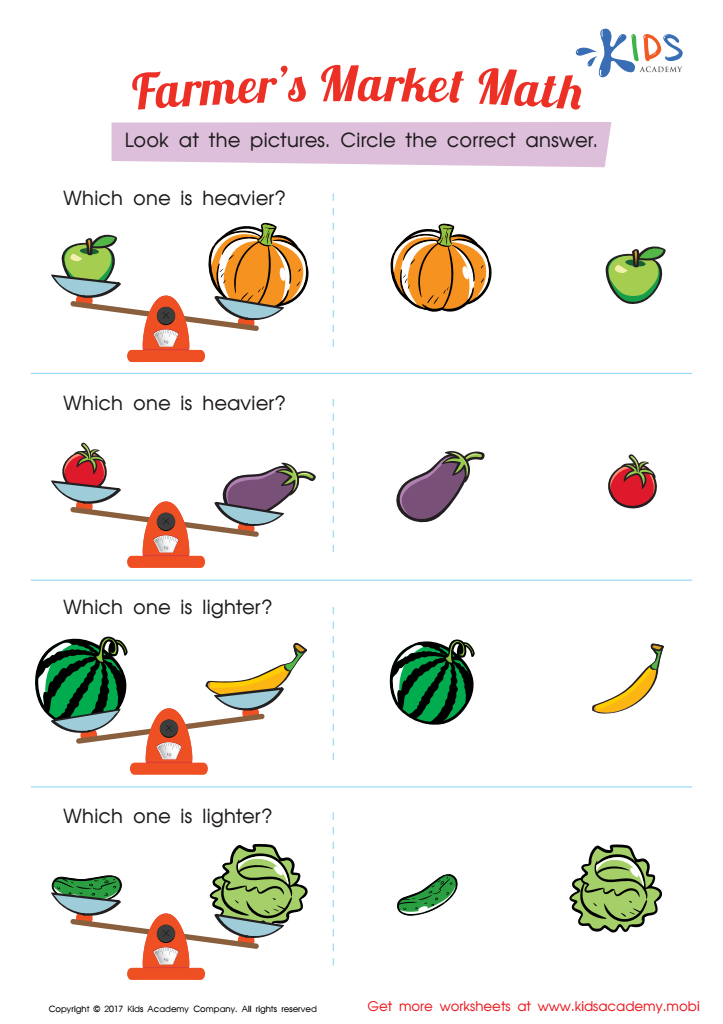
Which One Is Heavier Worksheet
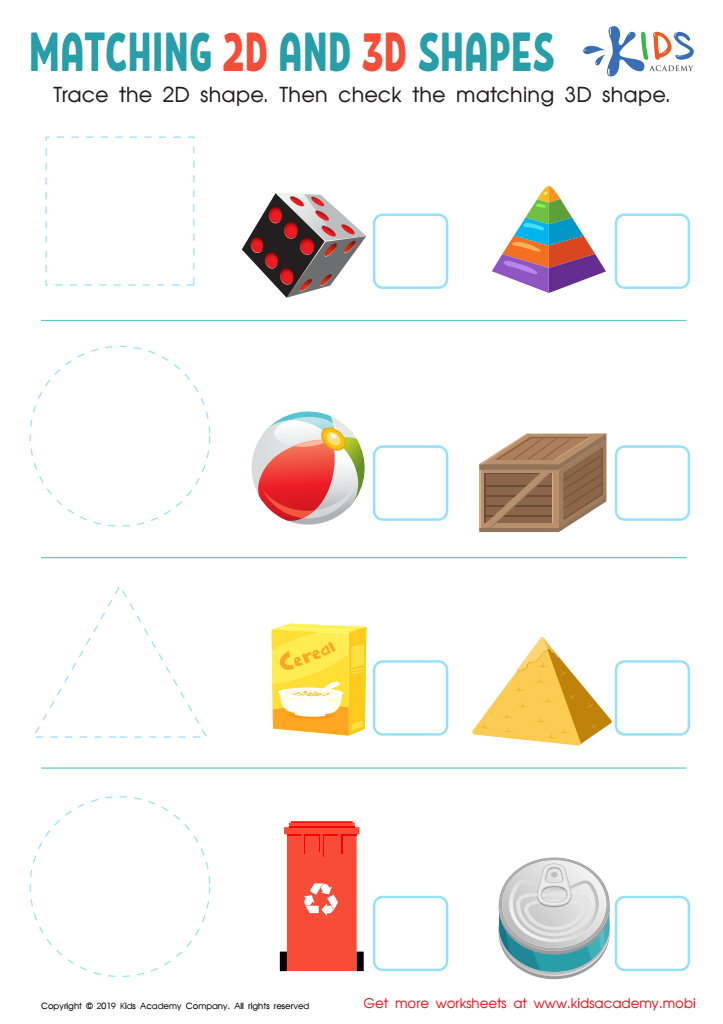
Matching 2D and 3D Shapes Worksheet
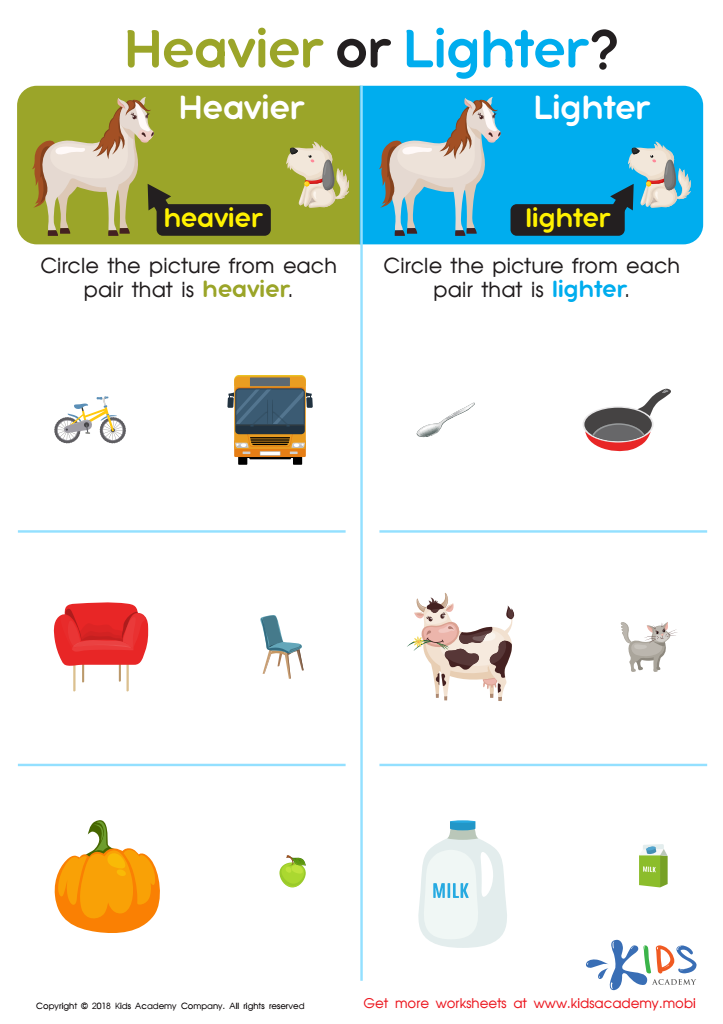
Heavier or Lighter? Worksheet
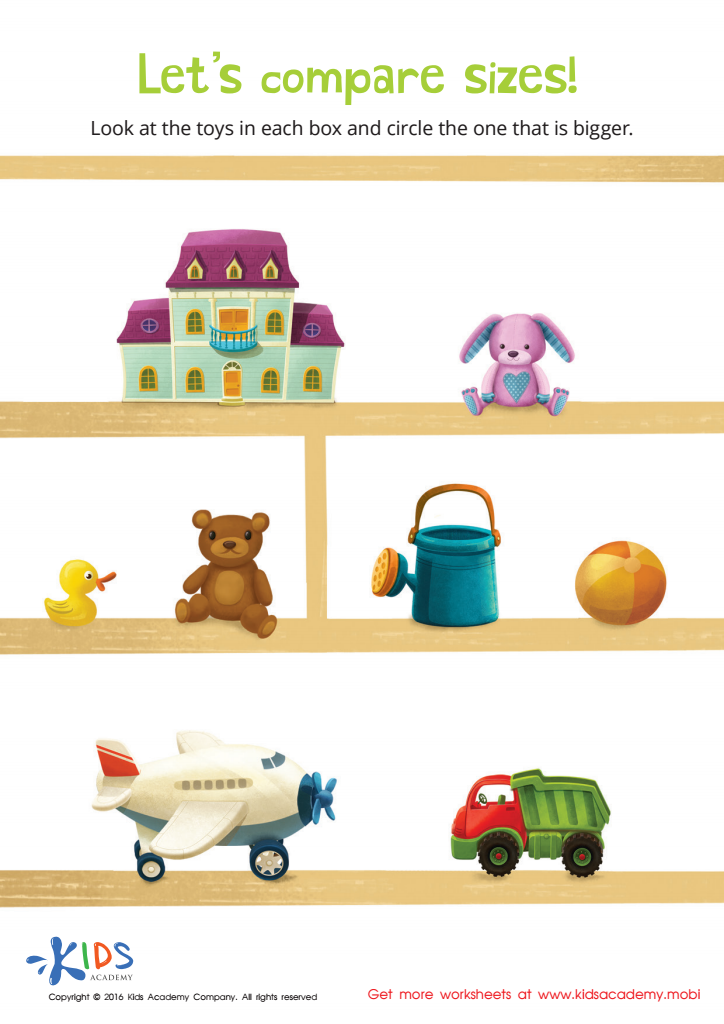
Classifying by Size Sorting Worksheet


.jpg)





Comparing objects is a fundamental mathematical concept that plays a crucial role in early childhood development, particularly for children aged 3-4. For parents and teachers, nurturing this skill is vital for fostering a child's cognitive growth, problem-solving abilities, and preparation for more complex math later in life.
At this age, children are naturally curious and eager to explore their environment. Engaging them in comparing objects, such as size, weight, or quantity, lays the groundwork for understanding fundamental math concepts like measurement and numeracy. These activities help enhance their observational skills and vocabulary, enabling them to express ideas and concepts more effectively.
Moreover, comparing objects fosters critical thinking and encourages children to ask questions, such as “Which is bigger?” or “How many do we have?” This not only builds mathematical intuition but also promotes social interaction when children share their observations and compare findings with peers or parents.
Ultimately, when parents and teachers prioritize comparing objects in playful, hands-on experiences, they create a solid foundation for a child’s mathematical journey. By valuing these early learning moments, they empower children with essential skills that positively impact their overall educational trajectory.








