
Improve counting skills Math Worksheets for Ages 3-4
9 filtered results
Difficulty Level
Grade
Age
-
From - To
Subject
Activity
Standards
Our "Improve Counting Skills" math worksheets are perfect for children aged 3-4, designed to make learning fun and effective. These worksheets employ engaging visuals and playful exercises to help young learners grasp basic counting principles. Each activity is carefully crafted to build confidence and numeracy skills, from counting objects to recognizing numbers. With vibrant illustrations and interactive tasks, these printable sheets encourage hands-on learning and help little ones develop a strong math foundation. Ideal for home or preschool practice, our counting worksheets make mastering early math concepts a joyful adventure for your child!
Favorites
With answer key
Interactive
 Assign to My Students
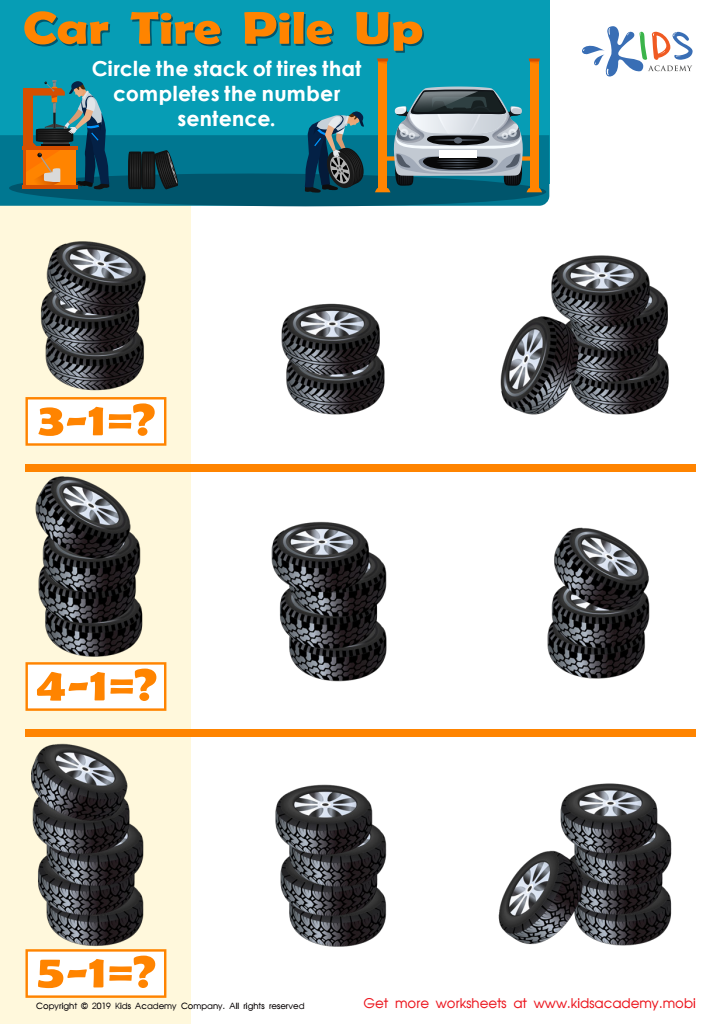
Car Tire Pile Up Worksheet
Examine the pic with your kids. Can they recognize the items piled up? The tires are organized in different quantities. Equations are on the left. Have your children work out the equations, counting the tire stacks to identify the correct answer.
Car Tire Pile Up Worksheet
Worksheet
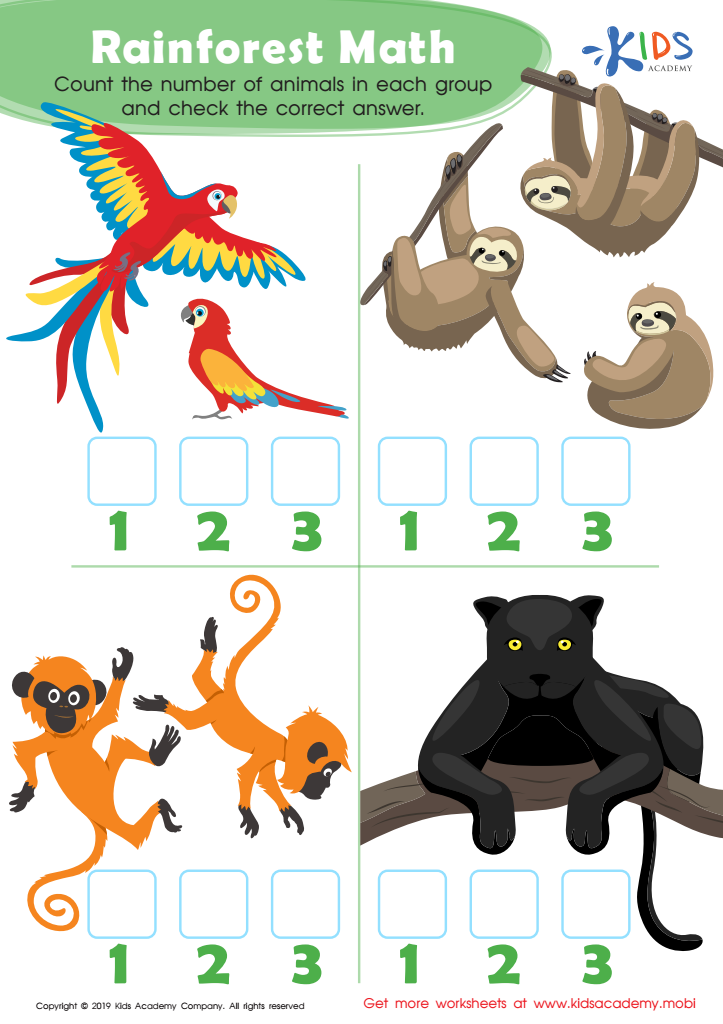
Rainforest Math Worksheet
Kids love learning about rainforest animals! This worksheet helps them with counting and number sense. It features recognizable rainforest animals and asks children to choose the correct number from the answer choices. It's a fun way for children to build their skills - without even knowing it!
Rainforest Math Worksheet
Worksheet
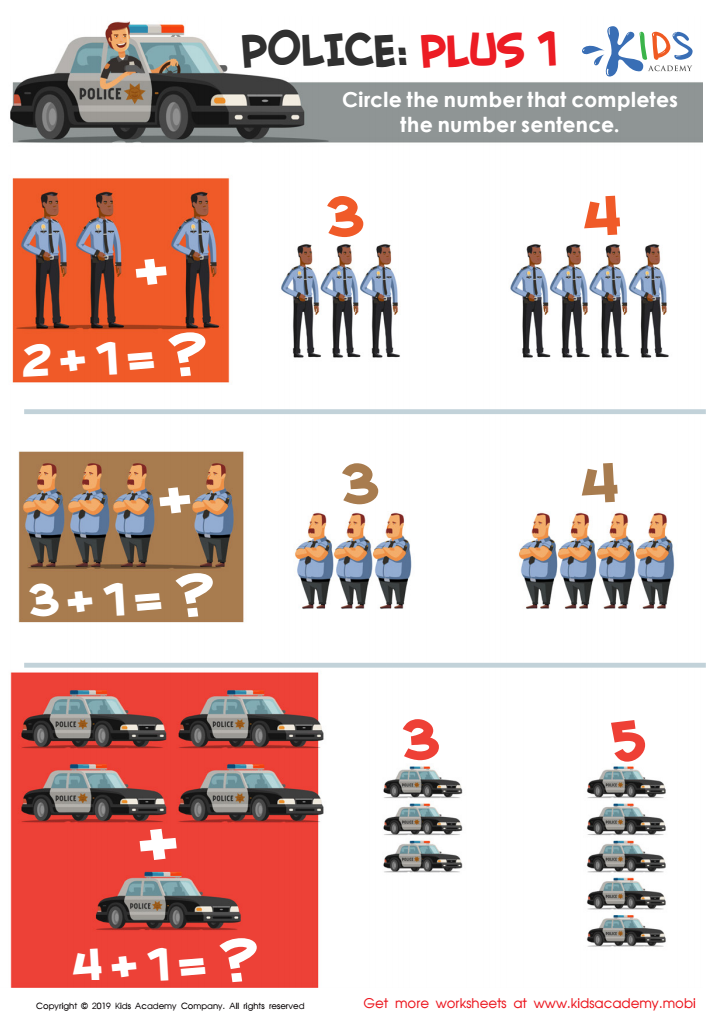
Police: Plus 1 Worksheet
Help your kids count the policemen in the worksheet and circle the number that completes the number sentence. It's a great way to improve their counting and addition skills. Discuss with your kids how policemen contribute to the community too.
Police: Plus 1 Worksheet
Worksheet
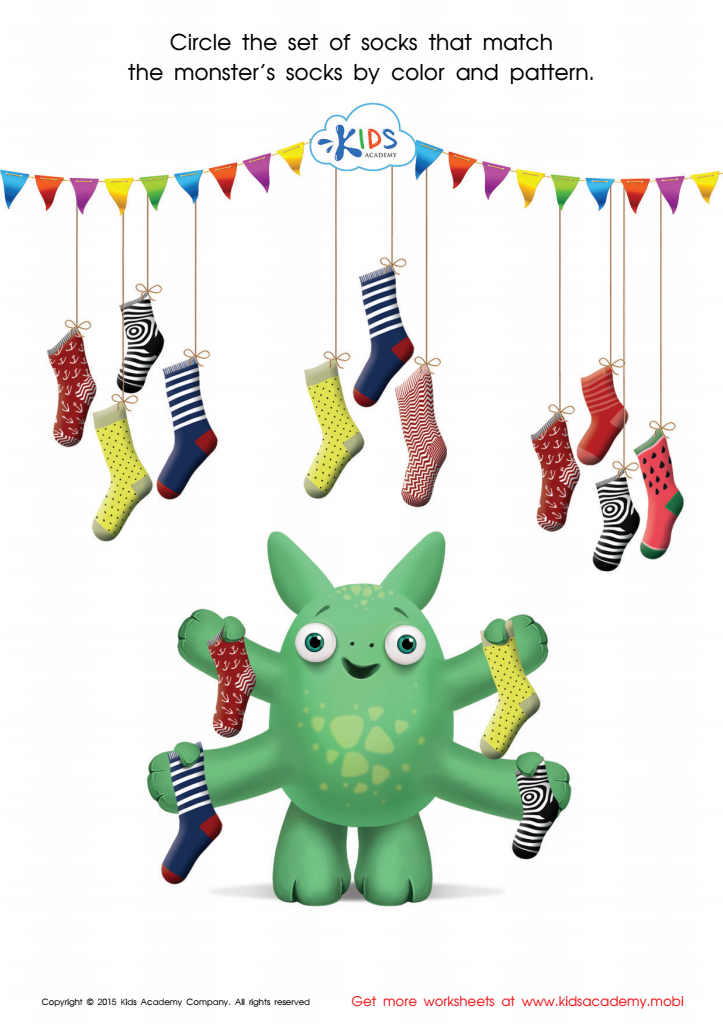
Connecting the Monster's Socks Printable
The cute monster did some washing yesterday, but now he can't put his socks back together! Children must focus on the color and pattern to make the right matches, improving their cognitive and fine motor skills. Get more educational games by Kids Academy!
Connecting the Monster's Socks Printable
Worksheet
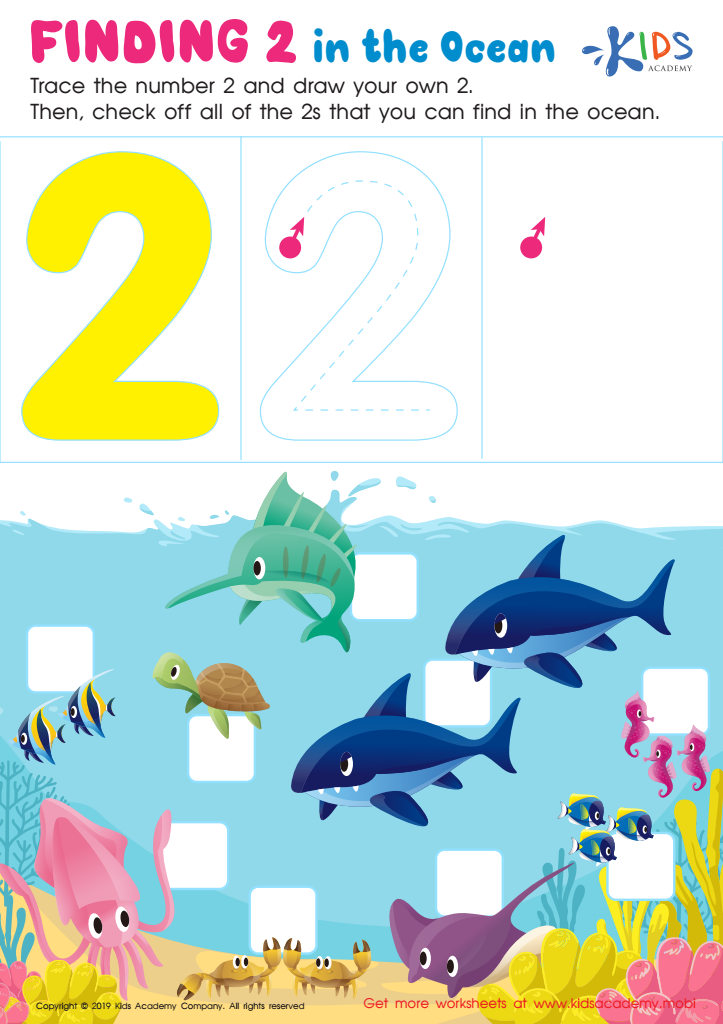
Finding 2: In the Ocean Worksheet
Kids start their math journey with basic numbers. Finger counting, number representation with pictures and this worksheet help build number sense. Kids trace lines and dots to write the number two and identify groups of two sea creatures for easy success and to feel proud of their math skills.
Finding 2: In the Ocean Worksheet
Worksheet
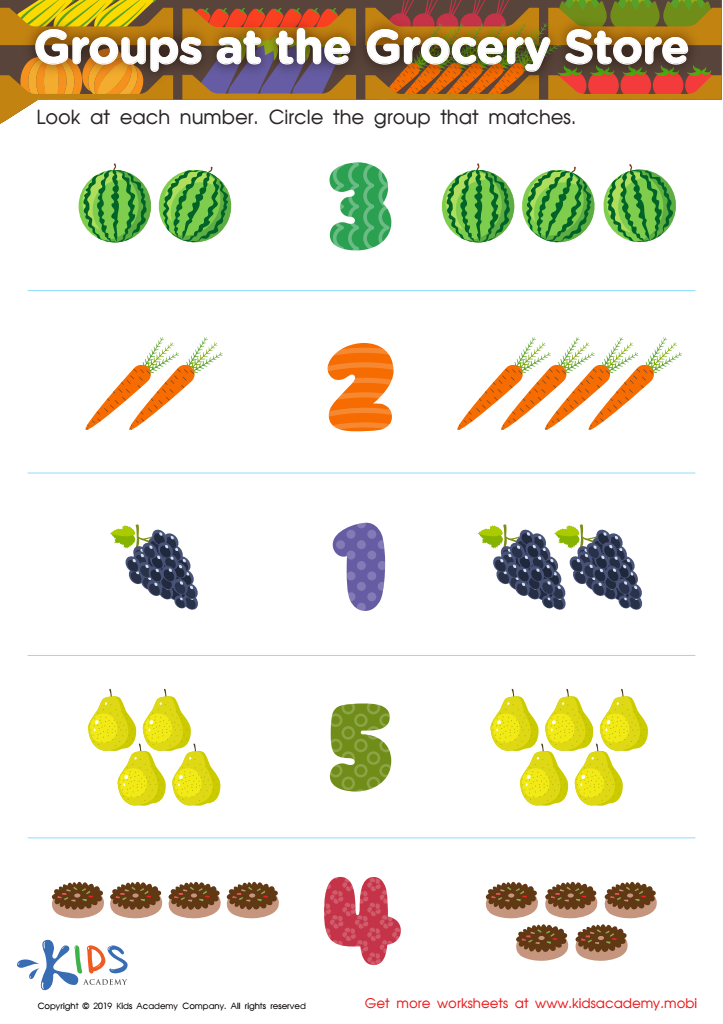
Groups at the Grocery Store Worksheet
Help your kids learn about counting with this worksheet! Look at each group of objects and circle the one that matches. It's a fun way to support what they're learning at school and give them a boost in counting.
Groups at the Grocery Store Worksheet
Worksheet
Join Kids Academy for Free
Who is primarily going to use this learning content?





.jpg)

Developing counting skills in children ages 3-4 is foundational for their academic and everyday life success. At this age, children are naturally curious and rapidly developing their cognitive capabilities. Introducing them to counting sets the stage for numeracy, an essential skill that extends far beyond math class, touching on critical thinking, problem-solving, and even early literacy.
Counting teaches children the concept of numbers and quantity, which is fundamental to understanding more complex mathematical ideas later on. This early skill aids in recognizing patterns, understanding sequences, and grasping the basics of addition and subtraction. By counting objects, fingers, or toys, children also improve their fine motor skills and hand-eye coordination.
Moreover, strong counting skills foster a sense of achievement and confidence. As children master counting, they feel proud and motivated to learn more. This confidence can positively influence their overall attitude towards education, making them more engaged and eager learners.
For teachers and parents, embedding counting in daily routines—such as counting steps, apples at snack time, or blocks during play—creates a rich, interactive learning environment. Such consistent practice helps children internalize these fundamental skills in a fun and meaningful way.
Therefore, caring about counting skills ensures children have a robust foundation in mathematics while nurturing a lifelong love for learning.








