Improving observation Math Worksheets for Ages 3-4
3 filtered results
-
From - To
Explore our engaging "Improving Observation Math Worksheets for Ages 3-4" designed to enhance your child's critical observation skills while making learning fun! These worksheets incorporate playful visuals and interactive tasks that encourage young learners to identify patterns, colors, and shapes, building their foundational math skills. Perfect for preschoolers, our activities promote cognitive development through hands-on experiences, fostering a love for learning early on. Parents and educators can easily access and print these resources for classrooms or home use. Unlock your child's potential and watch them thrive in math literacy with our thoughtfully crafted worksheets tailored for inquisitive minds!
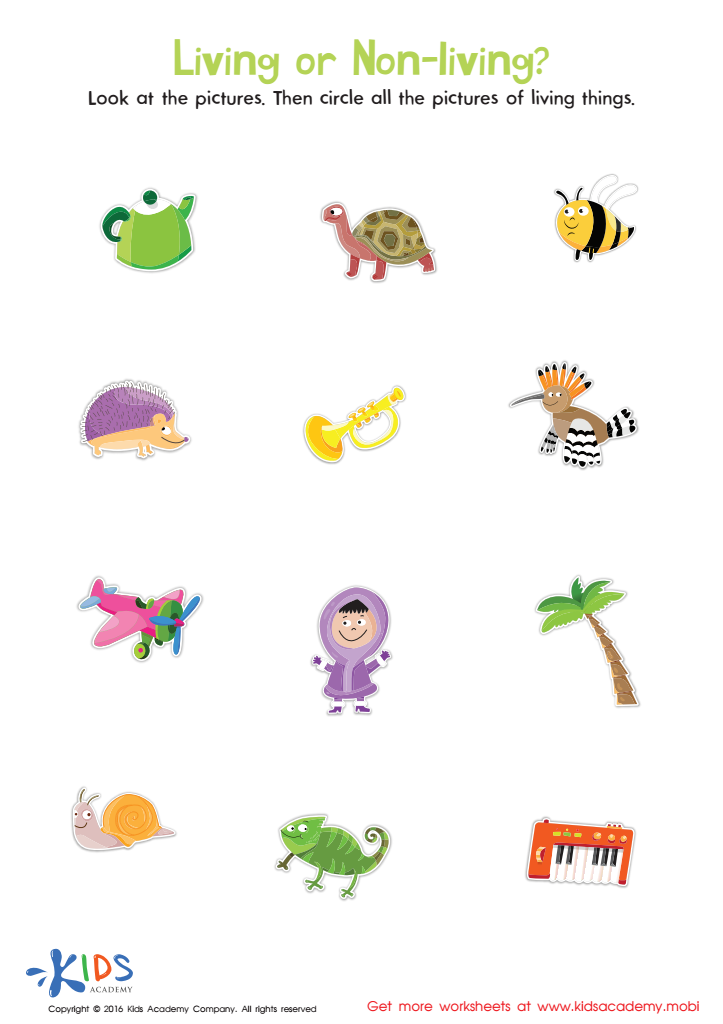
Identifying Living and Non–living Things Sorting Worksheet
 Assign to My Students
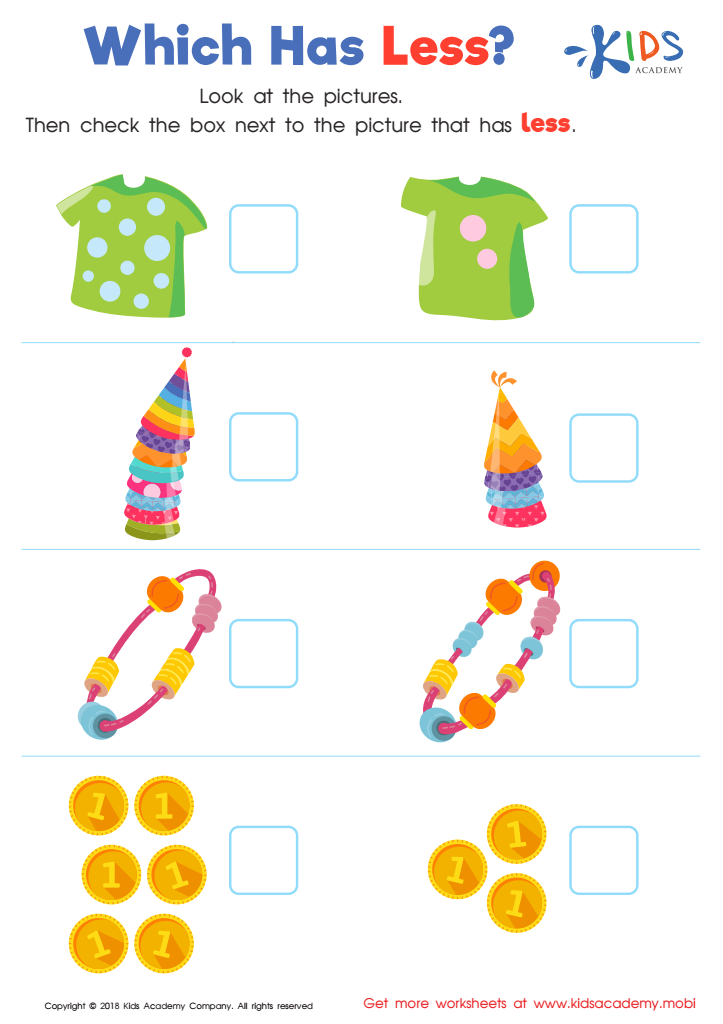
Which Has Less? Worksheet
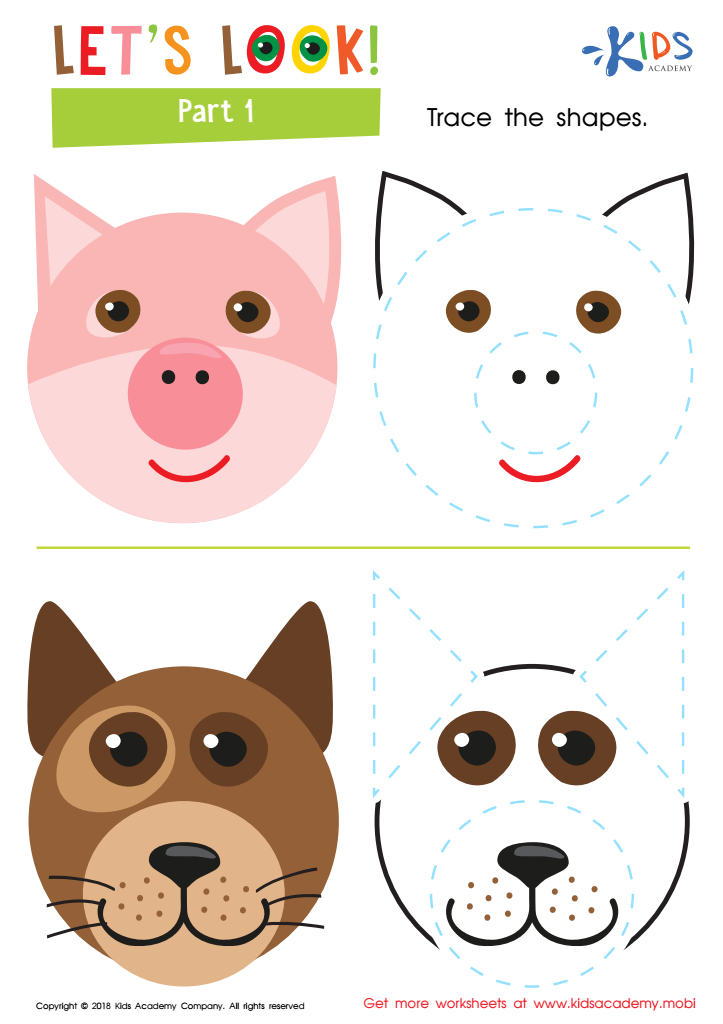
Let's Look! Part 1 Worksheet







Improving observation in math for children ages 3-4 is crucial for several reasons. At this developmental stage, children are naturally curious and eager to explore their surroundings. Fostering a strong foundation in mathematical concepts enhances their cognitive skills, enabling them to recognize patterns, classify objects, and understand basic numerical concepts. Observational math encourages hands-on learning experiences that make these concepts tangible.
Parents and teachers play a pivotal role in nurturing this essential development. By improving their observation skills, they can identify and leverage opportunities for informal learning in everyday activities, such as counting snacks, sorting toys, or comparing sizes. This helps weave math into natural interactions, making learning more engaging and relatable for young children.
Additionally, early exposure to mathematics sets the groundwork for later academic success. Research indicates that positive early experiences with math lead to more confidence and competence in math subjects throughout a child's educational journey. Furthermore, honing observation skills allows adults to tailor their teaching strategies to meet individual child needs, thereby supporting diverse learning styles. Ultimately, investing in improving observation math sets children on a path toward critical thinking, problem-solving, and lifelong learning, confirming that early math skills are fundamental to overall development and future academic achievement.








