Mathematical problem-solving Math Worksheets for Ages 3-4
4 filtered results
-
From - To
Enhance your child's early math skills with our engaging Mathematical Problem-Solving Worksheets for ages 3-4. Designed to foster critical thinking and foundational math understanding, these worksheets provide colorful, interactive activities that make learning fun. Each worksheet encourages children to explore basic concepts through playful challenges, nurturing their ability to recognize patterns, categorize items, and solve simple equations. Ideal for home or classroom use, our worksheets are crafted to promote cognitive development and boost confidence in young learners. Watch your child’s love for math grow while they develop essential problem-solving skills that will benefit them in future academic endeavors.
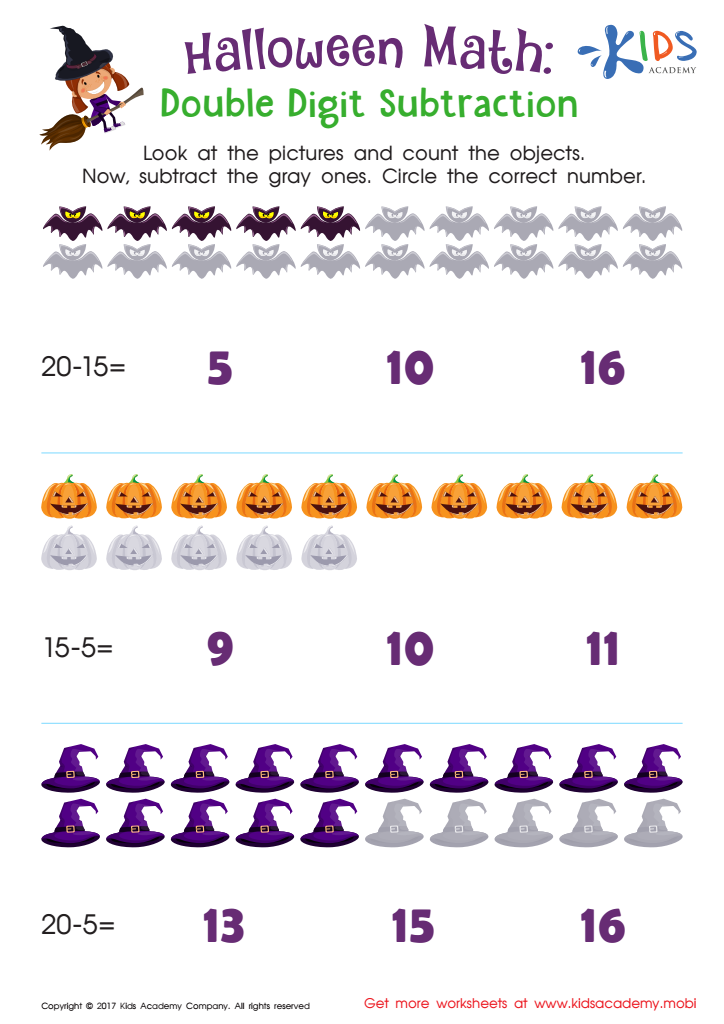
Halloween Math Subtraction Worksheet
 Assign to My Students
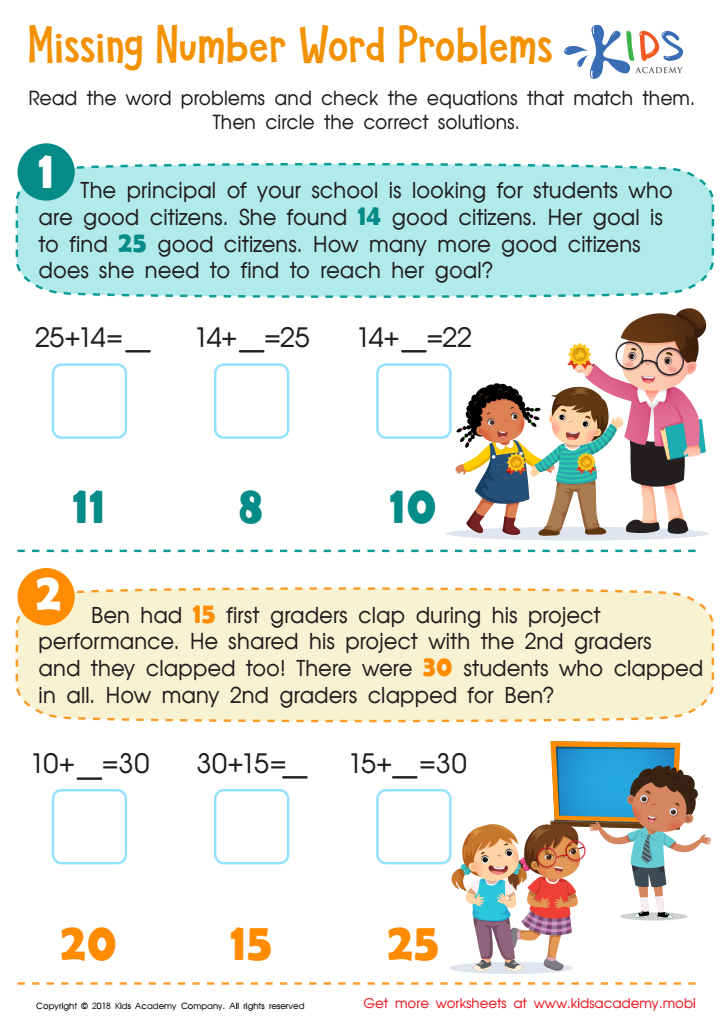
Missing Number Word Problems Worksheet
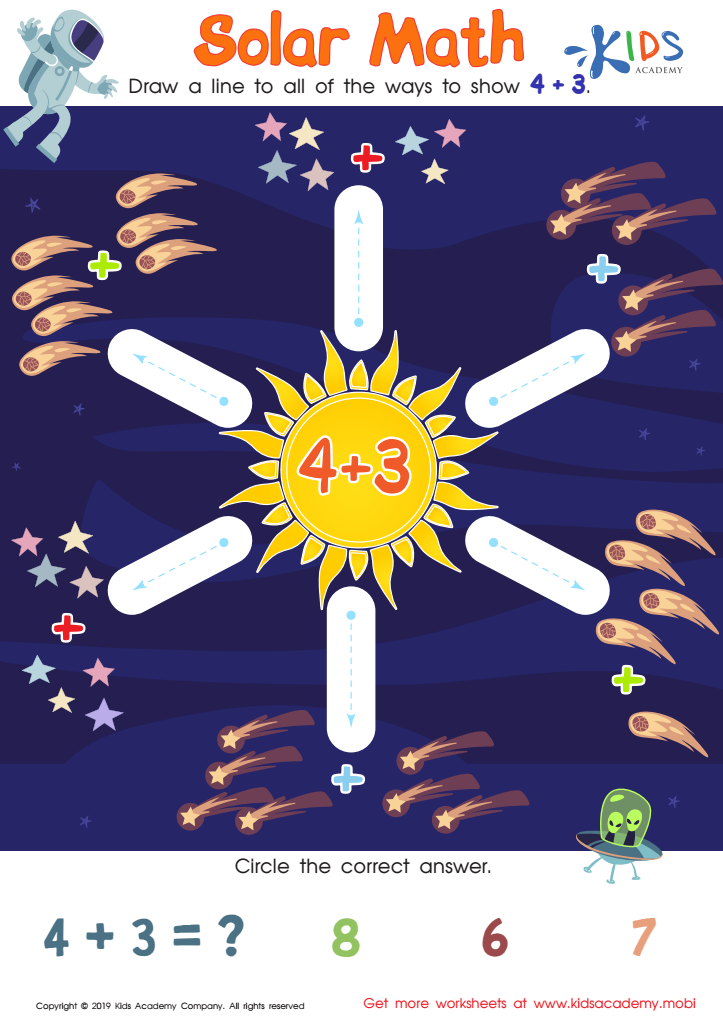
Solar Math Worksheet
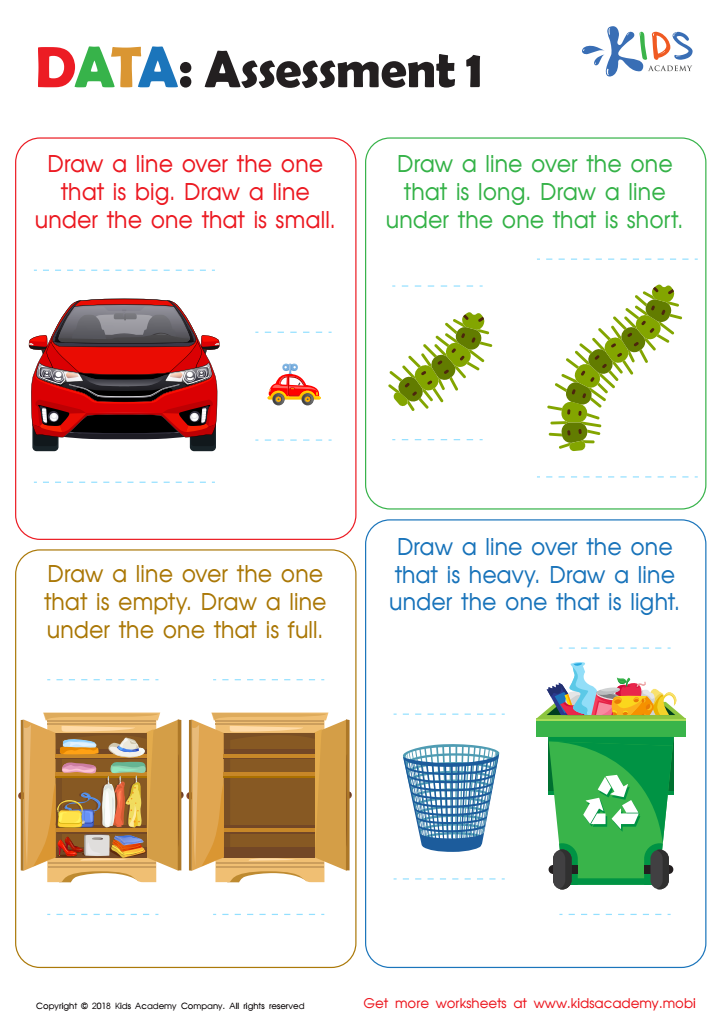
Data: Assessment 1 Worksheet








Mathematical problem-solving is foundational for children's cognitive development and sets the stage for lifelong learning. For ages 3-4, engaging with math goes beyond basic counting; it promotes critical thinking and nurtures creativity. At this age, children explore concepts such as patterns, shapes, and measurements through play and everyday experiences, fostering their inherent curiosity.
Parents and teachers should care about mathematical problem-solving because it enhances reasoning and promotes a growth mindset. When young learners tackle problems—whether sorting toys, measuring ingredients for a simple recipe, or identifying patterns in nature—they develop persistence and learn that challenges can lead to understanding. These experiences help nurture resilience, as they learn that making mistakes is part of the learning process.
Furthermore, early exposure to math in a fun, engaging context empowers children to view math positively, combating negative attitudes toward the subject later in life. Fostering these skills at an early age influences future academic achievement and career opportunities. By integrating math into everyday activities and playful interactions, parents and teachers can build a solid foundation that enriches children's development, preparing them for more complex mathematical concepts in the years to come.








