Money counting skills Math Worksheets for Ages 3-4
3 filtered results
-
From - To
Enhance your child's early math abilities with our engaging Money Counting Skills Math Worksheets designed for ages 3-4. These worksheets provide a fun and interactive way for little learners to explore the concepts of money and counting through colorful visuals and relatable scenarios. As children practice identifying coins and understanding their values, they develop essential early numeracy skills while fostering excitement for math. Perfect for both home and classroom use, our printable worksheets will encourage kids to recognize coins, match values, and solve simple problems, setting a solid foundation for future financial literacy. Start counting and learning today!
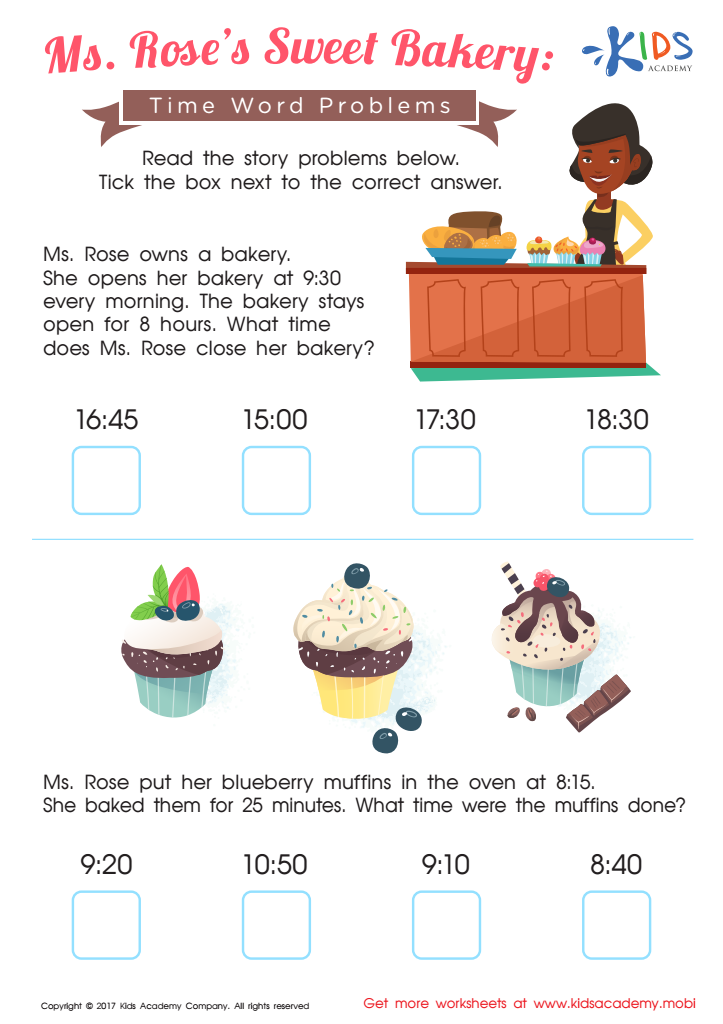
Ms. Roseв's Sweet Bakery Time Worksheet
 Assign to My Students
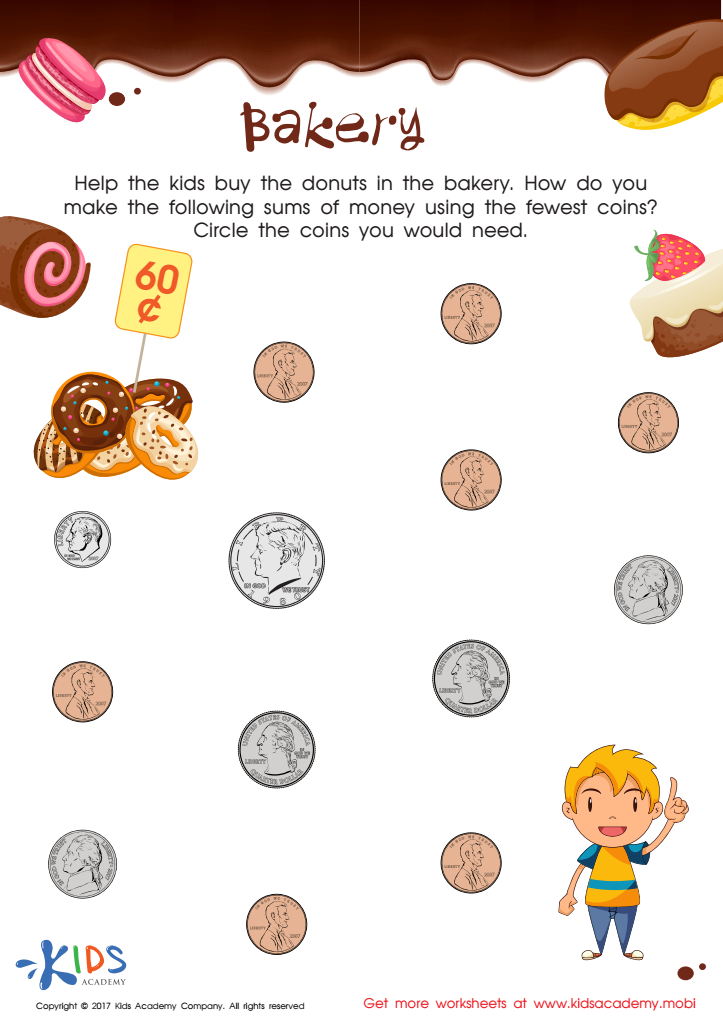
Counting Coins Worksheet
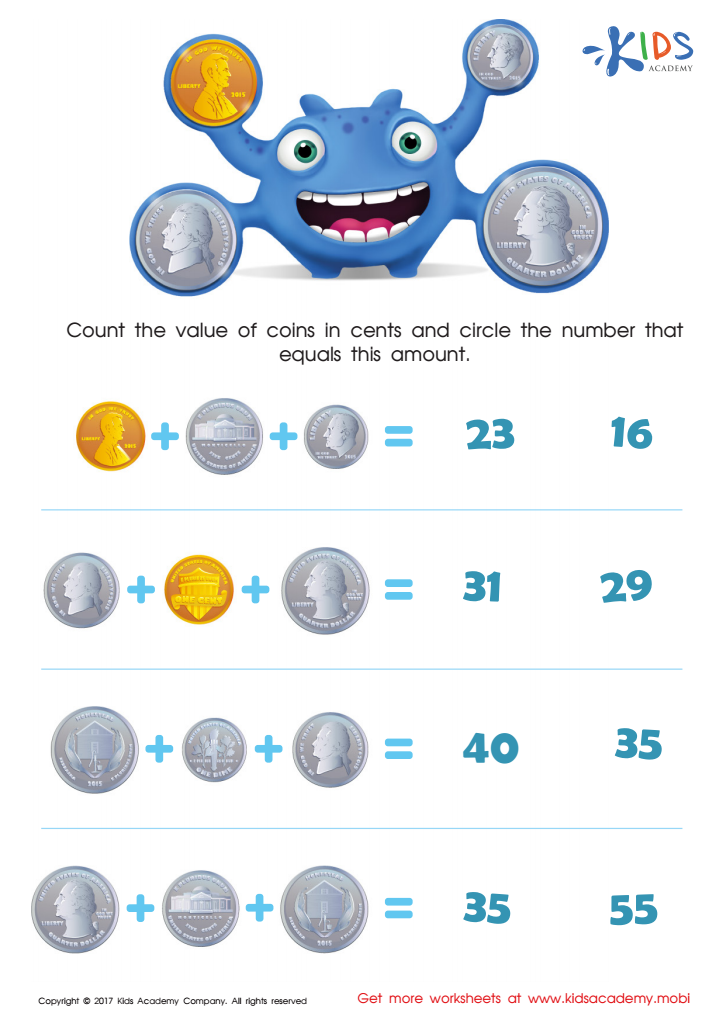
Counting the Coins Money Worksheet








Money counting skills for children aged 3-4 are fundamental in laying the groundwork for financial literacy and math proficiency. Developing these skills at an early age fosters a sense of responsibility, critical thinking, and problem-solving that is vital for lifelong learning. By engaging children in money counting activities, such as using play money or participating in simple role-play scenarios at a “store,” parents and teachers can create an interactive and engaging environment that introduces basic mathematical concepts like addition and subtraction.
Moreover, familiarity with money helps young learners understand the value of items and the importance of saving versus spending. This awareness not only enhances cognitive skills but also promotes better decision-making as they grow. When children learn to count money, they practice essential fine motor skills and improve their ability to recognize numbers, encouraging overall mathematical development.
Involving children in money-oriented activities supports socio-emotional skills through collaboration and communication as they interact with peers or adults. Ultimately, counting money is more than just a math skill; it cultivates confidence and prepares children for future academic challenges and real-life scenarios. Parents and teachers play a crucial role in nurturing this learning journey, empowering children with the skills they need for a successful future.








