Subtraction practice Math Worksheets for Ages 3-4 - Page 3
50 filtered results
-
From - To
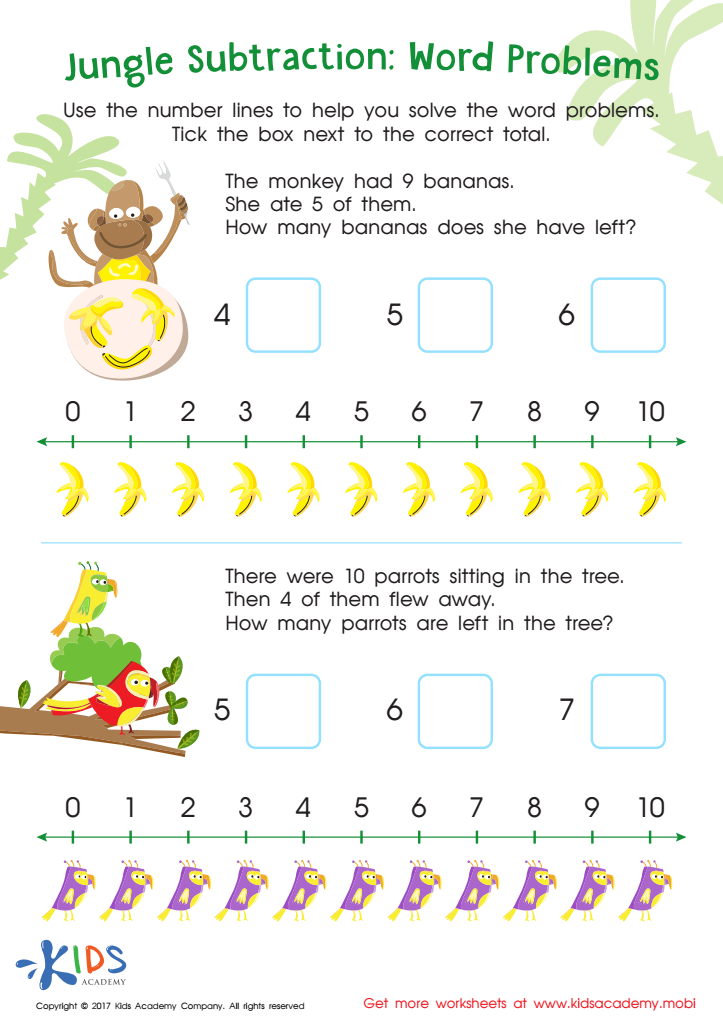
Jungle Subtraction Word Problems Substraction Worksheet
 Assign to My Students
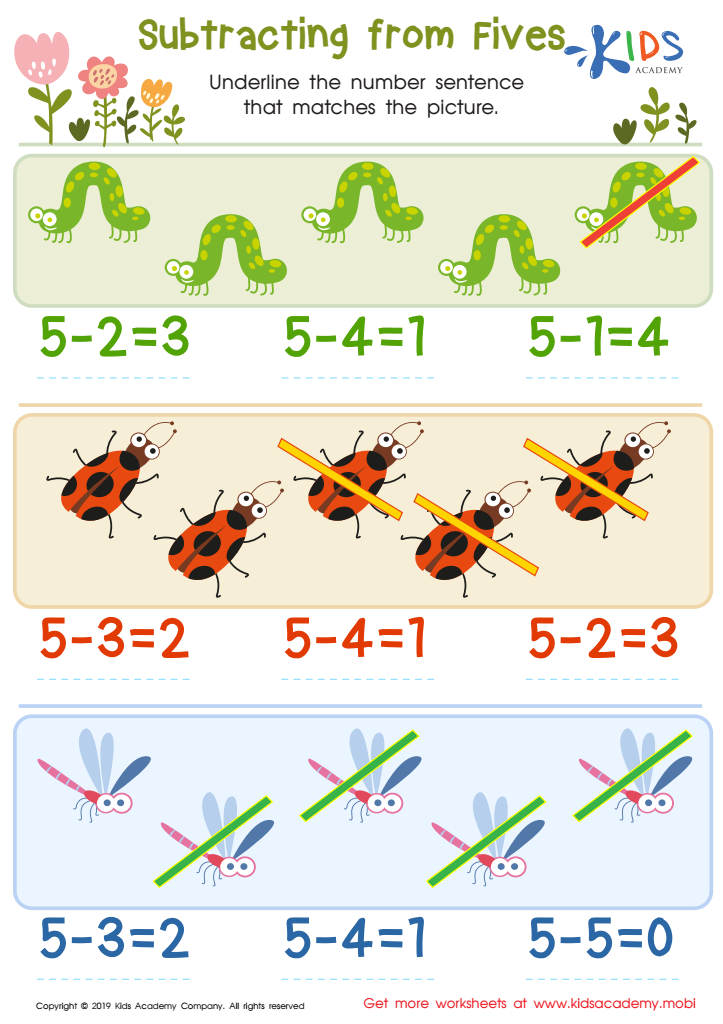
Subtracting From Fives Worksheet








Subtraction practice for ages 3-4 is crucial for early mathematical development. At this stage, children's cognitive abilities are rapidly growing, helping them understand basic concepts of quantity and number relationships. Engaging in subtraction activities fosters critical thinking and problem-solving skills, laying a strong foundation for future math learning.
Parents and teachers should care about subtraction practice because it promotes number sense. Recognizing how to take away a quantity helps children grasp the entirety of counting and the value of numbers. This foundational skill positively impacts their ability to perform more complex calculations in later years.
Moreover, early subtraction exercises can be made engaging and fun. Using visual aids such as blocks or fun stories can capture children's attention, making learning an enjoyable experience. This positive association with math during crucial formative years encourages a lifelong love of learning.
Lastly, subtraction skills aid in overall cognitive development and improve fine motor skills through hands-on activities. By nurturing these math abilities early on, parents and teachers are investing in children's long-term academic success, ensuring they're better prepared for the challenges of formal education.








