
Visual Perception Skills Math Worksheets for Ages 3-4
10 filtered results
Difficulty Level
Grade
Age
-
From - To
Subject
Activity
Standards
Enhance your child's learning experience with our Visual Perception Skills Math Worksheets designed specifically for ages 3-4! These engaging worksheets help young learners develop essential visual perception abilities necessary for math readiness. Through fun activities, children will sharpen their skills in recognizing shapes, patterns, and spatial relationships, laying a strong foundation for future math concepts. All worksheets are colorful and interactive, making learning enjoyable and effective. Encourage your little ones to explore, observe, and enhance their cognitive skills in a playful manner. Visit our page for printable worksheets that will kickstart your child's journey toward mathematical success today!
Favorites
With answer key
Interactive
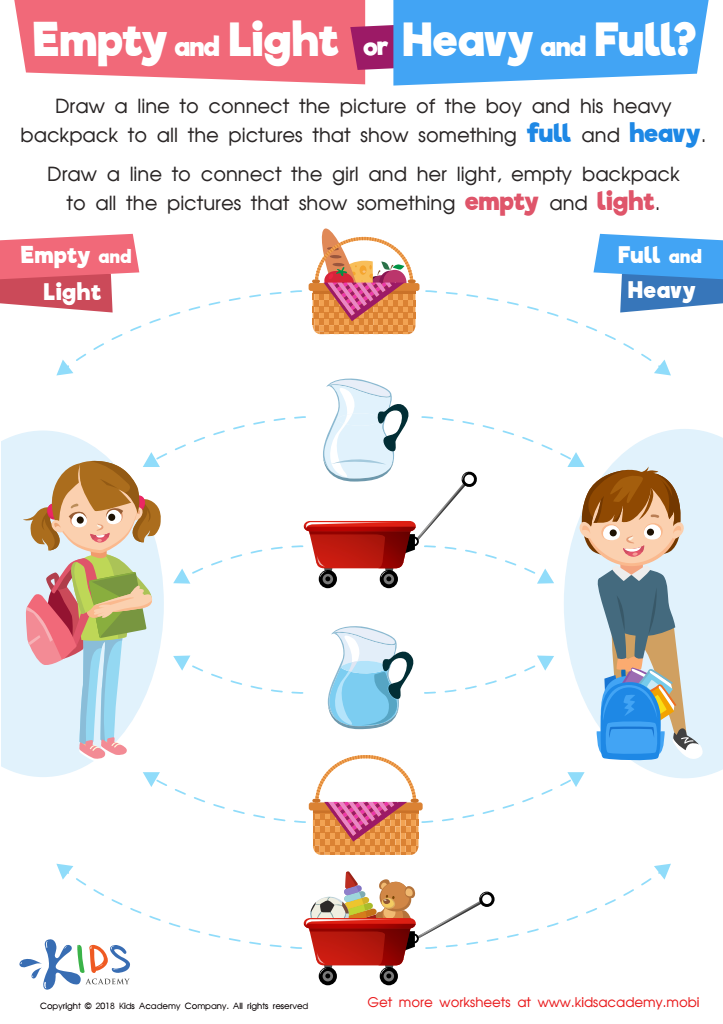
Empty and Light or Heavy and Full? Worksheet
Kids can have trouble understanding measurement, like the differences between heavy and light. This worksheet helps them associate full with heavy and empty with light, using familiar images. Plus, it's a fun way to practice fine motor skills, tracing the lines to connect the pictures.
 Assign to My Students
Empty and Light or Heavy and Full? Worksheet
Worksheet
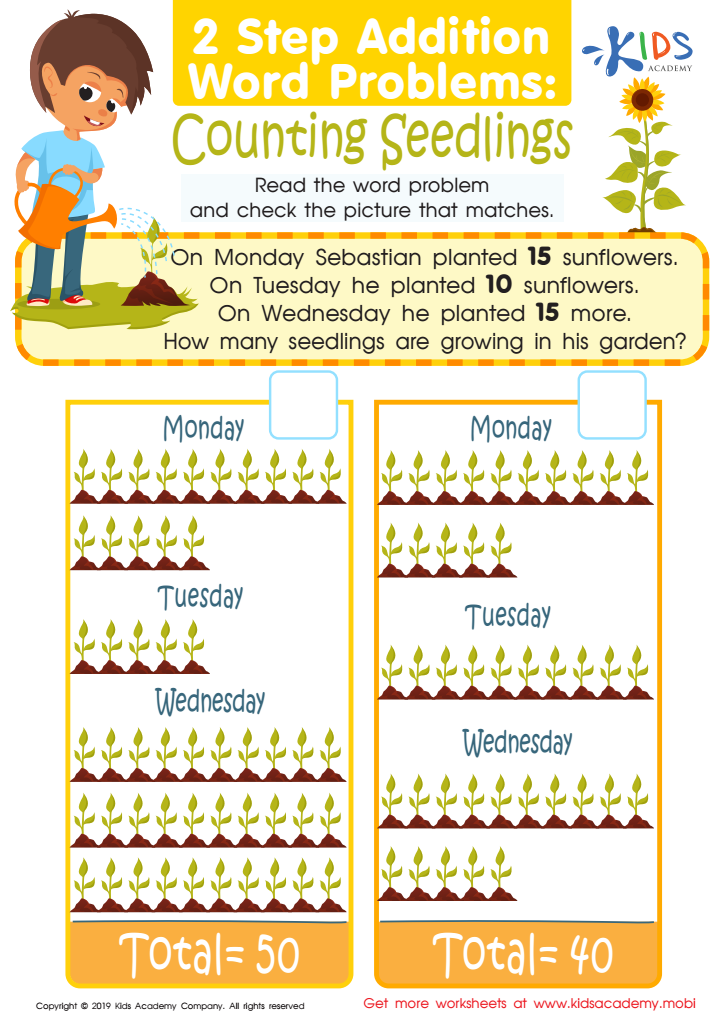
Counting Seedlings Worksheet
Understanding math word problems is key. Multiple steps can prove challenging - this free worksheet provides one-to-one picture representation to help kids solve multi-step addition word problems. Strengthen addition skills by choosing the matching picture to the answer.
Counting Seedlings Worksheet
Worksheet
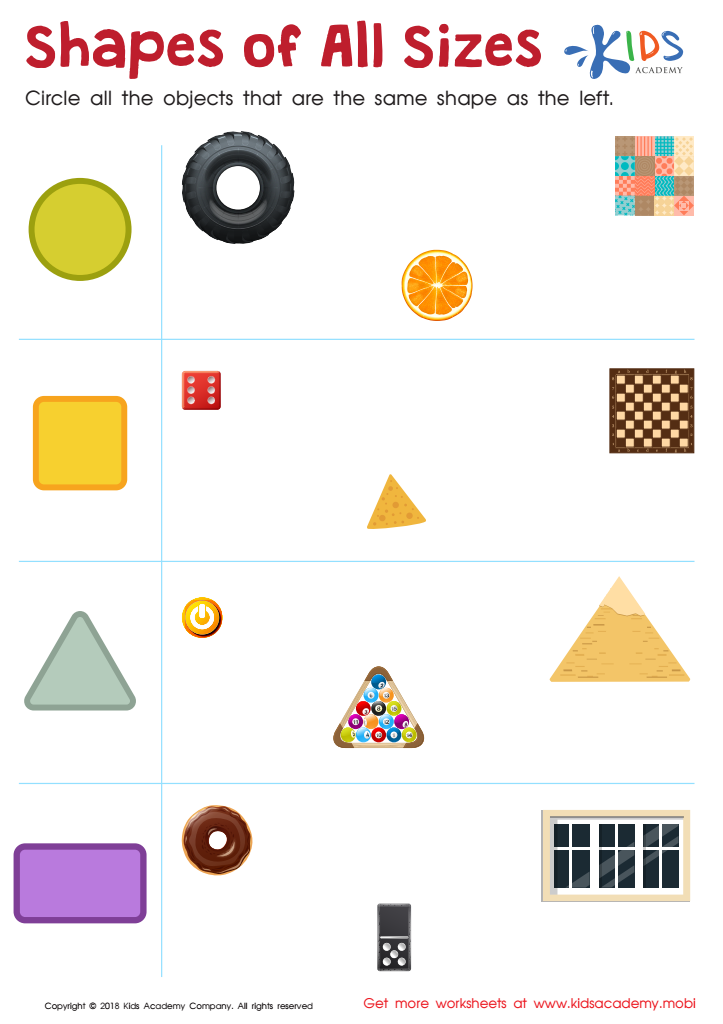
Shapes of All Sizes Worksheet
Students will have fun comparing basic shapes to familiar objects with this worksheet. It's an excellent way to help them recognize similarities in geometric shapes, building strong foundations for understanding congruence and similarity.
Shapes of All Sizes Worksheet
Worksheet
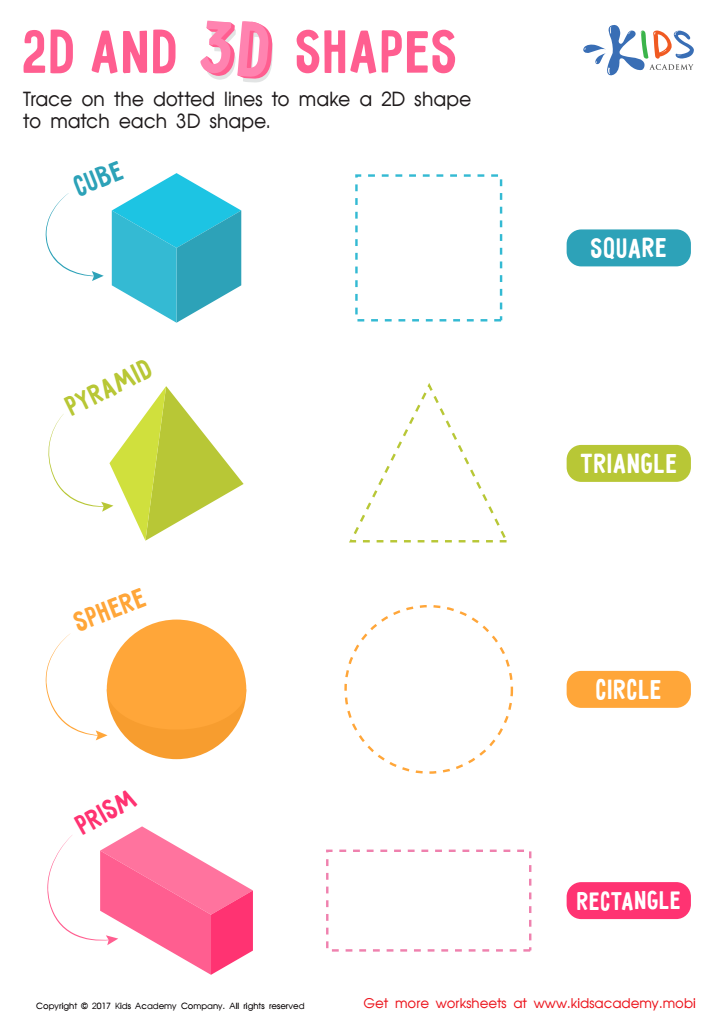
2D and 3D Shapes Worksheet
Introduce your child to 3D and 2D with this traceable worksheet. With dotted lines, help them trace and make a 2D shape for each 3D shape: square, triangle, rectangle, and circle. Show them there's more than one way to draw! You may have taken them to a 3D movie, or they've seen some fantastic 3D art. Now they can wonder no more.
2D and 3D Shapes Worksheet
Worksheet
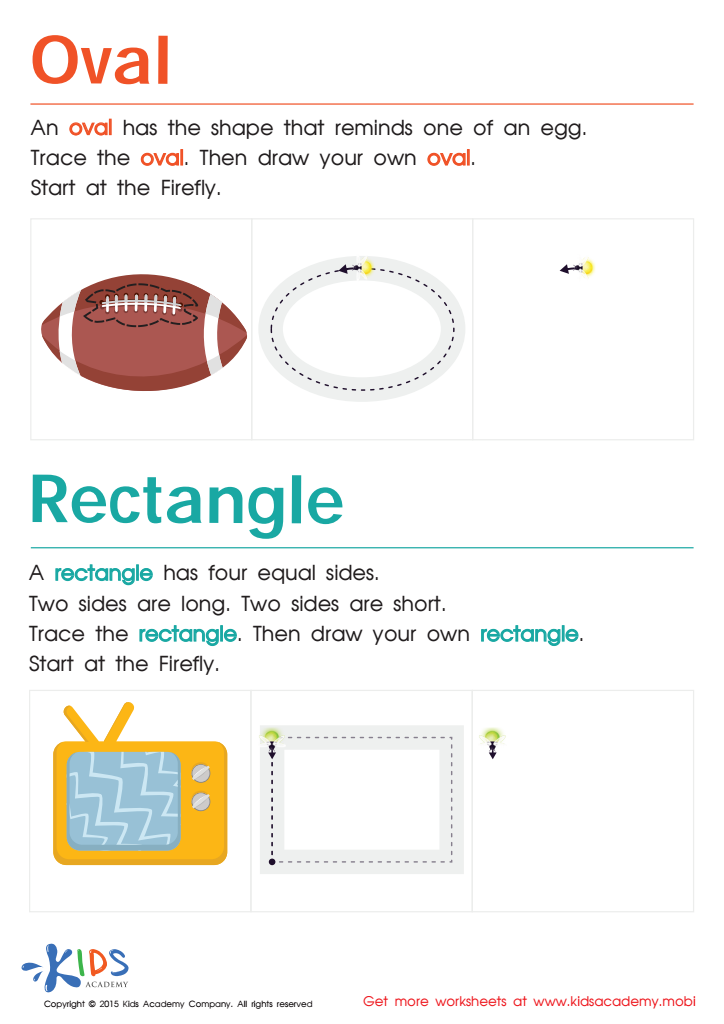
Easy Drawing of Ovals And Rectangles Worksheet
Kids Academy offers free geometry worksheets to make learning more fun and interesting. Trace an oval, rectangle, and many other shapes!
Easy Drawing of Ovals And Rectangles Worksheet
Worksheet
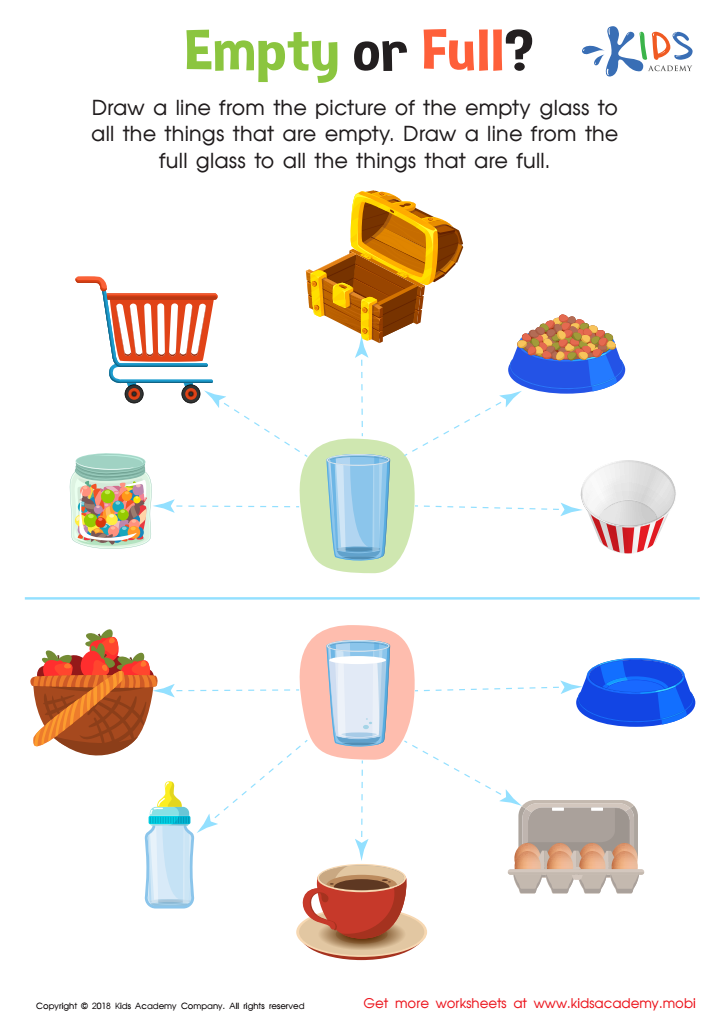
Empty or Full? Worksheet
Let students get to grips with the concepts of empty and full with this PDF worksheet. It uses fun, bright pictures to help them comprehend the difference and also helps develop fine-motor skills with tracing lines. Kids will be proud of themselves as they get answers right!
Empty or Full? Worksheet
Worksheet
Join Kids Academy for Free
Who is primarily going to use this learning content?




Visual perception skills are crucial for young children's cognitive development, especially in mathematics. At ages 3-4, children begin to explore and understand concepts such as shapes, sizes, patterns, and spatial relationships, all of which lay the foundation for future mathematical learning. When parents and teachers focus on developing these skills, they help enhance children’s ability to recognize and interpret visual information, which is fundamental in math.
Improving visual perception can lead to better problem-solving skills, as children learn to visualize mathematical concepts and apply them in practical situations. For example, recognizing patterns helps in counting, sequencing, and eventually in arithmetic operations. Additionally, strong visual perception skills promote confidence in math-related activities, inspiring a positive attitude towards learning and reducing anxiety regarding mathematical tasks.
Moreover, engaging in activities that boost visual perception, such as puzzles, sorting games, and shape recognition, makes learning enjoyable and interactive for young children. This early intervention supports cognitive skills that will be vital throughout their education, fostering a lifelong appreciation for mathematics and learning. Thus, investing time in developing visual perception skills at this age is essential for parents and teachers, ensuring children are well-equipped for their academic journey ahead.








