
Color Identification Matching Worksheets for Ages 3-4
3 filtered results
Difficulty Level
Grade
Age
-
From - To
Subject
Activity
Standards
Engage little learners with our vibrant Color Identification Matching Worksheets designed specifically for ages 3-4! These fun, educational activities enable children to recognize and match colors, enhancing their visual discrimination and fine motor skills. Perfect for preschool and early kindergarten, each worksheet features playful images and engaging tasks that keep young minds interested and eager to learn. Unlock a colorful world of learning for your child while laying a solid foundation for future math and science concepts. Download the worksheets today at Kids Academy and watch your child's color knowledge bloom!
Favorites
With answer key
Interactive
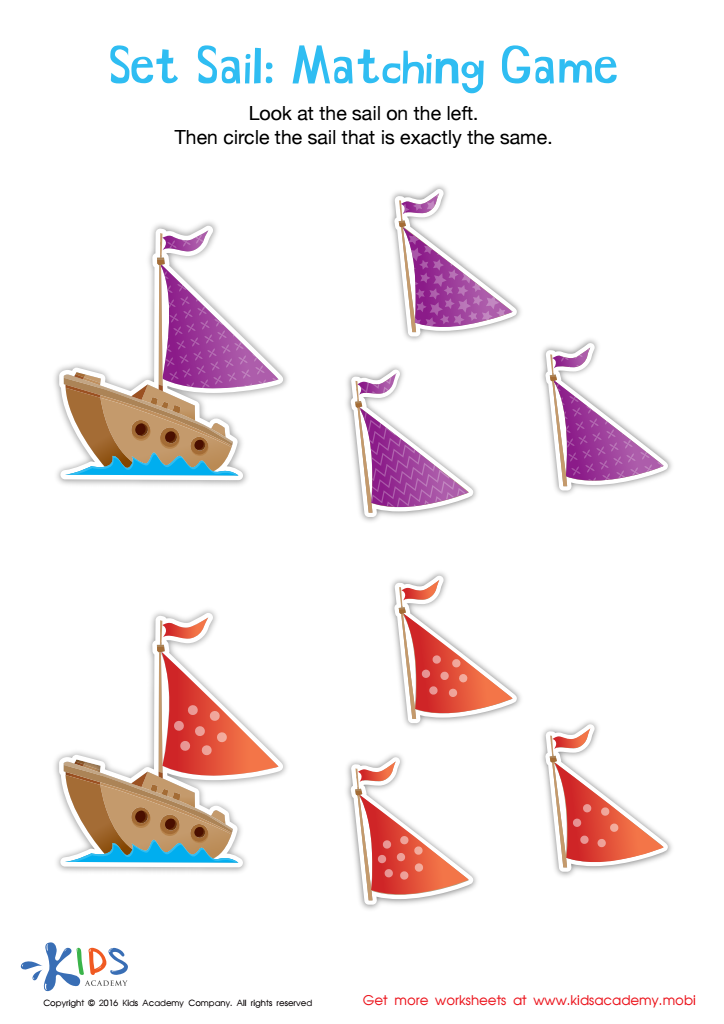
Set Sail Worksheet
Set sail with this fun matching game for toddlers! Kids will love finding the same pattern on the sails, improving their problem-solving and counting skills. Enjoy this bright and engaging worksheet!
 Assign to My Students
Set Sail Worksheet
Worksheet
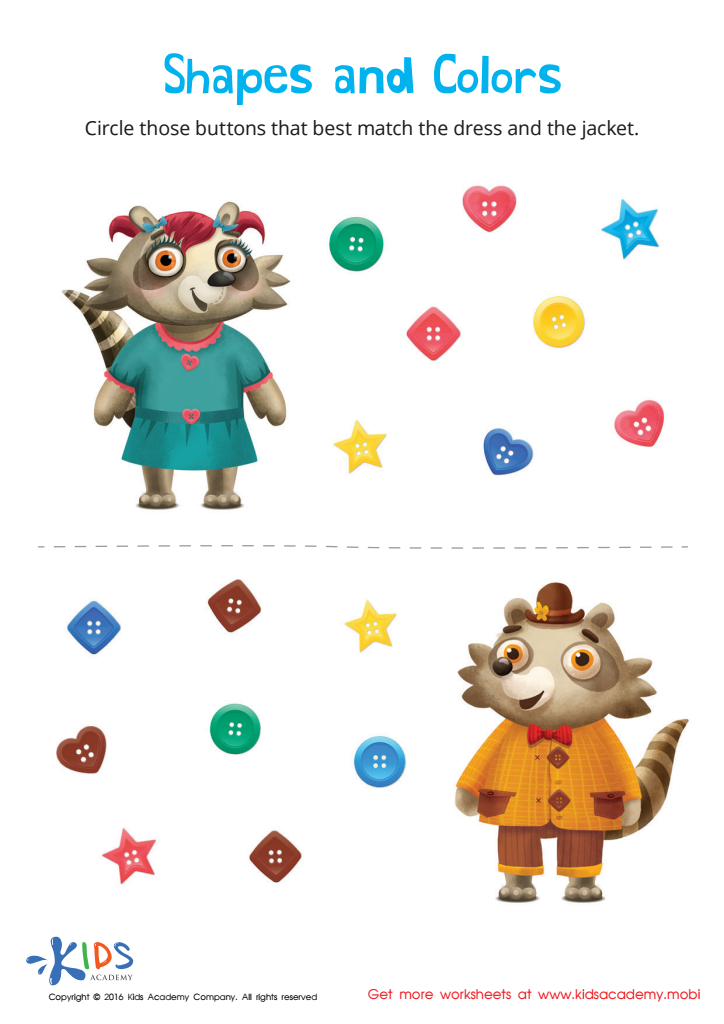
Matching: Shapes and Colors Worksheet
Help Mr. and Mrs. Raccoon find the right buttons to match their shirts! Kids will identify shapes and colors and learn to match them correctly.
Matching: Shapes and Colors Worksheet
Worksheet
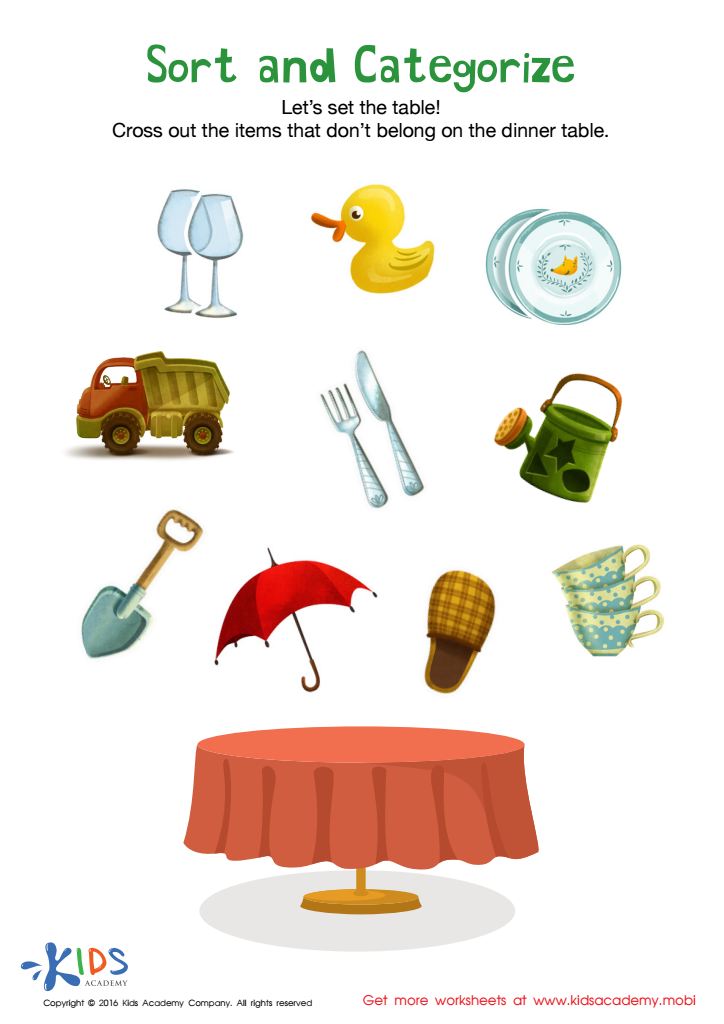
Join Kids Academy for Free
Who is primarily going to use this learning content?








Parents and teachers should prioritize color identification and matching skills in children aged 3-4 because these activities play a crucial role in their cognitive, language, and emotional development. During this stage, children experience rapid brain development, and engaging with colors can significantly enhance this process.
Firstly, recognizing and matching colors helps to enhance a child's cognitive skills. When children identify different colors, they learn categorization and comparison, foundational aspects of logical thinking and problem-solving. Understanding these differences also aids in sharpening their memory and attention to detail.
Secondly, color identification and matching significantly contribute to language development. As children learn and articulate the names of various colors, they expand their vocabulary, improve their pronunciation, and learn to form sentences. Engaging in these activities sparks conversations and prompts children to express their observations, ideas, and preferences.
Lastly, these skills have a profound impact on emotional development. Successfully identifying and matching colors boosts children's confidence and self-esteem, making them feel accomplished. Colors are also closely linked to emotions; by exploring colors, children can learn to associate them with feelings, which aids in emotional literacy and regulation.
Ultimately, investing time teaching color identification and matching provides a fundamental platform for broader educational success, preparing children for more complex academic concepts and social interactions.








